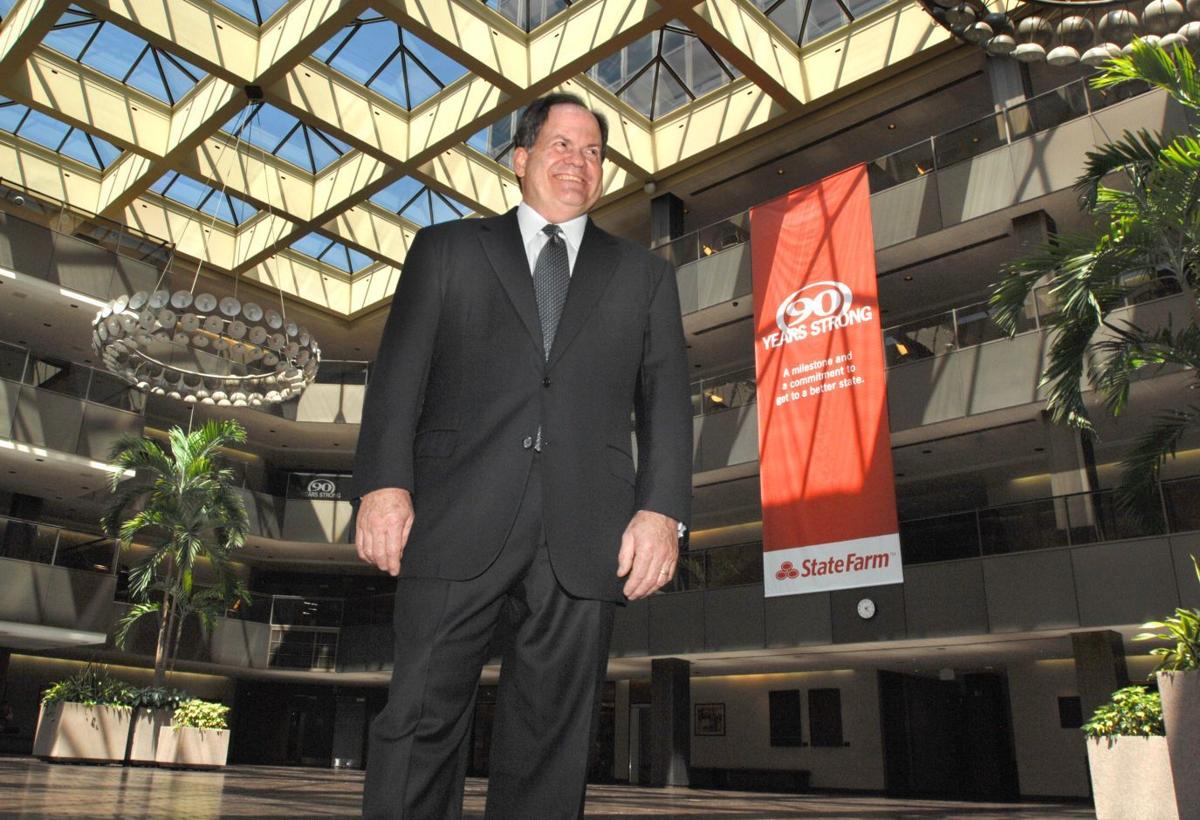
The Legacy of Ed Rust at State Farm: A Definitive History of Leadership
Edward B. Rust Jr. served as the Chief Executive Officer of State Farm Mutual Automobile Insurance Company for 30 years, from 1985 to 2015. His tenure transformed the organization from a specialized regional insurer into a diversified...
Edward B. Rust Jr. served as the Chief Executive Officer of State Farm Mutual Automobile Insurance Company for 30 years, from 1985 to 2015. His tenure transformed the organization from a specialized regional insurer into a diversified national financial services powerhouse, emphasizing long-term stability and extensive involvement in national education reform.
Contents
The Architect of Modern State Farm
When analyzing the history of American insurance, few names carry as much weight as Edward B. Rust Jr. Often referred to simply as Ed Rust, he represented the third generation of his family to lead State Farm, following in the footsteps of his father, Edward B. Rust Sr., and his grandfather, Adlai Rust. However, Ed Rust Jr.’s impact was not merely a continuation of family tradition; it was a fundamental modernization of one of America's largest mutual companies.
Taking the helm in 1985 at the age of 35, Rust inherited a company that was already a leader in the auto insurance market but faced an increasingly complex regulatory and competitive environment. Over the next three decades, he steered State Farm through periods of intense market volatility, catastrophic natural disasters, and a digital revolution that changed how consumers interacted with financial institutions. By the time he stepped down as CEO in 2015 (and as Chairman in 2016), State Farm had solidified its position as the largest property and casualty insurer in the United States.
Strategic Diversification and the Financial Services Shift
One of the most significant pillars of Ed Rust’s leadership was the strategic expansion of State Farm’s product offerings. Under his guidance, the company moved beyond its core competencies of auto, home, and life insurance to become a "one-stop shop" for consumer financial needs.
The Launch of State Farm Bank
In the late 1990s, Rust spearheaded the creation of State Farm Bank. This was a bold move for a traditional insurance carrier. By obtaining a federal savings bank charter in 1999, State Farm began offering deposit products, mortgages, and consumer loans directly through its vast network of independent contractors (agents). This integration was designed to deepen the "Good Neighbor" relationship, ensuring that if a customer trusted State Farm with their car and home, they could also trust them with their retirement savings and home financing.
Mutual Funds and Asset Management
Recognizing that policyholders were looking for ways to grow their wealth alongside protecting it, Rust oversaw the introduction of State Farm VP Management Corp. This allowed agents to offer mutual funds and other investment products. This shift was critical in an era where competitors like GEICO and Progressive were focusing heavily on price-driven, direct-to-consumer models. Rust’s counter-strategy was to double down on the value of the local agent, equipped with a comprehensive suite of financial tools.
Educational Advocacy and Corporate Responsibility
Ed Rust is perhaps as well known in Washington D.C. as he is in Bloomington, Illinois, for his relentless advocacy for K-12 education reform. He viewed education not as a side-project of corporate philanthropy, but as a core economic necessity.
Throughout his career, Rust served in high-profile leadership roles for organizations such as the Business Roundtable, the National Alliance of Business, and the U.S. Chamber of Commerce. He was a frequent advisor to U.S. Presidents on educational policy, arguing that a highly skilled workforce was the primary engine of American competitiveness. Under his leadership, State Farm became a major sponsor of educational initiatives, focusing on teacher quality, accountability standards, and student achievement.
This commitment often saw him bridging the gap between the private sector and public policy, advocating for the "No Child Left Behind" Act and subsequent educational standards. He believed that corporations had a vested interest in the quality of local schools because those schools produced the future employees and customers of companies like State Farm.
Navigating Catastrophe and Financial Stability
The true test of an insurance executive is how they handle the years when the "big one" hits. Rust’s tenure was marked by some of the most expensive natural disasters in American history, including Hurricane Andrew (1992), the Northridge Earthquake (1994), and Hurricane Katrina (2005).
State Farm’s performance during these crises was a testament to the conservative financial management Rust championed. While some competitors struggled with solvency or exited markets entirely after major losses, State Farm maintained a robust policyholder surplus. Rust often emphasized the "mutual" nature of the company, reminding stakeholders that because State Farm was owned by its policyholders rather than stockholders, it could prioritize long-term claims-paying ability over quarterly earnings targets.
| Metric/Era | State Farm in 1985 (Start of Rust Era) | State Farm in 2015 (End of Rust Era) |
|---|---|---|
| Primary Focus | Auto and Home Insurance | Integrated Financial Services |
| Annual Revenue | Approx. $12 Billion | Approx. $75 Billion |
| Policyholder Surplus | Approx. $10 Billion | Over $80 Billion |
| Banking Services | None | Full-service Federal Savings Bank |
| Distribution | Captive Agency Force | Multi-channel (Agent-centric) |
The Culture of the "Good Neighbor"
Under Ed Rust, the "Like a Good Neighbor, State Farm is there" slogan became more than just a marketing jingle; it became the operational philosophy for thousands of employees and agents. Rust was known for his approachable leadership style and his deep roots in the Bloomington-Normal community.
He maintained a focus on the independent contractor agency model, even as technology tempted many firms to move toward call centers and internet-only platforms. Rust argued that in moments of crisis—such as a house fire or a fatal accident—customers wanted a local face they could trust, not an anonymous representative in a remote location. This human-centric approach allowed State Farm to maintain high retention rates despite the aggressive advertising spend of direct-to-consumer rivals.
The Transition to Michael Tipsord
As 2015 approached, the board of directors and Ed Rust prepared for a leadership transition that would ensure continuity. Rust’s retirement as CEO in June 2015 saw the appointment of Michael Tipsord, who had previously served as the company’s Chief Operating Officer and Chief Financial Officer.
The transition was remarkably smooth, reflecting the internal stability Rust had cultivated over three decades. Tipsord, who had worked closely with Rust for years, continued many of the strategic initiatives Rust began, particularly the emphasis on technological modernization and digital tools for agents. Rust remained as the Chairman of the Board until 2016, providing a bridge during the initial year of Tipsord's leadership before officially retiring from the company his family helped build.
Assessing the Rust Legacy in 2026
From the perspective of 2026, Ed Rust’s career at State Farm is viewed as the definitive era of corporate scaling. While modern insurance is now heavily influenced by AI-driven underwriting and telematics—technologies that were in their infancy during his final years—the financial foundation Rust built remains the bedrock of the company.
His legacy is characterized by:
- Financial Fortitude: Leaving the company with a surplus that allowed it to weather the inflationary pressures of the early 2020s.
- Market Dominance: Maintaining the #1 position in auto and home insurance for decades against intense, well-funded competition.
- Civic Engagement: Setting a standard for how a Fortune 50 CEO can influence national policy without losing focus on the core business.
Frequently Asked Questions
What is Ed Rust's relationship to the founders of State Farm?
Ed Rust Jr. is the son of Edward B. Rust Sr., who was the CEO from 1954 to 1985. His grandfather, Adlai Rust, also served as CEO. While the company was founded by G.J. Mecherle in 1922, the Rust family provided the primary leadership through most of the 20th century, steering its growth into a national brand.
How did Ed Rust change State Farm's business model?
He transformed it from a property and casualty (P&C) insurer into a comprehensive financial services provider. This included the 1999 launch of State Farm Bank and the expansion into mutual funds and asset management, allowing the company to compete with banks and investment firms.
Why was Ed Rust so involved in education reform?
Rust believed that the quality of the American workforce was the most critical factor for long-term economic stability. He argued that businesses have a direct stake in the success of public schools, leading him to hold prominent roles in the Business Roundtable and other advocacy groups to influence national education standards.
What was the state of State Farm when Ed Rust retired?
When he retired as CEO in 2015, State Farm was the largest property and casualty insurer in the U.S., with a policyholder surplus exceeding $80 billion and an annual revenue of approximately $75 billion. The company was financially stable and had successfully transitioned into the digital age.
Is Ed Rust still involved with State Farm in 2026?
No, Ed Rust Jr. is fully retired. He stepped down as CEO in 2015 and as Chairman of the Board in 2016. While his influence remains through the company's culture and long-term strategy, the organization is currently led by his successors.
Where did Ed Rust receive his education?
He graduated from Illinois Wesleyan University with a bachelor's degree and later earned both a Juris Doctor (JD) and a Master of Business Administration (MBA) from Southern Methodist University (SMU).
Summary and Next Actions
Ed Rust’s tenure at State Farm serves as a masterclass in long-term corporate stewardship. For business students and industry professionals, his career demonstrates the power of balancing tradition with the necessity of evolution. He managed to keep a century-old mutual company relevant in an age of disruptive technology by focusing on the core value of human relationships and financial stability.
If you are researching the history of corporate leadership or the insurance industry, consider exploring the Business Roundtable archives or State Farm’s historical reports from 1985–2015. These documents provide a more granular look at the specific policy shifts and economic strategies that Rust implemented during his thirty-year watch.
Image Gallery