Understanding the Taxation on Life Insurance Proceeds: A 2026 Comprehensive Guide
Generally, life insurance death benefits paid to beneficiaries are not subject to federal income tax. Whether received as a lump sum or in installments, the principal amount is typically tax-free. However, interest earned on the procee...
Generally, life insurance death benefits paid to beneficiaries are not subject to federal income tax. Whether received as a lump sum or in installments, the principal amount is typically tax-free. However, interest earned on the proceeds, certain policy transfers, or high-value estates may trigger significant income or estate tax liabilities.
Contents
Navigating the tax implications of life insurance is essential for both policyholders and beneficiaries. While the Internal Revenue Code (IRC) offers generous protections for these payouts, the landscape is not without its complexities. As we move through 2026, understanding the intersection of death benefits, cash value growth, and the shifting federal estate tax exemptions is vital for effective financial planning.
The General Rule: Federal Income Tax Exemption
Under Internal Revenue Code Section 101(a), the proceeds of a life insurance contract paid by reason of the death of the insured are generally excluded from the beneficiary's gross income. This means that if an individual receives a $500,000 death benefit, they do not have to report that $500,000 as taxable income on their federal tax return.
The logic behind this exemption is rooted in social policy. The federal government recognizes that life insurance serves as a critical safety net for families, preventing them from becoming dependent on state resources after the loss of a breadwinner. Because the premiums are typically paid with after-tax dollars, the death benefit is treated as a return of those funds and a fulfillment of a private contract, rather than "new" income.
Exceptions to the Income Tax-Free Rule
While the principal is usually safe from the IRS, there are specific scenarios where income tax can apply:
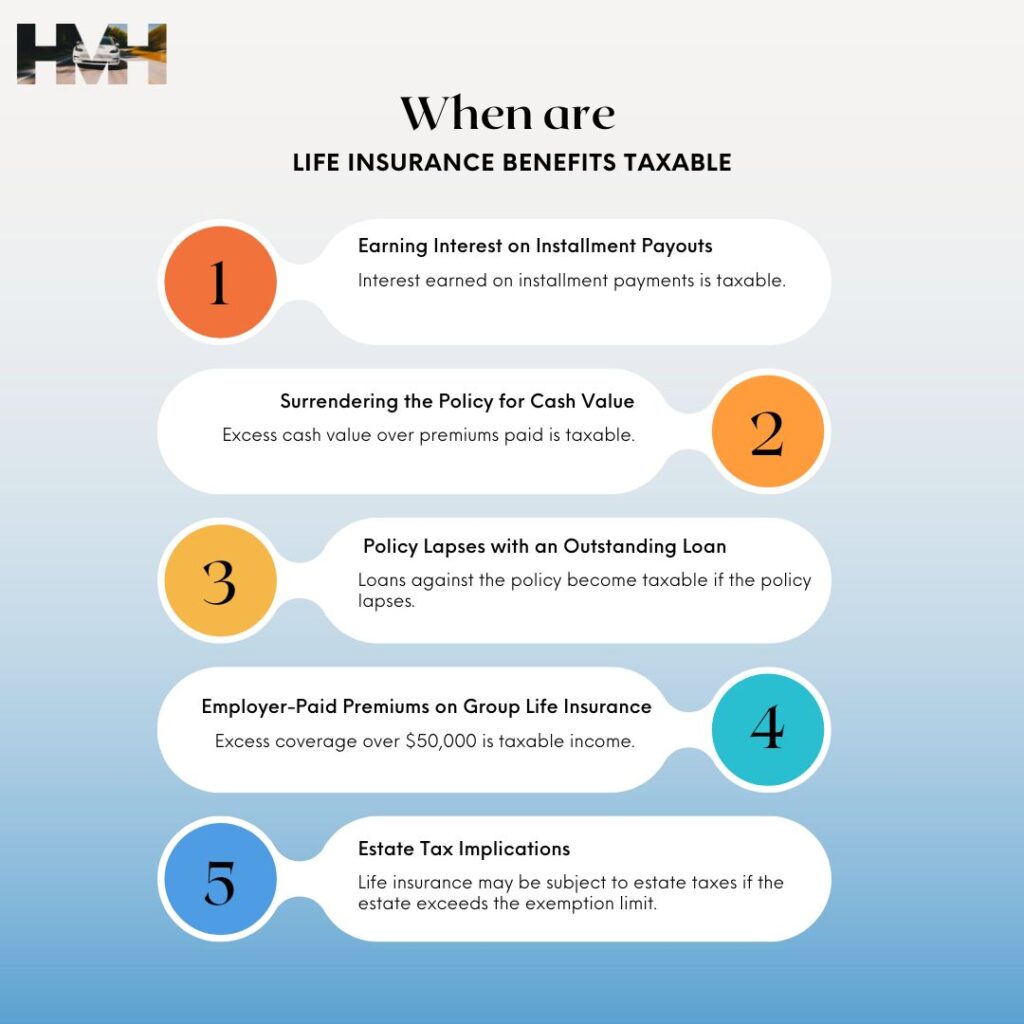
- Interest Income: If a beneficiary chooses to leave the death benefit with the insurance company for a period, or if the insurer delays payment and pays interest on the balance, that interest is fully taxable. The principal remains tax-free, but the interest must be reported as "Interest Income" on Form 1040.
- The Transfer-for-Value Rule: If a life insurance policy is sold or transferred to another party for "valuable consideration" (money or something of value), the tax-exempt status may be lost. In such cases, the death benefit is taxable to the extent that it exceeds the price paid for the policy plus subsequent premiums paid by the new owner. There are exceptions for transfers to the insured, a partner of the insured, or a corporation in which the insured is an officer or shareholder.
- Employer-Owned Life Insurance (EOLI): Under IRC Section 101(j), if a business owns a policy on an employee, the proceeds may be taxable unless specific notice and consent requirements were met before the policy was issued.
Estate Tax Implications in 2026
The most significant tax threat to life insurance proceeds is often not the income tax, but the federal estate tax. For 2026, this is a particularly sensitive topic due to the sunsetting of the Tax Cuts and Jobs Act (TCJA) provisions at the end of 2025.
Inclusion in the Gross Estate
If the deceased held "incidents of ownership" in the policy at the time of death, the full value of the death benefit is included in their gross estate. Incidents of ownership include the power to change beneficiaries, borrow against the cash value, or cancel the policy.
The 2026 Exemption Cliff
As of 2026, the federal estate tax exemption has reverted to pre-2018 levels (adjusted for inflation), sitting at approximately $7 million per individual. This is a sharp decrease from the roughly $13 million exemption seen in 2025. Consequently, many more families may find that a large life insurance policy pushes their total estate value over the taxable threshold, leading to a potential tax hit of up to 40% on the excess.
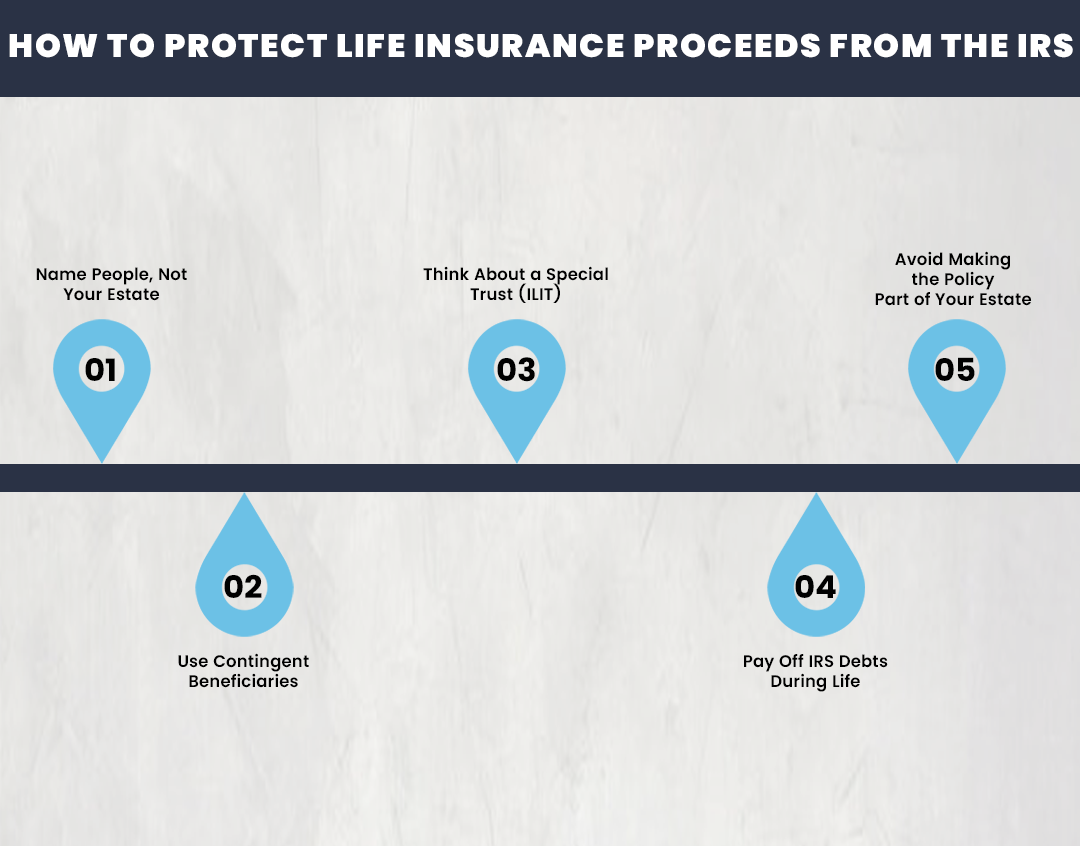
To avoid this, many high-net-worth individuals utilize an Irrevocable Life Insurance Trust (ILIT). By having the trust own the policy, the insured individual relinquishes incidents of ownership, effectively removing the proceeds from their taxable estate.
Taxation of Living Benefits and Cash Value
Permanent life insurance policies, such as Whole Life or Universal Life, accumulate a "cash value" component. Accessing this money while the insured is still alive carries different tax rules than the death benefit.
Policy Withdrawals and Surrenders
Withdrawals are generally taxed on a FIFO (First-In, First-Out) basis. This means you are allowed to withdraw an amount equal to the total premiums you have paid (your "basis") without paying any taxes. Once the withdrawals exceed the basis, the excess is taxed as ordinary income.
If you surrender the policy entirely, you receive the full cash value minus any surrender fees. The portion of the payout that exceeds your total premiums paid is taxable as ordinary income.
Policy Loans
One of the primary advantages of cash-value life insurance is the ability to take out a loan against the policy. Policy loans are generally not taxable, even if the loan amount exceeds the premiums paid. However, there is a major caveat: if the policy lapses or is surrendered while a loan is outstanding, the unpaid loan balance (to the extent it exceeds the basis) becomes immediately taxable as ordinary income.
Modified Endowment Contracts (MEC)
If a policy is funded too heavily and too quickly, it may be classified as a Modified Endowment Contract (MEC) under the "7-pay test." Once a policy becomes a MEC, it loses its favorable FIFO tax treatment. Withdrawals and loans from a MEC are taxed on a LIFO (Last-In, First-Out) basis, meaning the first dollars taken out are considered taxable earnings. Additionally, if the owner is under age 59½, they may face a 10% IRS penalty on those withdrawals.
Comparison of Payout Scenarios
The following table summarizes how different methods of receiving or accessing life insurance funds are treated for federal tax purposes in 2026.
| Scenario | Primary Tax Treatment | Basis for Taxation |
|---|---|---|
| Lump-Sum Death Benefit | Tax-Free | IRC Section 101(a) exemption. |
| Interest on Proceeds | Taxable | Taxed as ordinary income in the year received. |
| Installment Payout | Partially Taxable | Principal is tax-free; interest portion is taxable. |
| Cash Value Withdrawal | Tax-Free up to Basis | Taxable only after total premiums are recovered. |
| Policy Loan | Tax-Free | Not income, provided the policy remains in force. |
| Policy Surrender | Partially Taxable | Any amount over the total premiums paid is income. |
| MEC Withdrawal | Taxable | LIFO treatment; earnings taxed first plus potential penalty. |
Specialized Tax Considerations
Corporate and Group Life Insurance
For employer-provided group term life insurance, the first $50,000 of coverage is a tax-free fringe benefit. The "imputed cost" of any coverage exceeding $50,000 is considered taxable income to the employee and is reported on their Form W-2. However, the death benefit paid to the beneficiary from a group policy remains income tax-free.
1035 Exchanges
Internal Revenue Code Section 1035 allows for the tax-free exchange of an existing life insurance policy for a new one. This is particularly useful if a policyholder finds a product with better features or lower costs. As long as the exchange is handled directly between insurance companies, the accumulated gain in the old policy is rolled into the new one without triggering an immediate tax liability.
Accelerated Death Benefits
If an insured individual is diagnosed with a terminal illness (typically defined as having 24 months or less to live) or a chronic illness, they may be able to access a portion of the death benefit while still alive. These "accelerated death benefits" are generally received income tax-free under IRC Section 101(g), provided they are used for qualified purposes.
Common Mistakes to Avoid
- Naming the "Estate" as Beneficiary: This is a frequent error. If the estate is the beneficiary, the proceeds are guaranteed to be included in the gross estate for tax purposes and will be subject to the probate process, which can be time-consuming and expensive.
- The "Unholy Trinity" (Goodman Triangle): This occurs when three different people serve as the owner, the insured, and the beneficiary (e.g., a wife owns a policy on her husband, with their child as the beneficiary). Upon the husband's death, the IRS may view the death benefit as a taxable gift from the wife to the child. To avoid this, the owner and the beneficiary should usually be the same person or entity.
- Ignoring the MEC Limits: Policyholders looking to use life insurance as a tax-advantaged investment vehicle must monitor their premium payments to ensure they do not accidentally cross the MEC threshold, which permanently changes the tax status of the policy.
Frequently Asked Questions
Are life insurance proceeds taxable if the policy was a gift?
Generally, no. If you are gifted an existing policy, the death benefit remains income tax-free to the beneficiary. However, the gift itself may be subject to gift tax rules if the "interpolated terminal reserve" (roughly the cash value) of the policy exceeds the annual gift tax exclusion ($18,000 in 2024-2025, adjusted for 2026).
Does the state of residence affect life insurance taxes?
While federal income tax rules are uniform, state laws vary. Most states do not tax life insurance death benefits as income. However, some states have their own estate or inheritance taxes with much lower thresholds than the federal government. It is important to check the specific regulations in the state where the deceased resided.
What happens if I sell my life insurance policy to a third party?
This is known as a life settlement. The taxation of a life settlement is three-tiered:
- The portion of the sale price up to your basis is tax-free.
- The portion between the basis and the cash surrender value is taxed as ordinary income.
- Any remaining gain is taxed as a capital gain.
If a policy is used as collateral for a loan, is the death benefit taxable?
No. Using a policy as collateral for a bank loan does not change the tax-exempt status of the proceeds. When the insured dies, the lender is paid first from the proceeds to satisfy the debt, and the remainder goes to the beneficiaries tax-free.
Can the IRS seize life insurance proceeds for back taxes?
In most cases, the IRS can only seize the cash value of a policy if the policyholder owes back taxes. Once the insured dies and the benefit is paid to a beneficiary, the funds are generally protected from the deceased's creditors, including the IRS, unless the beneficiary themselves owes the taxes.
Practical Recommendation
Given the significant changes to the estate tax exemption in 2026, individuals with total assets (including life insurance) exceeding $7 million should consult with a tax professional or estate attorney immediately. Review your policy ownership structures to ensure you are not inadvertently creating an estate tax liability. If you are a beneficiary, ensure you receive a Form 1099-INT if any interest was paid on your claim, as this must be reported on your annual tax return.
Professional Advice Disclaimer: This article provides general information regarding federal tax laws as of 2026 and is not intended as specific legal, tax, or financial advice. Tax laws are subject to change and vary by jurisdiction. Always consult with a qualified CPA or tax attorney regarding your individual circumstances.
Image Gallery