Why These Practices Prevent Unauthorized Access and Strengthen Overall Security
Effective cybersecurity in 2026 is no longer defined by a single "silver bullet" solution but by the strategic integration of specific technical practices that work in concert. Implementing robust security protocols such as Multi-Facto...
Effective cybersecurity in 2026 is no longer defined by a single "silver bullet" solution but by the strategic integration of specific technical practices that work in concert. Implementing robust security protocols such as Multi-Factor Authentication (MFA), the Principle of Least Privilege (PoLP), and Zero Trust Architecture is essential because these practices directly address the most common vulnerabilities utilized by modern threat actors. By creating multiple layers of friction, organizations can effectively prevent unauthorized access and drastically reduce the potential "blast radius" of a security incident.
Contents
These practices strengthen overall security by removing reliance on a single point of failure. When an organization shifts from a permissive, perimeter-based model to a restrictive, identity-centric model, it fundamentally changes the economics for an attacker. Instead of needing to bypass one firewall, an adversary must now navigate a complex web of continuous verification, encrypted data flows, and restricted permissions, making a successful, widespread breach significantly more difficult and time-consuming to execute.
The Evolving Threat Landscape in 2026
As we navigate through 2026, the complexity of unauthorized access attempts has reached an all-time high. The rise of automated, AI-driven phishing campaigns and advanced persistent threats (APTs) means that static passwords are effectively obsolete. In this environment, the "why" behind modern security practices becomes clear: traditional methods were designed for a world where the workforce was inside a physical office and the data stayed in a centralized server room.
Today’s distributed cloud environments and remote-first workflows require a decentralized security approach. Modern practices prevent unauthorized access by assuming that the network is already compromised. By shifting the focus from "keeping people out" to "verifying everyone inside," organizations create a resilient infrastructure that can withstand the inevitabilities of human error and sophisticated technical exploits.
Multi-Factor Authentication (MFA): The First Line of Defense
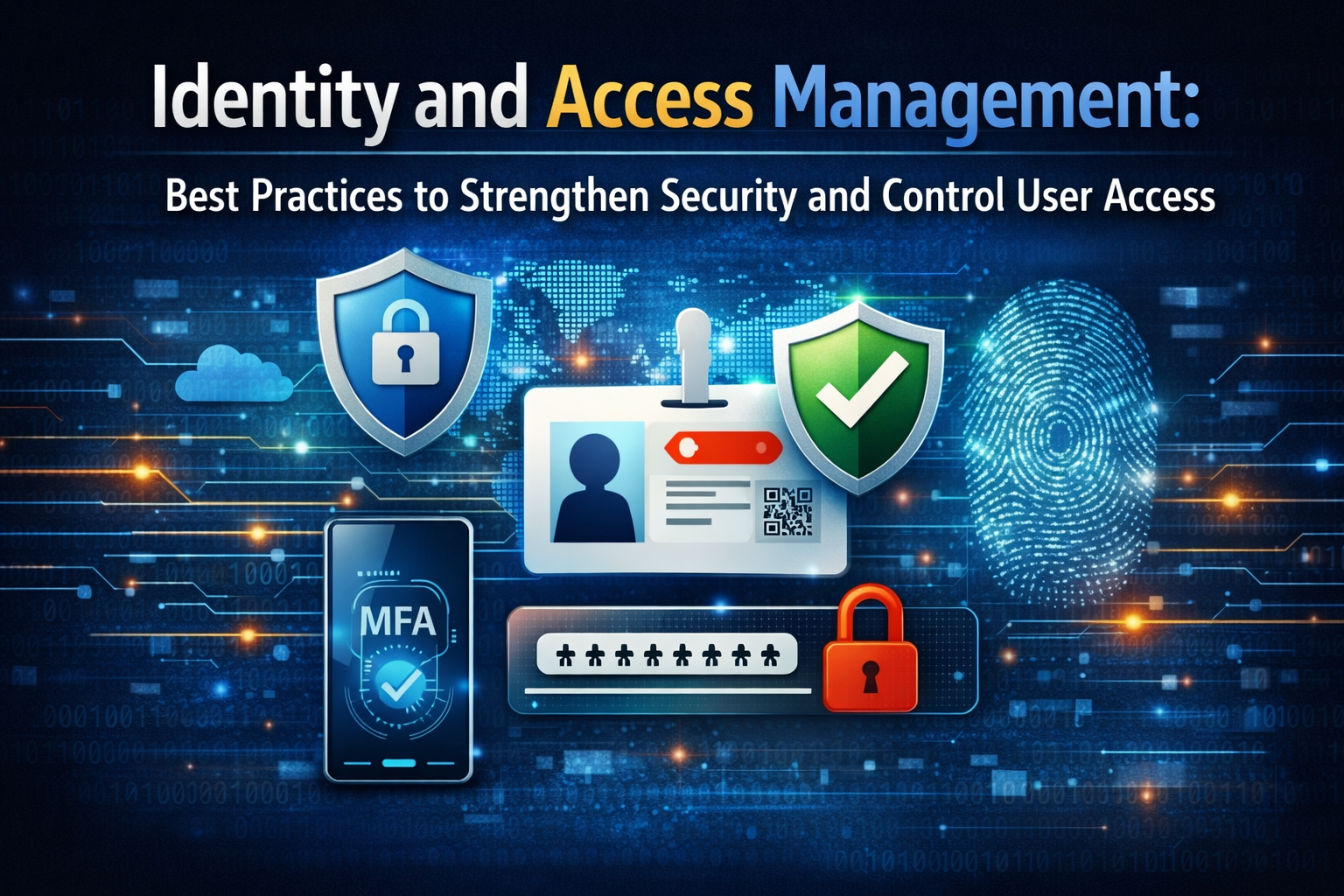
Multi-Factor Authentication remains the most critical practice for preventing unauthorized access. The fundamental logic behind MFA is the requirement of two or more independent credentials to verify a user's identity. These typically fall into three categories: something you know (password), something you have (a security key or smartphone), and something you are (biometrics).
Why MFA is Effective Against Credential Theft
The primary reason MFA strengthens security is its ability to neutralize the impact of stolen passwords. In a single-factor environment, a leaked password—whether through a data breach at a third-party site or a successful phishing attempt—grants an attacker full access. With MFA enabled, specifically phishing-resistant MFA like FIDO2/WebAuthn standard passkeys, the password becomes useless on its own.
In 2026, we have seen a significant shift away from SMS-based MFA, which is vulnerable to SIM swapping and interception. Modern MFA practices emphasize hardware-based tokens and biometrics, which provide a cryptographic link between the user's device and the service they are accessing. This prevents "Man-in-the-Middle" (MitM) attacks where an attacker tries to intercept a code in real-time.
Strengthening Security through Contextual Awareness
Advanced MFA solutions now incorporate contextual signals, such as geographic location, time of day, and device health. If a user attempts to log in from an unrecognized device in a different country at 3:00 AM, the system can automatically deny access or trigger a higher-level authentication challenge. This "Adaptive MFA" ensures that even if a physical device is stolen, unauthorized access is still prevented through environmental analysis.
The Principle of Least Privilege (PoLP) and Blast Radius Reduction
The Principle of Least Privilege (PoLP) is the practice of limiting access rights for users, accounts, and computing processes to only those they absolutely need to perform their legitimate functions. While it may seem restrictive to employees, it is one of the most powerful ways to strengthen overall security.
Preventing Lateral Movement
Unauthorized access often begins with a "low-level" account, such as an entry-level employee’s email. If that account has broad permissions to access financial records or server configurations, a single compromised password can lead to a total system failure. PoLP prevents this by "siloing" access. If an attacker gains access to a user’s account, they are confined to that user’s specific, limited permissions. This prevents "lateral movement"—the process by which an attacker moves from one compromised system to more sensitive areas of the network.
Just-in-Time (JIT) Access
In 2026, the evolution of PoLP has led to the widespread adoption of Just-in-Time (JIT) access. Instead of having permanent "standing" privileges, administrators are granted elevated permissions only when needed and only for a fixed duration. This practice prevents unauthorized access by ensuring that high-privilege accounts do not exist in a "ready-to-use" state for an attacker to hijack. Once the task is completed, the permissions are automatically revoked, leaving no open door for future exploitation.
Zero Trust Architecture: Never Trust, Always Verify
Zero Trust is a strategic framework that eliminates the concept of a "trusted" internal network. In a Zero Trust environment, every access request is treated as a potential threat, regardless of whether it originates from inside or outside the organizational perimeter.
Micro-segmentation: Security at the Granular Level
A core component of Zero Trust is micro-segmentation. This involves breaking the network into small, isolated zones with their own security policies. By doing so, organizations prevent a breach in one segment (like the marketing department's file share) from spreading to another (like the customer database). This practice strengthens security by creating internal barriers that require constant re-authentication.
Continuous Verification
Unlike traditional security that checks credentials only at the "front door" (login), Zero Trust requires continuous verification. The system constantly monitors the behavior of the user and the state of the device throughout the entire session. If a user’s behavior suddenly deviates from their historical patterns—such as attempting to download thousands of files at once—the session can be terminated instantly. This real-time response is why Zero Trust is the gold standard for preventing unauthorized access in 2026.
Comparison of Key Security Practices and Their Impact
The following table outlines how specific practices address different facets of unauthorized access and overall security posture.
| Security Practice | Primary Threat Mitigated | Technical Mechanism | Strategic Benefit |
|---|---|---|---|
| Phishing-Resistant MFA | Credential Theft / Phishing | Cryptographic hardware keys / Biometrics | Eliminates password-only vulnerabilities. |
| Least Privilege (PoLP) | Lateral Movement | Role-Based Access Control (RBAC) | Minimizes the impact of a compromised account. |
| Micro-segmentation | Network-wide Breaches | Software-defined perimeters | Isolates sensitive data from the general network. |
| Encryption (at rest/transit) | Data Exfiltration | AES-256 / TLS 1.3+ protocols | Renders stolen data unreadable to unauthorized parties. |
| Continuous Monitoring | Insider Threats / APTs | AI-driven behavioral analytics | Detects and stops unauthorized actions in real-time. |
| Patch Management | Vulnerability Exploitation | Automated software updates | Closes known security holes before they can be used. |
Robust Patch Management and Vulnerability Scanning
No matter how strong your identity verification is, unpatched software remains a primary entry point for unauthorized access. Attackers frequently use automated scanners to find systems running outdated software with known vulnerabilities (CVEs).
Why Rapid Patching is Vital
In the current landscape of 2026, the "window of opportunity" for attackers has shrunk. When a vulnerability is announced, exploits are often developed within hours using automated tools. Systematic patch management strengthens security by ensuring that the underlying infrastructure is resilient against these known exploits. By automating the deployment of security updates, organizations ensure that human oversight does not lead to a catastrophic delay in protection.
Proactive Vulnerability Scanning
Strength in security is also found in "knowing thy self." Regular vulnerability scanning allows IT teams to see their network through the eyes of an attacker. By identifying misconfigured cloud buckets, open ports, or outdated certificates, organizations can proactively close the gaps that lead to unauthorized access before an adversary finds them.
Encryption: Protecting Data When Access Controls Fail
Even with the best access controls, there is always a non-zero risk of a breach. This is where encryption acts as the final line of defense. By encrypting data both "at rest" (stored on disks) and "in transit" (moving across networks), organizations ensure that even if unauthorized access occurs, the data itself remains protected.
In 2026, the standard for encryption has moved toward end-to-end encryption (E2EE) for all internal communications. This prevents "sniffing" attacks where an adversary intercepts data as it moves between servers. Furthermore, robust key management practices—where encryption keys are rotated frequently and stored in Hardware Security Modules (HSMs)—ensure that the "keys to the kingdom" are just as protected as the data they lock.
Frequently Asked Questions
Why is MFA considered better than a complex password?
MFA is superior because it requires a physical or biological component that cannot be easily replicated or stolen remotely. While a complex password can be cracked using brute force or obtained through a database leak, a hardware token or a fingerprint requires the attacker to have physical access to the user or their specific device, significantly increasing the difficulty of unauthorized access.
How does the Principle of Least Privilege affect employee productivity?
While PoLP can occasionally require employees to request access for new tasks, modern "Just-in-Time" (JIT) access tools have made this process nearly instantaneous. The slight increase in administrative overhead is a necessary trade-off for the massive increase in security. Without PoLP, a single mistake by one employee could compromise the entire company’s data.
Is Zero Trust only for large corporations?
No. In 2026, Zero Trust principles are scalable for businesses of all sizes. Many small-to-medium enterprises (SMEs) use cloud-based identity providers that have Zero Trust features built-in. Regardless of company size, the practice of "never trust, always verify" is the most effective way to prevent unauthorized access in a cloud-centric world.
What is the difference between authorization and authentication?
Authentication is the process of verifying who a user is (e.g., via a login and MFA). Authorization is the process of determining what that verified user is allowed to do (e.g., via PoLP and access control lists). Both are required to prevent unauthorized access; you must first know who the person is and then strictly limit their actions.
Can automated security tools replace human security teams?
While AI and automated tools are essential for handling the scale of modern threats and identifying patterns, human oversight remains necessary for strategic decision-making and investigating complex anomalies. Automation strengthens security by handling the "grunt work," allowing human experts to focus on high-level threat hunting and incident response.
Strategic Recommendation
To effectively prevent unauthorized access and strengthen overall security, organizations must move beyond a "compliance-only" mindset. The first practical step is to audit all existing accounts and enforce phishing-resistant MFA across the board, starting with administrative and high-access accounts. Following this, implement a Least Privilege model by auditing user permissions and removing any access that is not essential for daily operations.
By integrating these practices into a unified Zero Trust framework, you create a resilient environment where security is a continuous process rather than a static perimeter. Regularly testing these defenses through simulated "red team" exercises will ensure that your practices remain effective against the evolving tactics of 2026’s threat actors.
Image Gallery