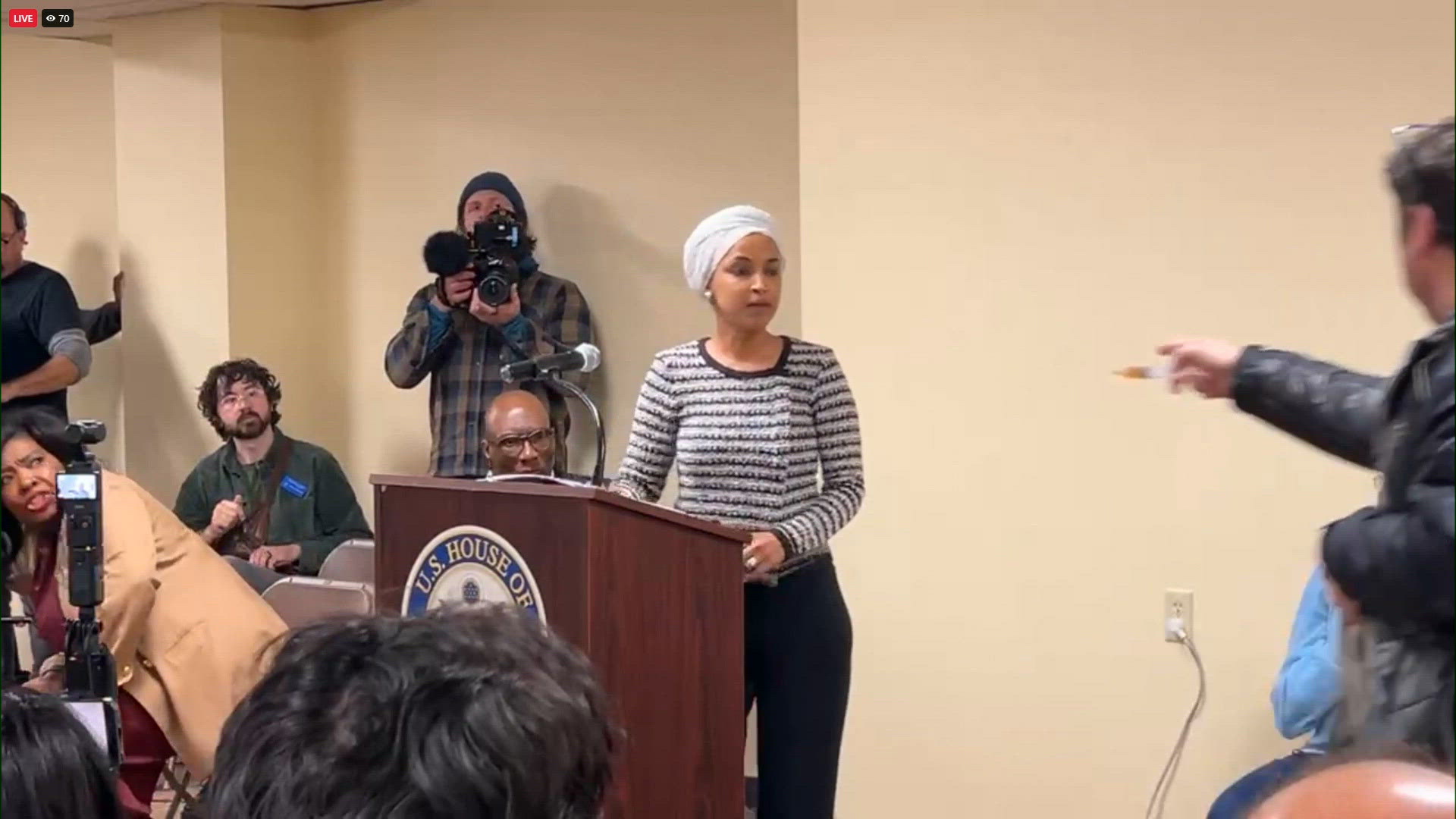
The Journey of Ilhan Omar: From Mogadishu, Somalia, to the Minnesota Statehouse
Congresswoman Ilhan Omar represents a unique narrative in American politics, having been born in Mogadishu, Somalia, before seeking refuge in Kenya and eventually settling in Minneapolis, Minnesota. As of 2026, she continues to serve a...
Congresswoman Ilhan Omar represents a unique narrative in American politics, having been born in Mogadishu, Somalia, before seeking refuge in Kenya and eventually settling in Minneapolis, Minnesota. As of 2026, she continues to serve as the U.S. Representative for Minnesota's 5th congressional district, a role she has held since 2019.
Contents
Early Life and the Somali Civil War
Ilhan Abdullahi Omar was born on October 4, 1982, in Mogadishu, the capital of Somalia. She was the youngest of seven siblings. Her father, Nur Omar Mohamed, was an educator and worked as a trainer for civil servants, while her mother, Fadhuma Abukar Haji Adam, passed away when Ilhan was only two years old. Following her mother's death, she was raised by her father and grandfather, Abukar Aden, who was the director of Somalia’s marine transport.
The Somalia of Omar’s early childhood was one of relative stability for her family, but this changed abruptly in 1991. As the Somali Civil War intensified, the family was forced to flee their home to escape the escalating violence. This period marked the beginning of a decade-long journey of displacement that would eventually lead her to the United States. The experience of losing a home to civil strife is a foundational element of Omar’s political identity, often informing her stances on foreign policy and refugee rights.
The Refugee Experience: Four Years in Kenya
After fleeing Mogadishu, Omar’s family sought sanctuary across the border in Kenya. They spent four years in the Utange refugee camp near Mombasa. Life in the camp was characterized by scarcity and uncertainty. In various reflections on this time, Omar has described the difficulties of living in a crowded environment with limited access to clean water and formal education.
Despite these hardships, the Utange camp was a place of transition. It was during these four years that her family applied for refugee status in the United States. The vetting process for refugees is famously rigorous, involving multiple interviews, background checks, and health screenings. In 1995, their application was approved, granting the family the opportunity to resettle in America. This move was part of a larger wave of Somali migration to the West, driven by the total collapse of the Somali state in the early 1990s.
Arrival in the United States and the Move to Minnesota
Ilhan Omar and her family first arrived in the United States in 1995, initially settling in Arlington, Virginia. However, after two years, the family moved to Minneapolis, Minnesota, in 1997. This move was strategic and culturally motivated. By the late 1990s, the Twin Cities had become a primary destination for Somali refugees due to the availability of entry-level jobs and the presence of voluntary agencies (VOLAGs) that specialized in resettlement.
Minnesota offered a burgeoning Somali community, which provided a sense of cultural continuity and support that was harder to find in other parts of the U.S. Omar attended Edison High School in Minneapolis, where she quickly learned English and began to take an interest in the democratic process. She often accompanied her grandfather to caucuses, acting as his translator. It was in these local political meetings that she first observed the mechanics of American democracy and the power of community organizing.
Education and Community Advocacy in the Twin Cities
Following her graduation from high school, Omar pursued higher education at North Dakota State University (NDSU). She graduated in 2011 with a Bachelor of Arts in political science and international studies. Her time at NDSU was formative, providing her with the theoretical framework to understand the global and domestic issues she had experienced firsthand as a refugee and an immigrant.
Returning to Minneapolis after college, she became a prominent community educator and advocate. She worked as a nutrition educator for the University of Minnesota and later served as a senior policy aide for Minneapolis City Council member Andrew Johnson. Her work during this period focused on increasing civic engagement among immigrant communities and addressing systemic barriers to housing and employment. By 2016, Omar had built a significant grassroots following, which she leveraged to launch her first campaign for public office.
Breaking Barriers: The Minnesota House and U.S. Congress
In 2016, Ilhan Omar ran for a seat in the Minnesota House of Representatives. She defeated the long-serving incumbent Phyllis Kahn in the Democratic-Farmer-Labor (DFL) primary and went on to win the general election. This victory made her the first Somali-American legislator in the United States. Her term in the state legislature was marked by a focus on criminal justice reform, environmental protections, and economic equality.
In 2018, when U.S. Representative Keith Ellison announced he would not seek re-election to the 5th district—opting instead to run for Minnesota Attorney General—Omar entered the race for the U.S. House of Representatives. Her victory in November 2018 was historic on multiple levels:
- She became the first Somali-American elected to Congress.
- She was one of the first two Muslim women (along with Rashida Tlaib) elected to Congress.
- She was the first naturalized citizen from Africa to serve in the House.
- She was the first woman of color to represent Minnesota in Washington, D.C.
Timeline of Migration and Political Milestones
| Year | Location | Status / Key Event |
|---|---|---|
| 1982 | Mogadishu, Somalia | Born to Nur Omar Mohamed and Fadhuma Abukar Haji Adam. |
| 1991 | Somalia / Kenya | Fled civil war; entered Utange refugee camp. |
| 1995 | Arlington, Virginia | Arrived in the U.S. as a sponsored refugee. |
| 1997 | Minneapolis, Minnesota | Relocated to the Twin Cities; began high school. |
| 2000 | Minnesota | Became a naturalized U.S. citizen at age 17. |
| 2011 | Fargo, North Dakota | Graduated from North Dakota State University. |
| 2016 | Minneapolis, Minnesota | Elected to the Minnesota House of Representatives (District 60B). |
| 2018 | Washington, D.C. | Elected to the U.S. House of Representatives (MN-5). |
| 2026 | Washington, D.C. | Serving as a multi-term incumbent in the U.S. House. |
Representation of Minnesota’s 5th District
Minnesota’s 5th congressional district is one of the most diverse and reliably Democratic districts in the state. It encompasses the city of Minneapolis and several surrounding suburbs, including St. Louis Park, Richfield, and Crystal. Since taking office, Omar has remained a polarizing but popular figure within her district.
Her legislative priorities as of 2026 continue to align with the progressive wing of the Democratic Party. She has been a vocal advocate for the "Green New Deal," "Medicare for All," and substantial changes to U.S. immigration policy. Her background as a refugee from Somalia heavily influences her work on the House Foreign Affairs Committee, where she frequently critiques U.S. military interventions and advocates for human rights-centered diplomacy.
Challenges and Contextualizing Her Dual Identity
Omar’s identity as a Somali-born American has often placed her at the center of national debates regarding assimilation, religious freedom, and "American-ness." Throughout her career, she has faced significant scrutiny regarding her past, her faith, and her criticisms of U.S. policy. However, for her supporters in Minnesota, she represents a literal manifestation of the American Dream—the idea that a refugee can arrive with nothing and rise to the highest levels of government.
The Somali community in Minnesota, often referred to as "Little Mogadishu" in certain neighborhoods like Cedar-Riverside, views her as a vital link between their heritage and their future in the U.S. Her ability to navigate both the cultural expectations of the Somali diaspora and the legislative requirements of the U.S. Congress is a defining feature of her political longevity.
Frequently Asked Questions
When did Ilhan Omar become a U.S. citizen?
Ilhan Omar became a naturalized U.S. citizen in 2000, when she was approximately 17 years old. Under U.S. law, children generally acquire citizenship through their parents if they are under 18 when the parent naturalizes, or they can apply independently upon reaching adulthood. Her citizenship was a prerequisite for her to serve in both the Minnesota State House and the U.S. Congress.
Why is she associated specifically with Minnesota?
While she initially arrived in Virginia, Minnesota has been her home for nearly three decades. Minnesota is home to the largest Somali population in North America, making it the cultural and political hub for Somali-Americans. Omar’s entire political career, from community organizing to the U.S. House, has been rooted in the Minneapolis area.
What is her current role in the U.S. government as of 2026?
As of 2026, Ilhan Omar is a member of the U.S. House of Representatives, representing Minnesota’s 5th congressional district. She has won multiple re-election bids since her initial 2018 victory and continues to serve on influential committees, including those focused on education, labor, and foreign affairs.
Does she still have ties to Somalia?
While her primary focus is on her American constituents, Omar maintains a connection to the Somali diaspora and has often spoken about the need for stability and democracy in Somalia. She has met with Somali leaders and has used her platform to advocate for humanitarian aid to the Horn of Africa, particularly during periods of drought or conflict.
What was her life like in the refugee camp?
Omar spent four years in the Utange camp in Kenya. In interviews, she has described it as a place where "life was at a standstill." Resources were scarce, and the primary goal was daily survival. She has noted that this experience gave her a profound appreciation for the stability and opportunity provided by the U.S. democratic system.
Further Information and Next Steps
For those interested in the legislative record of Representative Ilhan Omar or the history of Somali migration to Minnesota, several official resources provide verified data. You can track her voting record and sponsored legislation through the official U.S. House website. Additionally, the Minnesota Historical Society offers extensive archives on the history of the Somali community in the Twin Cities, documenting the cultural and economic impact of this migration wave since the 1990s. Understanding the intersection of her Somali origins and her Minnesotan political life provides a broader view of the changing demographic landscape of the American Midwest in the 21st century.
Image Gallery