2004 Jeep Grand Cherokee Starter Replacement Guide: Step-by-Step DIY
Replacing the starter on a 2004 Jeep Grand Cherokee (WJ) is a straightforward mechanical task that involves disconnecting the battery, removing the electrical leads from the starter solenoid, and unbolting the unit from the transmissio...
Replacing the starter on a 2004 Jeep Grand Cherokee (WJ) is a straightforward mechanical task that involves disconnecting the battery, removing the electrical leads from the starter solenoid, and unbolting the unit from the transmission bellhousing. Whether you have the 4.0L Inline-6 or the 4.7L V8, this repair typically takes one to two hours using standard hand tools.
Contents
The 2004 model year marked the final iteration of the "WJ" generation of the Grand Cherokee. As these vehicles continue to be celebrated for their longevity and off-road capability in 2026, maintaining the starting system is essential for reliability. A failing starter often presents itself through an audible "click" without the engine turning over, or a slow, labored crank that persists even after the battery has been fully charged.
Identifying Starter Failure vs. Battery Issues
Before committing to a starter replacement, it is vital to distinguish between a localized starter failure and a broader electrical issue. In 2026, many WJ Jeeps have upgraded electrical systems or aged wiring harnesses that can mimic starter symptoms.
The "Click" Test
If you turn the key and hear a single, sharp metallic click, the starter solenoid is likely engaging, but the motor within the starter unit is failing to spin. If you hear a rapid-fire clicking sound, this is more commonly a sign of low voltage from the battery or a poor ground connection.
Voltage Drop Testing
Use a multimeter to check the battery voltage. A healthy battery should read approximately 12.6 volts when the engine is off. While someone else attempts to start the vehicle, monitor the voltage drop. If it plunges below 10 volts, the battery is likely the culprit. However, if the voltage remains high but the engine doesn't crank, the electrical path to the starter or the starter itself is likely defective.
The Starter Relay
Before crawling under the Jeep, locate the Power Distribution Center (PDC) under the hood. Locate the starter relay (usually identified on the underside of the lid). You can swap this relay with an identical one (such as the horn relay) to rule out a simple blown component. If the Jeep starts with the swapped relay, the starter itself is functional.
Necessary Tools and Safety Prerequisites
Working on the starting system involves high-amperage electrical circuits and physical risks associated with lifting a heavy vehicle.
Safety Disclaimer: This guide is for informational purposes. Automotive repairs involve inherent risks. Always consult the official service manual for your specific VIN. If you are uncomfortable working under a vehicle or with electrical systems, seek professional assistance.
Required Tools:
- Socket Set: 10mm (for battery), 13mm, and 15mm (for starter mounting bolts).
- Ratchet and Extensions: A long 10-inch extension is particularly helpful for reaching the top mounting bolt on the V8 models.
- Wrenches: A small 8mm or 10mm wrench for the solenoid signal wire.
- Wire Brush: To clean terminal contacts.
- Safety Gear: Work gloves and impact-rated eye protection (to prevent debris from falling into your eyes while under the chassis).
- Jack and Jack Stands: Even if the Jeep has a lift kit, use stands for safety.
Preparation:
- Park on a level surface and engage the parking brake.
- Disconnect the Negative Battery Cable: This is the most critical step. The starter is connected directly to the battery with a high-amperage lead that is not fused. If your tool touches the frame while loosening this lead at the starter, it will create a massive electrical arc, potentially causing fire or injury.
Step-by-Step Replacement: 4.0L I6 and 4.7L V8
While the general procedure is similar for both engines found in the 2004 Grand Cherokee, the physical clearance varies. On both engines, the starter is located on the passenger side of the vehicle, where the engine meets the transmission.
Step 1: Accessing the Starter
Slide under the passenger side of the vehicle. On the 4.0L engine, the starter is highly visible and easily accessible. On the 4.7L V8, you may find that the exhaust manifold or the front driveshaft (on 4WD models) creates a tighter workspace. If the vehicle is a 4x4, you do not necessarily need to remove the driveshaft, but using a swivel-head ratchet can make the job significantly easier.
Step 2: Remove the Electrical Connections
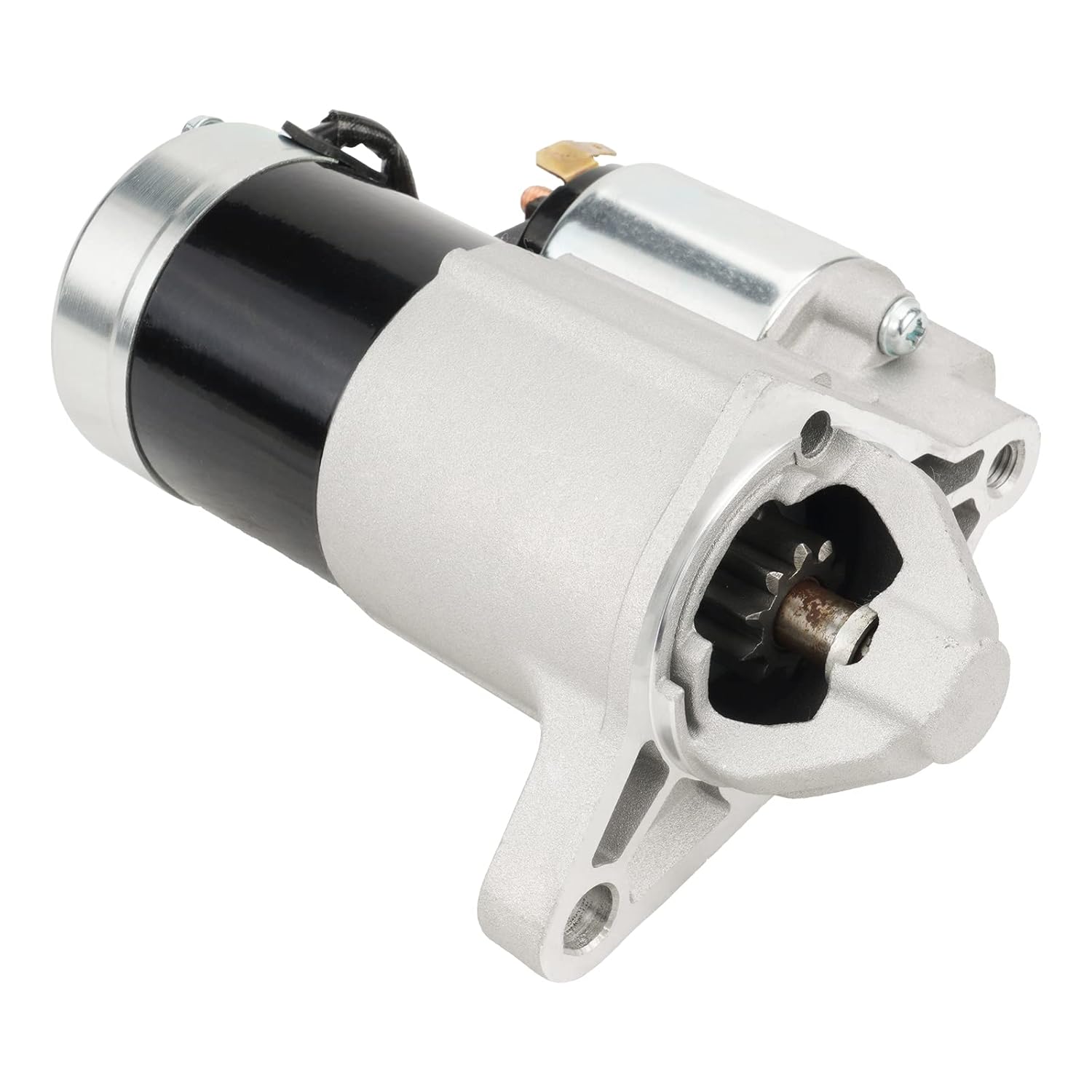
There are two wires attached to the back of the starter solenoid:
- The B+ Terminal: This is the thick red cable held on by a 13mm nut. Remove the nut and pull the cable off the stud.
- The S-Terminal (Signal Wire): This is the smaller wire that tells the starter to engage. It is usually held by a small 8mm or 10mm nut, though some 2004 models utilize a plastic "spade" connector that snaps on. Be gentle with these plastic clips, as they become brittle with age.
Step 3: Remove the Mounting Bolts
The starter is secured to the bellhousing by two bolts.
- The Bottom Bolt: Usually a 15mm bolt. This is easily removed with a standard socket.
- The Top Bolt: Also a 15mm bolt, but it is often tucked away where visibility is poor. Use a long extension and go "over" the body of the starter to reach it.
Pro Tip: Hold the starter with one hand while removing the final few threads of the second bolt. The unit is heavy (approximately 10–15 lbs) and can cause injury or damage the remaining threads if it falls abruptly.
Step 4: Extracting the Unit
Wiggle the starter forward toward the front of the vehicle until the "nose" of the starter clears the bellhousing. You may need to rotate the unit 90 degrees to find the "sweet spot" that allows it to drop down between the frame rail and the engine block.
Step 5: Preparing the New Starter
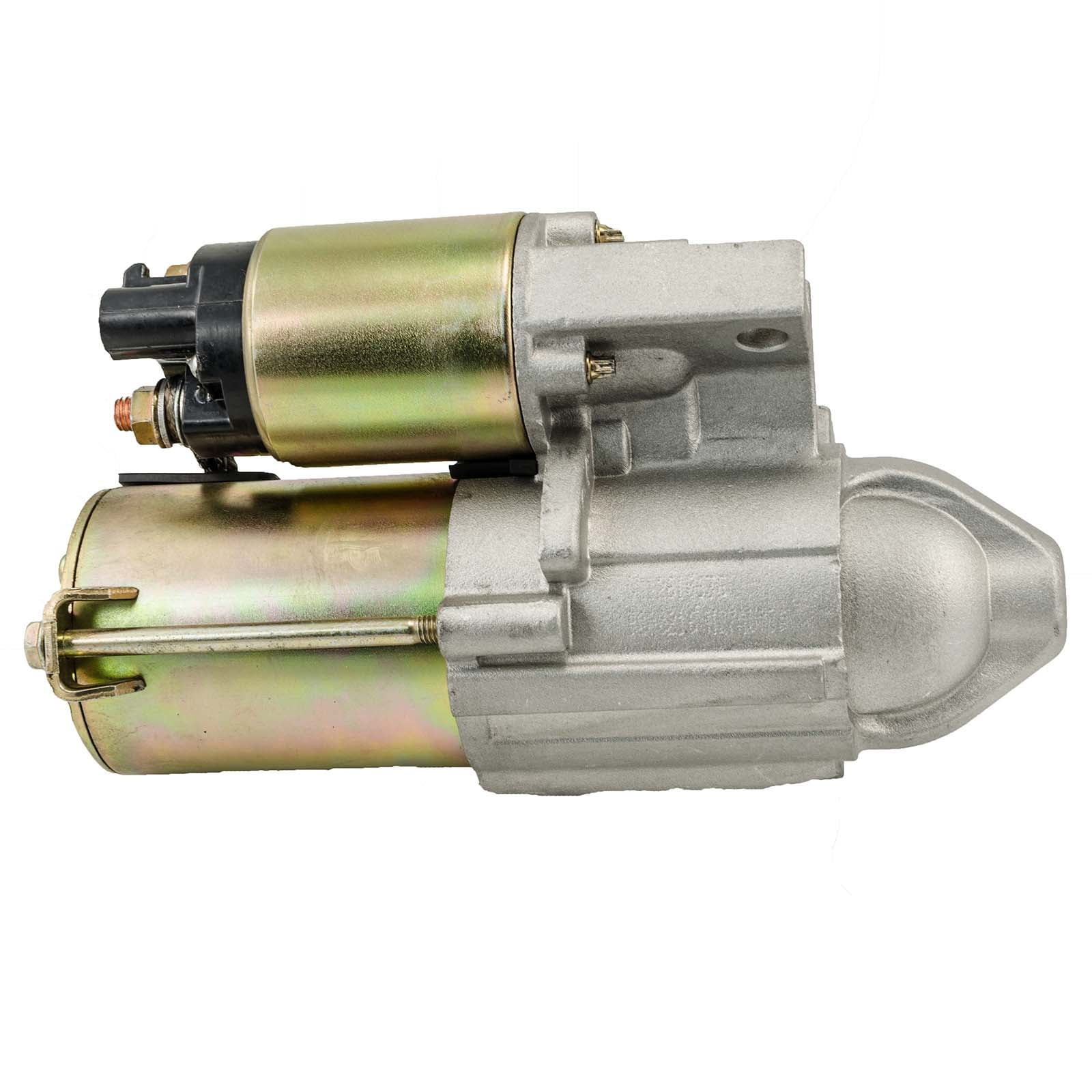
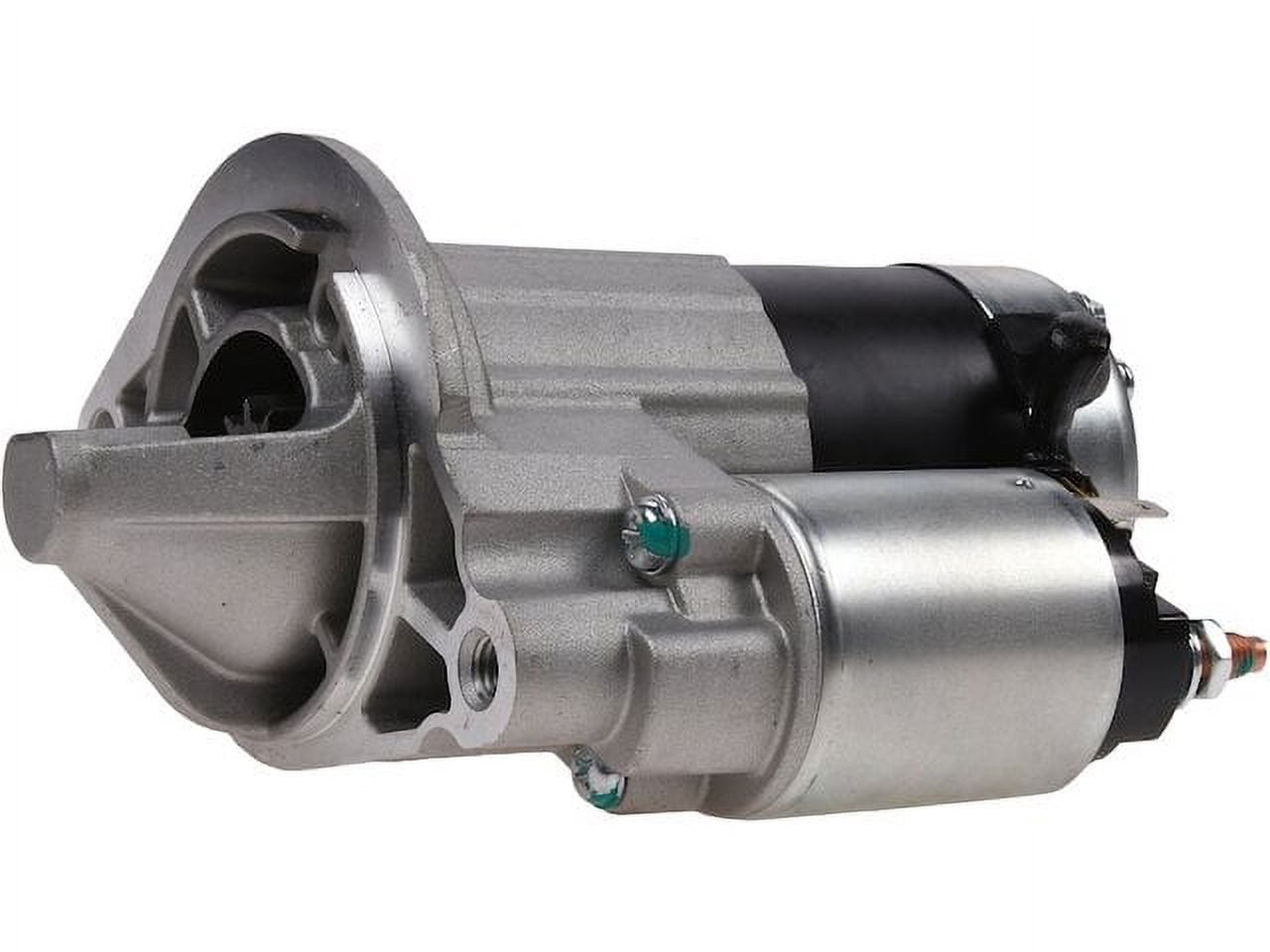
Before installing the new unit, compare it to the old one. Ensure the mounting holes align and the gear on the nose matches the tooth count of the original. Use a wire brush to clean the copper eyelets on your vehicle's wiring harness. Clean contacts ensure maximum current flow and prevent future "no-start" conditions.
Step 6: Installation
- Lift the new starter into position and slide the nose into the bellhousing.
- Hand-thread both mounting bolts first to ensure they are not cross-threaded.
- Tighten the mounting bolts to approximately 30-40 ft-lbs.
- Reattach the electrical leads. Connect the thick B+ cable first, followed by the smaller signal wire. Do not over-tighten the small nut on the solenoid, as the internal plastic can crack.
- Reconnect the negative battery terminal.
Starter Replacement Technical Specifications
| Feature | 4.0L Inline-6 Specification | 4.7L V8 Specification |
|---|---|---|
| Starter Location | Passenger Side (Lower) | Passenger Side (Lower) |
| Mounting Bolt Size | 15mm | 15mm |
| Mounting Torque | 33 ft-lbs (45 Nm) | 40 ft-lbs (54 Nm) |
| B+ Nut Size | 13mm | 13mm |
| S-Terminal Type | Nut or Clip | Snap-on Clip (typically) |
| Approx. DIY Time | 45 - 60 Minutes | 60 - 90 Minutes |
2026 Cost and Parts Analysis
In 2026, parts for the WJ Grand Cherokee remain widely available through major retailers and specialty Jeep vendors.
- Remanufactured Units: These typically cost between $120 and $160. They are a cost-effective choice but ensure they come with a lifetime warranty, as quality can vary between rebuilders.
- New OEM/Premium Units: Brands like Bosch or Mopar may cost between $210 and $280. These are recommended if you plan on keeping the vehicle for several more years or using it for demanding off-road tasks.
- Professional Labor: If you choose to have a shop perform the replacement, expect to pay for 1.5 to 2 hours of labor. At current 2026 rates, this translates to roughly $250 to $400 in labor costs, bringing the total bill to approximately $400–$650.
Troubleshooting New Installation Issues
If you install the new starter and the vehicle still fails to start, check the following:
- The Battery Terminals: Ensure the battery clamps are tight and free of corrosion. Even a slightly loose negative terminal can prevent the high-amperage draw required by a new starter.
- The Engine Ground: The starter relies on the engine block for its ground. If your engine-to-chassis ground strap is frayed or corroded, the starter will not function correctly.
- The Neutral Safety Switch (NSS): If the Jeep starts in "Neutral" but not "Park," the issue is likely the NSS on the transmission, not the starter.
Frequently Asked Questions
Can I "tap" the starter to get it to work one last time?
Yes, this is a common emergency tactic. Lightly tapping the starter motor body with a hammer or a heavy wrench can sometimes jar the internal brushes into making contact. However, this is a sign of imminent total failure and should only be used to get the vehicle to a location where it can be repaired.
Do I need to remove the skid plates to reach the starter?
Most 2004 Grand Cherokees do not require skid plate removal for starter access. However, if your Jeep is equipped with aftermarket armor or the Up-Country suspension group, you may find that a transfer case or engine skid plate partially obstructs your arm's reach.
Why does my new starter make a high-pitched grinding noise?
This usually indicates that the starter is not shimmed correctly or is misaligned in the bellhousing. While Jeep starters typically do not require shims, debris trapped between the starter mounting surface and the bellhousing can cock the unit at an angle, preventing proper gear mesh with the flexplate.
Is there a difference between the 2WD and 4WD starters?
No, the starter units are generally the same regardless of the drivetrain configuration. The primary difference lies in the ease of access; 4WD models have a front driveshaft that can slightly restrict the space available to maneuver the unit out of the engine bay.
Should I replace the battery at the same time?
It is not mandatory, but because a failing starter often puts immense strain on a battery, it is wise to have the battery "load tested" at an auto parts store. In 2026, most retailers provide this testing for free.
Final Recommendation
For the 2004 Jeep Grand Cherokee, the starter is a high-wear item that typically lasts 120,000 to 150,000 miles. If your vehicle is approaching this mileage and exhibiting intermittent starting issues, proactive replacement is advised. When purchasing a replacement, prioritize a unit with a strong warranty and always ensure your electrical grounds are clean and secure to protect your new investment.
Image Gallery