Watermelon Kcal in the Daily Diet: Caloric Density, Nutrition, and Weight Management
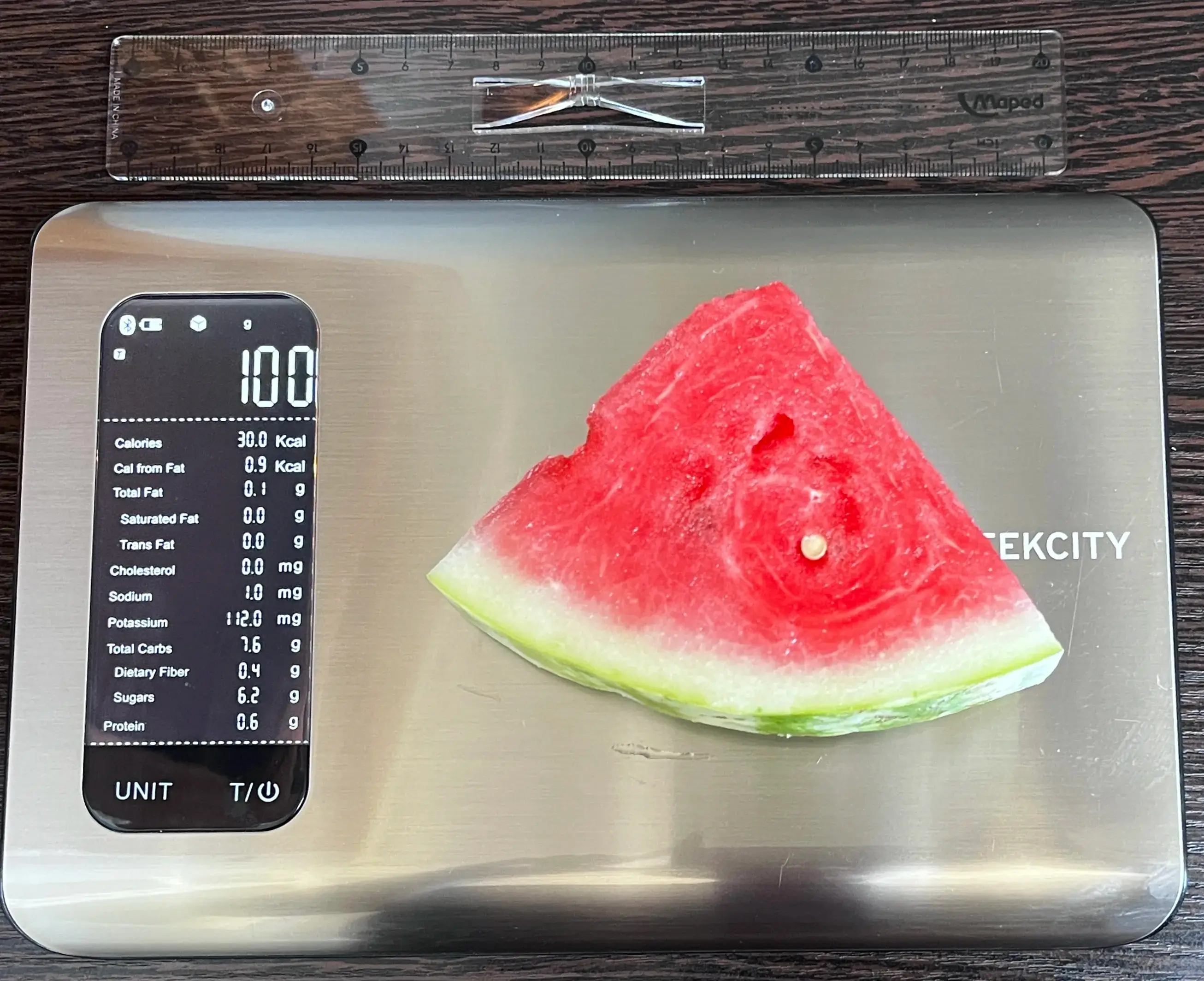
Watermelon contains approximately 30 calories (kcal) per 100 grams, or about 46 calories per cup of diced fruit (154g). Because it is composed of over 91% water, watermelon provides exceptionally low energy density, making it an ideal...
Watermelon contains approximately 30 calories (kcal) per 100 grams, or about 46 calories per cup of diced fruit (154g). Because it is composed of over 91% water, watermelon provides exceptionally low energy density, making it an ideal choice for volume eating, hydration, and weight management when consumed in appropriate daily portions.
Contents
Understanding Watermelon’s Caloric Profile and Energy Density
When planning a daily caloric budget, understanding food volume relative to energy yield is critical. Watermelon (Citrullus lanatus) is classified as a low-energy-density food due to its exceptionally high water content. A standard 100-gram serving delivers roughly 30 kcal, making it one of the lowest-calorie fruits available in human nutrition.
Energy density refers to the number of calories per unit weight of food (typically kcal per gram). Foods with low energy density allow individuals to consume a larger physical volume of food while maintaining a restricted caloric intake. Watermelon achieves this low caloric density because water contributes zero calories while accounting for 91.4% of the fruit’s total weight.
To contextualize these numbers across common household measurements:
- 100 grams: ~30 kcal
- 1 cup of diced watermelon (154 grams): ~46 kcal
- 1 small wedge (1/16th of a medium melon, approx. 286 grams): ~86 kcal
- 1 large wedge (approx. 434 grams): ~130 kcal
Because of this profile, adding a generous portion of watermelon to your daily diet adds negligible energy compared to denser fruits like bananas (89 kcal per 100g) or avocados (160 kcal per 100g). However, because watermelon is easy to consume in large quantities, monitoring total intake remains important for precise macro tracking.
Detailed Nutritional Breakdown: Beyond the Calories
While calories determine energy balance, macronutrients and micronutrients dictate metabolic health, satiety, and physiological function. Watermelon offers a rich spectrum of bioavailable nutrients alongside its hydrating properties.
Macronutrient Distribution
A 100-gram serving of raw watermelon yields the following average macronutrient profile:
- Total Carbohydrates: 7.55 g
- Dietary Fiber: 0.4 g
- Total Sugars: 6.2 g (consisting of fructose, glucose, and sucrose)
- Protein: 0.61 g
- Total Fat: 0.15 g
The carbohydrates in watermelon are primarily simple sugars, predominantly fructose. Fiber content is relatively modest at 0.4 grams per 100 grams, meaning watermelon digests rapidly compared to fiber-dense berries or apples.
Key Micronutrients and Bioactive Compounds
Beyond basic macronutrients, watermelon delivers significant functional compounds:
- Lycopene: Watermelon is one of the richest plant sources of lycopene, a carotenoid antioxidant responsible for its red pigmentation. Watermelon contains up to 4,532 micrograms of lycopene per 100 grams—often exceeding raw tomatoes by 40%. Lycopene plays a recognized role in neutralizing free radicals and supporting cardiovascular health.
- L-Citrulline: Watermelon is the premier dietary source of L-citrulline, a non-essential amino acid. In the body, L-citrulline is converted into L-arginine, a precursor to nitric oxide. Nitric oxide promotes vasodilation, aiding blood pressure regulation, arterial flexibility, and exercise-induced blood flow.
- Vitamin C (Ascorbic Acid): A 100-gram portion provides roughly 8.1 mg of Vitamin C (about 9–10% of the daily recommended intake), supporting immune defense and collagen synthesis.
- Vitamin A (from Beta-Carotene): Offers approximately 28 mcg of RAE (Retinol Activity Equivalents), essential for ocular health and cellular differentiation.
- Potassium: Containing around 112 mg per 100 grams, watermelon acts as a mild dietary electrolyte, supporting intracellular fluid balance and neuromuscular conduction.
Watermelon’s Impact on Blood Sugar: Glycemic Index vs. Glycemic Load
A common point of confusion when integrating watermelon into a daily diet is its impact on blood glucose levels. Watermelon has a high Glycemic Index (GI) of roughly 72 to 76 out of 100. A high GI indicates that the carbohydrates present in the food convert to blood glucose rapidly upon digestion.
However, GI alone can be misleading because it measures carbohydrate quality without accounting for portion size or overall carbohydrate concentration. To evaluate real-world metabolic impact, nutritionists utilize Glycemic Load (GL), calculated as:
$$\text{Glycemic Load} = \frac{\text{Glycemic Index} \times \text{Net Carbohydrates per Serving (g)}}{100}$$
For a typical 120-gram serving of watermelon:
- Net Carbohydrates = ~9 grams
- $\text{GL} = \frac{72 \times 9}{100} = 6.48$
A Glycemic Load score below 10 is classified as low. Therefore, despite its high GI, watermelon has a low Glycemic Load of approximately 5 to 7 per standard serving. This low GL occurs because 91% of the fruit is water, leaving very little actual sugar by weight to alter systemic blood glucose dramatically under normal consumption levels. Individuals managing type 2 diabetes or insulin resistance can generally include moderate portions of watermelon without triggering severe glucose spikes.
Serving Sizes, Caloric Content, and Macronutrient Profile
To simplify daily meal planning, the following table details the nutritional values of watermelon across standardized serving sizes based on official USDA food composition databases.
| Portion Size | Weight (g) | Energy (kcal) | Water (g) | Carbohydrates (g) | Sugars (g) | Fiber (g) | Potassium (mg) |
|---|---|---|---|---|---|---|---|
| 100 Grams (Baseline) | 100 g | 30 kcal | 91.4 g | 7.6 g | 6.2 g | 0.4 g | 112 mg |
| 1 Cup (Diced) | 154 g | 46 kcal | 140.8 g | 11.6 g | 9.5 g | 0.6 g | 172 mg |
| 1 Cup (Balls) | 157 g | 47 kcal | 143.5 g | 11.9 g | 9.7 g | 0.6 g | 176 mg |
| 1 Small Wedge (1/16 melon) | 286 g | 86 kcal | 261.4 g | 21.6 g | 17.7 g | 1.1 g | 320 mg |
| 1 Medium Wedge (1/8 melon) | 572 g | 172 kcal | 522.8 g | 43.2 g | 35.5 g | 2.3 g | 641 mg |
How Watermelon Fits Into Different Caloric and Dietary Frameworks
Because of its low caloric density and specific macronutrient ratios, watermelon performs differently across various dietary strategies.
- DAILY DIETARY FITTING
- Calorie Deficit Diets: High Volume / Low Energy Density
- Athletic Performance: Rapid Glycogen Recovery & L-Citrulline
- Ketogenic Diets: Strict Portion Control Required
1. Weight Loss and Calorie Deficit Plans
In calorie-restricted diets, hunger management (satiety) is often the primary barrier to long-term adherence. Watermelon excels in volume eating strategies. Consuming 300 grams of watermelon provides a substantial physical volume in the stomach for under 100 kcal, triggering stretch receptors that signal fullness to the brain. Replacing energy-dense snacks (such as chips or baked goods) with watermelon significantly reduces daily net caloric intake while preserving satisfaction.
2. Athletic Performance and Intra-Workout Hydration
For active individuals, watermelon serves as a natural, low-calorie rehydration food. Its sodium, potassium, and magnesium content—combined with naturally occurring glucose—helps replenish glycogen stores and restore electrolyte balance after exercise. Furthermore, the L-citrulline in watermelon can support reduced muscle soreness and improved endothelial function when consumed regularly around training sessions.
3. Ketogenic and Strict Low-Carb Diets
On a strict ketogenic diet (typically limiting net carbohydrates to 20–50 grams per day), watermelon must be handled with caution. A single cup of diced watermelon contains roughly 11 grams of net carbohydrates. While it can technically fit into a daily low-carb allocation in small portions (e.g., 50–75 grams), it consumes a large fraction of a ketogenic daily carbohydrate limit relative to fiber-dense leafy greens.
Potential Drawbacks, FODMAPs, and Upper Intake Limits
While watermelon is healthy for the vast majority of the population, overconsumption or specific health conditions warrant consideration:
- FODMAP Sensitivities: Watermelon contains significant amounts of fructose and polyols (sorbitol). In individuals with Irritable Bowel Syndrome (IBS) or fructose malabsorption, consuming large servings can cause gastrointestinal distress, including bloating, gas, and abdominal cramps.
- Hyperkalemia and Renal Considerations: Individuals with end-stage renal disease (ESRD) or severe chronic kidney disease (CKD) must strictly monitor their potassium intake. While watermelon is not as high in potassium as bananas or potatoes, consuming half a melon can accumulate substantial potassium loads.
- Passive Caloric Accumulation: Because watermelon is refreshing and easy to eat, it is common to consume 500 to 1,000 grams in a single sitting without realizing it. A 1,000-gram portion equals 300 kcal and 62 grams of sugar. While still lower in calories than processed snacks, this unmeasured consumption can erode a targeted calorie deficit.
Practical Strategies to Optimize Watermelon Intake
To maximize satiety and maintain stable blood glucose levels, consider pairing watermelon with complementary macronutrients. Combining simple carbohydrates with proteins or healthy fats slows gastric emptying, prolonging satiety and blunting the glycemic response.
Optimal Pairing Ideas
- Feta and Mint Salad: Pairing diced watermelon with rich feta cheese adds sodium, protein, and dietary fat, balancing the sweetness and creating a balanced snack.
- Greek Yogurt Bowl: Top plain 0% or 2% Greek yogurt with cubed watermelon and chia seeds for a high-protein, hydration-focused post-workout meal.
- Protein Smoothie Enhancer: Blend 150 grams of watermelon with unflavored or vanilla whey protein isolate and ice. The high water content eliminates the need for liquid bases while keeping energy low.
- Pre-Workout Hydration Cubes: Blend watermelon, freeze it into ice trays, and add the cubes to water before training for an amino-acid-rich hydration boost.
Frequently Asked Questions
How many kcal are in a full cup of diced watermelon?
One cup of diced watermelon (154 grams) contains approximately 46 calories (kcal). It also delivers 11.6 grams of carbohydrates, 9.5 grams of sugar, and over 140 grams of water.
Can I eat watermelon every day when trying to lose weight?
Yes. Watermelon is low in calories and high in water, making it well-suited for daily consumption during a weight-loss phase. To ensure progress, track your portions accurately so the simple sugars and calories align with your overall daily deficit goals.
Does watermelon cause a sharp spike in blood sugar?
While watermelon has a high Glycemic Index (around 72), its Glycemic Load is low (around 5 to 7 per standard serving) due to its high water content. For healthy individuals and most people managing diabetes, moderate portions do not cause dramatic blood sugar spikes, especially when consumed as part of a meal containing protein or fat.
Is watermelon suitable for a low-carb or ketogenic diet?
Watermelon can fit into a low-carb diet in small amounts, but it requires strict portion management on a ketogenic diet. One cup contains roughly 11 grams of net carbohydrates, which can quickly consume a daily ketogenic carbohydrate limit of 20 to 30 grams.
What is the best time of day to eat watermelon?
Watermelon is versatile and can be eaten at any time. It works exceptionally well as a mid-morning or mid-afternoon snack to maintain hydration, or within 30 to 60 minutes before or after exercise to provide light carbohydrates and L-citrulline for muscle recovery.
Final Recommendation
Integrating watermelon into your daily diet is an efficient strategy for boosting hydration, satisfying sweet cravings, and supplying valuable micronutrients like lycopene and Vitamin C without overloading your daily calorie balance. For weight management, measure portions in grams or cups rather than eating straight from the fruit to keep your total intake transparent. Pair watermelon with lean protein or healthy fats when possible to prolong satiety and optimize metabolic response.
Image Gallery