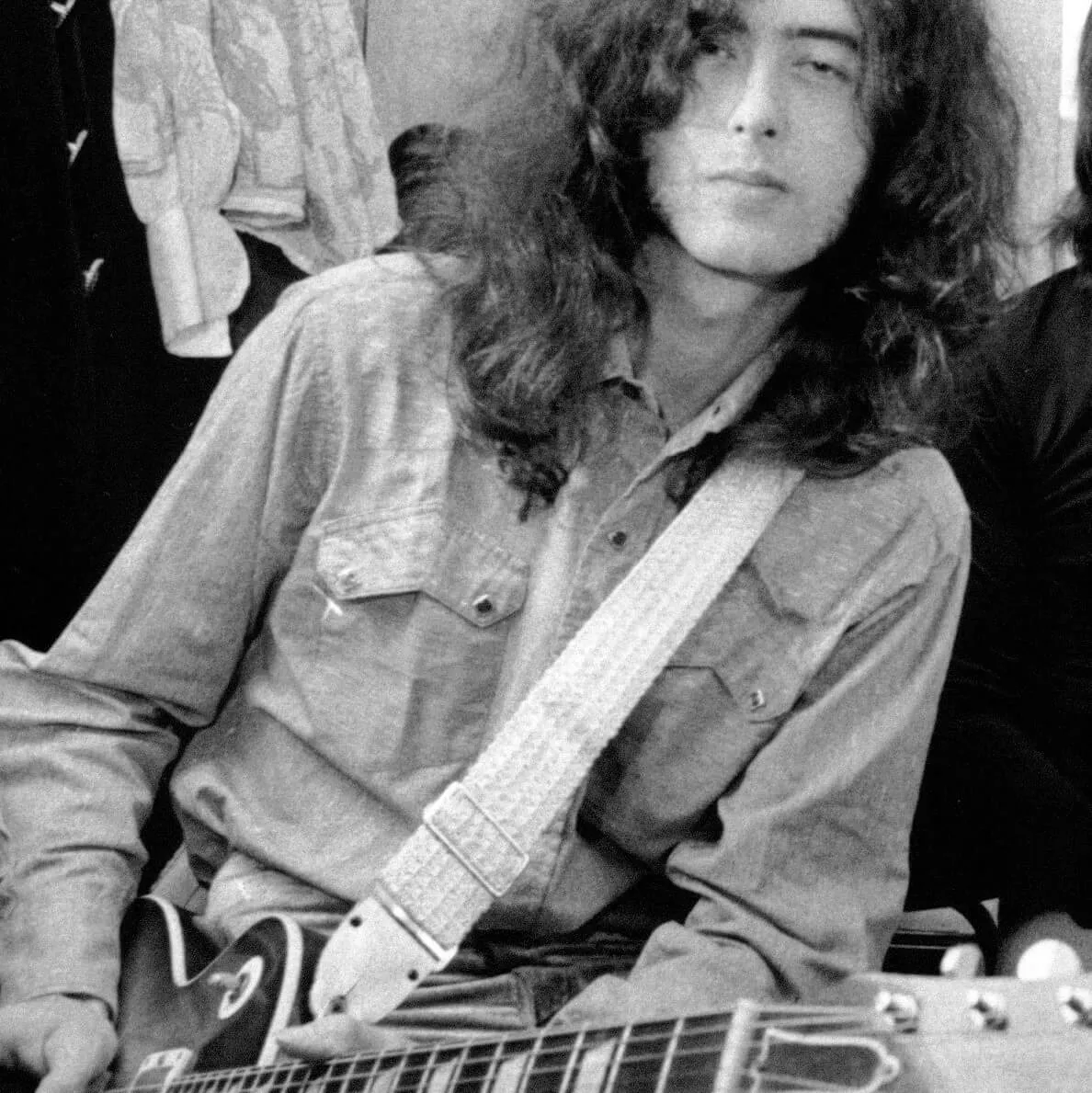
Exploring Jimmy Page Young Photos: A Visual History of the Led Zeppelin Architect
Jimmy Page young photos document the visual evolution of rock’s most influential architect, spanning from his 1957 skiffle debut on British television to the formation of Led Zeppelin in 1968. These archives showcase his transition fro...
Jimmy Page young photos document the visual evolution of rock’s most influential architect, spanning from his 1957 skiffle debut on British television to the formation of Led Zeppelin in 1968. These archives showcase his transition from a clean-cut session prodigy in the early 1960s to the velvet-clad, bow-wielding guitar icon who defined the aesthetic of 1970s stadium rock.
Contents
The Formative Years: Skiffle and Childhood (1950s)
The earliest and perhaps most famous "young Jimmy Page" visual record dates back to 1957. A thirteen-year-old Page appeared on the BBC programme All Your Own, hosted by Huw Wheldon. In these grainy black-and-white stills and film clips, Page is seen as a slender, earnest schoolboy playing a Hofner President acoustic guitar. He was part of a skiffle group, a genre that dominated British youth culture before the advent of the beat group era.
These photos are significant because they capture the "pre-fame" Page, who expressed a desire to pursue "biological research" before music fully took over his life. The visual contrast between this polite, short-haired adolescent and the "Dark Lord" persona he would later adopt is a cornerstone of rock hagiography. Collectors often look for these specific frames to witness the literal birth of a legend.
The Session Musician Era: The "Suit and Tie" Page (1963–1966)
By the early 1960s, Jimmy Page had become one of the most sought-after session guitarists in London. Photography from this era is markedly different from his later rock-star imagery. In these photos, Page is often seen in professional recording environments like Decca Studios or Abbey Road.
- Visual Style: He typically wore sharp, mod-inspired suits, often with a thin tie and a neatly coiffed, though slightly longer, hairstyle.
- The Gear: Images from this period frequently feature him with his 1960 Gibson Les Paul Custom "Black Beauty" (which was famously stolen in 1970) or various semi-hollow body guitars used for commercial jingles and pop recordings.
- The Context: You will find Page in the background of photos featuring The Who, The Kinks, or Marianne Faithfull. He was a professional technician of the guitar, and the photography reflects a disciplined, studious young man immersed in the craft of studio production.
This era provides a "missing link" for fans. While he was playing on massive hits like "You Really Got Me," he remained a ghost in the machine. Photographers of the era, often capturing the lead singers, occasionally caught Page in the periphery, providing a candid look at the rigorous work ethic that would later inform his production of Led Zeppelin’s albums.
The Yardbirds and the Birth of a Guitar Hero (1966–1968)
When Jimmy Page joined The Yardbirds—initially on bass before switching to lead guitar alongside Jeff Beck—his visual identity underwent a radical shift. This is the era where "Jimmy Page young photos" begin to align with the psychedelic explosion of Swinging London.
Photos from 1966 to 1968 show Page embracing the flamboyant fashion of Carnaby Street. He is seen in ruffled shirts, ornate waistcoats, and military jackets. His hair grew into the iconic dark curls that would define his look for decades. This period is also where the "Guitar Hero" poses began to emerge. Photographers like Gered Mankowitz captured Page in high-contrast black and white, emphasizing the angularity of his frame and the intensity of his performance.
It was during his time with The Yardbirds that the famous "Dragon Telecaster" (a 1959 Fender Telecaster with a hand-painted dragon design) first appeared in photos. These images are highly sought after by guitar historians because they document the specific modifications Page made to his instruments as he began experimenting with the textures and feedback that would characterize the early Zeppelin sound.
The Early Led Zeppelin Era: 1968–1971
The transition from the "New Yardbirds" to Led Zeppelin marks the peak of interest in young Jimmy Page photography. Between the ages of 24 and 27, Page curated a look that was both mystical and aggressively masculine.
Images from the 1969 American tours are particularly iconic. Photographers like Robert Knight and Baron Wolman captured Page in his prime, often wearing high-waisted velvet trousers and embroidered tunics. These photos document the first appearances of the 1959 Gibson Les Paul Standard (bought from Joe Walsh) and the use of the cello bow during "Dazed and Confused."
| Period | Primary Aesthetic | Key Instruments Pictured | Primary Photographer(s) |
|---|---|---|---|
| 1957–1959 | Skiffle / Schoolboy | Hofner President | BBC Archive Stills |
| 1963–1966 | Studio Session / Mod | Gibson Les Paul Custom | Various Studio Staff |
| 1966–1968 | Psychedelic / Yardbirds | Fender "Dragon" Telecaster | Gered Mankowitz |
| 1969–1972 | Early Led Zeppelin | '59 Gibson Les Paul Standard | Robert Knight, Baron Wolman |
How to Verify and Access Authentic Young Jimmy Page Photos
As of 2026, the market for rock photography has become highly digitalized, but physical prints remain the gold standard for collectors. When searching for or purchasing authentic photos of a young Jimmy Page, several technical factors should be considered to ensure historical accuracy and value.
1. Identify the Photographer
Authentic prints are usually attributed to specific photographers who had access to the band. For the Yardbirds and early Zeppelin era, look for names like:
- Gered Mankowitz: Known for the "Between the Buttons" era of the Stones and early Page studio shots.
- Baron Wolman: The first chief photographer for Rolling Stone magazine.
- Chuck Boyd: Documented the 1960s Los Angeles music scene where Zeppelin frequently toured.
- Chris Dreja: A fellow Yardbird who took many candid photos of Page during their tours.
2. Check the "Provenance" of Digital Archives
If you are searching for high-resolution digital versions, reputable archives are essential. The Jimmy Page Official Website often features a "On This Day" section that includes rare, high-quality photos from his personal archives. Other professional sources include:
- Getty Images: Holds the rights to many editorial photos from the 1960s and 70s.
- Morrison Hotel Gallery: Specializes in fine art music photography and often hosts exhibitions featuring Page.
- The British Library: Holds archives of early televised performances and related press photography.
3. Watch for "AI-Enhanced" vs. Original Film Grain
In the current 2026 landscape, many photos circulating online have been "upscaled" using artificial intelligence. While these may look sharp, they often lose the authentic texture of the original 35mm film. Historical collectors prioritize original scans that preserve the natural grain and lighting of the era. Authentic 1960s photography typically has a specific depth of field and color palette (if using Kodachrome or Ektachrome) that AI often struggles to replicate perfectly.
The Significance of Visual Evolution
The fascination with young Jimmy Page photos isn't merely about nostalgia; it is about tracking the development of a producer's mind. Page didn't just play the guitar; he staged it. Every era of his youth shows a deliberate choice in how he presented himself in relation to his instrument.
From the "working man" session player to the "occult-tinged" rock star, the photography serves as a visual biography of his shifting ambitions. For instance, the transition from the thin, clean tones of the Telecaster (seen in Yardbirds photos) to the thick, heavy presence of the Les Paul (seen in Zeppelin photos) is mirrored by his shift from slim-fit suits to expansive, stage-filling costumes.
Frequently Asked Questions
Where can I find the photo of Jimmy Page with the violin bow?
The first photos of Page using a violin bow date back to his late session days and his time with The Yardbirds (circa 1966-1967). However, the most famous "young" photos of this technique were taken during Led Zeppelin's 1969-1970 tours. You can find high-quality versions in the Led Zeppelin by Led Zeppelin 50th-anniversary book or via the Getty Images editorial archive.
Did Jimmy Page have short hair in his early career?
Yes. During his time as a session musician from 1963 to roughly 1965, Page maintained a standard professional "Mod" haircut, which was relatively short compared to the long, flowing curls he became known for in the 1970s. Photos from the Decca studio sessions clearly show this "clean-cut" look.
Is there a photo book dedicated to Jimmy Page’s youth?
The most comprehensive source is Jimmy Page’s own photographic autobiography, Jimmy Page by Jimmy Page, published by Genesis Publications. It contains hundreds of images hand-selected by Page, many of which date back to his childhood and early session career.
What is the most expensive Jimmy Page photo ever sold?
Signed, limited-edition prints by photographers like Gered Mankowitz or Baron Wolman can fetch thousands of dollars at auction. In 2026, original prints from the 1969 "Led Zeppelin I" era are particularly valuable due to their rarity and the historical weight of the band's debut.
How can I tell if a photo of young Jimmy Page is real or fake?
Check the equipment. Page was very specific about his gear. If you see a photo claiming to be from 1964 but he is playing a guitar or using an amp that wasn't manufactured until 1970, it is likely a mislabeled photo or a composite. Cross-referencing the guitar model with his known history is the best way to verify the date of a "young" photo.
Recommendations for Collectors and Fans
For those looking to explore "Jimmy Page young photos" deeply, start by visiting the Jimmy Page official website and navigating to the "On This Day" archive. This provides the most accurate dates and contexts for his early images. If you are a collector, prioritize purchasing through established galleries like the Morrison Hotel Gallery or Snap Galleries, as they provide certificates of authenticity for physical prints. For casual fans, the 2014 and 2020 editions of his autobiography remain the definitive visual records of his legendary career.
Image Gallery