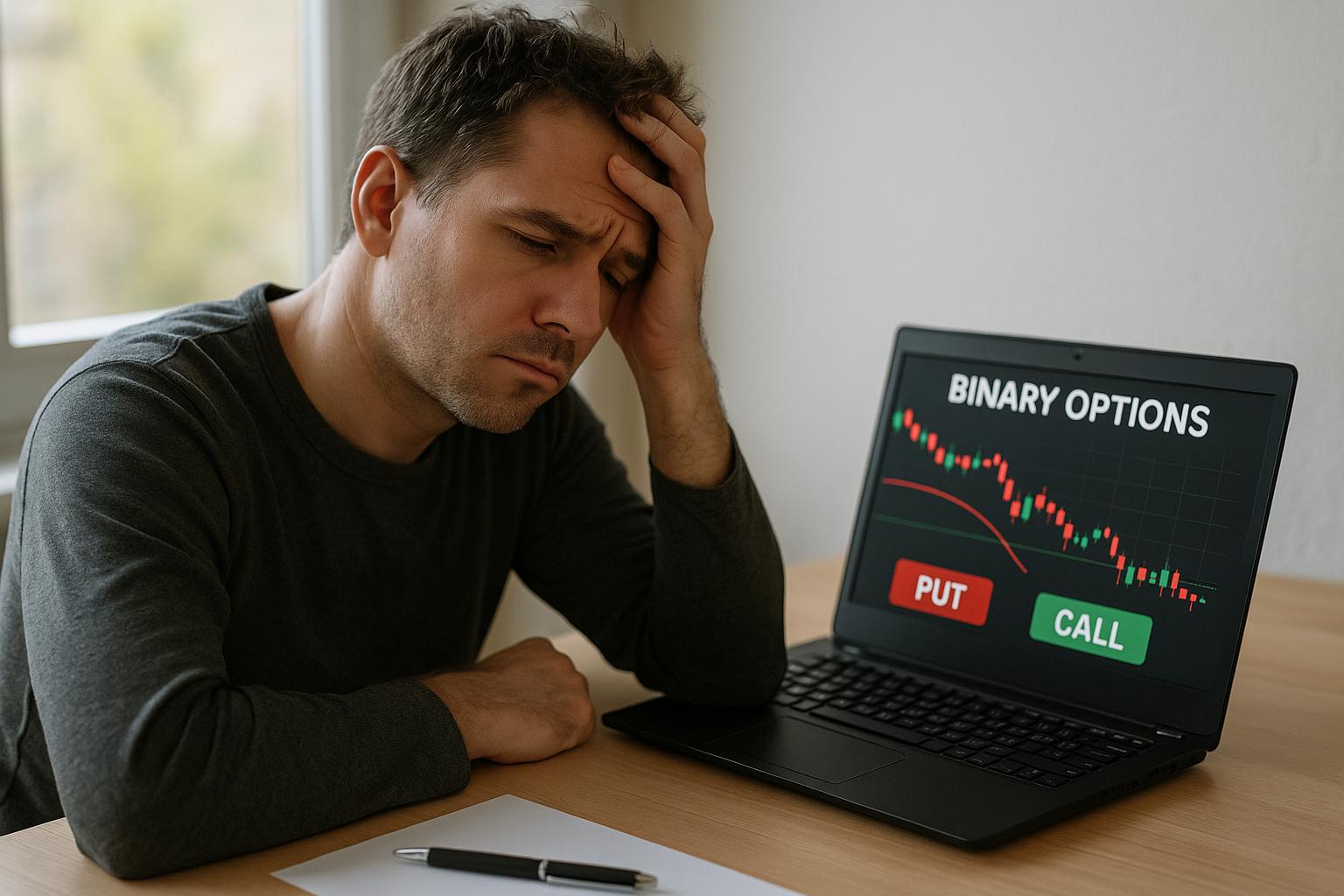
Do You Want to Take a Trade? A Comprehensive Guide to Professional Entry Execution
Deciding whether to take a trade is the critical junction where market analysis meets psychological discipline. It requires a systematic verification of your technical setup, a strict adherence to risk management protocols, and a clear...
Deciding whether to take a trade is the critical junction where market analysis meets psychological discipline. It requires a systematic verification of your technical setup, a strict adherence to risk management protocols, and a clear-headed assessment of your emotional state. Entering a position is a professional commitment, not a speculative impulse.
Contents
The Anatomy of the Decision: Strategy Over Impulse
The question "do you want to take a trade" often arises during periods of market volatility when price action becomes enticing. However, professional trading in 2026 relies on a binary "Yes/No" framework based on pre-defined criteria rather than a subjective "want." To navigate the modern financial landscape, which is heavily influenced by high-frequency algorithms and AI-driven sentiment shifts, a trader must distinguish between a high-probability setup and a psychological trap.
A "trade" is essentially a business transaction. Like any business deal, it requires a cost-benefit analysis. The "cost" is your risk capital—the amount you are willing to lose if the thesis is wrong. The "benefit" is the projected profit target based on historical technical patterns or fundamental shifts. If the relationship between these two factors does not meet your minimum requirements, the answer to whether you should take the trade is always a definitive no.
The Evolution of Trading in 2026
By 2026, the retail trading environment has shifted toward data-centric execution. Traditional technical analysis—such as support and resistance—remains foundational, but it is now frequently augmented by real-time flow data and institutional liquidity tracking. When you ask yourself if you want to take a trade, you are no longer just looking at a chart; you are assessing where your order fits within the current liquidity cycle.
Prerequisites: What Must Be Present Before Execution
Before the "Buy" or "Sell" button becomes an option, several structural elements must be in place. Attempting to trade without these prerequisites is akin to driving a vehicle without a braking system.
1. A Verified Trading Plan
A trading plan is a written document that dictates exactly what conditions must be met for an entry. This includes the specific timeframe (e.g., 15-minute for entries, Daily for trend), the specific instruments (e.g., EUR/USD, S&P 500 E-minis, or specific Equities), and the technical indicators or price action patterns required. In 2026, most successful traders utilize back-tested models that provide a statistical "edge"—a proven higher probability of one outcome over another.
2. Risk Capital Allocation
You should only take a trade if the capital being used is "risk capital." This is money that, if lost, will not alter your standard of living or your ability to meet financial obligations. The psychological pressure of trading with "scared money" (money needed for rent or essentials) almost inevitably leads to poor decision-making, such as pulling profits too early or letting losses run too long.
3. Defined Risk-to-Reward Ratio (R:R)
Professional standards in 2026 generally demand a minimum risk-to-reward ratio of 1:2. This means for every $100 you risk, you aim to make $200. Maintaining a positive R:R allows a trader to be wrong more than 50% of the time and still remain profitable. If a potential trade offers a 1:1 ratio or less, it is mathematically disadvantageous to take it over a long series of trades.
Technical Validation: The "How" of Taking a Trade
Once the prerequisites are met, the actual decision to enter depends on technical validation. This is the process of ensuring that the market structure confirms your bias.
Identifying the Setup
The setup is the broad context. For example, if the market is in a clear uptrend (making higher highs and higher lows), your setup is a "trend continuation" play. If the market is hitting a multi-month resistance level and showing signs of exhaustion, your setup is a "mean reversion" or "reversal" play.
Finding the Trigger
The trigger is the specific event that tells you to enter now. Common triggers in 2026 include:
- Candlestick Patterns: A bullish engulfing or a pin-bar at a key level.
- Volume Spikes: Significant institutional buying or selling entering the tape.
- Indicator Crossovers: A momentum oscillator (like the RSI or MACD) moving out of oversold/overbought territory.
- Liquidity Grabs: Price briefly dipping below a known support level to trigger stop-losses before reversing sharply upward.
Confirmation
Confirmation is the "second opinion" from the market. This might be a lower-timeframe break of structure or a secondary indicator aligning with the primary signal. While waiting for confirmation can sometimes result in a slightly worse entry price, it significantly increases the probability that the trade will move in the intended direction.
The Psychological Component: The "Want" vs. The "Need"
The phrasing "do you want to take a trade" highlights the psychological battle inherent in trading. Human emotions are often at odds with statistical probabilities.
Overcoming FOMO (Fear of Missing Out)
FOMO is the primary reason retail traders take sub-optimal trades. When a stock or currency pair moves 2% in a few minutes, the impulse to "hop on" is powerful. However, by the time the move is visible to the masses, the optimal entry point has usually passed. Taking a trade out of FOMO usually means entering at the "top" of a move, just before a retracement occurs.
Revenge Trading
After a loss, the brain often seeks to "get the money back" immediately. This leads to taking trades that do not fit the criteria of the trading plan. Professional traders in 2026 often use "circuit breakers"—software-enforced or self-imposed rules that prevent further trading for the day after a specific loss threshold is reached.
Analysis Paralysis
Conversely, some traders find it impossible to take a trade even when all criteria are met. This is often due to a fear of being wrong. It is vital to remember that a single trade is just one data point in a series of hundreds. The goal is not to be right on every trade, but to execute the system flawlessly.
Comparative Entry Strategies
When deciding to take a trade, the method of entry is as important as the direction. The following table compares the most common execution types used in 2026.
| Entry Type | Definition | Pros | Cons |
|---|---|---|---|
| Market Order | Instant execution at the current best available price. | Guaranteed entry into the move immediately. | High risk of "slippage" and paying a wider spread. |
| Limit Order | An order to buy/sell at a specific price or better. | Precision entry; ensures you don't overpay for the position. | The market may never reach your price, leaving you behind. |
| Stop Order | Becomes a market order only once a specific price is hit. | Validates momentum; you only enter if price "breaks out." | Can be "whipsawed" if price hits the stop and immediately reverses. |
| Scaled-In Entry | Breaking the total position into smaller parts at different prices. | Averages the entry price; reduces initial emotional impact. | Increases complexity and potential commission costs. |
Managing the Trade After Entry
The decision doesn't end once the trade is "taken." Modern trade management involves active monitoring, though the level of intervention depends on the strategy.
Setting the Stop-Loss
A stop-loss is non-negotiable. It is the point at which your trade thesis is officially proven wrong. In 2026, volatility-based stops (using the Average True Range or ATR) are standard, as they account for the current "noise" in the market. Placing a stop-loss too close to the entry price often results in being "stopped out" by normal market fluctuations before the intended move occurs.
Scaling Out and Trailing Stops
To lock in profits, many traders "scale out," selling half of the position at the first profit target and moving the stop-loss to the "break-even" point. A trailing stop can then be used to capture the remainder of a large trend. This ensures that even if the market reverses, the trade results in a net gain.
Common Mistakes to Avoid
- Trading During Low Liquidity: Taking trades during "dead zones" (such as the gap between the New York close and the Asian open) often results in unpredictable price action and high spreads.
- Ignoring the Economic Calendar: In 2026, central bank digital currency (CBDC) announcements and AI-sector earnings have massive impacts. Taking a technical trade right before a major "high-impact" news event is essentially gambling on the news outcome.
- Position Over-Sizing: Taking a trade with too much leverage is the fastest way to ruin. No single trade should ever risk more than 1-2% of the total account balance.
- Neglecting the Journal: Every trade taken must be recorded. Documentation of the "why," the "how," and the emotional state during the trade is the only way to identify long-term patterns of success or failure.
Frequently Asked Questions
Is it okay to take a trade based on a "gut feeling"?
While experienced traders develop an intuition for market rhythm, a "gut feeling" should never be the sole reason for a trade. It should only act as a prompt to look for a technically valid setup that matches your written plan. If the technicals don't back up the intuition, the trade should be avoided.
How many trades should I take per day?
In the 2026 trading environment, quality vastly outperforms quantity. Many professional intraday traders take only 1 to 3 high-probability trades per day. "Overtrading" is a leading cause of account depletion, as it increases commission costs and increases the likelihood of taking low-quality setups out of boredom.
What should I do if I miss a perfect entry?
If the market leaves without you, do not chase the price. Chasing a move ruins your risk-to-reward ratio and forces you to place your stop-loss in a technically illogical location. Wait for a "retest" of the breakout level or move on to the next opportunity. The market provides thousands of opportunities every year.
Should I take a trade if a major news event is about to happen?
Generally, no. Large news events create "slippage," where your stop-loss might not be honored at the exact price you set because the market moves too fast. It is usually safer to wait for the initial news volatility to settle and then trade the resulting trend or reversal once the direction is established.
Does the time of day matter when taking a trade?
Absolutely. Most liquidity and volume occur during the "overlap" of major global sessions (e.g., the London and New York overlap). Taking trades outside of these high-volume windows often leads to "choppy" price action where the market moves sideways, hitting stop-losses without any clear direction.
Practical Recommendation for 2026 Traders
If you are currently asking yourself "do you want to take a trade," stop and look at your written trading plan. If the current market conditions do not check every single box on your entry checklist, the professional action is to stay in cash. In trading, "no position" is a valid and often profitable position. Your next action should be to verify the current economic calendar for any impending high-impact news and ensure your position size is calculated based on a maximum 1% risk of your current account equity. Discipline in the "entry" phase is the only factor that ensures longevity in the financial markets.
Image Gallery