Do Life Insurance Policies That Pay Dividends Make Sense for Your Financial Strategy?
Life insurance policies that pay dividends, commonly known as participating whole life insurance, can make sense for individuals seeking a combination of permanent death benefit protection, guaranteed cash value growth, and potential p...
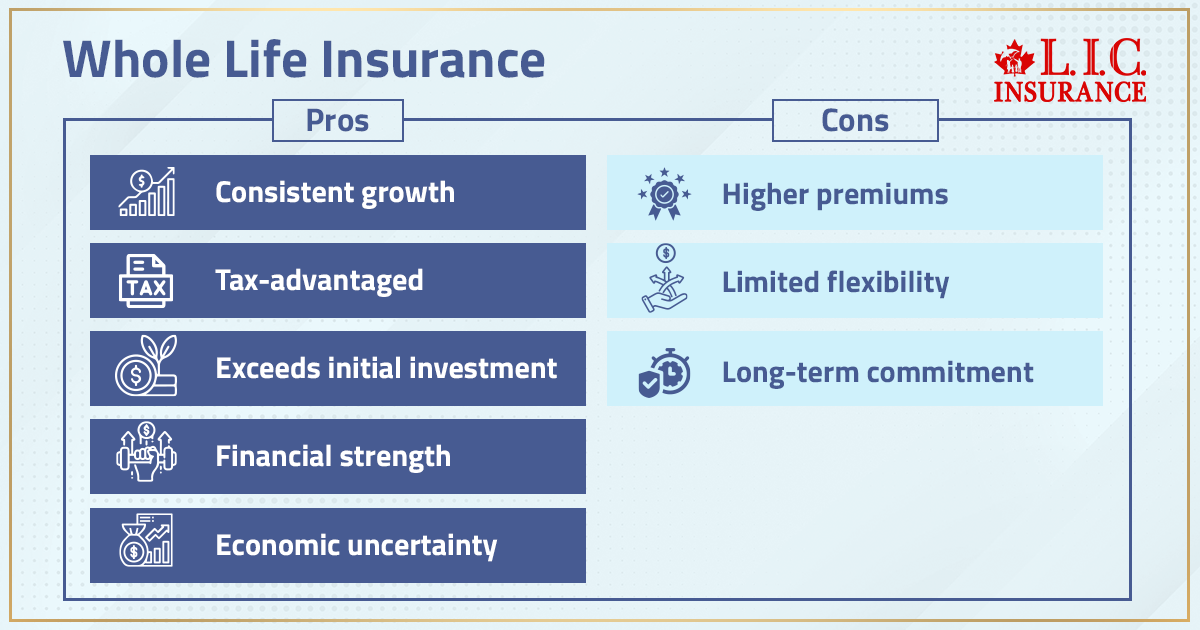
Life insurance policies that pay dividends, commonly known as participating whole life insurance, can make sense for individuals seeking a combination of permanent death benefit protection, guaranteed cash value growth, and potential profit sharing. While these policies are not designed as high-yield investment vehicles, they function as conservative, tax-advantaged financial instruments that offer stability and long-term liquidity for disciplined policyholders.
Contents
Understanding Participating Whole Life Insurance
Participating whole life insurance is a type of permanent life insurance that provides a death benefit for the entirety of the insured’s life, provided the premiums are paid. The "participating" component refers to the policyholder’s ability to share in the surplus earnings of the insurance company. When a mutual insurance company—a company owned by its policyholders rather than public shareholders—experiences better-than-anticipated results in mortality rates, administrative expenses, or investment performance, it may distribute a portion of this surplus to policyholders as a dividend.
It is critical to distinguish these dividends from those paid by stocks. In the context of life insurance, these are technically considered a partial return of "excess" premium. Because the insurance company cannot perfectly predict the cost of covering its risks over decades, they charge a base premium that acts as a buffer. If the company does not need the entirety of that buffer, they return a share to the policyholder.
The Mechanism of Dividend Growth
Dividends are not guaranteed. While historical performance of major mutual life insurance companies suggests long-term consistency, insurance regulators and the companies themselves emphasize that dividends are subject to the board of directors’ discretion based on the company’s current financial health.
Once declared, however, dividends can be utilized in several ways that amplify the policy's value:
- Paid-up Additions (PUA): This is the most common use of dividends, where the payout is used to purchase additional small units of fully paid-up insurance. These additions increase both the death benefit and the cash value of the policy, which subsequently generates more dividends in future years.
- Premium Reduction: Dividends can be applied to lower the out-of-pocket cost of the annual premium.
- Cash Payouts: Policyholders can opt to receive dividends as a taxable check, though this reduces the compounding power of the policy.
- Loan Repayment: Dividends can be directed to pay down existing policy loans, thereby reducing interest costs.
Comparing Participating Policies to Alternative Investments
To determine if these policies make sense for you, compare them against alternative strategies. Participating whole life is fundamentally an asset class defined by safety and long-term accumulation rather than aggressive growth.
| Feature | Participating Whole Life | Standard Index Fund (Stock) | Savings/HYSA |
|---|---|---|---|
| Primary Goal | Protection & Stability | Capital Appreciation | Liquidity & Safety |
| Risk Profile | Low (Guaranteed floor) | High (Market volatility) | Negligible (FDIC insured) |
| Growth Potential | Moderate (Dividends + Interest) | High (Market dependent) | Low (Variable rates) |
| Tax Treatment | Tax-deferred cash growth | Capital gains tax | Ordinary income tax |
| Liquidity | Via loans/surrender | Immediate | Immediate |
While an index fund may yield higher returns over a 20-year period, it lacks the death benefit protection and the protection against market crashes that a participating whole life policy provides. Conversely, a High-Yield Savings Account (HYSA) offers superior liquidity but fails to provide the leverage of a death benefit or the same tax-advantaged compounding features.
When Participating Whole Life Makes Sense
These policies are generally best suited for specific financial profiles. If you are seeking to diversify your portfolio away from market-linked assets, participating whole life serves as a "fixed-income-plus" layer.
- Estate Planning: The death benefit provides immediate liquidity to beneficiaries to cover estate taxes or debt, often free of income tax.
- Risk Mitigation: If your portfolio is heavily weighted in equities, a whole life policy acts as a ballast. Even during major economic downturns, the cash value of a participating policy continues to grow, often at a rate that exceeds traditional bank savings.
- Long-Term Horizon: These policies are notoriously front-loaded with costs. In the first few years, the cash value may be lower than the premiums paid. They only make financial sense if you intend to hold the policy for 10, 20, or even 30+ years, allowing the compound interest and dividends to overcome the initial administrative overhead.
- Conservative Liquidity: Because policyholders can borrow against the cash value at any time—usually without a credit check or tax consequences (provided the policy remains active)—it serves as an accessible emergency fund.
Potential Drawbacks and Considerations
The "sense" of purchasing these policies often evaporates if the buyer misunderstands the timeline. If you cancel a policy in the first five to ten years, you will almost certainly lose money. This is known as "surrender risk."
Furthermore, participating whole life insurance is expensive. The premiums are significantly higher than term life insurance, which only covers a specific period and does not build cash value. If your primary goal is simply to protect your family during your peak earning years, term life insurance remains the most cost-effective solution. Whole life is an instrument for permanent, lifelong coverage combined with a conservative cash-accumulation strategy.
Always review the "Policy Illustration" provided by the insurance agent. This document outlines the projected performance of the policy based on current dividend scales. While it is not a guarantee of future performance, it is a mathematical model showing how the policy is expected to behave under current economic assumptions. Ensure you are comfortable with the "guaranteed" column—this represents the absolute minimum value the policy will provide, regardless of dividend performance.
FAQ: Common Questions on Dividend-Paying Policies
Are dividends from life insurance considered taxable income? In most cases, dividends are considered a return of premium and are not taxable up to the amount of the total premiums you have paid into the policy. If you receive dividends that exceed your total cost basis, the excess may be subject to income tax.
Can I switch from a term policy to a participating whole life policy later? Many term policies include a "conversion rider" that allows you to convert your term coverage into a permanent policy without undergoing a new medical exam. This is a valuable feature if your health declines after the initial term purchase.
What happens to my dividends if the insurance company performs poorly? If the company has a bad year, they may reduce or omit the dividend. However, the guaranteed cash value and the death benefit remain intact. Your policy will not disappear due to poor market performance, which is a major distinction from variable life insurance.
Is it better to "buy term and invest the difference"? This is a classic financial debate. "Buying term and investing the difference" can often yield a higher net worth over time if the individual is disciplined enough to invest the price difference consistently. However, human behavior is often the variable that fails. Participating whole life insurance forces a "forced savings" discipline that many individuals find helpful for long-term wealth preservation.
Final Recommendation
Participating whole life insurance makes the most sense for high-income earners looking to shelter wealth in a tax-advantaged, stable environment, or for those who prioritize the guaranteed death benefit for estate liquidity. Before committing, verify the financial strength ratings of the mutual insurance company (e.g., A.M. Best, Moody’s, or Standard & Poor’s) and consult with a fee-only financial advisor to ensure the policy aligns with your broader investment portfolio.
Image Gallery