Implementing and Optimizing a Personalized News Feed for Users in 2026
A personalized news feed for users is a sophisticated content delivery system that utilizes machine learning, user behavioral data, and semantic analysis to curate a unique stream of information for every individual. By processing hist...
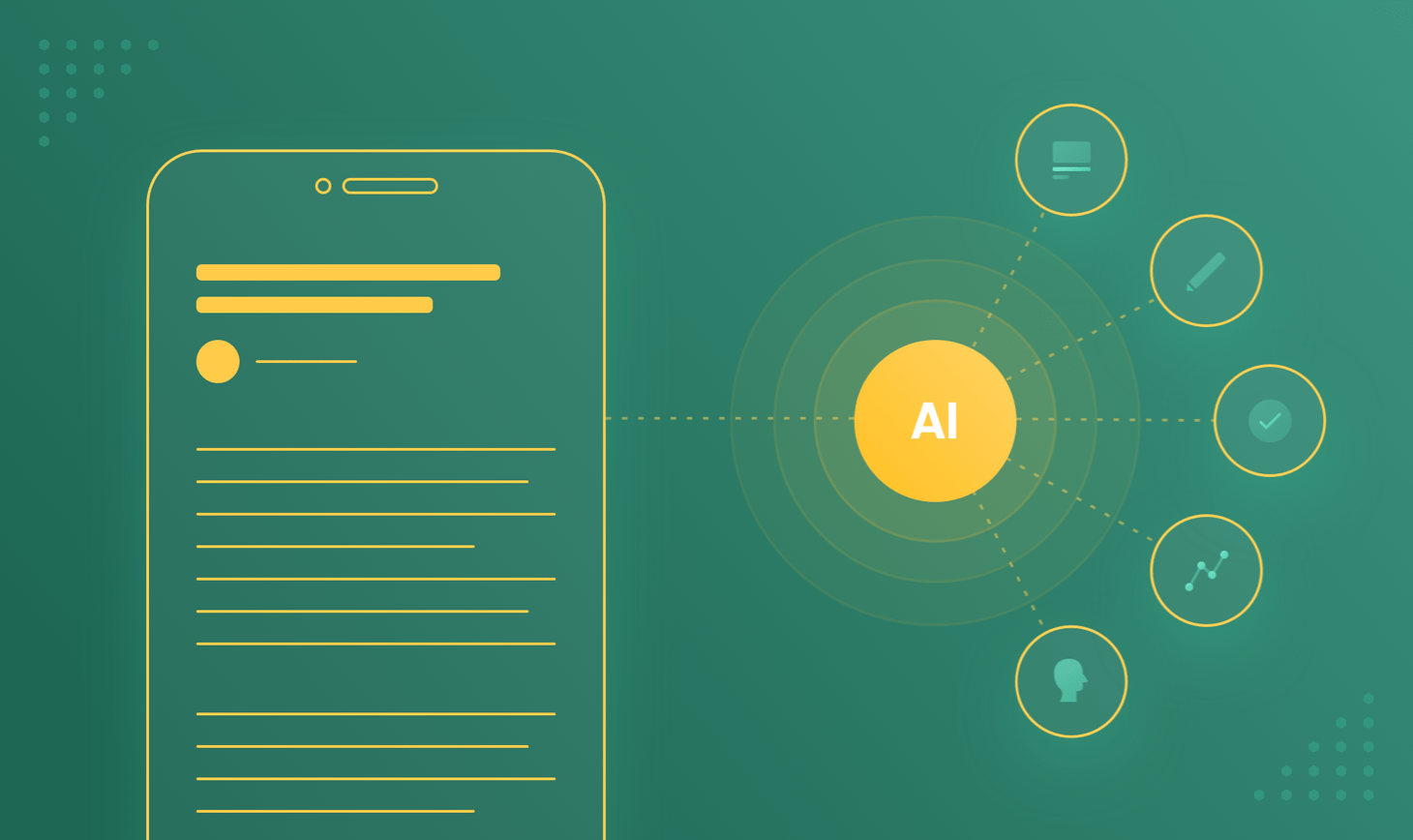
A personalized news feed for users is a sophisticated content delivery system that utilizes machine learning, user behavioral data, and semantic analysis to curate a unique stream of information for every individual. By processing historical interactions and real-time signals, these systems filter out noise, ensuring that users receive relevant, timely, and high-value content tailored to their specific interests.
Contents
The digital landscape of 2026 has moved far beyond the simple chronological lists of the past. Today, a personalized news feed is the primary gateway through which users consume information. Whether it is a professional dashboard for market analysts or a social discovery app, the underlying technology must balance relevance, diversity, and privacy. To understand how to implement or optimize such a system, one must look at the architectural layers that turn raw data into a curated experience.
The Evolution of Content Curation: Why Personalization Matters
In the early days of the internet, news feeds were largely static. Users subscribed to RSS feeds or visited specific homepages that looked identical for everyone. As the volume of digital content exploded, this "one-size-fits-all" approach led to significant information overload. The shift toward personalization was driven by the need for efficiency; users no longer have the time to sift through thousands of articles to find the three that matter to them.
By 2026, personalization has reached a level of "predictive curation." Systems do not just react to what a user clicked on yesterday; they anticipate what a user might need based on current context, professional shifts, and global trends. This evolution is critical for user retention. Platforms that fail to provide a high-signal, low-noise environment quickly lose their audience to more "intelligent" competitors who understand the nuances of user intent.
Core Technologies Powering Modern News Feeds
Building a personalized news feed requires a multi-layered technology stack. The process begins with data ingestion and ends with a ranking mechanism that decides the order of every post or article.
Machine Learning Algorithms and Collaborative Filtering
The backbone of most personalization engines remains collaborative filtering. This method makes predictions about a user's interests by collecting preferences from many users. If User A and User B both enjoyed articles about renewable energy and quantum computing, and User B recently read a high-quality piece on solid-state batteries, the system will likely recommend that same piece to User A.
However, modern systems often use Matrix Factorization or Deep Neural Networks (DNNs) to handle the "sparsity" of data—situations where there are millions of items but each user has only interacted with a few. These models can identify latent factors that explain why a user likes a certain type of content, even if they haven't explicitly stated it.
Semantic Search and LLM Integration
As of 2026, Large Language Models (LLMs) are deeply integrated into news feed architectures. Unlike older keyword-based systems, semantic engines understand the meaning behind the text. If a user follows "Sustainable Finance," the system understands that articles about "Green Bonds" or "ESG Compliance" are relevant, even if the specific phrase "Sustainable Finance" is never mentioned.
Vector databases, such as Pinecone or Weaviate, are used to store "embeddings"—mathematical representations of content. When a new article is published, it is converted into a vector. The system then performs a similarity search to match that vector against the user’s interest vector in near real-time.
The Architectural Workflow: From Raw Data to User Screen
Implementing a personalized news feed involves four distinct stages. Each stage must be optimized to ensure low latency and high relevance.
- Data Ingestion and Feature Extraction: This is the "input" phase. The system ingests content from various sources (APIs, web scrapers, user-generated content). It then extracts features: metadata (author, date), entities (companies, people), and sentiment.
- Candidate Generation (Retrieval): Because a platform might have millions of items, the system cannot rank all of them for every user simultaneously. It first performs a "coarse" filter to narrow the pool down to a few hundred or thousand candidates that are broadly relevant to the user.
- Scoring and Ranking: This is the "fine" filter. The system applies a more complex model to the candidates, calculating a probability score for specific actions, such as "probability of click," "probability of share," or "estimated dwell time."
- Re-Ranking and Diversity Injection: To avoid creating a "filter bubble," the final stage applies business logic. It might inject a few "serendipitous" items (topics the user hasn't seen before) or ensure that the feed isn't dominated by a single source.
Comparative Analysis of Personalization Models
Choosing the right model depends on the nature of the content and the size of the user base. The following table compares the dominant approaches used in 2026.
| Model Type | Primary Signal | Best For | Main Advantage | Key Limitation |
|---|---|---|---|---|
| Content-Based | Item metadata/text | Niche professional feeds | High relevance for new items | Can be too narrow/repetitive |
| Collaborative | User-item interactions | Social media, E-commerce | Discovers unexpected interests | The "Cold Start" problem |
| Hybrid Models | Both metadata & behavior | General news platforms | Balanced and robust | Computationally expensive |
| Graph-Based | Relationship networks | Professional networking | Maps complex dependencies | Extremely high latency potential |
Addressing the "Cold Start" Problem and Data Privacy
One of the most significant challenges in news feed personalization is the Cold Start problem. This occurs when a new user joins the platform (no history) or a new article is published (no interactions). To solve this, developers often use "Exploration vs. Exploitation" strategies. For new users, the system might show popular or trending content (exploitation) while testing different categories to see what sticks (exploration).
Furthermore, in 2026, privacy is no longer an afterthought. Regulations like the GDPR (General Data Protection Regulation) and the CCPA (California Consumer Privacy Act) have evolved to require "privacy by design." Modern feeds often utilize Differential Privacy or On-Device Learning. In these models, the sensitive data regarding what a user reads stays on their local device, and only anonymized model updates are sent back to the central server. This ensures a personalized experience without compromising individual identity.
User Interface (UI) and Feedback Loops
A personalized news feed is only as good as its feedback loop. If a user is shown content they dislike but has no way to signal that dissatisfaction, the algorithm will continue to fail.
- Explicit Feedback: These are direct actions like "Like," "Save," or "Follow." While highly accurate, only a small percentage of users provide explicit feedback.
- Implicit Feedback: This includes dwell time (how long someone stays on a page), scroll depth, and click-through rates. Modern systems weigh these signals heavily. For instance, if a user clicks an article but bounces back to the feed in two seconds, the system interprets this as a "negative signal" (the headline was likely clickbait).
The UI must facilitate these loops. Features like "Show less of this" or "Why am I seeing this?" provide the transparency that 2026 users demand. Transparency builds trust, and trust is the foundation of long-term user engagement.
Common Mistakes in Feed Implementation
Even with advanced AI, many platforms struggle with feed quality. Common pitfalls include:
- Over-Optimization for Clicks: This leads to a "race to the bottom" where the feed is filled with sensationalized or low-quality content. Top-tier platforms now optimize for "Value-Earned Time" rather than just raw clicks.
- The Echo Chamber Effect: If an algorithm only shows a user what they already agree with, it limits growth and can spread misinformation. Implementing a "diversity multiplier" in the ranking stage is essential to introduce varied perspectives.
- Latency Issues: A feed that takes three seconds to load is a failed feed. In 2026, users expect sub-500ms response times. This requires heavy use of edge computing and efficient database indexing.
Frequently Asked Questions
How do I reset my personalized news feed?
Most platforms in 2026 provide a "Reset Algorithmic Profile" option in privacy settings. Alternatively, you can clear your search history and unfollow specific topics to force the algorithm to re-evaluate your interests from a clean slate.
Why does my feed keep showing me old news?
This is usually a result of the "Recency vs. Relevance" weight in the ranking algorithm. If an older article is receiving significant new engagement or is highly relevant to a current event, the system may prioritize it. Checking your "Sort By" settings can often resolve this.
Can a personalized feed be manipulated by third parties?
While platforms use sophisticated bot-detection and anti-spam measures, "adversarial attacks" on algorithms are possible. This is why many news feeds now include verified badges and source-credibility scores to help users distinguish between organic content and coordinated influence campaigns.
Is my data being sold to train these news feeds?
Under current 2026 regulations, most reputable platforms must disclose if your interaction data is used for model training. Many offer an "opt-out" for data sharing while still allowing for localized personalization.
Next Steps for Users and Developers
For users, the best way to improve a news feed is to be intentional with interactions. Use the "Save" and "Follow" features, and do not hesitate to use "Hide" on content that does not add value. Your interactions are the instructions the AI uses to serve you better.
For developers, the next frontier is Contextual Personalization. This involves tailoring the feed not just to the person, but to their current situation—showing professional, high-density news during work hours and light-hearted, long-form content during the evening. Moving toward a more holistic understanding of the "user state" will be the defining characteristic of successful platforms in the coming years.
Image Gallery