How to List Business Analyst (BA) Experience in Life Insurance on Your Resume
To effectively list Business Analyst (BA) experience within the life insurance sector on your resume, you should clearly define your title as Business Analyst (Life Insurance) or Insurance Systems Analyst. Avoid using the acronym "BA"...
To effectively list Business Analyst (BA) experience within the life insurance sector on your resume, you should clearly define your title as Business Analyst (Life Insurance) or Insurance Systems Analyst. Avoid using the acronym "BA" in isolation, as it can be confused with a Bachelor of Arts degree. Instead, emphasize your domain knowledge in Life and Annuities (L&A), policy administration systems, and regulatory compliance to distinguish yourself from generalist analysts.
Contents
The life insurance industry in 2026 remains a complex ecosystem of legacy systems, modern cloud integrations, and strict regulatory frameworks. For a Business Analyst, "domain expertise" is the primary currency. Hiring managers at major carriers like New York Life, MetLife, or Prudential are not just looking for someone who can write user stories; they are looking for someone who understands the nuances of death benefits, premium calculations, and the ACORD data standards.
Resolving the "BA" Ambiguity: Role vs. Degree
Before drafting your resume, it is vital to distinguish between two common uses of the acronym "BA." In most professional contexts, "BA" refers to a Business Analyst, a role centered on bridging the gap between business needs and technological solutions. However, in the education section, "BA" signifies a Bachelor of Arts.
If your question is whether you should list a Bachelor of Arts degree as "Life Insurance," the answer is a firm no. Your degree should be listed under the Education section by its proper name (e.g., Bachelor of Arts in Economics). However, if you are asking how to represent your professional experience as a Business Analyst specializing in life insurance, you must frame your experience to highlight "Domain-Specific Business Analysis." In 2026, generalist resumes often fail to pass through Applicant Tracking Systems (ATS) that are specifically tuned to identify life insurance keywords like "Underwriting Workflows," "Illustration Software," or "NAIC Compliance."
Why Specificity Matters in the Life Insurance Niche
The life insurance sector is distinct from P&C (Property and Casualty) or Health Insurance. It involves long-tail liabilities, complex actuarial integrations, and highly sensitive beneficiary data. A Business Analyst who simply lists "gathered requirements for an insurance project" provides very little value to a recruiter.
To stand out, you must demonstrate that you understand the product lifecycle of a life insurance policy, from the initial "Illustration" and "E-App" (Electronic Application) to "Underwriting," "Policy Issuance," and "Claims Processing." By explicitly linking your BA title to the life insurance domain, you signal that you require less training on industry terminology and can immediately contribute to high-stakes projects like policy migration or digital transformation initiatives.
How to Structure Your Professional Experience Section
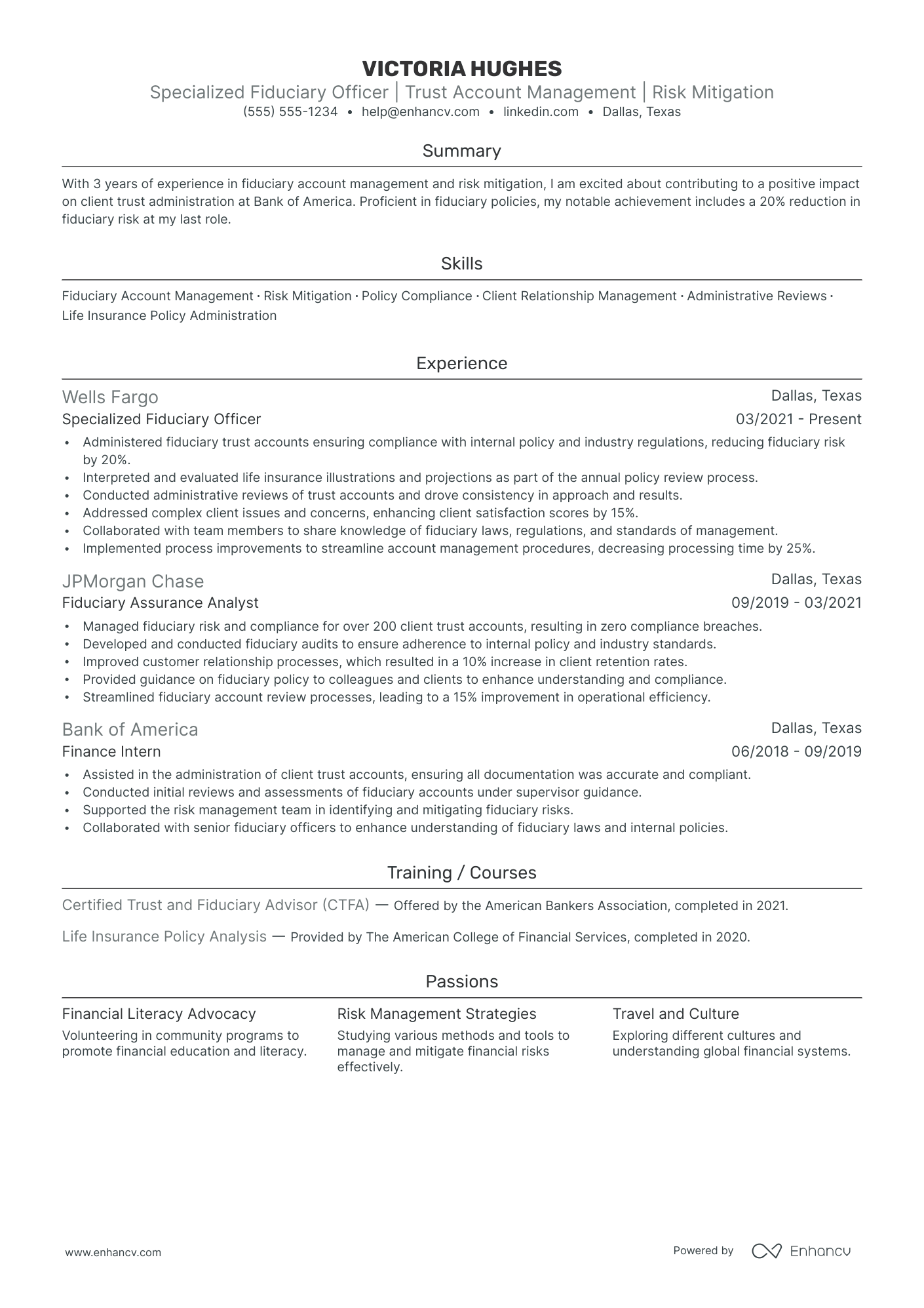
When detailing your work history, your job title should reflect both your function and your industry specialization. If your official HR title was simply "Business Analyst," you can ethically augment it on your resume to "Business Analyst (Life & Annuities)" to help with searchability.
Detailing Your Impact with Domain Keywords
Instead of generic bullet points, use "Action + Task + Context = Result" formulas that incorporate life insurance technicalities. For example:
- Weak: "Gathered requirements for a new insurance software."
- Strong: "Facilitated requirements elicitation sessions for an OIPA (Oracle Insurance Policy Administration) upgrade, focusing on automated underwriting rules for Term and Whole Life products, resulting in a 20% reduction in policy issuance turnaround time."
By mentioning specific platforms like OIPA or ALIP (Accenture Life Insurance Platform), you demonstrate technical proficiency that is highly sought after in 2026. Furthermore, referencing specific product types—such as Universal Life, Variable Life, or Indexed Universal Life (IUL)—shows that you understand the different calculation engines required for each.
The Skills Section: Technical vs. Domain Knowledge
A comprehensive resume for a Life Insurance BA must strike a balance between traditional business analysis skills and industry-specific knowledge. Your skills section should be categorized to allow recruiters to quickly scan for your "hard" technical skills and your "soft" domain expertise.
| Skill Category | Key Terms to Include | Why It Matters in 2026 |
|---|---|---|
| Domain Expertise | Life & Annuities (L&A), Underwriting, Reinsurance, Claims, Beneficiary Management | Proves you understand the core business of a life insurance carrier. |
| Regulatory Knowledge | NAIC Guidelines, SEC/FINRA (for Variable Life), AML/KYC, GDPR/CCPA | Vital for ensuring that software solutions remain compliant with evolving privacy and financial laws. |
| Technical Standards | ACORD Framework, XML/JSON Data Mapping, SQL, REST APIs | ACORD is the industry standard for data exchange; knowing it is non-negotiable for integration projects. |
| Platforms/Tools | OIPA, ALIP, Guidewire, Jira, Confluence, Lucidchart | Specificity in tools shows you can hit the ground running with the company’s existing tech stack. |
| Methodologies | Agile, Scrum, SAFe (Scaled Agile Framework), Waterfall | Large carriers often use SAFe to manage massive cross-departmental product launches. |
Highlighting Certifications and Continued Education
If you are a Business Analyst in the insurance world, certifications can often outweigh a generic degree. If you have earned designations from LOMA (Life Office Management Association) or The American College of Financial Services, these should be prominent on your resume.
Commonly recognized certifications include:
- FLMI (Fellow, Life Management Institute): This is considered the gold standard for understanding the operations and financial aspects of life insurance companies.
- CLU (Chartered Life Underwriter): While often for agents, a BA with a CLU shows deep expertise in the legal and tax implications of life insurance.
- CBAP (Certified Business Analysis Professional): This validates your core BA skills, which, when paired with insurance knowledge, makes you a top-tier candidate.
Listing these certifications next to your "BA" title creates a powerful narrative: you are not just a person who analyzes business processes; you are a specialist who understands the intricacies of the 2026 insurance landscape.
Common Mistakes to Avoid
- Over-reliance on Jargon: While technical terms are good, don't let your resume become a "word salad." Ensure every term like "MIB (Medical Information Bureau) integration" is used in the context of a specific achievement.
- Ignoring the "Customer Journey": In 2026, life insurance is shifting toward "Customer-Centricity." Your resume should reflect your experience in improving the policyholder portal or the agent's digital experience, not just the back-office database.
- Failing to Mention Data Migration: Many life insurance projects currently involve migrating policies from 30-year-old COBOL-based systems to the cloud. If you have experience in data mapping or legacy system retirement, emphasize it. This is a massive pain point for carriers today.
Frequently Asked Questions
1. Should I use the abbreviation "BA" or write out "Business Analyst"?You should write out "Business Analyst" at least once in your header or first job entry. While "BA" is common, "Business Analyst" is the primary keyword used by recruiters and ATS algorithms. After the first mention, you can use "BA" interchangeably, but always ensure it is clear you are referring to the role, not your degree.
2. Can I list "Life Insurance" as a skill if I only worked on one project?Yes, but you must be specific about what part of life insurance you touched. If you worked on a claims portal, list your skill as "Life Insurance Claims Processing." Accuracy is more important than broadness, as you will likely be tested on your domain knowledge during the interview process.
3. Is it necessary to mention the specific type of life insurance (Term, Whole, Variable)?Absolutely. The business rules for a Term Life policy are significantly simpler than those for a Variable Universal Life policy, which involves investment sub-accounts and SEC regulations. Specifying the product type demonstrates the depth of your complexity-handling capabilities.
4. How do I handle "BA" if I have a Bachelor of Arts in an unrelated field?List your degree in the Education section as "Bachelor of Arts in [Subject]." Do not use the abbreviation "BA" there if you are also using "BA" to describe your job title as a Business Analyst elsewhere. This prevents confusion for the reader and ensures the ATS categorizes your education and experience correctly.
5. What is the most important 2026 trend for an Insurance BA resume?The integration of AI and Machine Learning in Underwriting. If you have any experience gathering requirements for automated underwriting engines or "Fluidless" application processes, make that the centerpiece of your resume. This is the most active area of investment for life insurance carriers in the current year.
Final Recommendation
To maximize your impact, do not simply "list BA as life insurance." Instead, rebrand yourself as a Life Insurance Domain Expert who functions as a Business Analyst. Ensure your resume uses the language of the industry—terms like "Policy Administration," "ACORD standards," and "L&A products"—while clearly quantifying your achievements. This approach moves you from being a "generalist candidate" to a "specialist solution," which is essential for securing high-level roles in the competitive 2026 insurance market.
Image Gallery