Average Auto Insurance Cost in California by Age
California drivers face some of the most dynamic auto insurance pricing structures in the United States, with age serving as one of the single most influential factors in determining annual and monthly premiums. Younger drivers typical...
California drivers face some of the most dynamic auto insurance pricing structures in the United States, with age serving as one of the single most influential factors in determining annual and monthly premiums. Younger drivers typically encounter the highest rates due to statistical accident risks, while middle-aged and experienced motorists generally enjoy the lowest baseline costs before seeing moderate rate increases in their senior years.
Contents
Understanding how age influences car insurance rates in the Golden State requires examining statutory requirements, risk assessment methodologies, and the financial protections available to motorists across different life stages.
The Regulatory Framework of California Auto Insurance
Before evaluating how age brackets alter pricing, it is essential to understand the legal environment governing motor vehicle coverage in California. The California Department of Insurance (CDI) regulates rate filings and enforces consumer protection standards under Proposition 103, which was passed by voters in 1988. Proposition 103 fundamentally altered how insurance companies calculate premiums, shifting the primary rating factors away from arbitrary classifications and toward objective, driving-related criteria.
Under California law, insurers must base their rates primarily on three mandatory rating factors:
- Driving safety record: The number of at-fault accidents, moving violations, and traffic convictions accumulated over a statutory look-back period (typically three to ten years depending on severity).
- Annual mileage: The total number of miles a vehicle is driven annually, which correlates directly with exposure to road hazards.
- Years of driving experience: The length of time an individual has held a valid driver's license.
While age itself is heavily intertwined with driving experience, California law restricts how insurers utilize pure demographic data. However, because years of driving experience directly track with biological age for the vast majority of motorists, age remains a profound differentiator in price. Furthermore, insurers are permitted to factor in ZIP code or garaging address, vehicle make and model, and the selected coverage levels, all of which compound the cost variations observed across different age cohorts.
Auto Insurance Costs Across Key Age Brackets
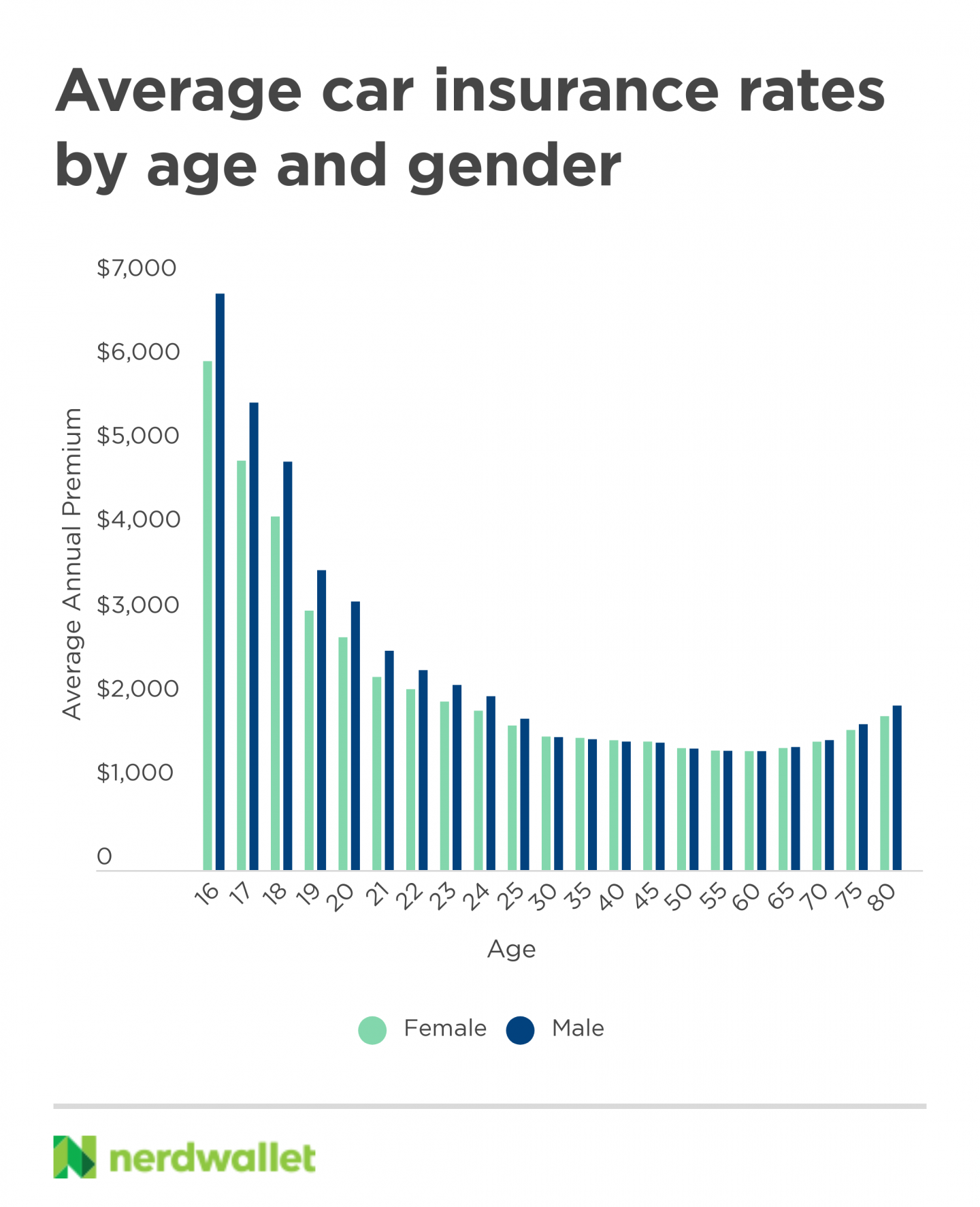
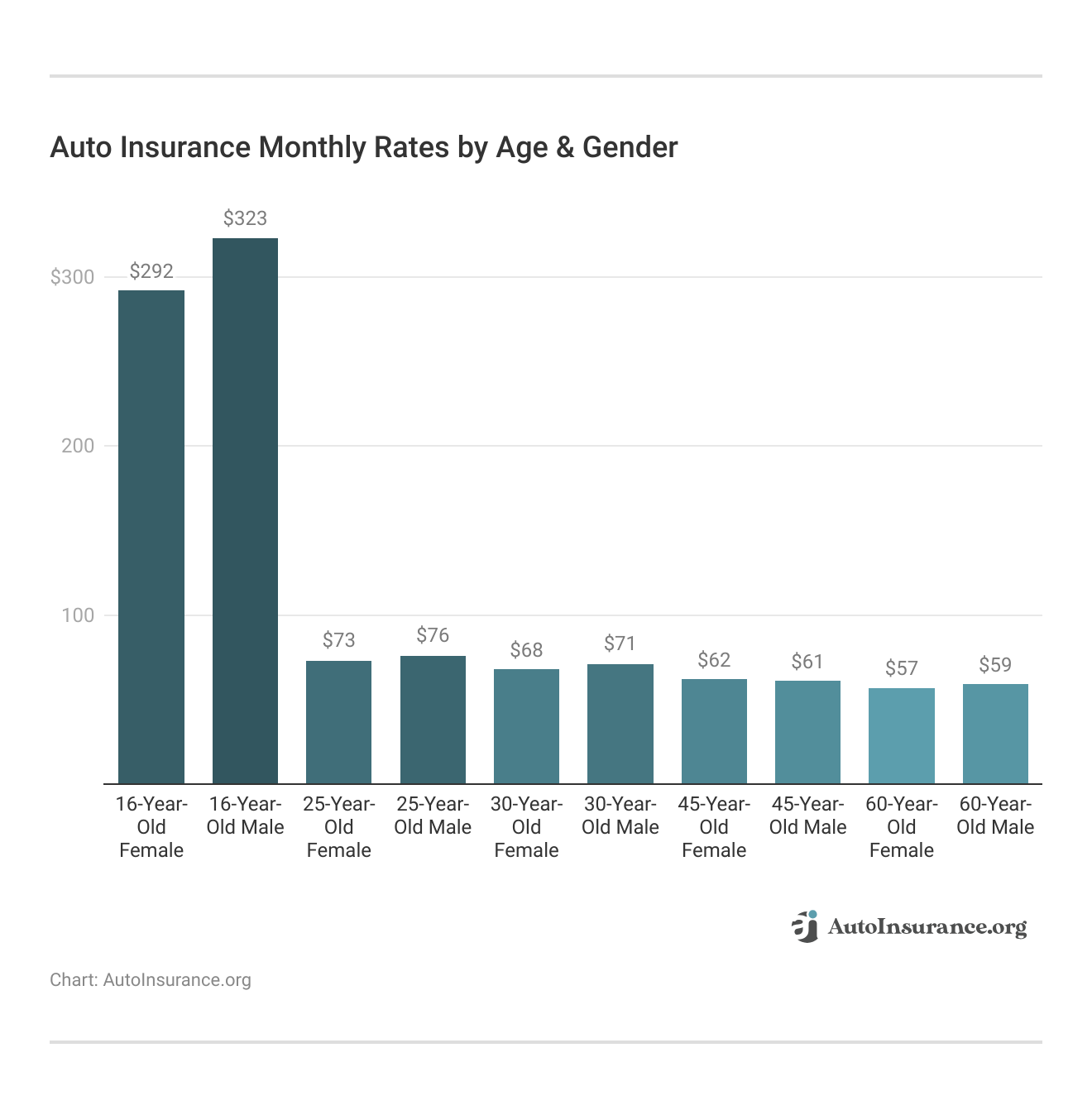
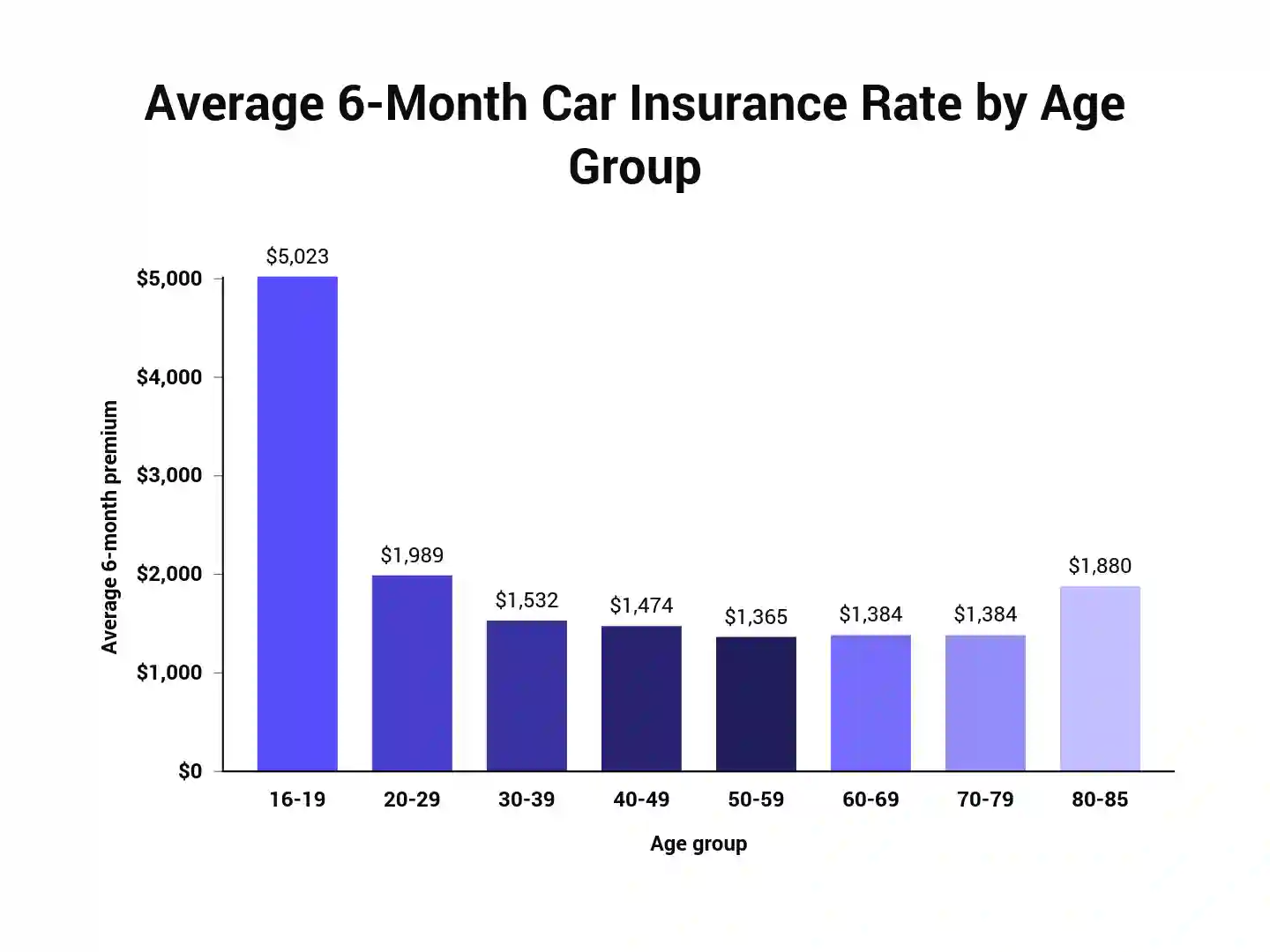
Insurance providers evaluate risk profiles by mapping historical claims data against specific age groups. The resulting cost curve is steep for teenagers, decreases steadily through middle age, and plateaus before ticking upward for elderly drivers.
| Age Group | Risk Profile | Relative Premium Cost Impact |
|---|---|---|
| Teens (16–19) | Highest risk, no history | Extremely high (often peak) |
| Young Adults (20–25) | Transitional experience | High, decreasing yearly |
| Adults (30–59) | Established stability | Lowest baseline rates |
| Seniors (65+) | Decreasing reflexes | Moderate to increasing rates |
Teenage Drivers (Ages 16–19)
Drivers aged 16 to 19 consistently experience the highest auto insurance premiums in California. According to market aggregate data and regulatory filings, insuring a teenager on an individual policy can easily cost several thousand dollars per year, frequently exceeding the cost of the vehicle itself.
The rationale behind these figures is rooted in actuarial science. Drivers in this bracket lack predictive historical driving data, making them an unknown risk. Combined with a statistically higher incidence of single-vehicle accidents, distracted driving incidents, and night-driving mishaps, insurers apply maximum risk loadings. To mitigate these expenses, families almost universally choose to add teenage drivers to an existing parent or guardian policy rather than purchasing standalone coverage, which introduces multi-car and bundling discounts.
Young Adults (Ages 20–25)
As drivers transition out of their teens and accumulate three to five years of verified driving experience, average premiums begin a downward trajectory. However, drivers in their early twenties—particularly males—still face elevated rates compared to mature adults.
Insurers view this group as a transitional demographic. While university attendance, changes in commuting patterns, and continued maturation reduce risk profiles, young adults frequently experience lifestyle shifts, such as moving to dense urban centers like Los Angeles or San Francisco, which independently drive up comprehensive and collision costs due to higher rates of vehicle theft, vandalism, and congestion-related fender-benders.
Prime Adult Drivers (Ages 30–59)
The demographic sweet spot for California auto insurance spans ages 30 through 59. During these decades, drivers have accumulated substantial experience, established stable credit-based or employment histories (where applicable under strict state limitations), and settled into predictable daily commutes.
Average insurance costs stabilize significantly during this period. Insurers reward this stability with their most competitive baseline rates. Motorists in this bracket who maintain clean driving records for three consecutive years qualify for the California Good Driver Discount, which mandates a statutory 20% discount off standard rates under Proposition 103.
Senior Drivers (Ages 65 and Older)
As motorists enter their golden years, the pricing dynamic shifts once again. While senior drivers typically possess decades of experience and drive fewer annual miles—both of which lower risk—actuarial tables begin to account for potential changes in reaction times, night-vision acuity, and vulnerability to severe injury in the event of a collision.
Consequently, insurance premiums for drivers aged 65 to 80 often experience a modest, gradual increase. To help offset these rising costs, California law mandates that insurance companies offer a senior discount to drivers aged 55 and older who successfully complete an approved mature driver improvement course certified by the Department of Motor Vehicles (DMV).
Primary Factors Influencing Rates Beyond Age
While age sets the broad parameters of an insurance quote, several secondary factors interact with age to shape the final premium paid by a California motorist:
- Coverage Selections: Choosing minimum liability coverage mandated by the state (currently set at $15,000 for injury/death to one person, $30,000 for injury/death to more than one person, and $5,000 for property damage) keeps upfront costs low but exposes the driver to severe out-of-pocket liabilities. Comprehensive and collision coverages add significant cost, especially for younger drivers operating newer vehicles.
- Geographic Location: Insurance costs vary dramatically by ZIP code. Urban environments with high traffic density, high rates of uninsured motorists, and frequent litigation payouts (such as parts of Los Angeles, Oakland, and San Bernardino) command much higher rates than rural areas in the Central Valley or Northern California.
- Vehicle Make and Model: High-horsepower sports cars, luxury imports, and vehicles with expensive sensor-laden bumpers cost substantially more to insure across all age groups compared to standard sedans or crossover utility vehicles.
Practical Strategies to Lower California Auto Insurance Costs
Regardless of age, motorists can implement specific, verifiable strategies to reduce their annual premium obligations without sacrificing essential legal protections:
- Bundle Policies: Combining auto insurance with homeowners, renters, or umbrella policies through the same carrier routinely yields multi-policy discounts ranging from 5% to 25%.
- Maintain a Clean Record: Avoiding traffic tickets, speeding citations, and preventable at-fault accidents preserves eligibility for the Proposition 103 Good Driver Discount.
- Opt for Higher Deductibles: Raising comprehensive and collision deductibles from $500 to $1,000 immediately lowers monthly premium payments, provided the policyholder maintains adequate emergency savings to cover the higher out-of-pocket threshold in an accident.
- Enroll in Telematics Programs: Many insurers offer app-based tracking programs that monitor driving habits—such as speed, braking smoothness, and phone distraction—allowing safe drivers across all age groups to earn customized discounts.
- Complete Approved Safety Courses: Mature drivers can complete DMV-approved defensive driving courses to secure mandatory state-regulated rate reductions.
Frequently Asked Questions
Why are auto insurance rates higher for teenagers in California?
Insurers charge higher rates for teenage drivers because statistical data shows they have a higher frequency of accidents and lack established driving records. Without historical data to prove driving competence, underwriters assign maximum risk values to this demographic.
Does California law allow insurance companies to use age directly when calculating rates?
While Proposition 103 restricts arbitrary rating factors, California law permits insurers to use years of driving experience as a primary rating factor. Because years of driving experience directly correlate with age, age remains a powerful indirect determinant of premium costs.
What is the California Good Driver Discount?
Codified under Proposition 103, the Good Driver Discount requires insurers to provide at least a 20% discount to motorists who have been licensed for at least three consecutive years, have accumulated no more than one point on their driving record, and have not been principally at fault in an accident resulting in injury or death.
How can senior drivers reduce their car insurance premiums?
Senior drivers aged 55 and older can lower their insurance rates by completing an approved mature driver improvement course. Additionally, reducing annual mileage through retirement or lifestyle changes helps secure lower rates.
Is minimum liability insurance enough protection in California?
While purchasing the state-mandated minimum liability limits satisfies legal operation requirements, it offers minimal financial protection. If an at-fault accident results in injuries or property damage exceeding those low limits, the driver remains personally liable for the remaining balance.
Next Steps for California Motorists
To secure the most competitive auto insurance rate for your specific age bracket and risk profile, gather your current policy declarations page, your driving history report from the DMV, and your estimated annual mileage. Compare quotes from at least three licensed admitted carriers operating in California. Review coverage limits carefully to ensure your assets are protected against catastrophic loss, and consult with a licensed insurance broker or the California Department of Insurance consumer services division if you encounter pricing disputes or have questions regarding regulatory compliance.
Image Gallery