Whole Life Insurance for Physicians Explained: Mechanics, Pros, Cons, and Strategy
Whole life insurance for physicians provides lifelong death benefit coverage paired with a tax-advantaged cash value account. Frequently pitched to high-earning medical professionals as an asset protection and wealth-building vehicle,...
Whole life insurance for physicians provides lifelong death benefit coverage paired with a tax-advantaged cash value account. Frequently pitched to high-earning medical professionals as an asset protection and wealth-building vehicle, its high premiums and front-loaded fees mean it generally serves as a niche financial strategy suitable primarily after fully funding conventional tax-advantaged retirement accounts.
Contents
Disclaimer: This guide is provided for educational purposes only and does not constitute individual financial, legal, or tax advice. Consult a qualified fiduciary financial planner and tax professional regarding your specific situation.
Understanding how Whole Life Insurance Works
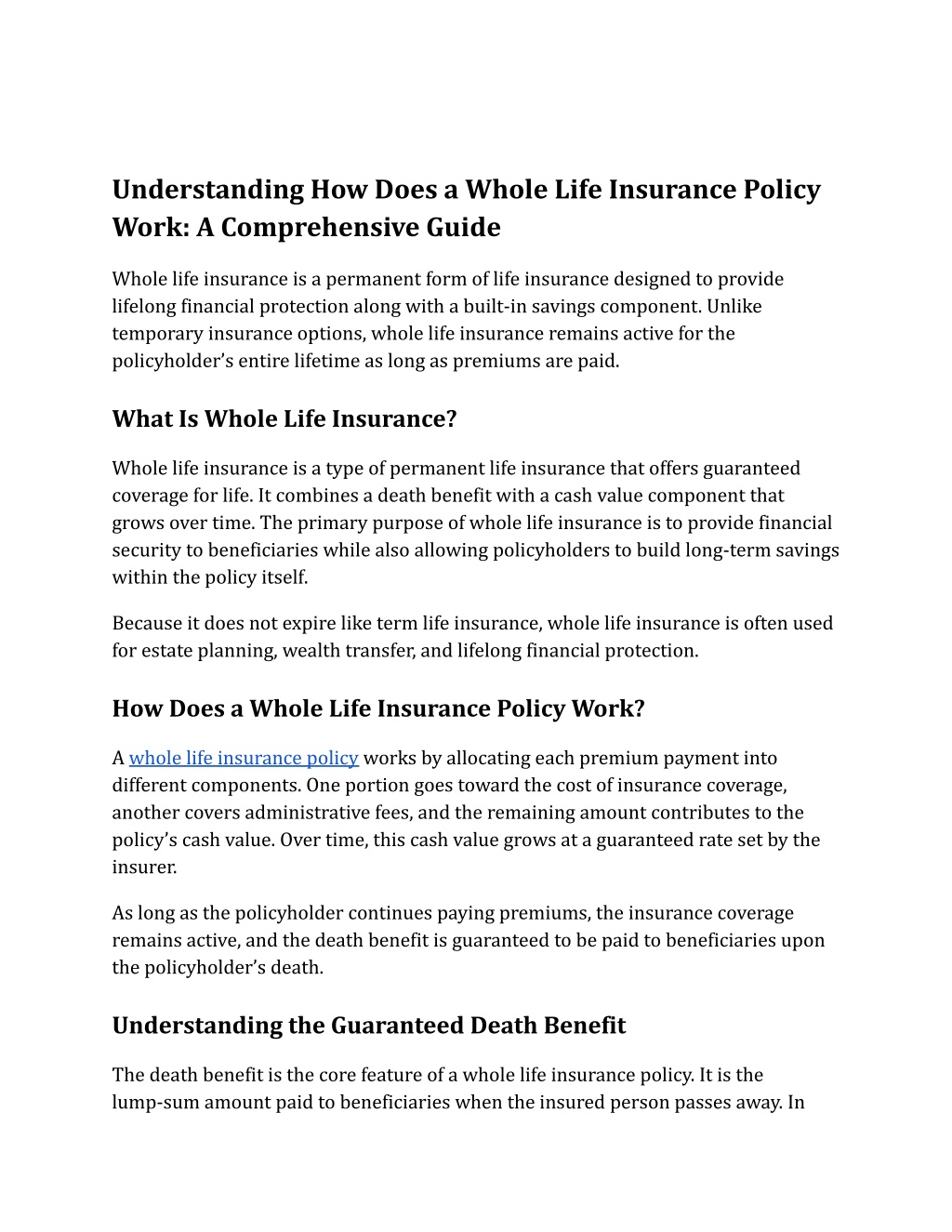
Whole life insurance is a type of permanent life insurance that remains in effect for the insured’s entire lifetime, provided premiums are paid according to the contract terms. Unlike term life insurance—which provides straightforward financial protection for a set period (such as 10, 20, or 30 years)—whole life combines a guaranteed death benefit with an internal savings mechanism known as cash value.
When a policyholder pays a whole life insurance premium, the payment is divided into three primary components:
- Cost of Insurance (COI): The baseline expense required to cover the mortality risk of the policyholder.
- Administrative Fees and Commissions: Expenses assessed by the insurance company to maintain the policy, satisfy underwriting expenses, and compensate the issuing agent.
- Cash Value Accumulation: The remaining portion of the premium that enters the cash value account, where it earns a guaranteed minimum interest rate set by the insurer.
| TOTAL PREMIUM PAID | ||
|---|---|---|
| Cost of Insurance (COI) (Mortality Risk) | Administrative Fees & Agent Commission | Cash Value Growth (Guaranteed Rate) |
In addition to the guaranteed rate of return, whole life policies issued by mutual insurance companies (companies owned by their policyholders rather than public shareholders, such as MassMutual, Guardian, New York Life, and Northwestern Mutual) can pay annual dividends. These dividends are technically classified by the Internal Revenue Service (IRS) as a tax-free refund of excess premiums. Policyholders can choose to receive dividends as cash, use them to reduce future premium payments, or reinvest them into the policy to purchase Paid-Up Additions (PUA), which increase both the net death benefit and the cash value accumulation rate over time.
Why Insurance Brokers Target Physicians
Physicians are among the primary targets for whole life insurance products due to their unique financial trajectory: high delayed earnings, significant exposure to professional liability (malpractice litigation), and limited availability of traditional tax shelters once standard retirement account contribution caps are reached. Insurance agents frequently highlight four key arguments when marketing whole life to doctors.
1. Asset Protection and Lawsuit Shielding
Medical practice carries inherent professional liability risk. While primary malpractice insurance policies cover clinical negligence claims up to policy limits, physicians often seek secondary layers of asset protection to safeguard their personal net worth.
In many states, life insurance cash value and death benefits receive statutory protection from judgment creditors and litigation awards. However, this protection varies wildly depending on state law:
- Strong Protection States: States like Florida (under Florida Statute § 222.14) and Texas offer robust protection, exempting the full cash surrender value of life insurance policies from creditor claims and bankruptcy proceedings.
- Limited Protection States: States like California (under California Code of Civil Procedure § 704.100) and New York limit creditor protections to specific dollar amounts or require proof that the cash value is necessary for the financial support of the debtor's dependents.
Because of these jurisdictional nuances, whole life is often promoted as an asset protection vault, though asset protection trusts and umbrella liability insurance frequently provide more direct protection at lower overall costs.
2. Tax-Advantaged Growth and Access
Cash value within a whole life policy grows on a tax-deferred basis under Internal Revenue Code Section 7702. Policyholders can access this accumulated wealth during their lifetime through two primary methods:
- Tax-Free Withdrawals up to Basis: A policyholder can withdraw cash tax-free up to the cumulative amount of total premiums paid into the policy (known as the cost basis).
- Policy Loans: Once basis is exhausted, policyholders can take policy loans against the remaining cash value. Because policy loans are structured as debts secured by the insurer using the cash value as collateral, they do not trigger immediate income taxes, even if the money borrowed represents untaxed gains.
If structured properly, a physician can borrow against the policy during retirement to create a tax-free income stream. When the physician passes away, the outstanding loan balance plus accumulated interest is deducted from the gross death benefit, with the remainder passing tax-free to beneficiaries under Internal Revenue Code Section 101(a).
3. Supplemental High-Income Savings Capacity
By the time a physician becomes an attending physician, their gross income often exceeds income limits for direct contributions to Roth IRAs. While Backdoor Roth IRAs provide an alternative, maximum annual contributions to qualified plans—such as 401(k), 403(b), or 457(b) accounts—are capped by statutory limits ($23,500 for elective deferrals in 2026, or $70,000 for total defined contribution limits under IRC Section 415(c)).
For high-earning specialties (such as orthopedic surgery, cardiology, or neurosurgery) grossing $500,000 to $1,000,000 or more annually, these qualified plan limits accommodate only a small fraction of their potential savings rate. Whole life insurance offers an uncapped tax-deferred repository for excess capital after all alternative tax-advantaged accounts are maxed out.
Drawbacks, Hidden Costs, and Opportunity Costs
Despite its advertised benefits, standard whole life insurance is frequently criticized by fee-only financial planners as an inefficient wealth-building vehicle for the vast majority of physicians. The key structural disadvantages stem from high friction costs, illiquidity, and opportunity costs.
High Agent Commissions and Fee Drag
Traditional whole life insurance contracts carry heavy upfront sales commissions. In the first policy year, agent commissions often equal 80% to 100% of the entire annual baseline premium, with trailing commissions continuing for several subsequent years. Additional surrender charges, administrative costs, and mortality charges further erode performance.
Because of this heavy fee structure, a standard whole life policy typically exhibits negative returns for the first 7 to 10 years. If a physician surrenders the policy within the first five years due to cash flow constraints, they frequently lose 50% to 100% of all premiums paid.
Opportunity Cost Compared to Low-Cost Index Investing
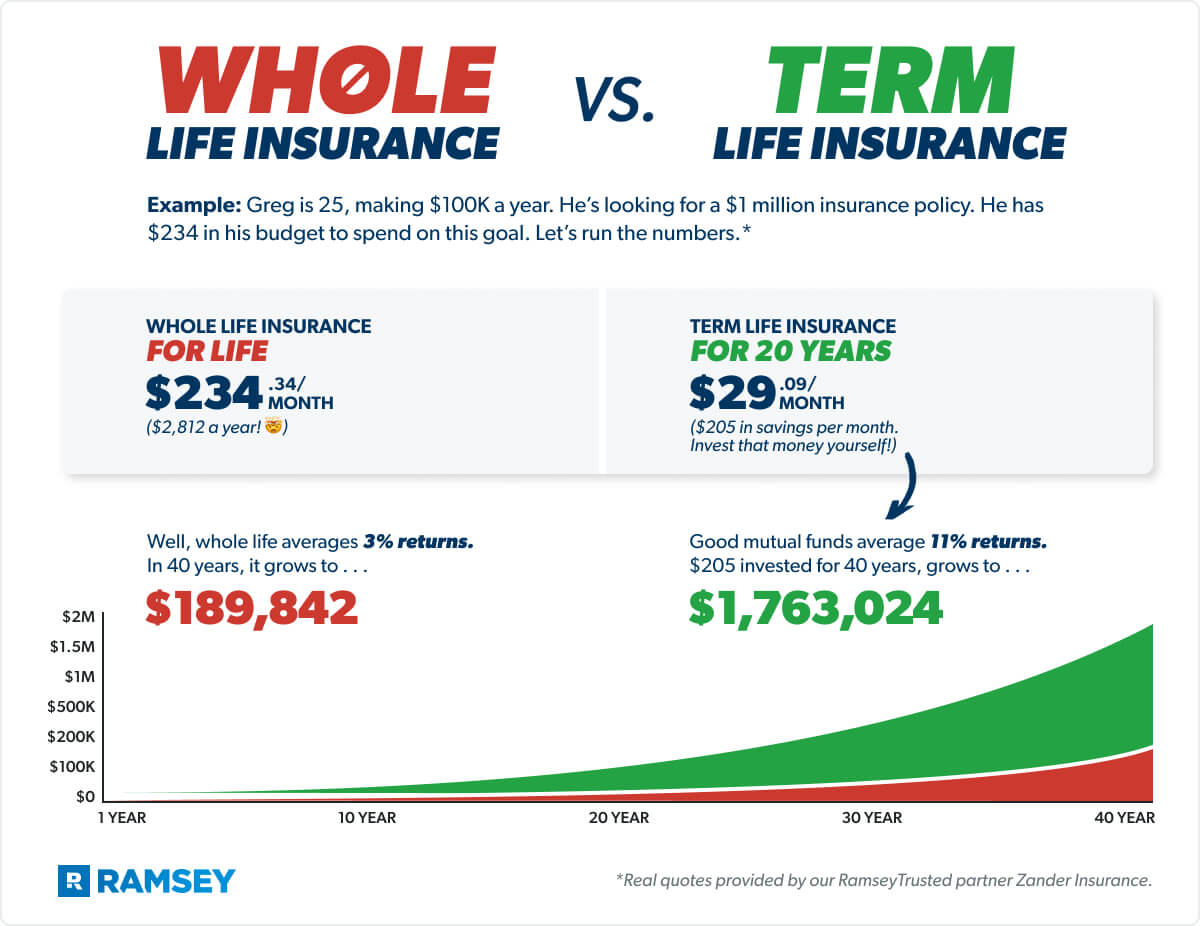
The cornerstone argument against whole life insurance is the financial principle of "Buy Term and Invest the Difference" (BTID).
Under a BTID framework, a physician purchases a low-cost, 20-year or 30-year level term life insurance policy to cover their dependents during their peak earning and debt-repayment years. The massive difference in premium cost between term insurance and whole life insurance is then systematically invested into low-cost equity index funds (such as S&P 500 or Total Stock Market index funds) within taxable brokerage accounts or real estate investments.
Historically, broad market equity investments have delivered higher average annualized returns over 20- to 30-year horizons compared to the net dividend yields of participating whole life policies, which historically average between 3% and 5% net IRR over multi-decade periods.
- TRADITIONAL WHOLE LIFE APPROACH:
- High Monthly Premium
- Insurer
- Split between COI, Commissions, & Cash Value (3%–5% Net Return)
- Insurer
- High Monthly Premium
- BUY TERM & INVEST THE DIFFERENCE (BTID):
- Low Term Premium
- Insurer
- Pure Death Benefit Protection
- Insurer
- Premium Difference
- Brokerage
- Low-Cost Index Funds (7%–10% Historical Nominal Return)
- Brokerage
- Low Term Premium
Illiquidity During Early Career Stages
During medical residency, fellowship, or the first few years as an attending physician, cash flow can be strained by student loan repayment obligations (such as Income-Driven Repayment plans), practice buy-in costs, or primary home purchases. Committing to a rigid, multi-thousand-dollar monthly whole life premium during these transition phases can cause severe financial distress, forcing early surrender at a substantial loss.
Whole Life vs. Alternative Wealth Strategies
To evaluate whether whole life insurance aligns with a physician's overall financial plan, it must be evaluated alongside alternative risk-management and wealth-building structures.
| Feature / Strategy | Level Term Life + Index Investing | Standard Whole Life | Overfunded (Blended) Whole Life | Variable / Indexed Universal Life (VUL / IUL) |
|---|---|---|---|---|
| Primary Objective | Maximize pure coverage & market returns | Lifelong protection & modest fixed growth | Accelerated cash growth & tax shelter | Market-linked growth with permanent protection |
| Early Liquidity (Years 1–5) | High (in liquidity of invested difference) | Extremely Low (often $0 to 20% of premiums) | Moderate to High (60% to 80%+ of premiums) | Low to Moderate (subject to surrender charges) |
| Long-Term Growth Potential | High (Market Equity Risk Premium) | Low-Moderate (Guaranteed rate + dividends) | Moderate (Lower fees allow more compound growth) | Variable (Capped index caps or market risk) |
| Fee Structure & Friction | Extremely Low | High (Front-loaded agent commissions) | Medium (Reduced commissions via PUA rider) | High (Internal charges, cap limits, cost of insurance) |
| Asset Protection | Varies by state for taxable account balance | Strong in statutory-protected states | Strong in statutory-protected states | Strong in statutory-protected states |
| Flexibility of Premiums | High (Can pause brokerage investments) | Rigid (Lapse risk if premiums missed) | Semi-Flexible (PUA portion can be adjusted) | Flexible (Subject to minimum cost of insurance) |
| Best Suited Profile | 90%+ of physicians seeking wealth building | Legacy estate planning for ultra-high-net-worth | High earners maxing all tax-deferred buckets | Complex risk-tolerant high-net-worth planners |
Structuring Whole Life Correctly: Paid-Up Additions (PUA) Riders
When whole life insurance is incorporated into a high-net-worth physician's estate plan, it should rarely be structured as a off-the-shelf policy. Standard policies maximize agent commissions by applying 100% of the premium toward baseline death benefit coverage.
Instead, specialized financial advisors design overfunded policies using a combination of base coverage and a Paid-Up Additions (PUA) rider.
The Mechanics of Paid-Up Additions
A PUA rider allows the policyholder to inject additional cash directly into the policy above the base premium.
- PUA dollars bypass the vast majority of agent sales commissions (reducing commission rates on PUA funds to approximately 2%–5%).
- 90% to 95% of every dollar directed into a PUA rider immediately contributes to liquid cash value in Year 1.
- Purchasing paid-up additions increases the total policy death benefit incrementally, which in turn elevates the policy's capacity to absorb future cash inputs without violating tax rules.
Avoiding Modified Endowment Contract (MEC) Status
When overfunding a whole life policy, advisors must strictly monitor compliance with the 7-Pay Test under Internal Revenue Code Section 7702A.
If a policyholder deposits cash into the policy too quickly relative to the total death benefit during the first seven years, the IRS reclassifies the contract as a Modified Endowment Contract (MEC).
- Consequences of MEC Status: The policy loses its tax-advantaged distribution benefits. Withdrawals and policy loans are subsequently taxed on a Last-In, First-Out (LIFO) basis, meaning earnings are withdrawn first and taxed as ordinary income. Additionally, distributions taken prior to age 59½ incur a 10% IRS tax penalty.
Properly designed overfunded policies blend base death benefit premiums with PUA riders right up to the MEC limit, maximizing early liquidity while preserving lifetime tax-free loan access.
The Physician's Financial Hierarchy of Needs
Financial planners focused on medical professionals emphasize establishing foundational risk management tools before deploying capital into permanent life insurance. The recommended order of priority includes:
- Step 1: True Own-Occupation Disability Insurance
- Step 2: High-Limit Term Life Insurance (10x–20x Annual Income)
- Step 3: Emergency Reserve Fund & High-Interest Student Loan Paydown
- Step 4: Maximize Qualified Tax-Advantaged Accounts (401k/403b, Backdoor Roth, HSA, 457b)
- Step 5: Taxable Brokerage Accounts / Low-Cost Index Funds
- Step 6: Specialized Cash-Value Permanent Insurance (Overfunded Whole Life / Asset Protection)
Step 1: True Own-Occupation Disability Insurance
A physician’s greatest asset is their specialty-specific earning potential. Before purchasing any life insurance, physicians must secure individual true own-occupation disability insurance with specialty-specific protection riders. This ensures that if an injury or illness prevents a specialist (such as a surgeon losing fine motor function) from performing their specific duties, the policy pays full disability benefits even if the physician transitions to teaching or another medical role.
Step 2: High-Limit Level Term Life Insurance
Physicians with dependents should establish immediate, low-cost financial protection using level term insurance. A typical guideline is 10 to 20 times gross annual income, structured across staggered 15-year, 20-year, or 30-year terms. This creates massive liquidity for debt clearance and family income replacement during early asset-building years at a fraction of whole life premium costs.
Step 3: Fully Fund Standard Tax-Advantaged Accounts
Capital allocation should follow a strict tax-efficiency hierarchy:
- Employer Match: Capture full employer matching contributions in 401(k) or 403(b) accounts.
- Health Savings Account (HSA): Fully fund an HSA if enrolled in a High-Deductible Health Plan (triple tax advantage).
- Backdoor Roth IRA: Complete annual non-deductible Traditional IRA contributions converted immediately to Roth IRAs.
- Max Out Employer Plans: Fill remaining elective deferral limits in 401(k)/403(b) and governmental 457(b) plans.
Step 4: Taxable Brokerage vs. Whole Life Insurance
Only after all qualified tax-advantaged accounts are maxed out should a physician compare taxable brokerage accounts against overfunded whole life insurance. Taxable brokerage accounts offer absolute liquidity, capital gains tax rates (which are often lower than ordinary income tax rates), and zero ongoing policy fee drag. Whole life becomes attractive primarily when the physician requires specialized asset protection under state statutes or has exhausted all other avenues of wealth storage.
Frequently Asked Questions
Is whole life insurance appropriate for resident or fellow physicians?
No, whole life insurance is almost universally inappropriate for medical residents and fellows. During training, physicians face tight cash flows, modest salaries, and significant debt burdens. Committing limited income to expensive whole life premiums exposes trainees to high lapse rates and severe financial loss. Trainees should prioritize low-cost term life insurance and true own-occupation disability insurance instead.
How does cash value life insurance protect doctors against malpractice claims?
Cash value protection depends entirely on state statutory exemptions. In states like Florida, Texas, and Pennsylvania, state law fully exempts life insurance cash values from judgment creditors, shielding those funds if a malpractice verdict exceeds professional liability policy limits. In states with weak or capped protections, creditors can garnish cash surrender values. Physicians should review local statutes with a qualified asset protection attorney.
What options exist if a physician wants to exit an existing whole life policy?
If a policy is underperforming or no longer fits a physician's financial goals, three primary options exist:
- Surrender for Cash: Cancel the policy and receive the net cash surrender value minus any outstanding loans and surrender charges. Income taxes apply to any gains above the paid cost basis.
- 1035 Exchange: Execute a non-taxable transfer under Internal Revenue Code Section 1035 to roll the cash value directly into a low-cost annuity or a modern, lower-fee life insurance contract without triggering immediate taxes.
- Reduced Paid-Up Insurance: Stop paying premiums and convert the existing cash value into a fully paid-up death benefit of a lower dollar amount, eliminating future premium obligations while retaining tax-deferred growth.
How do policy loans work, and are they completely tax-free?
Policy loans allow policyholders to borrow against their cash value without triggering ordinary income tax, as loans are not classified as taxable income by the IRS. The insurance company charges loan interest, but the underlying collateral continues to earn interest or dividends within the policy. If the dividend rate matches or approaches the borrowing rate (known as direct or non-direct recognition borrowing), the net borrowing cost is minimal. However, if a policy lapses while an outstanding loan exceeds the cost basis, the entire unpaid loan balance becomes immediately taxable as ordinary income.
What is the difference between direct and non-direct recognition in whole life policies?
Direct recognition insurers adjust the dividend rate paid on the portion of cash value that is secured by an outstanding policy loan, lowering or raising the yield to match current market borrowing rates. Non-direct recognition insurers pay the exact same dividend rate on the entire cash value, regardless of whether a portion has been borrowed against. Non-direct recognition can be advantageous when policy dividend rates exceed loan interest rates.
Actionable Recommendations for Physicians
If you are evaluating a whole life insurance policy or already holding a policy pitch, take the following direct steps:
- Audit Your Primary Coverage: Ensure your true own-occupation disability insurance policy and high-limit term life insurance are fully underwritten and in force before signing any permanent insurance contract.
- Demand a Full In-Force Illustration: If evaluating a proposed whole life policy, insist on reviewing a complete numerical illustration. Look specifically at the Guaranteed Cash Value column in Years 1 through 10. If Year 1 cash value shows $0, the policy is structured with maximum agent commissions rather than an overfunded PUA framework.
- Verify State Creditor Laws: Check your state's specific statutory exemption codes for life insurance cash values. Do not assume life insurance provides blanket asset protection without verifying local jurisdictional limits.
- Work with Fee-Only Fiduciaries: Consult an independent, fee-only Certified Financial Planner (CFP®) who does not accept product sales commissions to analyze how a whole life policy interacts with your long-term tax, estate, and investment structures.
Image Gallery