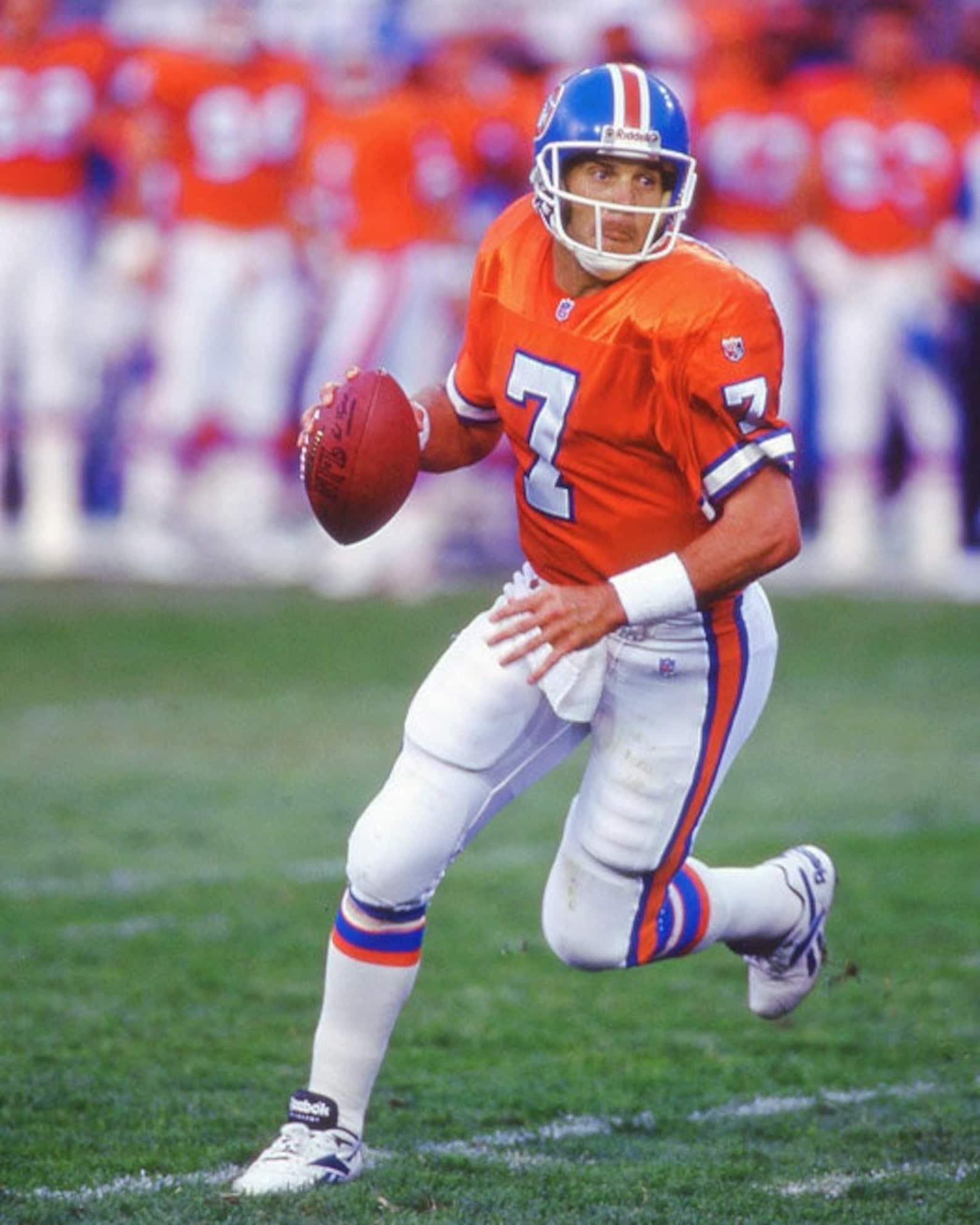
John Elway Salary: Historical Player Earnings and Executive Compensation Analysis
John Elway earned approximately $45.4 million in total salary during his 16-season Hall of Fame playing career with the Denver Broncos. As an executive, his annual salary peaked at an estimated $3.75 million per year. His current finan...
John Elway earned approximately $45.4 million in total salary during his 16-season Hall of Fame playing career with the Denver Broncos. As an executive, his annual salary peaked at an estimated $3.75 million per year. His current financial standing in 2026 is primarily driven by his diversified business empire and historical NFL earnings.
Contents
The trajectory of John Elway’s compensation provides a unique lens through which we can view the evolution of NFL economics. From his record-shattering rookie contract in 1983 to his transition into one of the league’s most influential executives, Elway has remained a central figure in the financial landscape of professional football. To understand his salary, one must look at three distinct phases: his time as a franchise quarterback, his tenure as a front-office executive, and his massive success as an entrepreneur.
The Economics of a Hall of Fame Playing Career (1983–1998)
When John Elway entered the NFL in 1983, the financial landscape was unrecognizable compared to today’s multi-hundred-million-dollar contracts. After being drafted first overall by the Baltimore Colts and forcing a trade to Denver, Elway signed a landmark rookie deal. His first contract was worth approximately $5 million over five years, a figure that made him one of the highest-paid players in the league at the time.
The Pre-Salary Cap Era
In the 1980s, NFL salaries were not governed by the strict hard cap that exists today. Earnings were largely determined by a player’s leverage and the owner's willingness to pay. Elway’s earnings grew steadily as he became the face of the AFC. By the early 1990s, he was consistently earning between $2 million and $3 million per season.
The Impact of the 1994 Salary Cap
The introduction of the NFL salary cap in 1994 fundamentally changed how Elway’s contracts were structured. To manage the cap, the Broncos began using signing bonuses and deferred compensation. His 1996 extension was a prime example of this, providing immediate cap relief for the team while ensuring Elway remained the highest-paid player in franchise history.
In his final playing year (1998), Elway’s base salary was roughly $4.8 million, though his total cap hit was higher due to prorated bonuses. When he retired after winning Super Bowl XXXIII, he left the game having earned more than almost any other player in history up to that point.
John Elway’s Executive Compensation (2011–2023)
After a hiatus from the official team payroll, Elway returned to the Denver Broncos in 2011 as the Vice President of Football Operations. His role eventually expanded to General Manager and President of Football Operations.
Unlike player salaries, NFL executive salaries are not publicly disclosed by the league. However, industry reporting from outlets like ESPN and NFL Network provided consistent windows into his compensation.
Performance-Based Incentives
Elway’s executive contracts were heavily influenced by his success on the field, most notably the signing of Peyton Manning and the subsequent victory in Super Bowl 50. In 2017, he signed a contract extension that was reported to pay him between $3 million and $3.75 million annually. This placed him among the highest-paid GMs in the NFL at the time.
The Transition to Consultant
As Elway stepped back from day-to-day operations in 2021 and moved into an outside consultant role through 2023, his compensation adjusted accordingly. By the time his formal contract with the Broncos concluded in early 2023, he had transitioned into a "representative" or "ambassador" role, where his income shifted from a structured salary to a combination of appearance fees and legacy-related payments.
Comparative Salary Data: Player vs. Executive
The following table outlines the estimated earnings throughout the different phases of Elway's career, adjusted for the context of the NFL market at those times.
| Career Phase | Time Period | Estimated Annual Salary/Earnings | Total Phase Earnings |
|---|---|---|---|
| Rookie Contract | 1983–1987 | $1,000,000 | $5,000,000 |
| Veteran Peak | 1988–1995 | $2,500,000 – $4,000,000 | ~$22,000,000 |
| Final Seasons | 1996–1998 | $4,500,000 – $6,000,000 | ~$18,400,000 |
| Executive GM | 2011–2020 | $3,000,000 – $3,750,000 | ~$32,000,000 |
| Consultant/Emeritus | 2021–2023 | $1,000,000 – $2,000,000 | ~$4,000,000 |
Beyond the Salary: The Business Empire
While John Elway’s NFL salaries were substantial, they represent only a fraction of his total wealth. Elway is often cited as one of the most successful "pro athlete turned businessman" examples in history.
The Auto Dealership Windfall
The most significant financial move of Elway’s career occurred in 1997, while he was still playing. He sold his chain of five auto dealerships to Republic Industries (now AutoNation) for a staggering $82.5 million. This single transaction exceeded his entire 16-year NFL playing salary. He later returned to the auto business, launching new dealerships under the "John Elway" brand, which continue to generate significant revenue in the Rocky Mountain region.
The "Missed" Broncos Stake
A common point of discussion regarding Elway’s net worth is the 1998 offer from then-owner Pat Bowlen. Elway was offered a 10% stake in the Broncos for $15 million, with an option to buy another 10%. Elway ultimately declined the offer. Had he accepted, that stake would be worth well over $400 million today, given the $4.65 billion sale price of the Broncos in 2022. While this was a "missed" salary/equity opportunity, it highlights the scale of the numbers Elway has dealt with throughout his life.
Restaurant and Endorsement Income
The "Elway’s" steakhouse brand remains a staple in Colorado, with multiple locations including at Denver International Airport. Additionally, his endorsement deals with brands like Chevrolet, Neptune, and various local entities have provided a consistent "shadow salary" that often rivaled his official NFL paychecks.
Factors Influencing Executive Salary Growth
As we look at the landscape in 2026, it is clear that executive salaries for legends like Elway are driven by three primary factors:
- Brand Equity: The value of having a Hall of Fame name associated with the franchise. For the Broncos, Elway was not just a GM; he was a shield against criticism and a magnet for season ticket holders.
- Market Inflation: Just as player salaries have ballooned (with top QBs now earning $55M+ annually), executive compensation has risen to keep pace with the massive revenue growth of the NFL.
- Revenue Generation: Executives who can bridge the gap between football operations and the business side (sponsorships, stadium naming rights) command higher premiums. Elway’s business acumen made him uniquely valuable in this regard.
Common Mistakes in Estimating Elway's Earnings
When researching John Elway’s salary, many fans and analysts fall into common traps that lead to inaccurate conclusions:
- Confusing Base Salary with Cap Hit: In the late 90s, Elway’s cap hit was often much higher than his actual take-home pay due to previous bonuses. Conversely, in years with large signing bonuses, his take-home pay was much higher than his reported base salary.
- Ignoring Taxes and Fees: Like all high-earning athletes, a significant portion of Elway’s "salary" was subject to the "jock tax" (paying taxes in every state where a game is played) and agent fees, typically 3% for playing contracts.
- Overlooking Inflation: $4 million in 1998 had the purchasing power of nearly $7.5 million today. When comparing Elway’s salary to modern players, it is essential to use inflation-adjusted figures to understand his actual economic status at the time.
FAQ
What was John Elway's highest salary as a player?
His highest single-season cash payout occurred in the late 1990s, where combined salary and signing bonuses reached approximately $6 million. In terms of base salary, his 1998 season was his highest at roughly $4.8 million.
How much did John Elway make as the Broncos' GM?
Elway’s salary as General Manager was not public, but reputable reports indicate he earned between $3 million and $3.75 million per year during his peak years (2017–2020).
Did John Elway ever own a piece of the Denver Broncos?
No. While he was offered a percentage of the team in 1998 by Pat Bowlen, he declined the deal. He has never held an equity stake in the franchise, despite his long tenure as an executive.
How does John Elway's salary compare to Patrick Mahomes?
There is no comparison in nominal dollars. Patrick Mahomes’ average annual value (AAV) is north of $45 million, which is nearly equal to John Elway’s entire 16-year career earnings ($45.4 million). This highlights the explosive growth of NFL media rights and the salary cap over the last 30 years.
Is John Elway still on the Broncos' payroll in 2026?
As of 2026, Elway has largely stepped away from formal contractual obligations with the team. While he remains a "Bronco for Life" and frequently appears at team events, he is no longer receiving a standard executive salary.
Final Financial Perspective
John Elway’s salary history is a testament to the transition of the NFL from a successful sports league into a multi-billion-dollar entertainment conglomerate. While his playing salaries may seem modest by 2026 standards, they provided the capital for a business career that has made him one of the wealthiest former athletes in the world. For those looking to understand the "John Elway Salary," the answer lies not just in his W-2 forms from the Denver Broncos, but in the shrewd business moves he made off the field.
If you are analyzing Elway’s financial legacy, focus on the diversification of his income. His ability to leverage a $4 million football salary into an $80 million business exit remains the gold standard for professional athletes today.
Image Gallery