Who Wrote the Original Wicked Book? The Story Behind Gregory Maguire’s Masterpiece
The original book Wicked: The Life and Times of the Wicked Witch of the West was written by American author Gregory Maguire. Published in 1995 by HarperCollins, the novel is a revisionist look at the Land of Oz, providing a complex bac...
The original book Wicked: The Life and Times of the Wicked Witch of the West was written by American author Gregory Maguire. Published in 1995 by HarperCollins, the novel is a revisionist look at the Land of Oz, providing a complex backstory for the antagonist of L. Frank Baum’s 1900 classic.
Contents
While many audiences are primarily familiar with the high-energy Broadway musical or the cinematic adaptations, the original source material is a dense, adult-oriented work of political and social commentary. Gregory Maguire did not just write a prequel; he created a sophisticated literary landscape that explored the nature of evil, the corruption of power, and the subjectivity of history. As of 2026, Maguire’s work remains the foundational text for one of the most successful transmedia franchises in modern history.
Gregory Maguire: The Visionary Behind the Witch
Gregory Maguire was born in 1954 in Albany, New York. Before becoming a household name due to the success of Wicked, Maguire was deeply embedded in the world of academia and children’s literature. He received a Ph.D. in English and American Literature from Tufts University and spent years studying the structures of folk tales and myths.
His decision to write Wicked was not a whim but a calculated intellectual exercise. Maguire has often stated in interviews that the catalyst for the book was the kidnapping and murder of Polly Klaas in 1993, a tragedy that gripped the United States. He began to wonder about the nature of "evil"—whether people are born "wicked" or have wickedness thrust upon them by a judgmental society.
Maguire chose the Wicked Witch of the West, whom he named Elphaba Thropp (a phonetic play on the initials of L. Frank Baum: L-F-B), as his vessel for this exploration. He realized that the iconic villain, who had terrified generations in the 1939 film The Wizard of Oz, was a blank slate in terms of motivation. By giving her a name, a family, and a conscience, Maguire challenged the binary morality of traditional fairy tales.
Beyond Wicked, Maguire has written over 30 books for children and adults. His "Wicked Years" series eventually expanded into a four-book cycle, and he has applied a similar revisionist lens to other classics, such as Confessions of an Ugly Stepsister (Cinderella) and Mirror Mirror (Snow White).
Understanding the Original Novel: A Revisionist Take on Oz
It is essential for readers to distinguish the 1995 novel from its later adaptations. While the musical and the 2024/2025 film versions lean into themes of friendship and empowerment, the original book is considerably darker and more philosophical.
Political and Social Themes
Maguire’s Oz is a land in turmoil. The Wizard is not a bumbling, well-meaning charlatan but a dictatorial figure who maintains power through propaganda and the oppression of "Animals" (sentient creatures with the ability to speak, as opposed to "animals" without speech). Elphaba is portrayed as a social activist and a revolutionary who fights against the Wizard’s discriminatory policies.
The Nature of Evil
The core of the book asks: Is evil a choice, or a label? Elphaba’s green skin is a source of lifelong trauma and social ostracization. Her descent into what the public perceives as "wickedness" is actually a series of tragic circumstances, political failures, and personal losses. Maguire uses the setting of Oz to critique religious fanaticism, racial prejudice, and the way governments create "enemies" to distract the populace.
Adult Content
Unlike L. Frank Baum’s original series, which was written for children, Maguire’s Wicked is intended for an adult audience. It contains mature language, complex sexual relationships, and brutal depictions of violence and political assassination. This is a crucial distinction for parents who may be looking for the book after seeing the family-friendly stage production.
The Wicked Years Series
The success of the first novel led Gregory Maguire to expand the story into a sprawling epic known as The Wicked Years. While Wicked stands alone as a complete narrative, the sequels provide a broader look at the fallout of Elphaba’s life and the eventual fate of Oz.
- Wicked: The Life and Times of the Wicked Witch of the West (1995): The story of Elphaba from her birth to her death at the hands of Dorothy Gale.
- Son of a Witch (2005): Focuses on Liir, a young man who may or may not be Elphaba’s son, as he navigates a post-Witch Oz occupied by the Wizard’s successors.
- A Lion Among Men (2008): Centers on the Cowardly Lion (Brrr), exploring his past as a disgraced "Animal" and his role as a reluctant bureaucrat in the Oziandian military.
- Out of Oz (2011): The final volume, which sees the return of Dorothy Gale to an Oz on the brink of civil war, concluding the political arcs established in the first book.
In 2021, Maguire returned to the world of Oz with a new spin-off series titled Another Day, beginning with The Brides of Maracoor. These books follow Elphaba’s granddaughter, Rain, further cementing Maguire’s status as the definitive modern architect of the Oz mythos.
Comparing the Book, the Musical, and the Films
To understand the impact of Gregory Maguire's writing, it is helpful to see how his original concepts were transformed for different mediums. The transition from the 1995 novel to the 2003 musical (and the subsequent 2024/2025 films) involved significant narrative shifts.
| Feature | Original 1995 Novel | Broadway Musical (2003) | Film Adaptations (2024/2025) |
|---|---|---|---|
| Primary Audience | Adults (Political/Dark) | General (Family-friendly) | General/Cinema Audience |
| Elphaba & Glinda | Complicated, often distant | Central, "Best Friends" dynamic | Central emotional core |
| The Wizard | Ruthless Dictator | Misguided, lonely man | Charismatic but deceptive |
| Fiyero’s Role | Tragic lover/Prince | Romantic lead/Scarecrow origin | Romantic lead |
| Ending | Tragic/Definitive death | Hopeful/Faked death | Epic/Split into two parts |
| Tone | Philosophical and bleak | Uplifting and spectacular | Visual spectacle/Emotional |
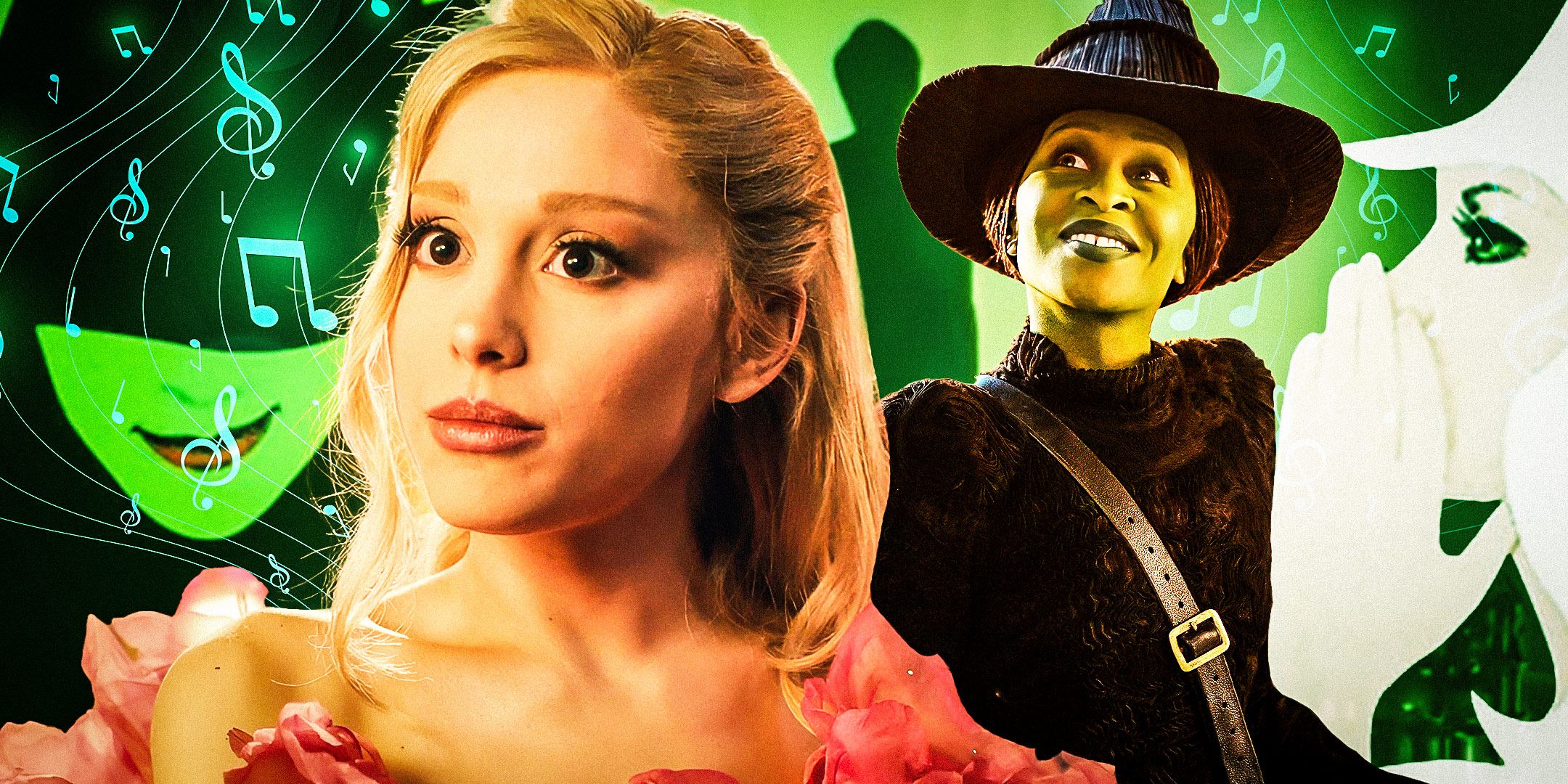
The musical, written by Winnie Holzman with music by Stephen Schwartz, softened many of Maguire’s harsher critiques to create a story about the "power of friendship." However, the foundational elements—the green skin, the rebellion against the Wizard, and the secret history of the witches—all originated in Maguire’s prose.
The Enduring Legacy of Elphaba Thropp
Why does the question of who wrote Wicked remain so relevant in 2026? It is because Gregory Maguire’s work represents a pivotal moment in literary history. Before Wicked, the idea of "the villain's side of the story" was not a dominant trope in popular culture. Maguire’s success paved the way for a wave of revisionist fiction, from Disney’s Maleficent to various retellings of Greek myths and Shakespearean plays.
Elphaba has become a cultural icon for the "other." Maguire gave a voice to the marginalized by taking a character who was pure "evil" and revealing the humanity underneath the green makeup. In doing so, he changed how we consume stories. We no longer accept a villain at face value; we ask what their childhood was like, what their motivations were, and who wrote the history books that condemned them.
Historical Context: L. Frank Baum vs. Gregory Maguire
While Gregory Maguire wrote the original book titled Wicked, he did not invent the characters of Oz. That honor belongs to L. Frank Baum, who wrote The Wonderful Wizard of Oz in 1900.
It is important to note that Maguire’s work is technically "parallel fiction" or "transformative work." Because Baum's original 1900 book entered the public domain decades ago, Maguire was legally permitted to use the characters and setting without permission from the Baum estate. However, Maguire was careful to avoid elements specifically created for the 1939 MGM film (such as the ruby slippers, which were silver in Baum's book) to avoid copyright issues with Warner Bros., who owns the film's rights.
Maguire’s contribution was taking a "flat" fairytale world and adding "round" literary depth. He transformed Oz from a whimsical land of adventure into a geopolitical landscape fraught with tension.
Frequently Asked Questions
Is "Wicked" based on a true story?
No, Wicked is a work of fiction. It is a revisionist retelling of the fictional characters created by L. Frank Baum in his 1900 book, The Wonderful Wizard of Oz. Gregory Maguire used the setting to explore real-world themes like politics and prejudice, but the story itself is entirely imagined.
Did Gregory Maguire write the script for the Wicked movie?
No. While the movie is based on the world Maguire created, the screenplay for the 2024/2025 film adaptations was primarily handled by Winnie Holzman (who wrote the book for the musical) and Dana Fox. Maguire served as a consultant and remains the author of the primary source material.
Is the book "Wicked" appropriate for children?
Generally, no. While the musical and films are appropriate for most children, the original novel by Gregory Maguire contains adult themes, graphic violence, and mature language. It is recommended for older teenagers and adults.
How many "Wicked" books did Gregory Maguire write?
Maguire wrote four books in the main "Wicked Years" series: Wicked, Son of a Witch, A Lion Among Men, and Out of Oz. He has also written a spin-off trilogy called Another Day, which includes The Brides of Maracoor, The Oracle of Maracoor, and The Witch of Maracoor.
Is Elphaba's name in the original Oz books?
No. L. Frank Baum simply referred to her as "The Wicked Witch of the West." The name Elphaba was entirely invented by Gregory Maguire for his 1995 novel. He created it by taking the initials of L. Frank Baum (L-F-B = El-pha-ba).
Final Recommendation for Readers
If you are a fan of the Wicked musical or the recent films, reading Gregory Maguire’s original 1995 novel is a rewarding, albeit challenging, experience. It provides a much deeper understanding of the political climate of Oz and the philosophical questions surrounding Elphaba’s life. To get the most out of the text, approach it as a piece of literary fiction rather than a fantasy adventure.
For those interested in the full scope of the story, start with Wicked (1995) and proceed through the "Wicked Years" series in order of publication. This will allow you to see how Maguire’s vision of Oz evolved over two decades, ultimately creating one of the most comprehensive and influential fictional universes in contemporary literature.
External Sources for Further Research:
Image Gallery