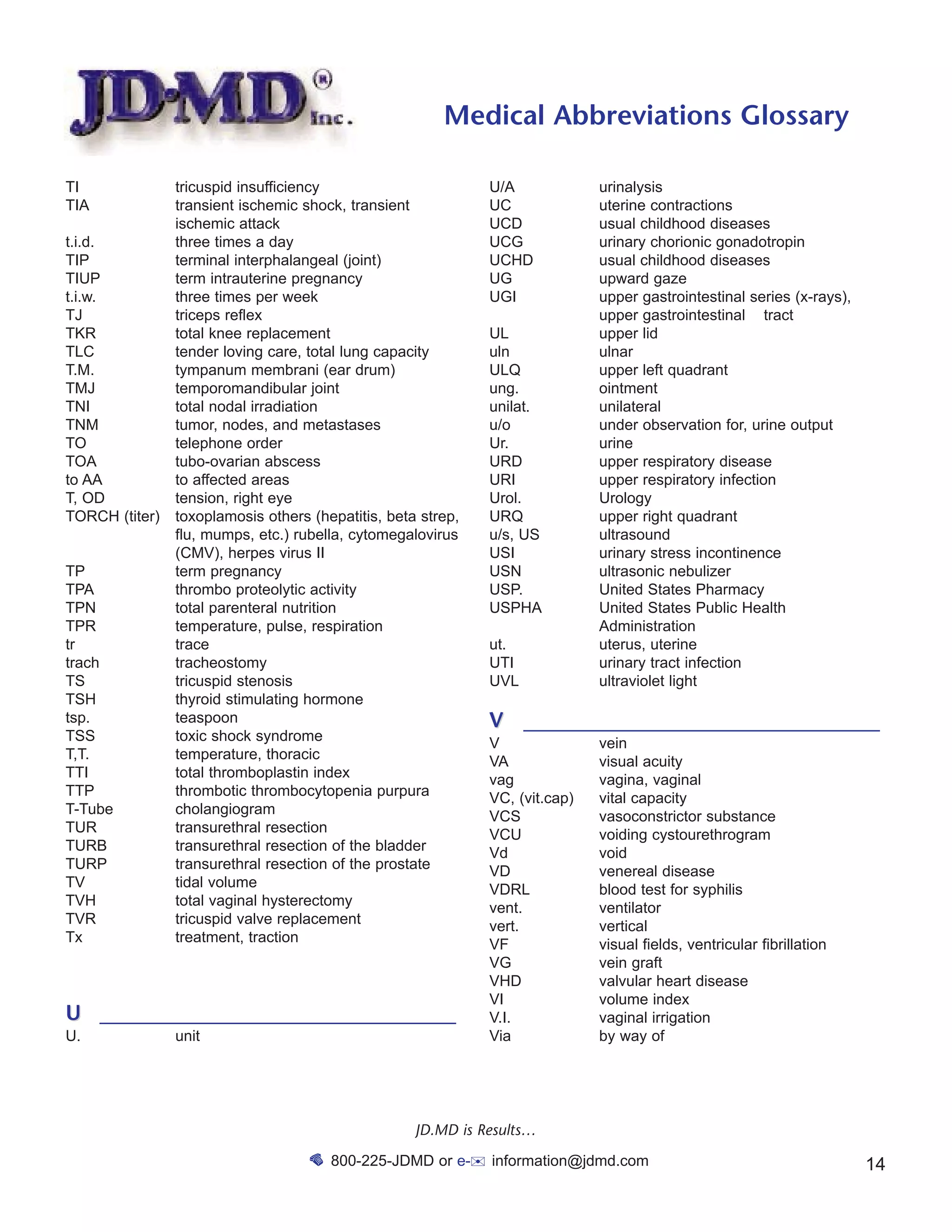
Understanding the T.T. Medical Abbreviation: Definitions and Context
In a clinical setting, the abbreviation "T.T." is highly context-dependent and most commonly refers to "Tetanus Toxoid." While it may occasionally appear in shorthand to describe "Tracheal Tube" or "Tender to Touch" during physical exa...
In a clinical setting, the abbreviation "T.T." is highly context-dependent and most commonly refers to "Tetanus Toxoid." While it may occasionally appear in shorthand to describe "Tracheal Tube" or "Tender to Touch" during physical examinations, it is primarily used in documentation regarding immunization history and public health records to denote the administration of a tetanus vaccine.
Contents
The Clinical Significance of Tetanus Toxoid (T.T.)
The most critical and widespread use of the abbreviation "T.T." in medical literature and patient charts is for Tetanus Toxoid. Tetanus is a serious bacterial infection caused by Clostridium tetani, an organism typically found in soil, dust, and animal feces. When this bacterium enters the body through an open wound—especially deep puncture wounds—it releases a toxin that causes painful muscle contractions, particularly in the jaw and neck.
The tetanus toxoid vaccine is a inactivated toxin that stimulates the immune system to produce antibodies without causing the disease itself. Because the immunity provided by this vaccine wanes over time, medical professionals routinely use "T.T." in patient records to track booster schedules. In most adult immunization protocols, a T.T. booster is recommended every ten years, or sooner if the patient sustains a high-risk injury in a setting where their immunization status is unknown.
Alternative Interpretations and Potential Ambiguity
While Tetanus Toxoid is the standard interpretation, medical abbreviations are notorious for overlap. Depending on the specialty or the specific clinical environment, "T.T." can occasionally denote other concepts. It is essential for healthcare providers to review the context of the note to avoid diagnostic or procedural errors.
- Tracheal Tube: In respiratory therapy or anesthesia, some clinicians may abbreviate "Tracheal Tube" as "T.T." This is more commonly seen as "ET" (Endotracheal) or "TT" (Tracheal Tube) in specialized intensive care unit (ICU) documentation.
- Tender to Touch: During a physical assessment, a physician might write "T.T." in shorthand to indicate an area of localized pain or sensitivity during palpation. This usage is generally restricted to informal clinician-to-clinician notes rather than formal diagnostic reporting.
- Tilt Table: In cardiology or neurology, "T.T." may refer to a "Tilt Table" test, used to diagnose the cause of syncope (fainting).
Because these variations exist, the Joint Commission and other patient safety organizations advocate for the use of "do-not-use" lists for ambiguous abbreviations. When reviewing a medical record, if the meaning of "T.T." is not immediately obvious from the surrounding text, it is standard practice to consult the full chart or the ordering physician for clarification.
Standardized Immunization Protocols
For patients and providers, understanding how "T.T." is documented is key to maintaining a valid immunization record. The vaccine is rarely administered as a single antigen preparation in modern practice; it is frequently combined with other components to provide broader protection.
The following table outlines the common vaccine combinations that utilize the Tetanus Toxoid component:
| Abbreviation | Full Name | Clinical Purpose |
|---|---|---|
| Td | Tetanus and Diphtheria | Adult booster for tetanus and diphtheria protection. |
| Tdap | Tetanus, Diphtheria, Pertussis | Includes protection against whooping cough. |
| DTaP | Diphtheria, Tetanus, Pertussis | Primary series for infants and young children. |
| TT | Tetanus Toxoid | Single antigen; historically used for specific booster requirements. |
The move toward using "Tdap" or "Td" as the primary shorthand is an effort to improve safety, as these represent the actual products administered in most 2026 healthcare facilities.
Documentation Best Practices for Providers
When documenting "T.T." in a patient’s electronic health record (EHR), clarity is paramount. Modern healthcare systems utilize structured data fields for immunizations, which minimizes the reliance on manual abbreviations. However, when writing progress notes, clinicians should follow these guidelines:
- Avoid Ambiguity: If you are referring to a patient’s tetanus status, write out "Tetanus Toxoid" or the specific vaccine product (e.g., Tdap) rather than using "T.T."
- Verify Context: If you encounter "T.T." in a patient chart from another facility, look for associated terms like "booster," "puncture wound," or "immunization schedule." If the context involves physical exam findings, look for references to anatomical locations.
- Update Records: If a patient arrives with a vague "T.T." entry on an old paper record, perform a new assessment or access a state-run immunization registry to confirm their status before recommending a follow-up dose.
Safety Considerations and Patient Advocacy
For patients, understanding your own medical records is a vital aspect of health literacy. If you receive a document stating that you received a "T.T." injection, you have the right to ask your provider to clarify exactly which vaccine preparation was used. This is particularly important for patients with allergies to vaccine components or those who need to maintain an accurate international health card for travel.
If you are unsure of your immunization history, you should:
- Request a copy of your full immunization record from your primary care physician.
- Check your regional or state health department database, which often aggregates data across different healthcare systems.
- If no records exist, most clinicians will treat the patient as unvaccinated and begin a standard catch-up schedule, as the risk of tetanus is significant and the vaccine is safe and effective.
Common Questions Regarding T.T.
Does T.T. always mean the same thing in every country? No. While Tetanus Toxoid is a globally recognized medical term, abbreviations vary by country and even by institution. In some jurisdictions, different abbreviations may be used for specific vaccine combinations, so it is always safer to use full names in international medical correspondence.
Is T.T. the same as the COVID-19 vaccine? No. Tetanus Toxoid is an entirely different class of vaccine used to prevent bacterial infection. There is no standard abbreviation for COVID-19 that utilizes the letters "T.T."
What if I am allergic to Tetanus Toxoid? True allergic reactions to the tetanus component are rare but possible. If you have been told you are "allergic to T.T.," it is essential to have this documented in your medical record with the specific nature of the reaction (e.g., anaphylaxis vs. local site irritation).
How long does T.T. immunity last? The protective antibody levels provided by the tetanus vaccine typically last for ten years in healthy adults. However, after a deep or "dirty" wound, providers may recommend an earlier booster if your last dose was more than five years ago.
Can a pharmacist tell me what T.T. means in my records? Yes. Pharmacists are highly trained in medication and vaccine terminology. If you have a question about an abbreviation found in your records, your local pharmacist can assist in interpreting the clinical shorthand.
Conclusion and Next Actions
The abbreviation "T.T." most commonly refers to Tetanus Toxoid, a critical vaccine component. While other interpretations exist—such as shorthand for a physical examination finding or a respiratory tube—these are context-dependent and far less standard.
If you find "T.T." in your own health records, the best course of action is to verify the entry with your healthcare provider. If it refers to an immunization, ensure your record is updated with the specific vaccine name (e.g., Tdap) to facilitate better care continuity. Always prioritize clear, jargon-free communication with your medical team to ensure your health history remains accurate and actionable.
Image Gallery