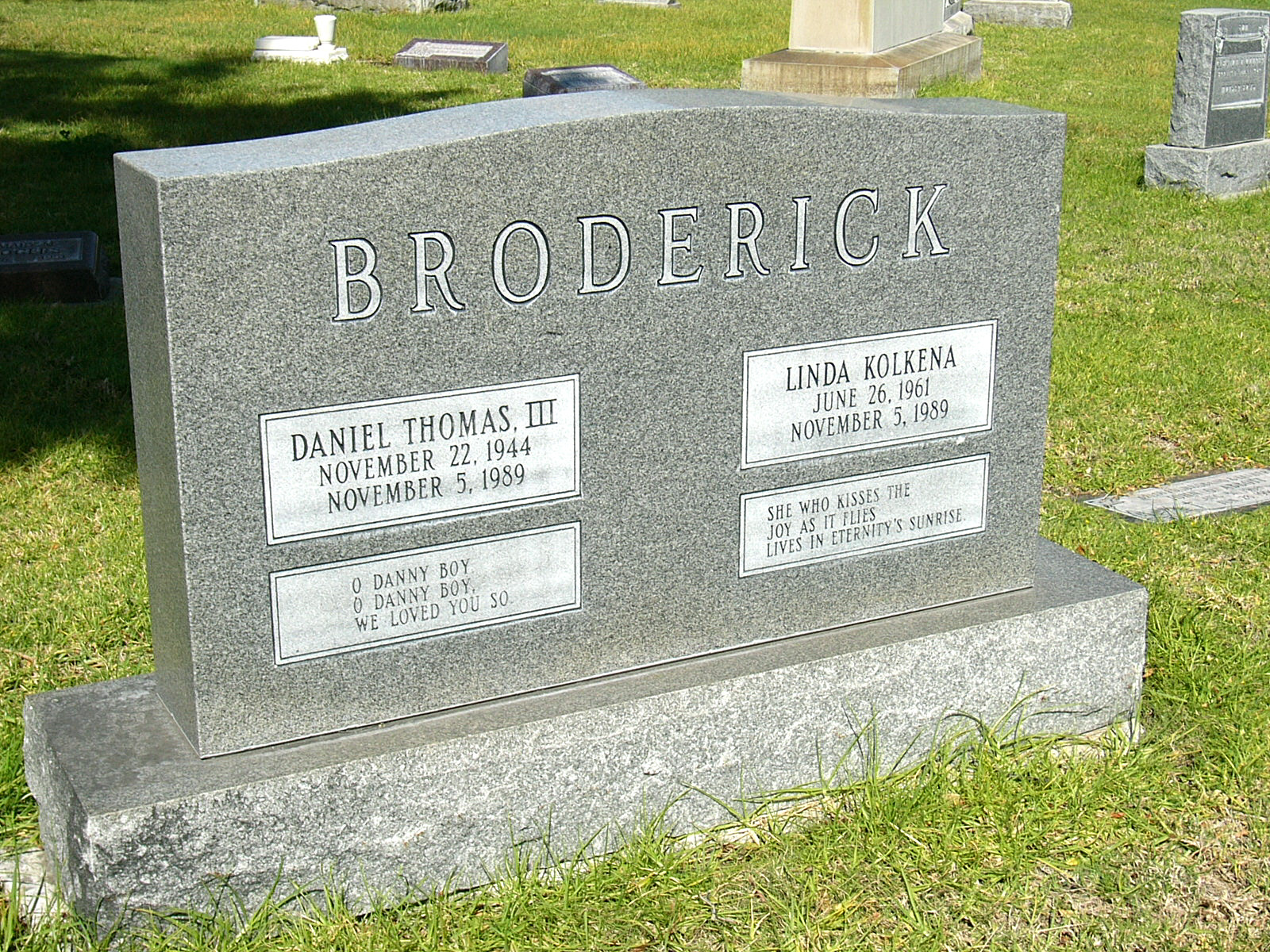
The Legacy of Dan Broderick and Linda Kolkena: A 2026 Legal and Cultural Retrospective
Note: This article examines the historical and legal significance of Dan Broderick and Linda Kolkena, whose tragic 1989 deaths and subsequent high-profile trials remain a foundational case study in American jurisprudence, domestic disp...
Note: This article examines the historical and legal significance of Dan Broderick and Linda Kolkena, whose tragic 1989 deaths and subsequent high-profile trials remain a foundational case study in American jurisprudence, domestic dispute escalation, and media sensationalism.
Contents
Decades after the fateful November morning in 1989 when Daniel Broderick III and his second wife, Linda Kolkena, were shot and killed in their San Diego home by Dan's estranged first wife, Betty Broderick, the case continues to command public and academic interest. As we evaluate the evolution of family law, domestic violence recognition, and the insanity defense in 2026, the Broderick case serves as a dark mirror reflecting how society handled messy divorces, psychological abuse, and the breaking points of human endurance before modern support structures existed.
Historical Background and the Rise of Dan Broderick
Daniel Broderick III was a formidable figure in the San Diego legal and medical communities. Possessing degrees from both Harvard Medical School and Harvard Law School, Dan represented the apex of professional achievement in the late 20th century. He built a lucrative malpractice defense practice, eventually becoming the president of the San Diego Bar Association.
However, his personal life was inextricably bound to his first wife, Elisabeth "Betty" Broderick. Betty had supported Dan through his grueling years of dual professional education, working multiple jobs while raising their growing family. When Dan finally established his practice and amassed significant wealth, the power dynamics within the marriage shifted drastically.
The Evolution of Professional Marriages Historical legal analyses of the late 1970s and 1980s highlight a recurring systemic flaw in equitable distribution laws of the era. Spouses who invested their youth and labor into putting a partner through professional school often found themselves financially and socially discarded once terminal degrees and high-earning statuses were achieved, with alimony and property division laws failing to adequately value non-monetary contributions.
The Catalyst: Linda Kolkena's Entry and the Bitter Divorce
In 1983, Dan Broderick hired 21-year-old Linda Kolkena as his legal receptionist. Kolkena was striking, charismatic, and younger than Dan, and the two soon began an affair that was an open secret within the local legal community. For years, Dan denied the relationship to Betty, gaslighting her while she struggled to maintain the household and care for their four children.
When Dan finally admitted the truth and filed for divorce, a legal and psychological war began. The divorce proceedings dragged on for years, fueled by Dan's absolute control over the legal system, his financial dominance, and Betty's escalating desperation.
- Financial Disparity: Dan used his legal prowess and financial leverage to cut off Betty's funds, leaving her struggling to pay basic bills while he lived in luxury.
- Custody Battles: Dan successfully obtained sole custody of the children, weaponizing the family court system against Betty.
- Legal Penalties: Betty was repeatedly fined and even jailed for contempt of court after violating restraining orders by leaving abusive messages on Dan and Linda's answering machines and driving her car into the front door of their new home.
The Climax: November 5, 1989
On November 5, 1989, Betty Broderick used a key she had stolen from her daughter to enter Dan and Linda's Marston Hills home in San Diego. She walked upstairs to their bedroom where Dan and Linda were asleep and fired five shots from a Smith & Wesson .38-caliber revolver. Linda was killed instantly; Dan was mortally wounded before Betty ripped the telephone cord out of the wall to prevent him from calling for help.
The double homicide shocked the nation, transforming a local society divorce into a national tabloid obsession. The public was instantly polarized, dividing cleanly into two camps: those who viewed Betty as a cold-blooded, premeditated murderess who deserved life in prison, and those who saw her as a battered woman pushed to temporary insanity by years of psychological torment and systemic injustice.
Legal Strategies and Trial Outcomes
The legal proceedings comprised two high-profile trials. The first trial in 1991 ended in a hung jury because two jurors believed the crime was manslaughter rather than murder, arguing that Betty had been driven to a state of diminished capacity by years of abuse. However, the prosecution successfully reframed the narrative in the second trial later that year.
| Trial Phase | Defense Strategy | Prosecution Focus | Verdict / Outcome |
|---|---|---|---|
| First Trial (1991) | Diminished capacity, battered woman syndrome, psychological abuse. | Premeditation, purchase of the weapon, unauthorized entry. | Hung jury (10-2 for conviction on second-degree murder, but ultimately declared a mistrial). |
| Second Trial (1991) | Continued focus on emotional distress and provocation. | Cold-blooded execution, lack of immediate physical threat, chilling post-crime behavior. | Convicted of two counts of second-degree murder; sentenced to 32 years to life. |
Societal Impact and Modern Legal Perspectives
In the contemporary context of 2026, the public and legal discourse surrounding Dan Broderick and Linda Kolkena has matured significantly. Modern understandings of coercive control, narcissistic abuse, and intimate partner violence provide a much deeper context for why Betty snapped, even if the act itself remains indefensible.
Legal scholars frequently cite the case as a watershed moment exposing the limitations of family law in protecting vulnerable spouses during high-conflict divorces. Today, family courts place a much higher emphasis on economic equity, restraining orders are enforced with greater digital and physical rigor, and psychological abuse is formally recognized as a severe precursor to physical violence.
Pros and Lessons Learned from the Broderick Tragedy
Analyzing the systemic failures and personal choices in the Broderick case highlights vital lessons for modern legal practice, marriage counseling, and domestic dispute resolution.
- Pro - Modern Legal Protections: Today's family courts utilize stricter protocols to prevent financial abandonment and asset hiding during high-net-worth divorces.
- Pro - Recognition of Coercive Control: Mental health professionals and legal frameworks now identify psychological torment and gaslighting as legitimate forms of abuse that require intervention before physical violence occurs.
- Con - The Danger of Weaponizing the Legal System: When one party dominates the legal process through professional expertise and financial might, it can trap the opposing party in a cycle of helplessness.
- Con - Failure of Early Intervention: The complete lack of mental health support and mediation during the Broderick divorce allowed animosity to fester into a lethal outcome.
Frequently Asked Questions
What happened to Dan Broderick and Linda Kolkena?
Dan Broderick and Linda Kolkena were shot and killed in their bed on November 5, 1989, by Dan's first wife, Betty Broderick. The double homicide followed a bitter, multi-year divorce and custody battle that captivated national media attention.
Is Betty Broderick still in prison?
Yes, Betty Broderick remains incarcerated at the California Institution for Women in Chino, California, serving a sentence of 32 years to life. As of 2026, she has been repeatedly denied parole after failing to show adequate remorse or insight into her crimes.
Why did Betty Broderick target Linda Kolkena?
Betty viewed Linda Kolkena as the primary catalyst for the destruction of her 16-year marriage and family structure. The workplace affair and subsequent marriage between Dan and Linda exacerbated Betty's feelings of betrayal, disenfranchisement, and abandonment.
How did the Broderick case change family law?
The case exposed the psychological tolls of protracted, high-conflict divorces and prompted legal reforms regarding how courts handle spousal support, asset concealment, and the recognition of emotional abuse within domestic dispute frameworks.
Where did the murders take place?
The murders occurred in the upscale Marston Hills neighborhood of San Diego, California, inside the home that Dan Broderick and Linda Kolkena shared following their marriage in 1989.
Navigating High-Conflict Legal Disputes Today
If you or someone you know is navigating a high-conflict divorce or experiencing domestic abuse, it is crucial to seek professional legal counsel and psychological support immediately. Modern legal systems offer robust safeguards, confidential mediation services, and protective orders designed to de-escalate crisis situations long before they reach a tragic conclusion. Prioritize safety, secure independent financial counseling, and utilize certified domestic advocacy resources to ensure a constructive path forward.
Image Gallery