The Ultimate Guide to the CFB Imperialism Map in 2026
The College Football (CFB) Imperialism Map is a captivating intersection of college sports fandom, geographic strategy, and data visualization. While it shares no connection with geographic risk map calculators or medical provider netw...
The College Football (CFB) Imperialism Map is a captivating intersection of college sports fandom, geographic strategy, and data visualization. While it shares no connection with geographic risk map calculators or medical provider networks, this article focuses purely on the dominant digital culture surrounding the 2026 college football season, tracking how territory changes hands weekly through the mechanics of the Risk game and traditional head-to-head match-ups.
Contents
Understanding the Mechanics of College Football Imperialism
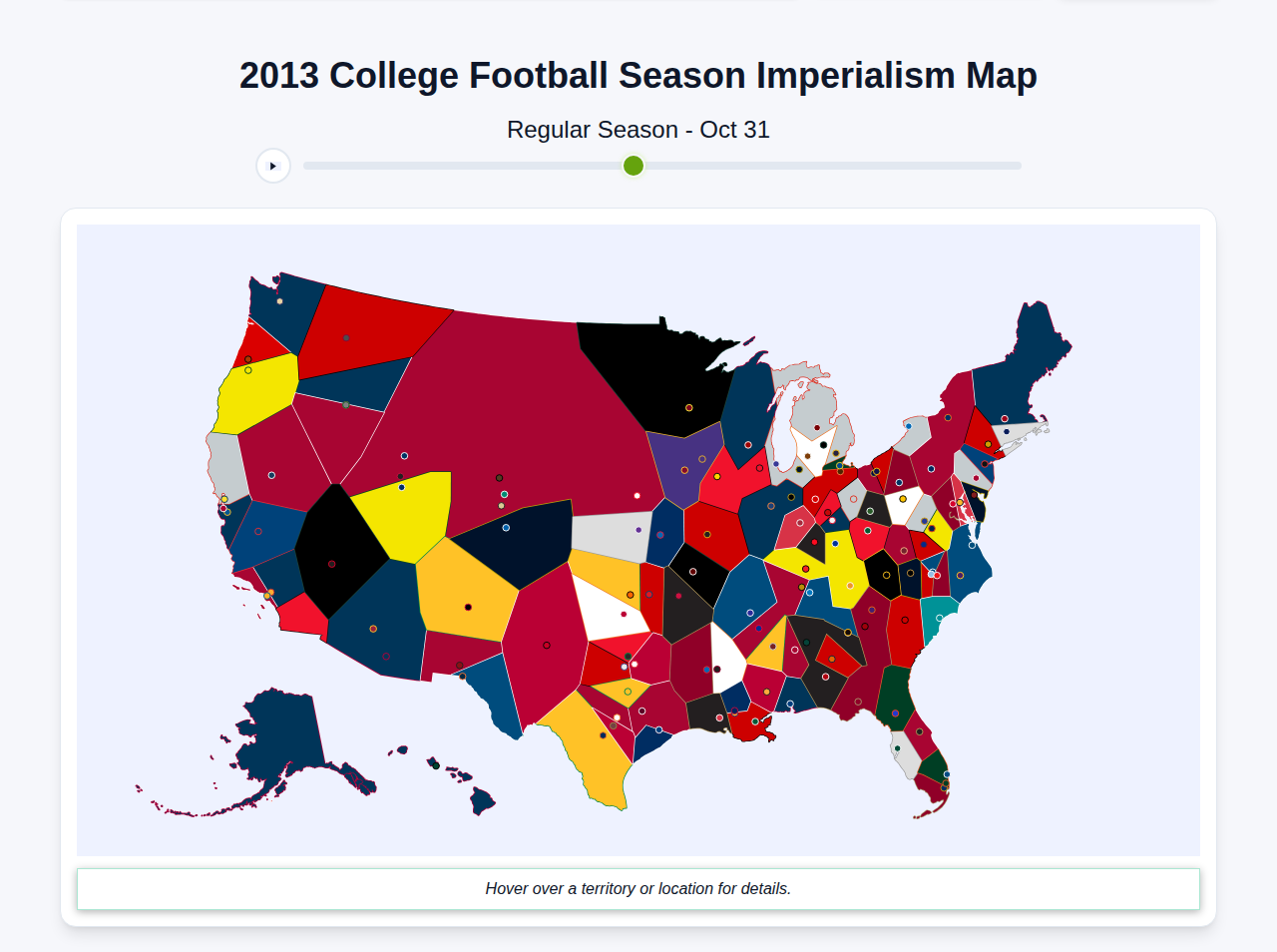
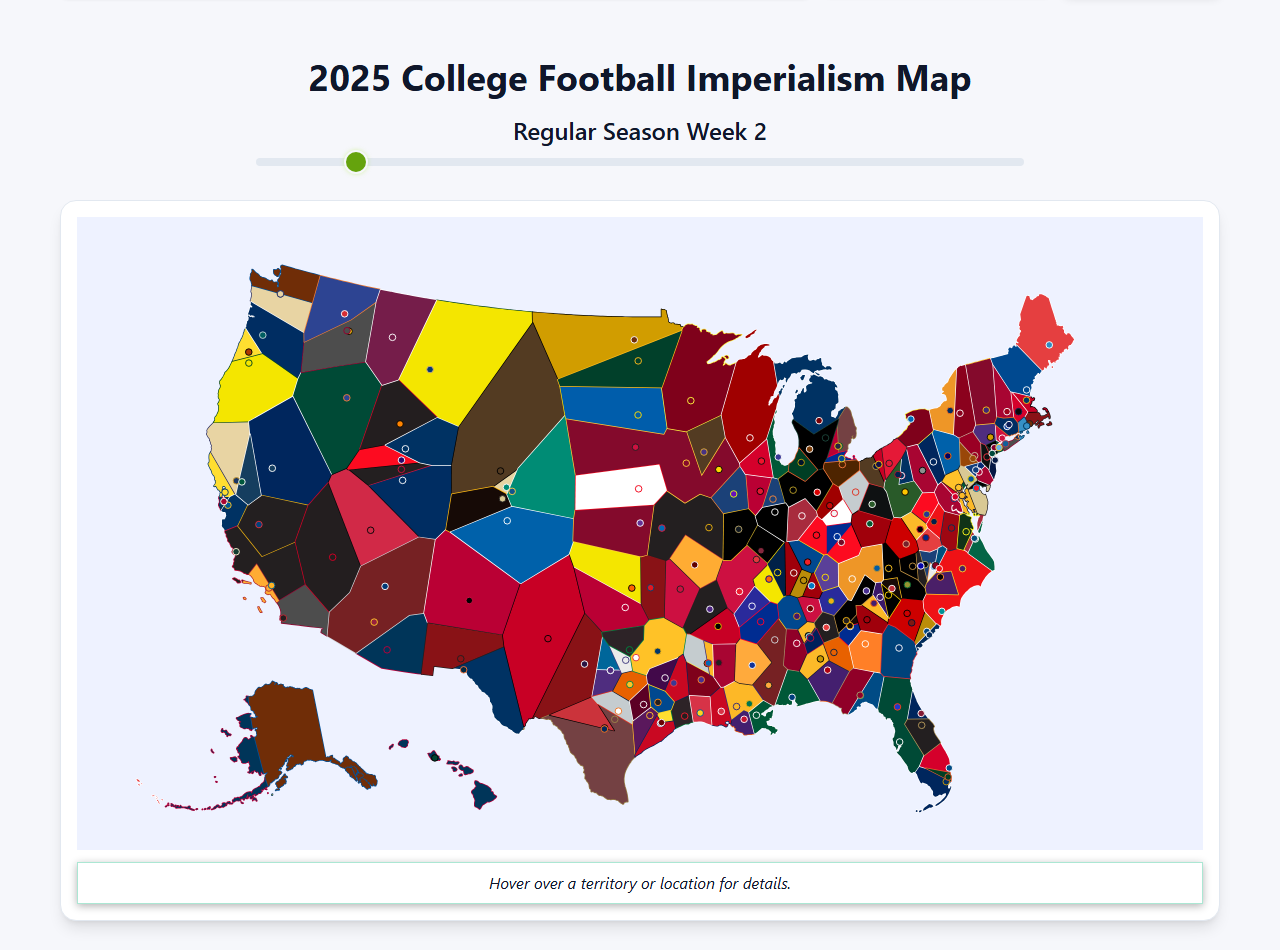
The concept of the college football imperialism map borrows its framework from the classic board game Risk. At the dawn of the season, every team in the Football Bowl Subdivision (FBS) is assigned a specific territory based on proximity, typically using a Voronoi diagram that maps out land areas closest to each university's stadium.
As the season progresses through 2026, every Saturday match-up acts as a territorial battle. When a team wins an away or home game against an opponent who currently holds land, the victor absorbs all territories owned by the defeated team. This creates a dynamic, high-stakes visual representation of the college football landscape that shifts weekly.
- Initial Allocation: Territories are distributed proportionally across all 134 FBS programs before the opening kickoff of Week 1.
- Territory Transfer: Winning a game requires capturing all land blocks currently held by the opponent, regardless of conference affiliation or division.
- Consolidation Phase: By the end of November, land naturally consolidates into the hands of powerhouse programs and undefeated conference leaders.
How the 2026 CFB Imperialism Map Visualizes Conference Dominance
Analyzing the map provides a unique lens through which to view conference supremacy. Traditional powerhouses in the Southeastern Conference (SEC) and the Big Ten often dominate the early and mid-season maps due to dense regional clusters and high-profile non-conference victories.
| Conference Tier | Typical Early Season Land Mass | Mid-Season Consolidation Factor | Primary Strategic Advantage |
|---|---|---|---|
| Power Four Conferences | High (Massive regional blocks) | Extremely High (Controls 80%+ of map) | Deeper rosters, high-profile crossover games |
| Group of Five Programs | Moderate (Localized home territories) | Low to Moderate (Vulnerable to single losses) | Upside potential via early upsets over major brands |
| Independent Programs | Variable (Isolated geographic pockets) | Low (Subject to travel and schedule gaps) | Unique geographic footprints that span multiple time zones |
The visualization acts as a live scoreboard of college football parity. When a Group of Five program pulls off a massive upset against a traditional blue blood in September 2026, thousands of square miles of land instantly change color, shifting from a major conference hub to a regional mid-major stadium.
Tracking and Mapping Tools for the 2026 Season
Community-driven mapping has evolved significantly over the years. Dedicated developers and statisticians on platforms like Reddit's college football community utilize Python scripts, GIS mapping software, and custom algorithms to update the imperialism map within hours of the final whistle every Saturday night.
Operational Tip for Map Enthusiasts When looking for the most accurate and up-to-date weekly visualizers in 2026, always check community-vetted repositories and interactive web tools that account for scheduling changes, FCS opponent territory rules, and conference realignment shifts that took effect over the summer.
Key Factors Handled by Modern Map Builders
- FCS Opponent Handling: Teams playing against Football Championship Subdivision opponents generally do not acquire new land for wins, preventing massive inflation of major conference footprints.
- Neutral Site Games: Bowl games and early-season neutral site classics require specific coordinate mapping to determine which school claims the physical stadium footprint.
- Conference Realignment Adjustments: The map automatically recalibrates Voronoi boundaries to reflect updated conference memberships and new stadium locations for the 2026 cycle.
Strategic Comparison: Imperialism Maps vs. Traditional Standings
To truly appreciate the appeal of the CFB imperialism map, it helps to contrast it against conventional metrics used by the College Football Playoff (CFP) selection committee.
| Evaluation Metric | Traditional CFP Standings | CFB Imperialism Map |
|---|---|---|
| Primary Objective | Resume strength, strength of record, and dominance | Geographic land control and conquest tracking |
| Treatment of Losses | Heavily penalizes multiple losses | Completely strips a team of all accumulated land upon a single defeat |
| Mid-Major Relevance | Often struggles with ballot access for smaller schools | Instantly rewards giant-killers with massive territorial expansion |
| Fan Engagement | Analytical, debate-driven, and stressful | Playful, visual, and highly gamified |
Frequently Asked Questions About the CFB Imperialism Map
What is the CFB imperialism map?
The CFB imperialism map is a fan-made visualization that applies the rules of the board game Risk to college football, where teams capture opponent territory by winning head-to-head games. It provides an alternative, game-theory-based way to track the college football season.
How are the initial territories decided at the start of the season?
Initial territories are typically calculated using a Voronoi diagram based on geographic proximity, ensuring every square mile of the map is assigned to the nearest FBS stadium before Week 1 kicks off.
Do wins against FCS teams count on the imperialism map?
Generally, no. Most community-run maps exclude FCS opponents from the land-transfer mechanic to prevent major conference teams from unfairly farming territory off lower-division schools.
Who updates the imperialism map each week?
The maps are maintained by dedicated programmers and community members within sports forums, who write automated scripts to process game outcomes and generate updated graphic renders every Sunday morning.
Can a team win back its original territory after losing it?
Yes. If a team loses its land in September but later defeats the current landholder later in the season, it can reclaim its original geographic footprint along with any other territory that team accumulated in the interim.
Where can I view the weekly updates for the 2026 season?
Weekly updates are widely shared across sports discussion boards, social media platforms dedicated to college athletics, and specialized open-source mapping websites as soon as the weekend slate concludes.
Conclusion and Next Steps for Fans
Engaging with the CFB imperialism map adds an immersive layer of strategy and entertainment to the traditional Saturday routine. Whether you are tracking your favorite program's march toward total geographic domination or rooting for an underdog to pull off a chaotic land grab, keep an eye on community forums for the latest weekly renders throughout the 2026 college football season.
Image Gallery