Essential Tips When Playing Basketball: Mastering the Court in 2026
To excel at basketball in 2026, players must master technical fundamentals like the BEEF shooting method and ambidextrous dribbling while prioritizing spatial awareness and defensive communication. Success relies on a combination of hi...
To excel at basketball in 2026, players must master technical fundamentals like the BEEF shooting method and ambidextrous dribbling while prioritizing spatial awareness and defensive communication. Success relies on a combination of high-intensity interval conditioning, consistent practice of game-speed drills, and selecting the right equipment to ensure safety and peak performance.
Contents
Perfecting Your Shooting Mechanics
Shooting is often considered the most vital skill in basketball. In the modern, "positionless" era of 2026, even centers and defensive specialists are expected to provide floor spacing by hitting perimeter shots. The foundation of a reliable jump shot is rooted in the BEEF principle, an acronym that has stood the test of time for coaching proper form.
The BEEF Principle Explained
- Balance: Your power begins at your feet. Keep them shoulder-width apart, usually with your dominant foot slightly ahead of the other. Ensure your weight is distributed on the balls of your feet, allowing for a quick, explosive vertical jump.
- Eyes: Focus on a specific target. Most elite shooters focus on the back of the rim or the hooks that hold the net. Avoid watching the flight of the ball; keep your eyes locked on the target until the shot is completed.
- Elbow: Your shooting elbow should be tucked in, forming a 90-degree angle (the "L" shape). This alignment ensures that the force of your shot is directed in a straight line toward the basket, reducing the "left-right" variance that causes misses.
- Follow-through: After releasing the ball, keep your hand up in the air, appearing as if you are reaching into a cookie jar on a high shelf. This flick of the wrist provides the necessary backspin, which softens the ball’s contact with the rim and increases the "shooter’s touch."
Developing Range and Consistency
Consistency is born from muscle memory. To develop range, you must ensure that your power is generated from your legs rather than "heaving" the ball with your upper body. According to USA Basketball, players should start close to the basket with one-handed form shooting to isolate the wrist and arm mechanics before moving to the three-point line. In 2026, data-driven shooting sensors are often used to track the arc of the ball—aiming for an entry angle of approximately 45 degrees is statistically optimal for maximizing the rim's surface area.
Elevating Ball Handling and Dribbling Control
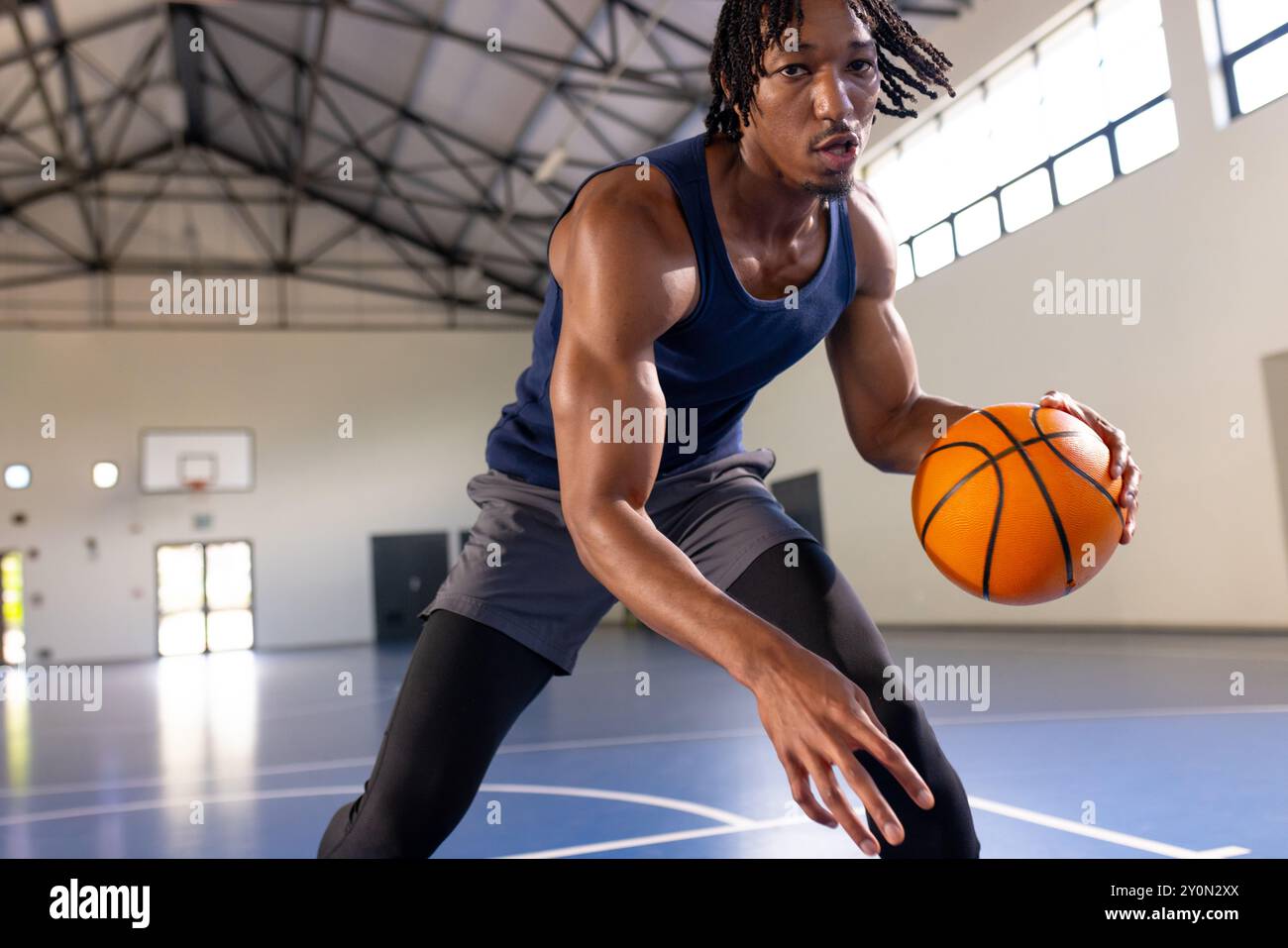
In the high-speed environment of a 2026 basketball game, ball handling is about more than just "fancy moves." It is about ball security and creating space. A player who can handle the ball effectively forces the defense to react, opening up passing lanes and driving opportunities.
Finger-Tip Control and Low Center of Gravity
The most common mistake beginners make is slapping the ball with their palms. Effective dribbling requires the use of the pads of your fingers. This provides more surface area and sensory feedback, allowing for quicker changes in direction. Furthermore, maintaining a low center of gravity—keeping your hips down and knees bent—makes you more stable and harder to knock off balance. The ball should generally stay below your waist to minimize the time it is "live" and vulnerable to steals.
Eliminating Weak Hand Vulnerability
A one-dimensional player is easy to defend. If a defender knows you can only drive to your right, they will "shade" you to the left, effectively neutralizing your offense. Dedicated training sessions must focus on the non-dominant hand. Practice the "Mikan Drill" and stationary crossover drills using only your weak hand to build the necessary coordination. Professional trainers suggest that for every 10 minutes spent on your dominant hand, you should spend 20 minutes on your weak hand until the proficiency is equalized.
Mastering Defensive Positioning and Communication
Defense wins championships, a mantra that remains true in 2026. While offense depends on rhythm and skill, defense depends on effort, positioning, and discipline.
The Defensive Stance and Lateral Quickness
A proper defensive stance requires you to be low, with your feet wider than shoulder-width and your arms extended to disrupt passing lanes. You should never be "flat-footed." Instead, stay on the balls of your feet to facilitate lateral movement. When sliding to keep up with an offensive player, avoid crossing your feet; this creates a moment of instability where a quick change of direction by the opponent will leave you off balance.
Help Defense and Rotations
Individual defense is only half the battle. Team defense requires an understanding of "help side" principles. When the ball is on the opposite side of the court, you should sag off your player toward the "paint" (the restricted area) to prevent easy drives. Communication is the glue of a good defense. In the loud environment of a competitive game, you must vocally call out screens ("Screen left!"), "I’ve got ball," and "Help!" to ensure everyone is synchronized. Failure to communicate often leads to missed assignments and easy baskets for the opposition.
Basketball IQ: Movement and Spacing
Basketball IQ refers to a player's ability to read the game and make the right decision in real-time. This often involves what you do when you don't have the ball.
- Spacing: Proper spacing prevents the defense from "clogging" the middle. Generally, players should maintain 15 to 18 feet of distance between each other.
- Cutting: Don't stand still. A well-timed "backdoor cut" (running behind a defender toward the hoop) can lead to an easy layup.
- Setting Screens: Using your body to block a teammate's defender is one of the most selfless and effective plays in basketball. Ensure your feet are set and your arms are tucked in to avoid an offensive foul.
Essential Gear and Equipment for 2026
The right gear is essential for both performance and injury prevention. In 2026, technology in footwear and apparel has reached new heights, focusing on impact protection and moisture management.
| Equipment Type | Key Features | Primary Benefit |
|---|---|---|
| Performance Shoes | Nitrogen-infused foam; multi-directional traction | Maximum energy return and ankle stability |
| Basketball | Microfiber composite cover; moisture-wicking | Consistent grip and durability on various surfaces |
| Ankle Braces | Hinged or lace-up rigid support | Prevention of inversion sprains during lateral cuts |
| Mouthguard | Custom-fit boil-and-bite or dental-grade | Protection against dental trauma and concussion risk |
| Compression Gear | Graduated compression fabrics | Improved blood flow and reduced muscle fatigue |
Conditioning and Injury Prevention
Basketball is a high-impact sport involving constant sprinting, jumping, and physical contact. Physical preparation is non-negotiable.
Dynamic Warm-ups vs. Static Stretching
Before playing, focus on dynamic stretching—movements that mimic the actions of the game, such as high knees, butt kicks, and lateral lunges. Static stretching (holding a stretch for 30 seconds) is better suited for post-game recovery. Dynamic warm-ups increase the core temperature and prepare the nervous system for explosive movements.
Interval Training
The game of basketball is a series of short, high-intensity sprints followed by brief periods of lower activity (like walking to the free-throw line). Your conditioning should reflect this. Instead of long-distance jogging, utilize High-Intensity Interval Training (HIIT). Wind sprints or "suicides" (running to different lines on the court and back) are the standard for building the specific aerobic and anaerobic capacity needed for the fourth quarter.
Recovery and Hydration
In 2026, recovery is treated with the same importance as practice. This includes prioritizing 7–9 hours of sleep and maintaining optimal hydration levels. According to The Mayo Clinic, athletes should consume fluids before, during, and after physical activity to prevent heat-related illnesses and maintain cognitive function.
Frequently Asked Questions
How can I improve my shooting range?
Improving range is about the kinetic chain. Power should flow from your legs, through your core, and into your wrist flick. Practice "range ladders": start at the rim, make five shots, then take one step back and repeat. If your form breaks down, you have reached your current effective limit. Focus on leg strength through squats and lunges to provide the necessary lift.
What is the best way to defend a faster player?
If an opponent is faster, do not play them "tight." Give them a cushion of a few feet. This "buffer" gives you more time to react to their movements. Force them toward the sidelines or toward your teammates (the "help defense") rather than giving them a straight path to the basket.
Can I get better at basketball if I practice alone?
Yes. Many of the greatest players spent hours practicing solo. Focus on ball-handling drills (like the "Spider Dribble"), the Mikan Drill for finishing around the rim, and "toss-outs" where you spin the ball to yourself to practice catching and shooting. Solo practice is the best time to refine mechanics without the pressure of a game.
How do I stop getting nervous during games?
Anxiety often stems from a lack of preparation or fear of failure. Develop a "next play" mentality. If you miss a shot or commit a turnover, acknowledge it and immediately focus on the next defensive possession. A consistent pre-game routine can also help "anchor" your mind and reduce performance jitters.
Final Recommendation
To truly elevate your game in 2026, you should record your sessions. Video analysis, once reserved for the pros, is now accessible via smartphones. Reviewing your shooting form or defensive positioning from an external perspective often reveals flaws that you cannot "feel" while playing. Combine this visual feedback with consistent, high-repetition practice and a disciplined approach to physical conditioning to reach your full potential on the court.
Image Gallery