Mathew Mellon and the Rise of Mobile Payment Security
The late banking heir Matthew Mellon became an unexpected bridge between legacy private wealth and modern financial technology. By anticipating the shift toward blockchain-based liquidity rails, his high-profile investments highlighted...
The late banking heir Matthew Mellon became an unexpected bridge between legacy private wealth and modern financial technology. By anticipating the shift toward blockchain-based liquidity rails, his high-profile investments highlighted the urgent need for enterprise-grade cryptographic security, multi-party authentication, and cold-storage key management across modern mobile payment ecosystems.
Contents
The Intersection of Banking Heritage and Digital Security
Matthew Mellon, a descendant of the prominent American banking family that founded Mellon Bank (now BNY Mellon), spent the final decade of his life looking beyond traditional wealth management. Long accustomed to institutional banking protocols built on centralized trust models, Mellon recognized early in the 2010s that global payment networks were transitioning away from legacy mainframe architecture toward decentralized, mobile-first settlement layers.
This pivot coincided with a broader transformation in financial infrastructure. Traditional electronic funds transfers—such as the Automated Clearing House (ACH) in the United States or SWIFT for international wire transfers—were built for batch processing and delayed settlement. As mobile smartphone adoption surged, consumer expectation shifted toward instant, peer-to-peer (P2P) clearing. However, speeding up transaction settlement introduced massive security risks, including identity theft, account takeover (ATO) attacks, and unauthorized key interception.
Mellon’s interest in financial innovation focused on a core industry dilemma: how to achieve near-instantaneous global liquidity without sacrificing the regulatory compliance and security guarantees enforced by centuries-old banking institutions. His work and public investments catalyzed discussions around how mobile devices could serve as secure hardware endpoints for high-value financial transactions.
The Bet on Ripple: Infrastructure and Regulatory Alignment
Unlike many early cryptocurrency investors who favored fully anonymous, permissionless networks, Matthew Mellon made his most publicized digital asset investment in Ripple (XRP). He reasoned that mainstream adoption of digital assets and mobile payments required direct integration with existing banking compliance networks, including Know Your Customer (KYC) and Anti-Money Laundering (AML) standards.
| Legacy Banking Rails (ACH/SWIFT) | Next-Gen Mobile Liquidity (XRP) |
|---|---|
| * Multi-day batch settlement | * 3 to 5 second finality |
| * High correspondent bank fees | * Micro-fractional fee overhead |
| * Centralized account databases | * Cryptographic ledger entry |
| * Vulnerable to centralized leaks | * Distributed node consensus |
Mellon understood that for mobile devices to become true digital wallets, the underlying payment protocols had to solve three critical security challenges:
- Settlement Risk: Reducing the time window between payment initiation and finality to prevent double-spending and intermediary defaults.
- Identity Verification: Binding cryptographic signature authority to verified real-world identities without exposing sensitive private keys over open networks.
- Liquidity Friction: Allowing real-time cross-border value transfer directly from mobile interfaces without relying on pre-funded nostro/vostro accounts.
By putting significant personal capital into banking-focused cryptographic assets, Mellon validated the premise that mobile payment infrastructure would ultimately be powered by cryptographic ledgers rather than legacy database entries.
Evolution of Mobile Payment Security Architecture
The rise of mobile payments over the past decade transformed the smartphone from a simple software interface into a dedicated cryptographic hardware device. The security frameworks protecting mobile transactions today reflect lessons learned during the volatile early years of digital asset custody.
Tokenization and Hardware-Backed Enclaves
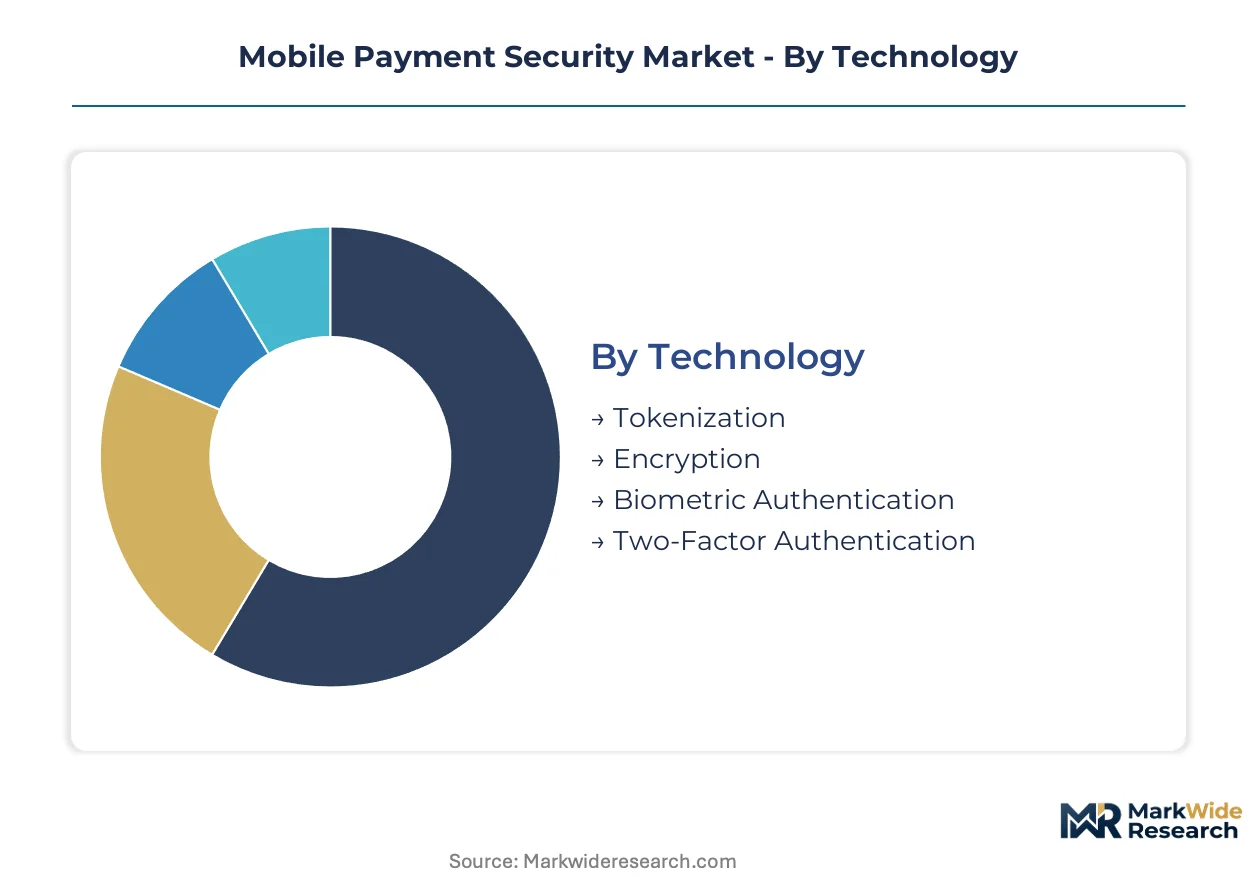
Modern mobile payment systems—ranging from retail wallets like Apple Pay and Google Wallet to institutional mobile banking apps—rely heavily on hardware isolation. Instead of transmitting raw bank account details or static primary account numbers (PANs), mobile hardware utilizes dynamic tokenization standardized by EMVCo.
When a user initiates a transaction via a mobile device:
- The sensitive payload is managed inside a Secure Element (SE) or a hardware-based Trusted Execution Environment (TEE) built into the system-on-chip (SoC).
- The payment network issues a device-specific surrogate value (a token) paired with a cryptographically generated dynamic cryptogram unique to that single transaction.
- Even if an attacker intercepts the mobile transmission via a rogue Wi-Fi access point or compromised cellular stack, the intercepted token cannot be reused for subsequent purchases.
Public-Key Cryptography and Biometric Validation
Mobile payment security modernizes security by replacing static passwords with asymmetric public-key cryptography. When registering a payment instrument or wallet, the mobile device generates a public-private key pair.
The private key remains permanently stored inside the device's secure enclave, non-exportable even to the operating system root level. Access to perform cryptographic signing using this private key is gated behind local biometric authentication—such as FIDO2-compliant facial recognition or capacitive fingerprint scanning. The payment processor or ledger node only receives the signed payload, verifying it using the corresponding public key.
Cryptographic Key Management: Lessons from the Mellon Legacy
One of the most widely reported aspects of Matthew Mellon’s cryptocurrency holdings was the extreme security measures he employed to protect his digital private keys. Mellon reportedly distributed cold-storage devices and seed phrases across multiple bank vaults in different jurisdictions under various names to mitigate physical theft and extortion risks.
While effective against physical intrusion, this hyper-fragmented approach highlighted a critical flaw in single-owner key architecture: single point of failure risk. Following his untimely death in 2018, complexity surrounding key retrieval created unprecedented inheritance and asset recovery challenges. This event served as a major case study for the fintech industry, accelerating the development of advanced key recovery and custodial architectures for mobile applications.
Key Custody Architecture Evolution:
- Legacy Single Private Key
- Single point of failure
- High physical loss risk
- Complex manual recovery
- Modern Distributed MPC
- Threshold Secret Sharing (tss)
- Multi-device shard distribution
- Seamless cloud & biometric recovery
Multi-Party Computation (MPC)
To solve the key management vulnerabilities exposed by early crypto pioneers, modern mobile payment security platforms rely on Multi-Party Computation (MPC). MPC divides a cryptographic private key into multiple encrypted secret shares distributed across separate entities (e.g., the user’s mobile device enclave, a cloud provider, and a compliance guardian server).
During a transaction:
- The parties run an interactive cryptographic protocol to compute a digital signature without ever reconstructing the complete private key on any single machine or device.
- If a user loses their smartphone, the key share stored on the lost device is revoked.
- The user recovers account access using identity-verified biometric authentication paired with the remaining distributed shares, eliminating single points of failure.
Account Abstraction and Smart Contract Wallets
In modern mobile Web3 and decentralized finance (DeFi) payment rails, programmable Account Abstraction (such as Ethereum's ERC-4337 standard) has largely replaced primitive seed phrases. Smart contract wallets permit non-custodial mobile management with enterprise safety features:
- Social Recovery: Designating trusted contacts or institution-backed guardians to sign recovery requests.
- Daily Transaction Limits: Enforcing dynamic daily spend caps directly on-chain or via smart contract logic to contain device theft losses.
- Automated Fraud Freezes: Pausing transactions automatically if suspicious key behavior or anomaly alerts trigger pre-set parameters.
Comparing Mobile Payment Security Frameworks
Mobile financial architectures deploy distinct security mechanisms based on their regulatory exposure, settlement speed, and underlying technology stack. The following table contrasts the dominant frameworks operating in the digital economy:
| Security Dimension | Legacy Mobile Banking (ACH/SEPA Apps) | Tokenized Mobile Wallets (Apple Pay / Google Wallet) | Modern Non-Custodial Mobile Wallets | Institutional Liquidity Networks (RippleNet) |
|---|---|---|---|---|
| Primary Authentication | Passwords, SMS OTP, Time-based OTP (TOTP) | Biometric (Face ID/Fingerprint) via Hardware Enclave | Local Biometrics + Passphrase / MPC Key Shares | Multi-Signature Hardware Security Modules (HSM) |
| Data Protection Method | Transport Layer Security (TLS 1.3), Session Tokens | EMV Tokenization, One-Time Dynamic Cryptograms | Asymmetric Public-Key Encryption, Local Storage | Interledger Protocol (ILP) Cryptographic Proofs |
| Key/Credential Location | Centralized Bank Servers | Device Secure Element (SE) / Host Card Emulation (HCE) | On-Device Encrypted Storage / MPC Key Shards | Distributed Institutional Ledger Nodes / HSMs |
| Settlement Latency | 1 to 3 Business Days | Instant (Front-end), 1 to 3 Days (Back-end Clearing) | Seconds to Minutes (Blockchain dependent) | 3 to 5 Seconds |
| Main Vulnerability Vectors | SIM-swapping, Credential Stuffing, Phishing | POS Terminal Tampering, Device Theft (if PIN compromised) | Malware / Screen Scrapers, Lost Seed Recovery Failure | API Endpoint Exploits, Node Consensus Collusion |
| Regulatory & Compliance Level | Strict National Banking Laws (FDIC, PSD2/PSD3) | PCI-DSS, EMVCo Compliance, Financial Data Regulations | Self-Hosted (Varies by jurisdiction and broker gateway) | Strict Institutional KYC/AML & ISO 20022 Alignment |
Modern Regulatory Compliance and Anti-Fraud Technologies
As mobile devices become primary transactional interfaces, global regulatory bodies enforce strict controls to curb fraud and illicit financial flows. In Europe, the Revised Payment Services Directive (PSD2) and its evolving framework PSD3 mandate Strong Customer Authentication (SCA) for electronic transactions.
SCA requires mobile payment applications to validate at least two of the following independent elements before authorizing funds transfer:
- Knowledge: Something only the user knows (e.g., a PIN or password).
- Possession: Something only the user possesses (e.g., a verified mobile device hardware enclave or secure token).
- Inherence: Something the user is (e.g., fingerprint, facial geometry, or behavioral biometrics).
Strong Customer Authentication (SCA) Framework:
- KNOWLEDGE
- Password / PIN
- Dynamic Passcode
- POSSESSION
- Secure Hardware
- Paired Mobile Device
- INHERENCE
- Biometric Scan
- Behavioral Patterns
Behavioral Analytics and AI Risk Scoring
Modern mobile payment gateways integrate real-time risk engines powered by machine learning algorithms. Beyond static authentication, background services analyze behavioral telemetry to detect abnormal account usage:
- Device Telemetry: Assessing touch-screen pressure, typing cadence, micro-swipes, and holding angles to verify the physical presence of the legitimate user.
- Network Context: Identifying sudden IP address jumps, unauthorized VPN usage, or active connection attempts from known proxy nodes.
- Device Environment Checks: Detecting rooted or jailbroken operating systems, hooked API calls, or active remote-desktop sharing software that could indicate a Man-in-the-Middle (MitM) or Man-in-the-Mobile (MitMo) attack.
If the risk score exceeds acceptable operational thresholds, the payment stack automatically step-up authenticates the user or temporarily flags the transaction for manual fraud review.
Best Practices for Implementing Secure Mobile Payment Systems
Engineers, fintech managers, and security architects designing next-generation mobile payment stacks must adopt a defense-in-depth posture:
- Leverage Hardware Enclaves: Store private keys, authentication tokens, and cryptographic seeds inside hardware-backed storage (Android Keystore with StrongBox or iOS Secure Enclave). Never store plaintext credentials in unencrypted local storage or app sandboxes.
- Implement Threshold Cryptography (MPC): Eliminate single points of failure in key custody by using distributed secret sharing protocols. This mitigates physical loss risks and streamlines user account recovery workflows.
- Mandate Out-of-Band Biometric SCA: Deprecate insecure SMS-based two-factor authentication (2FA) in favor of FIDO2 WebAuthn standards and hardware-backed biometric verification to neutralize SIM-swap attacks.
- Deploy Dynamic Code Obfuscation and Tamper Detection: Use runtime application self-protection (RASP) tools to detect debugging attempts, binary patching, or execution within compromised emulator environments.
- Align Protocols with ISO 20022 Messaging: Ensure mobile payment backends conform to standardized global messaging protocols to support seamless cross-border interoperability and automated AML compliance tracking.
Frequently Asked Questions
Who was Matthew Mellon and how did he impact digital payments?
Matthew Mellon was an American businessman and heir to the Mellon banking fortune. He became a prominent early investor in cryptocurrency, notably Ripple (XRP), advocating for the integration of digital asset technology with regulated institutional banking and mobile payment security frameworks.
What is the primary difference between traditional mobile banking security and crypto wallet security?
Traditional mobile banking applications rely on centralized server-side authentication where the bank manages master balances and private database records. Crypto wallets use decentralized asymmetric cryptography where transaction signing authority depends directly on private keys managed locally on the user's mobile device or distributed across MPC key shards.
How does hardware tokenization protect mobile transactions?
Tokenization replaces actual credit card numbers or account identifiers with a dynamic, mathematically generated token. Even if a bad actor intercepts the mobile payment payload at a point-of-sale (POS) terminal, the token cannot be reused to commit unauthorized transactions elsewhere.
Why is SMS two-factor authentication (2FA) considered unsafe for mobile payments?
SMS-based 2FA is vulnerable to SIM-swapping attacks, where bad actors manipulate mobile network operators into transferring a victim's phone number to a attacker-controlled SIM card. Mobile payment systems prefer hardware-backed biometric authenticators or time-based authenticator apps operating within secure enclaves.
What is Multi-Party Computation (MPC) in mobile wallets?
Multi-Party Computation (MPC) is a cryptographic protocol that splits a private key into multiple encrypted pieces (shares) stored across different locations. It allows a mobile application to sign financial transactions securely without ever creating or exposing the complete private key in a single location, removing single points of failure.
Final Guidance and Action Plan
The legacy of early digital asset investors like Matthew Mellon underscores a core reality: convenient mobile payments cannot succeed without institutional-grade security. As financial applications continue to merge instant cross-border liquidity with mobile interfaces, organizations must evaluate their current security infrastructure.
Fintech developers and financial institutions should audit their mobile application suites against current OWASP Mobile Application Security Verification Standards (MASVS). Priority should be placed on deprecating legacy password authentication, integrating zero-trust hardware attestation, and adopting threshold cryptography to protect user assets against both network exploits and hardware loss.
Image Gallery