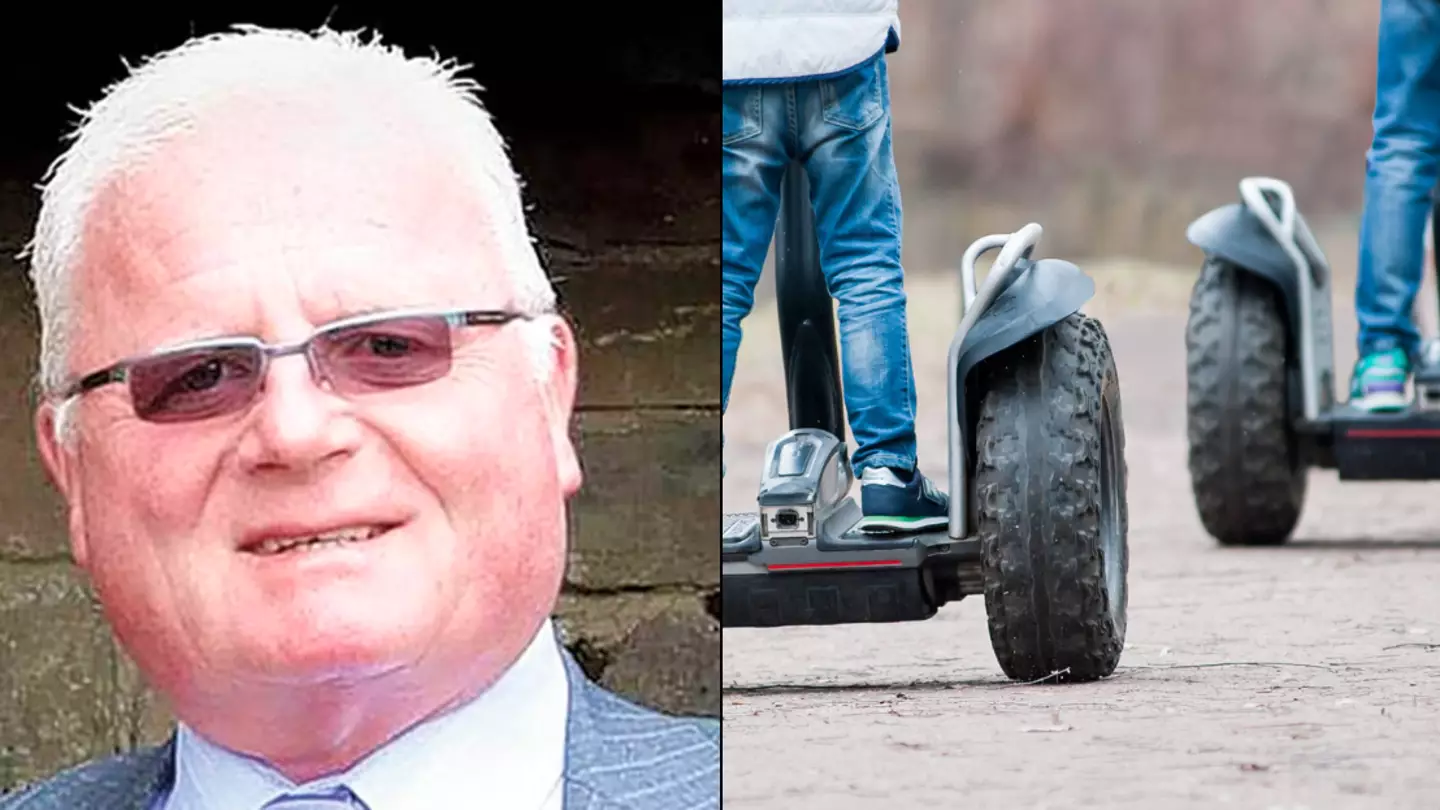
Understanding Jimi Heseldon's Death While Riding a Segway: Circumstances, Investigation, and Legacy
Jimi Heseldon, the British billionaire businessman and owner of Segway Inc., tragically died in September 2010 when he accidentally rode his Segway personal transporter off a 30-foot limestone cliff near his home in West Yorkshire, Eng...
Jimi Heseldon, the British billionaire businessman and owner of Segway Inc., tragically died in September 2010 when he accidentally rode his Segway personal transporter off a 30-foot limestone cliff near his home in West Yorkshire, England. His death sent shockwaves through the global business and engineering communities, prompting widespread scrutiny of personal transporter safety, operational controls, and regulatory frameworks surrounding self-balancing vehicles.
Contents
The Biography and Business Legacy of Jimi Heseldon
Before examining the mechanics of the tragic incident, it is essential to understand who Jimi Heseldon was and how he came to own the iconic Segway brand. Born in Leeds, England, in 1948, Heseldon left school at the age of 15 to work as a coal miner. After the decline of the British coal industry, he used his redundancy payout to start a business renting and later repairing sandblasting equipment.
Heseldon’s defining business achievement was the invention and commercialization of the Hesco Bastion. This defense barrier system, composed of collapsible wire mesh containers lined with heavy-duty geotextile fabric and filled with sand or earth, revolutionized military engineering. Widely adopted by the United States Armed Forces, the British Army, and NATO forces worldwide, Hesco barriers provided rapid, cost-effective blast protection and flood defense, turning Heseldon into a self-made multi-millionaire.
In December 2009, through his investment company Heme Trust, Heseldon acquired Segway Inc., the American company famous for inventing the two-wheeled, self-balancing personal transporter. Heseldon was deeply passionate about the product, viewing it not just as a novelty for tourists and security guards, but as a revolutionary urban mobility solution that could reduce carbon emissions and ease pedestrian congestion. His untimely death less than a year later abruptly halted his vision for the company's future expansion.
Chronology of the Accident
The incident occurred on the morning of September 26, 2010, on an estate near Boston Spa, West Yorkshire. Investigators and emergency services pieced together the final moments of Heseldon’s life through eyewitness accounts, forensic analysis, and the physical evidence recovered from the scene.
Heseldon was operating a specialized Segway X2 Golf model, an all-terrain variant equipped with low-pressure tires designed for rough ground, grass, and inclines. He was riding the device along a steep, rugged footpath adjacent to the River Wharfe near his property.
According to official findings established during the subsequent coroner's inquest, Heseldon appears to have encountered a narrow section of the path or attempted to reverse the machine to allow another person to pass. Because Segways rely on dynamic stabilization—shifting the rider's center of gravity forward or backward to control movement—maneuvering on uneven terrain requires precise weight distribution and situational awareness.
Investigators concluded that Heseldon either lost his footing or misjudged the proximity to the edge of the 30-foot cliff face. Both Heseldon and the Segway plunged over the precipice, falling into the rocky riverbed below. Emergency services were called to the scene, but Heseldon was pronounced dead at the location. A post-mortem examination determined that he died from multiple blunt force injuries consistent with a high fall.
Technical Mechanics of the Segway X2 and Safety Considerations
To comprehend how the accident happened, it is vital to examine how the Segway operates and how terrain limitations affect its safety profile. The Segway PT (Personal Transporter) uses a sophisticated system of gyroscopes, tilt sensors, and onboard microprocessors that mimic the human body's balance system.
When a rider leans forward, the wheels roll forward to keep the rider centered; leaning backward causes the machine to move in reverse. However, this technology has strict operational boundaries:
- Center of Gravity Limits: The machine cannot defy physics on extreme slopes, loose gravel, or vertical drops. If the wheels lose traction or if the platform tilts beyond its operational recovery angle, the self-balancing mechanism can be overwhelmed.
- Terrain Adaptation: The X2 model used by Heseldon was built for off-road use, featuring wider tires and a more robust frame than the urban i2 model. However, "all-terrain" does not mean "vertical-terrain-proof." Navigating narrow ledges with steep drop-offs presents inherent risks for any self-balancing vehicle.
- The "Stick" Control Limitation: Steering on a Segway is controlled by tilting the LeanSteer frame left or right. In tight spaces or emergency situations where a rider panics and steps off or shifts weight incorrectly, the machine can accelerate unexpectedly in the direction of the unbalance.
| Segway Model Attribute | Urban Standard (e.g., i2) | All-Terrain Variant (e.g., X2) |
|---|---|---|
| Primary Use | Pavements, indoor facilities, smooth asphalt | Grass, dirt trails, gravel paths, uneven ground |
| Tire Design | Narrow, smooth tread for efficiency | Wide, low-pressure tread for grip and shock absorption |
| Ground Clearance | Standard (~3 inches) | Elevated (~4.5 inches) |
| Risk Factors | Slippery wet surfaces, potholes, curbs | Steep inclines, loose soil, hidden obstacles, edge proximity |
Official Findings and Incoroner's Verdict
An inquest into Heseldon’s death was conducted by the West Yorkshire coroner, David Hinchliff. The legal inquiry reviewed police reports, forensic reconstruction data, and witness testimony to determine whether mechanical failure played a role in the tragedy.
The investigation conclusively ruled out any mechanical defect in the Segway X2. Forensic tests performed on the recovered device showed that the computer systems, batteries, gyroscopes, and motor controls were functioning entirely within manufacturer specifications prior to the impact.
The coroner recorded a verdict of accidental death. The official conclusion established that Heseldon suffered a tragic misadventure while operating the vehicle near a hazardous, unfenced drop-off. The ruling emphasized that the incident was the result of a tragic accident influenced by the difficult terrain rather than any inherent manufacturing flaw or safety defect in the Segway product line.
Public Reaction, Media Coverage, and Industry Impact
The death of Jimi Heseldon generated intense global media coverage due to the dramatic irony of a billionaire industrialist dying while riding a product manufactured by his own company. Tabloids and mainstream news outlets alike focused heavily on the mechanics of the machine, sparking a temporary public fear regarding the safety of personal transporters.
Despite the sensationalist headlines, industry analysts and safety experts quickly pointed out that Segways had maintained a strong safety record over the preceding decade, with millions of cumulative operating hours worldwide. The vast majority of Segway-related injuries at the time were attributed to rider error, collisions with stationary objects, or pedestrian accidents on crowded sidewalks, rather than spontaneous device failure.
Nevertheless, the incident forced a renewed dialogue regarding micro-mobility regulations:
- Infrastructure Deficits: Many municipalities highlighted the lack of dedicated infrastructure for personal transporters, forcing riders to choose between vehicular roadways and pedestrian walkways.
- Safety Gear Protocols: Following the incident, safety advocates renewed calls for mandatory helmet use when operating self-balancing vehicles, even though helmets are frequently neglected by casual riders and tour groups.
- Corporate Resilience: Segway Inc. continued its operations following Heseldon's passing. The company was eventually acquired by Ninebot, a Chinese transportation robotics startup, in 2015, shifting its focus toward lightweight electric scooters, robotics, and commercial delivery bots.
Frequently Asked Questions
Did a mechanical failure cause Jimi Heseldon's Segway accident?
No. Comprehensive forensic testing by West Yorkshire police and technical experts confirmed that the Segway X2 involved in the accident was in perfect working order. The coroner's inquest officially ruled the death an accident caused by the challenging terrain and proximity to a cliff edge.
What model of Segway was Jimi Heseldon riding?
Heseldon was riding a Segway X2 Golf, an all-terrain personal transporter designed for outdoor use on grass, dirt paths, and uneven terrain, rather than the standard urban models commonly seen on city sidewalks.
Are Segways generally considered safe to ride?
Yes, when operated according to manufacturer guidelines. Segways utilize redundant gyroscopic stabilization systems. However, like bicycles or motorcycles, they carry inherent physical risks when operated near steep drops, on slippery surfaces, or without appropriate protective gear like helmets.
How did Jimi Heseldon make his fortune?
Heseldon built his wealth primarily through the invention and global sales of the Hesco Bastion defense barrier, a wire mesh and geotextile system filled with earth used extensively by military forces for blast and flood protection.
What happened to Segway Inc. after Heseldon's death?
Segway Inc. continued operating independently for several years before being acquired in April 2015 by Ninebot, a Beijing-based personal transportation company backed by Xiaomi. The brand remains a prominent name in electric micro-mobility today.
Conclusion and Continuing Safety Lessons
The tragic death of Jimi Heseldon remains one of the most widely cited cautionary tales regarding personal mobility devices. While the incident was legally classified as an accident stemming from difficult environmental conditions rather than equipment malfunction, it serves as an enduring reminder of the physical laws governing self-balancing vehicles. Modern micro-mobility users, municipal planners, and manufacturers continue to reference the event when designing safety protocols, emphasizing that situational awareness, terrain assessment, and respect for operating boundaries are critical when navigating high-risk environments.
Image Gallery