Why the Printer Scene from Office Space Matters
The printer scene from Office Space resonates deeply because it transforms the universal workplace frustration of malfunctioning office hardware into a cathartic act of corporate rebellion. By giving physical form to the intangible mis...
The printer scene from Office Space resonates deeply because it transforms the universal workplace frustration of malfunctioning office hardware into a cathartic act of corporate rebellion. By giving physical form to the intangible misery of bureaucratic white-collar labor, the sequence captures a rare moment of collective defiance against the mind-numbing indignities of modern employment.
Contents
The Cultural Anatomy of Workplace Frustration
Long before open-plan offices and remote collaboration tools reshaped daily routines, the corporate environment of the late 1990s was defined by fluorescent lighting, cubicles, and unreliable machinery. Mike Judge’s 1999 cult comedy Office Space tapped directly into this mundane misery, but no single moment encapsulates the existential dread of white-collar work quite like the destruction of the PC Load Letter printer.
This sequence is much more than a slapstick comedy beat. It stands as a masterclass in visual satire, offering a sociological window into the psychological erosion caused by bureaucratic oversight, meaningless tasks, and mechanical gaslighting. To understand why this specific cinematic moment endures decades later, one must examine the socio-economic conditions of the era, the technical mechanics of office bureaucracy, and the universal psychology of workplace burnout.
The Technological Catalyst: The Infamous Error Message
At the heart of the scene is a piece of office machinery that refuses to cooperate: an aging, heavy-duty network printer. The characters—Peter Gibbons, Michael Bolton, and Samir Nagheenanajar—are already at their breaking points, subjected to micro-management, meaningless TPS reports, and the constant threat of downsizing. When the printer halts yet again, flashing the cryptic and famously annoying prompt "PC LOAD LETTER," it serves as the final straw.
Decoding the Frustration
To modern readers, error codes are a fact of life, but the "PC LOAD LETTER" prompt holds a legendary status because it is entirely nonsensical to the average user.
- PC: Paper Cassette.
- LOAD: Insert media.
- LETTER: Use standard letter-sized paper (8.5 x 11 inches).
Instead of providing a clear instruction like "Please refill the paper tray," the printer uses cryptic internal terminology that forces workers to troubleshoot technology they do not own, care about, or understand. It represents the ultimate intersection of human user error and cold, indifferent automation. The machine is not merely broken; it is actively mocking the user's intelligence and patience.
Catharsis and the Fantasy of Corporate Rebellion
Psychologists often discuss the concept of catharsis—the purification or purging of emotional tensions. For the characters in Office Space, and for millions of viewers stuck in cubicle farms, destroying the printer is a manifestation of repressed rage.
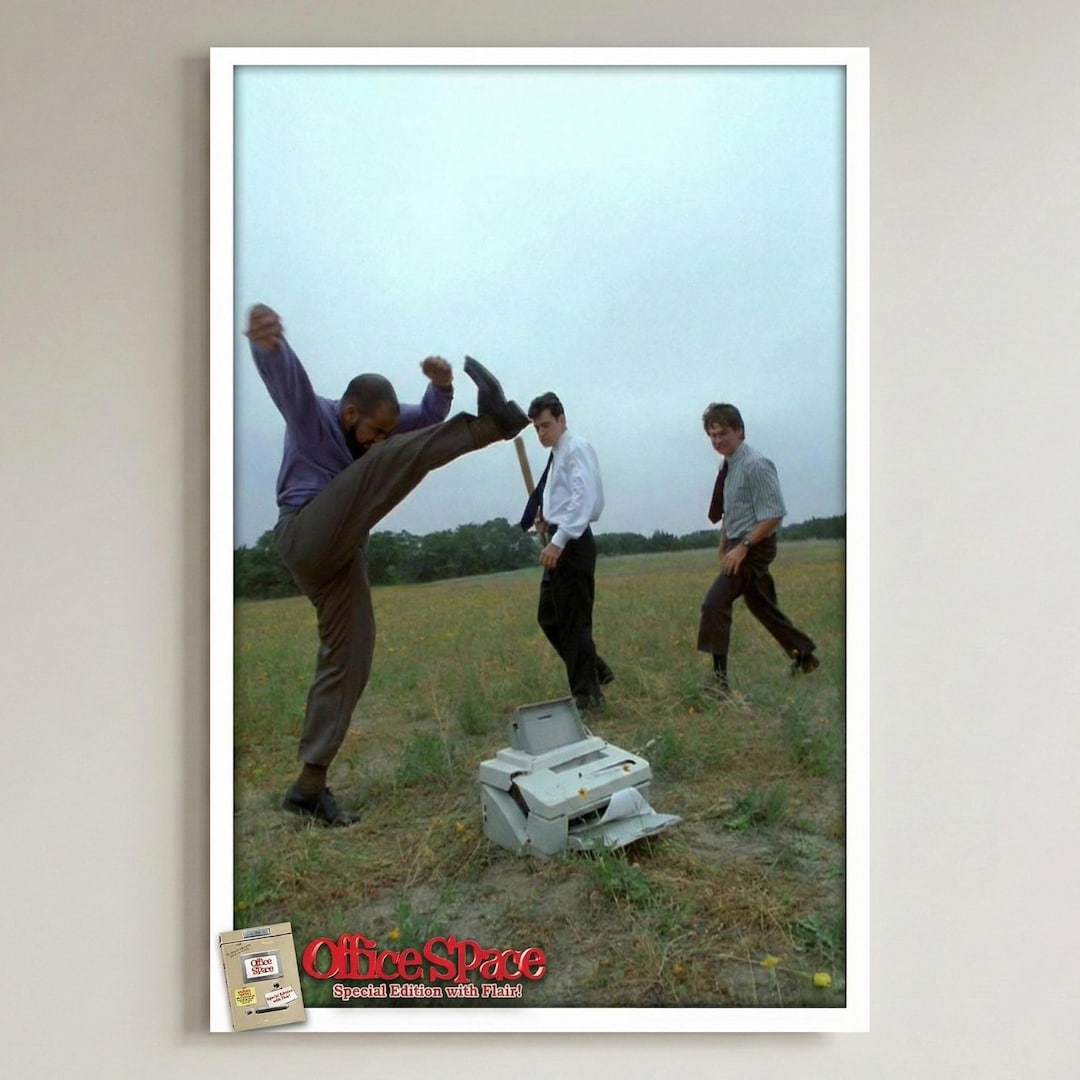
White-collar work often denies employees physical agency. Unlike manual labor or craft trades, where workers see tangible results at the end of the day, office workers deal with abstractions: spreadsheets, emails, metrics, and memos. This abstraction creates a sense of alienation. When Michael Bolton takes a baseball bat to the printer in a sun-drenched, open-air field to the tune of Geto Boys’ "Damn It Feels Good to Be a Gangsta," he is reclaiming physical agency. He is transforming digital and mechanical frustration into a concrete, kinetic reality.
| Element of the Scene | Symbolic Meaning in Corporate Culture | Real-World Workplace Parallel |
|---|---|---|
| The Printer | Indifferent corporate infrastructure and administrative friction | Unresponsive IT helpdesks, lagging software, and constant system crashes |
| The Error Code | Cryptic bureaucratic language designed to confuse | Complex HR policies, changing compliance metrics, and opaque performance reviews |
| The Baseball Bat | The human desire to physically reject systemic alienation | Quiet quitting, sudden resignation, or expressing burnout to management |
| The Field Setting | The escape from claustrophobic cubicle architecture | Remote work flexibility, boundaries against overwork, and mental health breaks |
The Evolution of Workplace Anomie
When Office Space premiered in theaters in February 1999, the dot-com boom was reaching its fever pitch, and corporate restructuring was becoming a standard method for maximizing shareholder value. Employees were expected to do more with less while enduring management consulting trends like those personified by the film's "two Bobs."
The printer scene matters because it diagnoses anomie—a sociological condition of instability resulting from a breakdown of standards and values. Peter Gibbons does not hate printing documents; he hates the entire ecosystem of software, management, and meaningless metrics that make printing documents an exercise in psychological torture. The destruction of the printer is an assault not on property, but on the symbol of corporate control.
Why the Scene Resonates in Modern Work Culture
Decades after its release, the transition from heavy laser printers to cloud computing and remote work has not eliminated the sentiment behind the printer scene. If anything, the hardware has simply been replaced by software.
- Software Bloat: Modern workers deal with endless password resets, multi-factor authentication loops, and mandatory enterprise software updates that crash during critical presentations.
- Digital Surveillance: Where physical micro-management involved Milton Lumbergh taking your stapler, modern micro-management involves keystroke tracking, constant Slack status monitoring, and automated productivity metrics.
- The Illusion of Efficiency: Technology was promised to liberate workers from toil; instead, it has expanded the workday into the evening hours via smartphones and constant connectivity.
Consequently, the urge to take a blunt instrument to office infrastructure remains universally understood. The printer scene serves as a cultural touchstone because it validates the secret, suppressed thoughts of anyone who has ever stared blankly at a frozen screen while a deadline looms.
Common Misconceptions About the Scene
While the sequence is celebrated as an anti-corporate anthem, cultural analysis often misinterprets the characters' motivations and the aftermath of their actions.
- It Is Not About Violence: The scene is framed as a comedic fantasy rather than a promotion of workplace violence. The deliberate slow motion, the hip-hop soundtrack, and the collaborative joy turn an act of vandalism into a bonding ritual.
- It Is Not Just a Gag: Mike Judge drew directly from his own brief, soul-crushing stint in Silicon Valley engineering firms. The specificity of the office politics—down to the cover sheets on TPS reports—ensures the satire lands with sociological accuracy.
- The Aftermath Matters: Crucially, Peter’s rebellion does not end in ruin; it leads to his eventual liberation from corporate life. By refusing to care about the rules, he finds a strange kind of freedom.
Frequently Asked Questions
What does "PC LOAD LETTER" actually mean on an old printer?
It is an error code originating from older Hewlett-Packard laser printers, specifically the LaserJet series. It indicates that the printer's paper cassette requires letter-sized paper, but the system prompt is notoriously obscure to users who expect plain-English instructions.
Why is the printer scene considered a cinematic milestone for office workers?
It provides visual catharsis for the feelings of powerlessness, alienation, and frustration inherent in bureaucratic white-collar jobs. It externalizes the internal rage of dealing with broken technology and indifferent management.
Was the printer scene improvised during the filming of Office Space?
No, the sequence was carefully scripted by director Mike Judge. However, the physical execution, the choice of music (Geto Boys), and the comedic timing of the actors transformed a written page into an iconic cinematic moment.
How has the meaning of the printer scene changed in the era of remote work?
While physical printers are less common in home offices, the core frustration has shifted to digital equivalents like frozen video calls, endless software updates, and cryptic error messages. The scene remains a metaphor for technological friction and administrative absurdity.
What song plays during the printer destruction scene?
The song is "Damn It Feels Good to Be a Gangsta" by the Houston hip-hop group Geto Boys, released originally in 1992 and featured prominently in the 1999 film soundtrack to contrast the white-collar setting with gangsta rap defiance.
Practical Takeaways for Modern Professionals
While smashing office equipment with a baseball bat is strictly discouraged in contemporary human resources guidelines, the underlying philosophy of the printer scene offers valuable lessons for modern professionals navigating burnout. Recognizing the signs of systemic alienation, setting firm boundaries against technological overreach, and finding genuine community with colleagues facing similar pressures are vital steps toward maintaining mental health in demanding environments. When systems break down repeatedly without institutional support, the healthiest response is often not to rage against the machine, but to step back, reevaluate priorities, and reclaim your time.
Image Gallery