Vince Carter Net Worth and Career Earnings: A Complete Financial Breakdown
As of 2026, former NBA superstar Vince Carter has an estimated net worth of approximately $110 million. Over an extraordinary 22-season career spanning four decades, Carter accumulated $172 million in gross NBA salary earnings across e...
As of 2026, former NBA superstar Vince Carter has an estimated net worth of approximately $110 million. Over an extraordinary 22-season career spanning four decades, Carter accumulated $172 million in gross NBA salary earnings across eight franchises, supplemented by tens of millions more in high-profile endorsement deals, media contracts, and strategic private investments.
Contents
Overview of Vince Carter’s Financial Legacy
Vince Carter’s financial trajectory stands out in professional sports history not only for its absolute peak earnings during his prime, but for its unprecedented duration. Selected fifth overall in the 1998 NBA Draft by the Golden State Warriors and immediately traded to the Toronto Raptors, Carter transformed from an explosive, highlight-reel slam dunk champion into one of the league's most reliable and longest-tenured veteran leaders.
His professional basketball playing career stretched from 1998 to 2020—making him the only player in NBA history to compete in four distinct calendar decades (1990s, 2000s, 2010s, and 2020s). This historic longevity allowed Carter to navigate multiple NBA Collective Bargaining Agreements (CBAs), transitioning seamlessly from maximum-salary franchise centerpiece contracts to lucrative mid-level exception deals and, ultimately, veteran minimum contracts late in his career.
Understanding Carter’s financial standing requires examining how his $172 million in on-court compensation interacted with off-court revenue streams, post-retirement broadcasting contracts, and standard professional expenses such as federal taxes, state taxes (and the NBA "jock tax"), agent fees, and lifestyle expenditures.
Detailed Breakdown of NBA Salary Earnings by Team and Contract Era
During his 22-year NBA run, Carter played for eight distinct organizations: the Toronto Raptors, New Jersey Nets, Orlando Magic, Phoenix Suns, Dallas Mavericks, Memphis Grizzlies, Sacramento Kings, and Atlanta Hawks. His salary progression reflects the evolving NBA salary cap dynamics over two decades.
| Era / Franchise Phase | Active Seasons | Estimated Gross Pay |
|---|---|---|
| Toronto Raptors | 1998–2004 | $37.5 Million |
| New Jersey Nets | 2004–2009 | $76.8 Million |
| Orlando Magic | 2009–2010 | $16.3 Million |
| Phoenix Suns | 2010–2011 | $17.5 Million |
| Dallas Mavericks | 2011–2014 | $9.3 Million |
| Memphis Grizzlies | 2014–2017 | $12.2 Million |
| Sacramento Kings | 2017–2018 | $8.0 Million |
| Atlanta Hawks | 2018–2020 | $4.8 Million |
| Total Career NBA Salary | 1998–2020 (22 Yrs) | ~$172.4 Million |
1. The Toronto Raptors Era (1998–2004)
Carter signed his rookie scale contract following the 1998 draft lockout. Over his initial three seasons in Toronto, his rookie agreement earned him roughly $6.4 million. After winning the 1999 NBA Rookie of the Year award and electrifying the global basketball audience at the 2000 Slam Dunk Contest, Toronto secured Carter with a maximum contract extension in the summer of 2001.
That six-year extension was valued at up to $88 million, depending on cap escalators. By the time Carter was traded to New Jersey midway through the 2004–2005 season, he had earned approximately $37.5 million in salary from the Raptors organization.
2. Peak Earnings: The New Jersey Nets (2004–2009)
Carter’s financial peak coincided with his dominant prime in New Jersey alongside point guard Jason Kidd. During his tenure with the Nets, Carter absorbed the highest single-season salaries of his career.
In August 2007, Carter signed a four-year contract extension with New Jersey worth $61.5 million guaranteed, with a team option for a fifth year. Across his five seasons with the Nets, Carter earned over $76 million in total base pay, including his highest single-season earnings up to that point, averaging more than $15 million per year.
3. Transition Years: Orlando Magic and Phoenix Suns (2009–2011)
Traded to the Orlando Magic in June 2009, Carter continued collecting the elevated salary structured in his 2007 Nets extension. In the 2009–2010 season, his earnings topped $16.3 million.
After a trade to the Phoenix Suns during the 2010–2011 season, Carter earned approximately $17.5 million for that year alone—the single highest single-season payout of his entire career. When the Suns waived him in late 2011 prior to the fully guaranteed deadline of his final contract year, he still received a partial buyout guarantee of $4 million, paving the way for the veteran phase of his career.
4. Veteran Roles and Sustained Income (2011–2020)
Rather than retiring as his physical athleticism shifted, Carter successfully adapted his game into a perimeter shooter and locker-room mentor. This tactical adjustment added nine additional seasons of revenue:
- Dallas Mavericks (2011–2014): Signed a three-year deal utilizing the mini-mid-level exception, earning roughly $9.3 million total.
- Memphis Grizzlies (2014–2017): Signed a multi-year mid-level contract worth $12.2 million over three seasons.
- Sacramento Kings (2017–2018): Signed a lucrative one-year veteran deal worth $8.0 million, offering young Kings players leadership while maintaining strong top-line earnings.
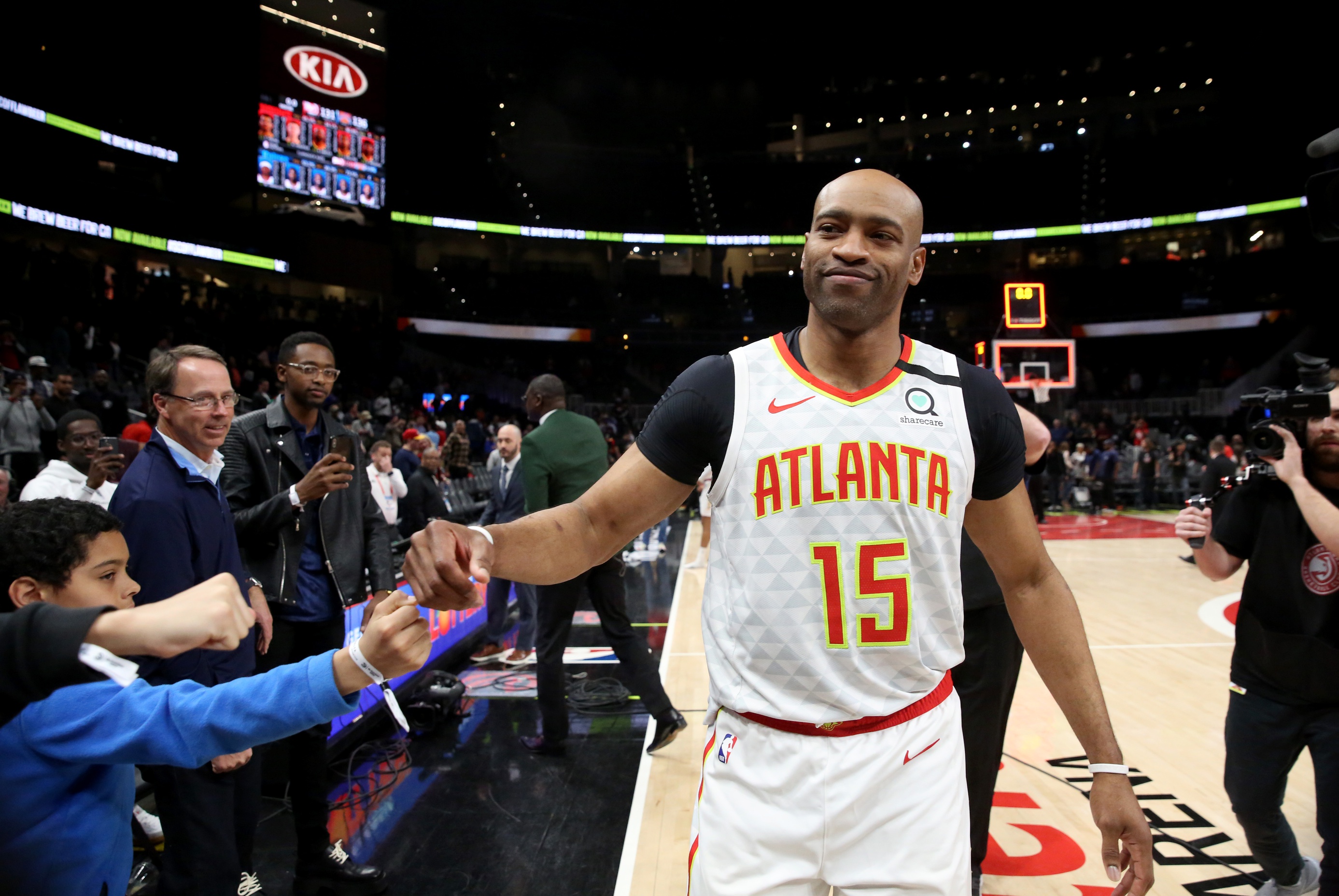
- Atlanta Hawks (2018–2020): Signed consecutive one-year, veteran-minimum contracts paying roughly $2.4 million per season, concluding his playing career in 2020.
Endorsements and Off-Court Commercial Portfolio
While Carter earned $172 million on the court, his cultural footprint during the early 2000s generated tens of millions in off-court marketing agreements. At the height of "Vinsanity," Carter was one of the most commercially valuable athletes on Earth.
| Brand Partner | Key Products / Deals | Commercial Context |
|---|---|---|
| Puma | Signature Shoes | Initial rookie deal; ended via early opt-out |
| Nike | Nike Shox BB4 Line | Long-term landmark signature partnership |
| Gatorade | Global Campaigns | National television & print advertisements |
| EA Sports / Sega | NBA Live / NBA 2K | Video game cover athlete appearance |
The Puma to Nike Transition
Carter initially signed a major endorsement contract with Puma upon entering the NBA in 1998. However, due to shoe comfort and design disputes, Carter terminated the deal prematurely in 1999. The resulting legal dispute required Carter to pay a settlement and restricted him from wearing another brand's logo publicly for a set period.
Despite this early setback, Carter partnered with Nike in 2000, setting off one of the most iconic sneaker partnerships of the era.
Nike and the "Shox" Legacy
Nike selected Carter as the lead athlete to launch its mechanical cushioning technology, Nike Shox. During the 2000 Summer Olympics in Sydney, Carter performed his famous dunk over French center Frédéric Weis while wearing the Nike Shox BB4.
The moment turned the Shox BB4 into a global commercial hit. Nike subsequently launched a full signature sneaker line for Carter, including the Nike Air Zoom Vinsanity and subsequent Nike Shox VC iterations. Off-court income from Nike and complementary sponsors such as Gatorade, EA Sports, and Spalding added an estimated $40 million to $50 million to his lifetime earnings during his playing days.
Post-Retirement Revenue: Media, Investments, and Recognition
Retirement from the court in 2020 did not end Carter's earning power. He transitioned directly into corporate broadcasting, sports media analysis, and long-term asset management.
Sports Broadcasting Career
Immediately following his retirement, Carter was recruited as a senior analyst for ESPN, appearing regularly on flagship studio programming such as Get Up, First Take, and NBA Countdown, as well as providing game commentary. He later expanded his broadcasting portfolio through color commentary roles for regional and national networks, including work with the Brooklyn Nets' YES Network and national television packages. These sports media positions command mid-six-figure to low-seven-figure annual compensation for premier former-player talents.
Business Investments and Real Estate
Throughout his career, Carter managed his wealth conservatively:
- Restaurant & Hospitality Ventures: Carter previously owned and operated "Vince Carter’s Restaurant," a premier dining venue in Daytona Beach, Florida, which he built for over $11 million before later selling the property.
- Real Estate Portfolio: Over two decades, Carter acquired high-value residential properties in Florida, Georgia, and Toronto. His primary personal residence, a custom luxury estate in Florida, represents a multi-million dollar real estate holding.
- Vince Carter Foundation: Established early in his career, Carter’s charitable foundation has funneled millions of dollars into youth programs, basketball camps, and educational scholarships across Florida and North Carolina, demonstrating a sustained commitment to community equity.
Basketball Hall of Fame Validation (Class of 2024)
Carter’s election to the Naismith Memorial Basketball Hall of Fame in 2024 elevated his brand equity. Hall of Fame status permanently elevates an athlete's baseline value for private appearances, memorabilia signing contracts, corporate speaking engagements, and brand ambassadorships.
Financial Stewardship: Gross vs. Net Worth Analysis
While Vince Carter accumulated over $172 million in NBA salary and an estimated $50 million+ in total endorsements, his net worth settles near $110 million. This difference highlights the standard financial deductions faced by professional athletes:
- Taxation: High-earning NBA players face maximum federal tax brackets (~37%), alongside state income taxes across multiple playing jurisdictions (the "jock tax"). Over a career, combined taxes routinely claim 45% to 50% of gross earnings.
- Professional Representation Fees: Standard NBA agent fees typically range from 2% to 4% of player contracts, while marketing agents generally take 10% to 20% of off-court endorsement earnings.
- Investment & Portfolio Costs: Maintaining high-end physical assets, wealth management services, legal counsel, and insurance policies requires steady capital outlay.
Carter avoided the severe financial pitfalls that affect many retired professional athletes by avoiding high-risk, unhedged business ventures, maintaining a long playing career, and pivoting smoothly into corporate media.
Frequently Asked Questions
What is Vince Carter’s estimated net worth in 2026?
Vince Carter’s estimated net worth is approximately $110 million. This reflects his 22-year NBA salary history, shoe deals with Nike, media broadcasting deals, and investments in real estate and private equity.
How much did Vince Carter earn in total NBA salaries?
Carter earned $172,044,000 in total gross salary during his 22 seasons in the NBA, playing for eight different franchises.
What was Vince Carter’s highest single-season salary?
Carter’s highest single-season earnings came during the 2010–2011 season with the Phoenix Suns (and previously structured under his New Jersey Nets extension), when he made $17.5 million.
Did Vince Carter have a signature shoe deal?
Yes. Carter was the premier signature athlete for Nike’s Nike Shox series in the early 2000s, debuting the iconic Nike Shox BB4 during the 2000 Olympic Games. Nike released several signature shoes under his name, including the Nike Shox VC line.
What does Vince Carter do for a living after retiring from basketball?
After retiring in 2020, Carter became a full-time sports broadcaster and studio analyst. He has worked with media outlets including ESPN and regional networks like the YES Network, alongside managing his private investments and charitable foundation.
Financial Strategy Takeaways from Vince Carter's Career
Vince Carter’s financial story offers valuable lessons in professional wealth preservation and career adaptation:
- Adaptability Extends Earning Lifespans: By reinventing his playing style from an athletic scoring wing to a perimeter shooter and veteran leader, Carter added nearly a decade of high-value veteran contracts to his career.
- Early Brand Alignment Pays Long-Term Dividends: Aligning with a global brand like Nike during a peak cultural moment established a strong personal brand that outlasted his peak athletic years.
- Seamless Career Pivots Preserve Wealth: Transitioning immediately from active competition into sports broadcasting ensured that Carter maintained consistent active income, keeping his core invested capital untouched.
Image Gallery