Why Whole Life Versus Term Insurance Matters: A Guide to Strategic Coverage
Understanding the difference between whole and term life insurance is vital because it dictates your long-term financial security, tax liabilities, and estate liquidity. While term insurance provides high-value protection for a specifi...
Understanding the difference between whole and term life insurance is vital because it dictates your long-term financial security, tax liabilities, and estate liquidity. While term insurance provides high-value protection for a specific period, whole life offers permanent coverage with a growing cash asset, directly influencing how you protect heirs and build multi-generational wealth.
Contents
Deciding between whole life and term insurance is one of the most consequential financial choices an individual can make. This decision is not merely about choosing a monthly premium; it is about aligning a legal contract with a lifelong financial strategy. In 2026, as the economic landscape continues to shift with fluctuating interest rates and evolving tax codes, the "why" behind this choice has become more nuanced. Choosing the wrong path can lead to under-insurance during critical years or unnecessary expenses in later life.
Defining the Core Distinction: Duration vs. Equity
The fundamental reason the "whole life versus term" debate matters is the nature of the contract's duration and its underlying value. Term life insurance is designed for a specific window of time—typically 10, 20, or 30 years. It functions similarly to an auto insurance policy; you pay for coverage, and if the insured event (death) does not occur within that term, the policy expires without any residual value. This is "pure" insurance, where the premium is calculated based solely on the statistical probability of the policyholder's death during the specified period.
Whole life insurance, conversely, is a form of permanent life insurance. As long as premiums are paid, the coverage remains in force for the policyholder's entire life. Beyond the death benefit, whole life includes a "cash value" component. This is a living benefit that grows over time, often at a guaranteed rate. The distinction matters because term insurance is a risk-management tool for temporary liabilities, whereas whole life is a multi-purpose financial vehicle that combines risk management with capital accumulation.
For families in 2026, the choice often hinges on the "replacement vs. preservation" mindset. Term insurance is built to replace income during high-need years—when mortgages are active and children are young. Whole life is built to preserve an estate, provide for final expenses, or act as an alternative asset class that is uncorrelated with the stock market.
The Financial Impact of Premium Structures
The cost difference between these two products is significant, and understanding why it exists is crucial for long-term budgeting. Term insurance premiums are significantly lower because the insurer is only on the hook for a limited time. Most policyholders outlive their term policies, which allows insurance companies to keep premiums affordable for the masses.
Whole life premiums are substantially higher because the insurer knows with 100% certainty that they will eventually pay out the death benefit, provided the policy remains active. To manage this, the premiums are "leveled." In the early years of a whole life policy, you are essentially overpaying for the insurance coverage. This excess capital is funneled into the cash value account and used by the insurer to offset the much higher cost of insuring your life when you are older.
In 2026, the premium gap remains a primary driver of consumer behavior. However, the higher cost of whole life is often framed as "forced savings." For individuals who struggle to maintain a disciplined investment schedule, the contractual obligation to pay a whole life premium ensures that at least some portion of their wealth is being diverted into a low-volatility, tax-advantaged account.
The Strategic Value of Whole Life’s Cash Component
The "living benefits" of whole life insurance are often where the most confusion—and the most opportunity—lies. As you pay premiums into a whole life policy, the cash value grows on a tax-deferred basis according to the Internal Revenue Code Section 7702. This growth is not subject to market volatility, making it an attractive "safe bucket" for a diversified portfolio.
Policy Loans and Liquidity
One of the most significant reasons the whole life choice matters is the ability to access capital. Policyholders can take loans against their cash value. Unlike a bank loan, there is no credit check, and you are essentially borrowing from the insurance company using your policy’s cash value as collateral. In 2026’s financial environment, this liquidity can be a lifeline for business opportunities, emergency expenses, or supplementing retirement income during a market downturn.
Dividends in Participating Policies
Many whole life policies are "participating," meaning they are eligible to receive dividends from the insurance company. While not guaranteed, these dividends are essentially a return of premium that can be used to purchase "paid-up additions" (increasing the death benefit and cash value), pay premiums, or be taken as cash. In an era of economic uncertainty, the historical stability of dividend-paying mutual insurers provides a level of financial predictability that term insurance cannot match.
Term Insurance: The Utility of High-Value Protection
While whole life offers equity, term insurance offers sheer volume. For the vast majority of young families, the primary goal is to ensure that if a breadwinner passes away, the surviving family can pay off the mortgage, fund college educations, and maintain their standard of living.
Because term insurance is inexpensive, a 35-year-old can often secure $1 million or more in coverage for a fraction of what a $100,000 whole life policy would cost. This matters because under-insuring is a greater risk than choosing the "wrong" type of policy. If a family needs $1 million in coverage to survive but can only afford the premiums for a $250,000 whole life policy, they are $750,000 short of their actual need.
Furthermore, term insurance offers flexibility. Many modern term policies include a "conversion rider." This allows the policyholder to convert their term coverage into a permanent whole life policy at a later date without undergoing a new medical exam. This is a critical feature in 2026, as it protects the policyholder’s "insurability"—even if they develop a chronic illness later in life, they can secure permanent coverage based on the health status they had when they first bought the term policy.
The Interplay with Estate Planning and Taxation in 2026
The choice between these two instruments has profound implications for estate taxes and wealth transfer. Under current federal guidelines, death benefits are generally received by beneficiaries income-tax-free. However, for high-net-worth individuals, the death benefit can be included in the taxable estate.
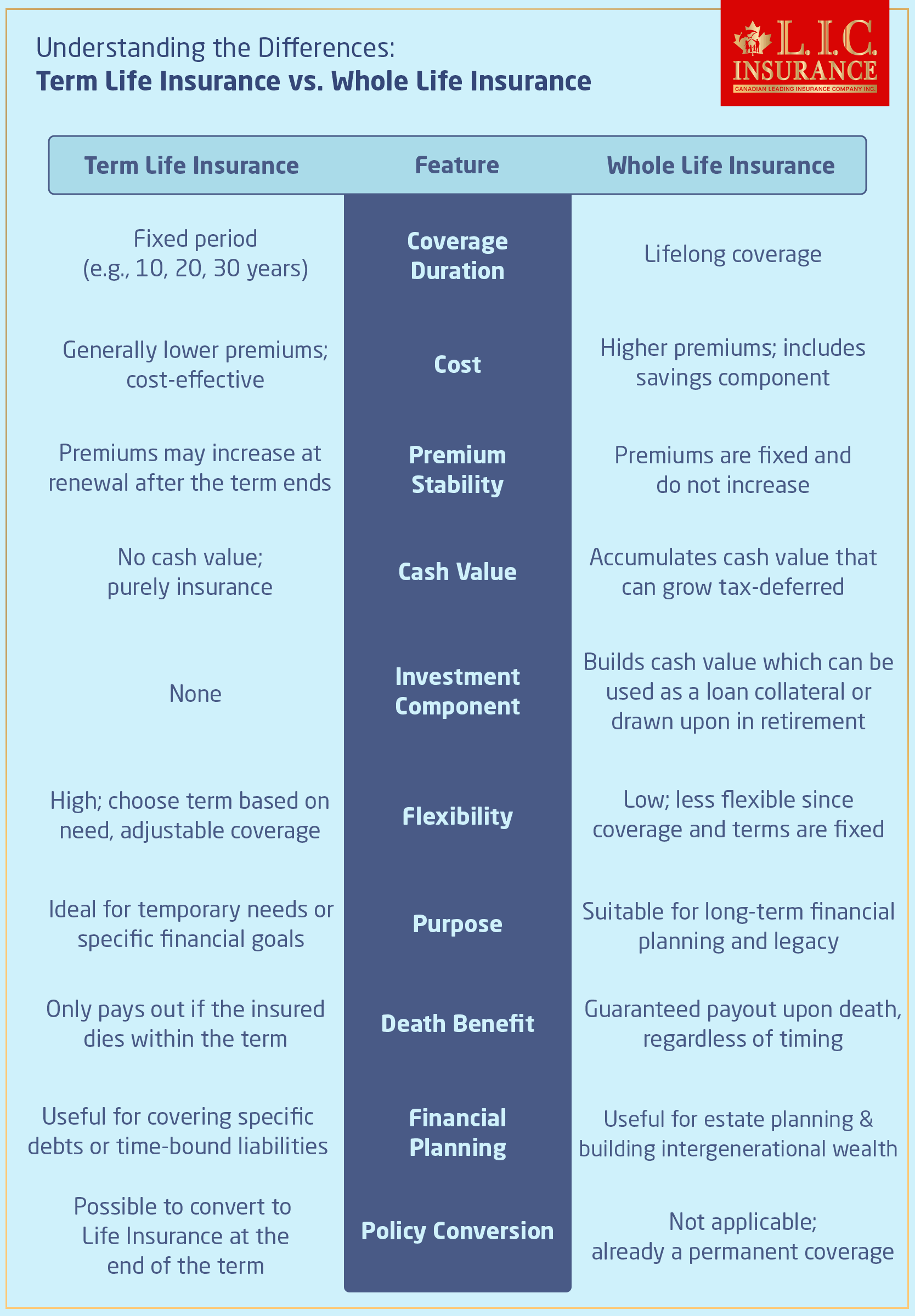
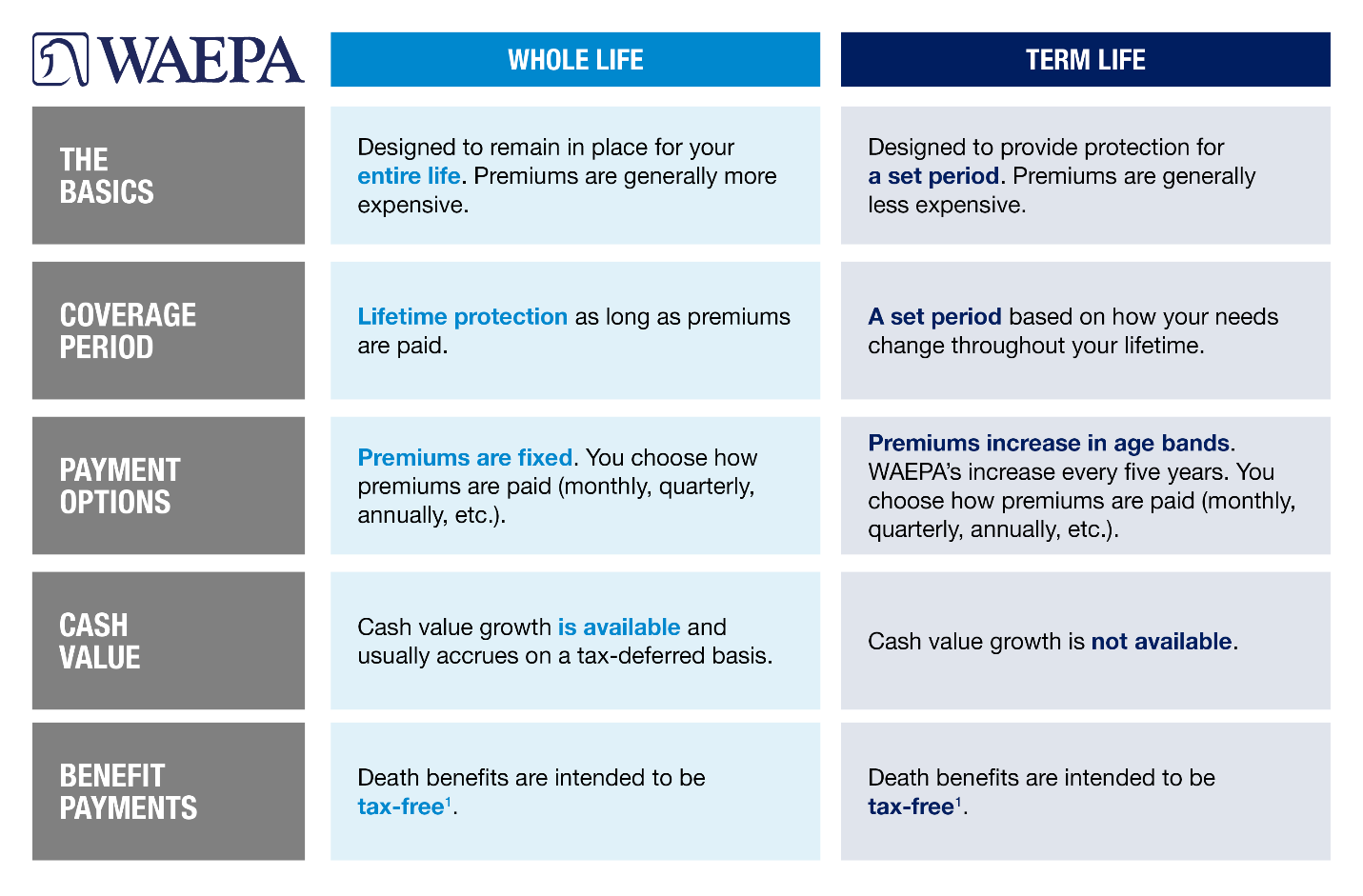
| Feature | Term Life Insurance | Whole Life Insurance |
|---|---|---|
| Duration | Fixed period (10–30 years) | Permanent (Life) |
| Premium Cost | Low; increases significantly at renewal | High; fixed/level for life |
| Cash Value | None | Yes; grows over time |
| Dividends | Not applicable | Available in participating policies |
| Tax Treatment | Tax-free death benefit | Tax-free death benefit + tax-deferred growth |
| Main Purpose | Income replacement / Debt coverage | Estate planning / Wealth accumulation |
| Best For | Young families, temporary debt | Long-term legacy, tax efficiency |
In 2026, estate planning often utilizes whole life insurance within an Irrevocable Life Insurance Trust (ILIT). Because the policy is permanent, it provides the liquidity needed to pay estate taxes or provide equalized inheritances without forcing the sale of illiquid assets like a family business or real estate. Term insurance is rarely used for this purpose because the risk of the policy expiring before the policyholder dies is too high, which would leave the estate without the necessary liquidity.
Decision Matrix: Identifying Your Financial Profile
The choice between whole life and term insurance is not a "one-size-fits-all" scenario. It requires an honest assessment of your financial stage and goals.
- The "Foundation" Stage: If you are early in your career with high debt (student loans, mortgage) and dependents, term insurance is usually the priority. It provides the largest "safety net" for the lowest cost, allowing you to invest your surplus cash in other vehicles like 401(k)s or IRAs.
- The "Accumulation" Stage: If you have maximized your traditional retirement accounts and are looking for tax-advantaged ways to grow wealth with low volatility, adding a whole life component can be beneficial. It acts as a conservative bond-like alternative in your portfolio.
- The "Legacy" Stage: If your primary goal is to leave a specific dollar amount to a charity, a child, or to cover estate taxes, whole life is the only reliable option. Relying on term insurance for permanent needs is a gamble on your own longevity that rarely pays off.
Frequently Asked Questions
Can I have both term and whole life insurance?
Yes, many financial planners recommend a "laddered" approach. You might carry a large term policy to cover your working years and a smaller whole life policy to cover final expenses and provide a permanent legacy. This allows you to have high coverage when it's most needed while ensuring some coverage remains forever.
What happens if I stop paying premiums on whole life?
Unlike term insurance, which simply lapses, whole life policies have "non-forfeiture" options. If you can no longer afford premiums, you may be able to use the existing cash value to purchase a "reduced paid-up" policy (a smaller death benefit that requires no more premiums) or take the cash surrender value.
Are dividends in whole life insurance guaranteed?
No, dividends are not guaranteed. They depend on the insurance company's profitability, investment performance, and mortality experience. However, many top-tier mutual insurers have paid dividends every year for over a century, including through the Great Depression and the 2008 financial crisis.
Is it true that I should "buy term and invest the difference"?
This is a popular strategy that suggests buying cheap term insurance and investing the premium savings in the stock market. While mathematically sound if you are a disciplined investor, it fails if the investor lacks discipline or if the market performs poorly. It also ignores the specific tax and estate benefits that permanent insurance provides.
How does inflation in 2026 affect these policies?
Inflation erodes the purchasing power of a fixed death benefit. For term insurance, you may need to increase your coverage over time. Many whole life policies allow you to use dividends to buy "paid-up additions," which increases the death benefit over time, helping the policy keep pace with inflation.
Final Recommendation: Assessing Your Horizon
The choice between whole life and term insurance matters because it is the difference between purchasing a service and building an asset. For most people, term insurance is the essential starting point; it is the most efficient way to protect your family from the catastrophe of lost income. However, as your wealth grows and your financial needs shift from "protection" to "preservation," whole life insurance becomes a powerful tool for tax-efficient growth and estate liquidity.
Before committing to a policy, review your 2026 financial statement. If you have gaps in your 20-year income protection, prioritize a term policy immediately. If your foundation is secure and you are seeking a permanent, tax-advantaged asset, consult with a professional to model how a whole life policy fits into your long-term estate plan.
Image Gallery