Understanding the Finance Function in Financial Management: A Comprehensive Guide for 2026
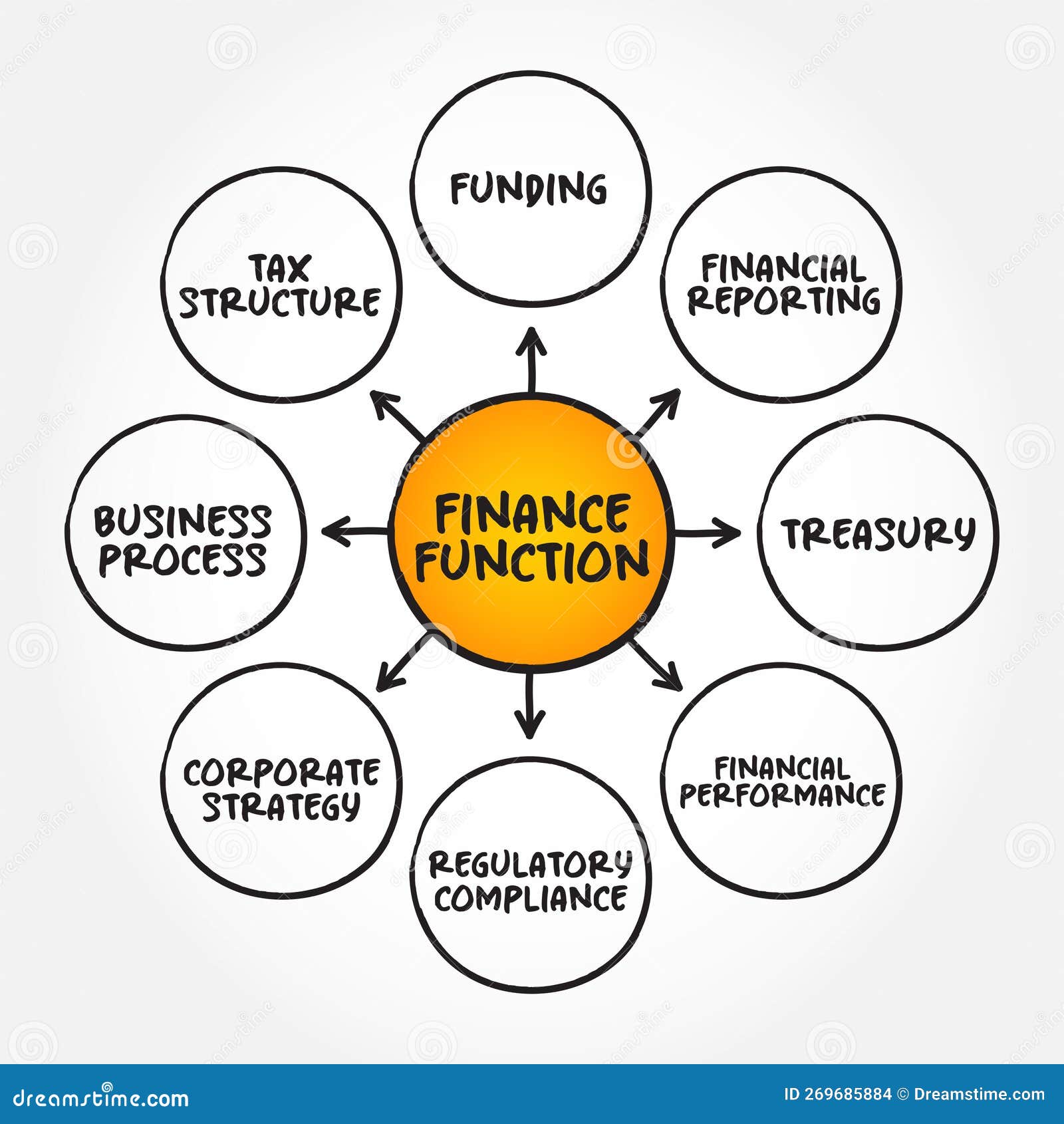
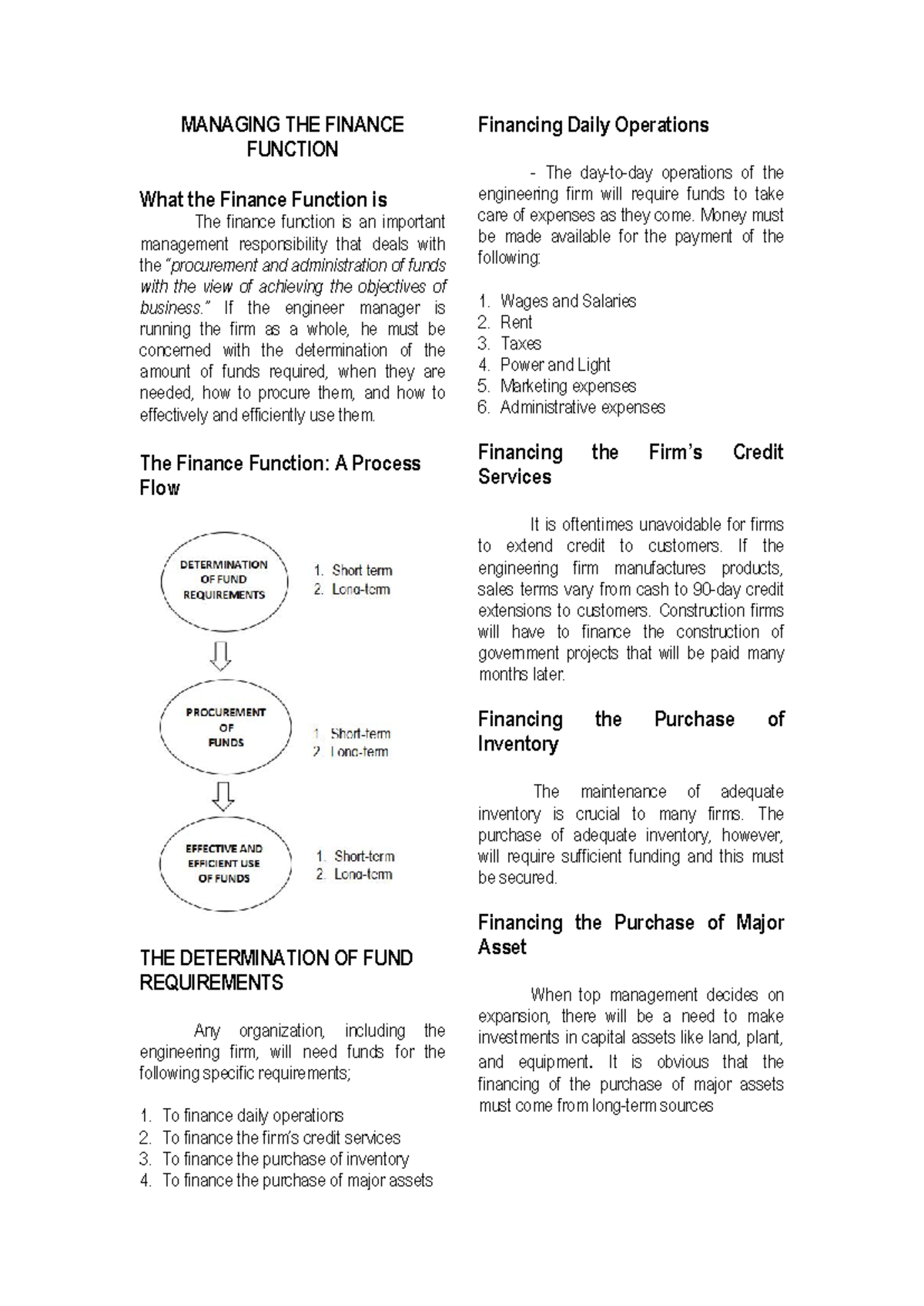
The finance function is the specific organizational capability responsible for the procurement, allocation, and control of financial resources to achieve long-term strategic goals. It encompasses critical decision-making processes rega...
The finance function is the specific organizational capability responsible for the procurement, allocation, and control of financial resources to achieve long-term strategic goals. It encompasses critical decision-making processes regarding capital investments, funding structures, and profit distribution, moving beyond simple record-keeping to ensure an entity’s solvency, liquidity, and overall value maximization.
Contents
The Evolution and Definition of the Finance Function
In the corporate landscape of 2026, the finance function has transitioned from a back-office administrative role to a front-and-center strategic partner. While traditional definitions focused purely on the "supply of funds," modern financial management views the finance function as the analytical engine of the business. It is the process of managing an organization's money (capital) in such a way that it can meet its goals and stay financially healthy.
The finance function is primarily concerned with three specific areas: procurement of funds, effective utilization of funds, and the distribution of earnings. Without a robust finance function, even companies with innovative products can fail due to cash flow mismanagement or inefficient capital structures. In a 2026 context, this also involves the integration of predictive AI and real-time data analytics to forecast market shifts and optimize resource deployment.
The Three Pillar Decisions of the Finance Function
The core of the finance function is built upon three fundamental types of decisions. These decisions are interrelated; a change in one often necessitates a recalibration of the others.
1. The Investment Decision (Capital Budgeting)
The investment decision is arguably the most critical component of the finance function. it involves determining how to allocate the firm's limited resources among competing long-term assets. The goal is to invest in projects that yield a return higher than the cost of the capital used to fund them.
- Capital Budgeting: This involves evaluating the potential profitability of long-term investments like new machinery, research and development, or entering a new geographic market. Professionals use tools such as Net Present Value (NPV), Internal Rate of Return (IRR), and Payback Period to assess viability.
- Asset Management: Beyond just acquiring assets, the finance function must manage existing assets efficiently. This includes deciding when to retire old equipment or divest from underperforming business units.
- Risk-Return Trade-off: Every investment carries risk. The finance function must balance the desire for high returns with the organization's risk appetite, ensuring that the company does not overextend itself in volatile markets.
2. The Financing Decision (Capital Structure)
Once a company identifies where it wants to invest, it must decide how to pay for those investments. The financing decision focuses on the "capital structure"—the mix of debt and equity used to fund operations.
- Equity vs. Debt: Equity involves selling ownership (shares), which does not require repayment but dilutes control. Debt involves borrowing (loans or bonds), which must be repaid with interest but offers tax advantages (interest is often tax-deductible).
- Cost of Capital: The finance function aims to minimize the Weighted Average Cost of Capital (WACC). By finding the optimal "sweet spot" between debt and equity, a company can maximize its overall market value.
- Leverage Management: In 2026’s economic environment, managing financial leverage is vital. High debt levels increase the risk of insolvency during market downturns, while too little debt might suggest a company isn't taking advantage of growth opportunities.
3. The Dividend Decision (Allocation of Profits)
The final pillar concerns what to do with the profits generated by the business. The finance function must decide how much of the net profit should be distributed to shareholders as dividends and how much should be "plowed back" into the business as retained earnings.
- Retained Earnings: These are crucial for organic growth. If a company has high-growth opportunities (where the return on investment is high), the finance function typically recommends retaining more profit.
- Shareholder Expectations: Investors often look for consistent dividend payouts as a sign of financial health. Balancing these expectations with the need for internal reinvestment is a delicate act of corporate diplomacy and financial logic.
- Stock Buybacks: An alternative to dividends, where the company buys its own shares from the market to increase the value of remaining shares, often used when the leadership believes the stock is undervalued.
Operational Finance Functions and Working Capital
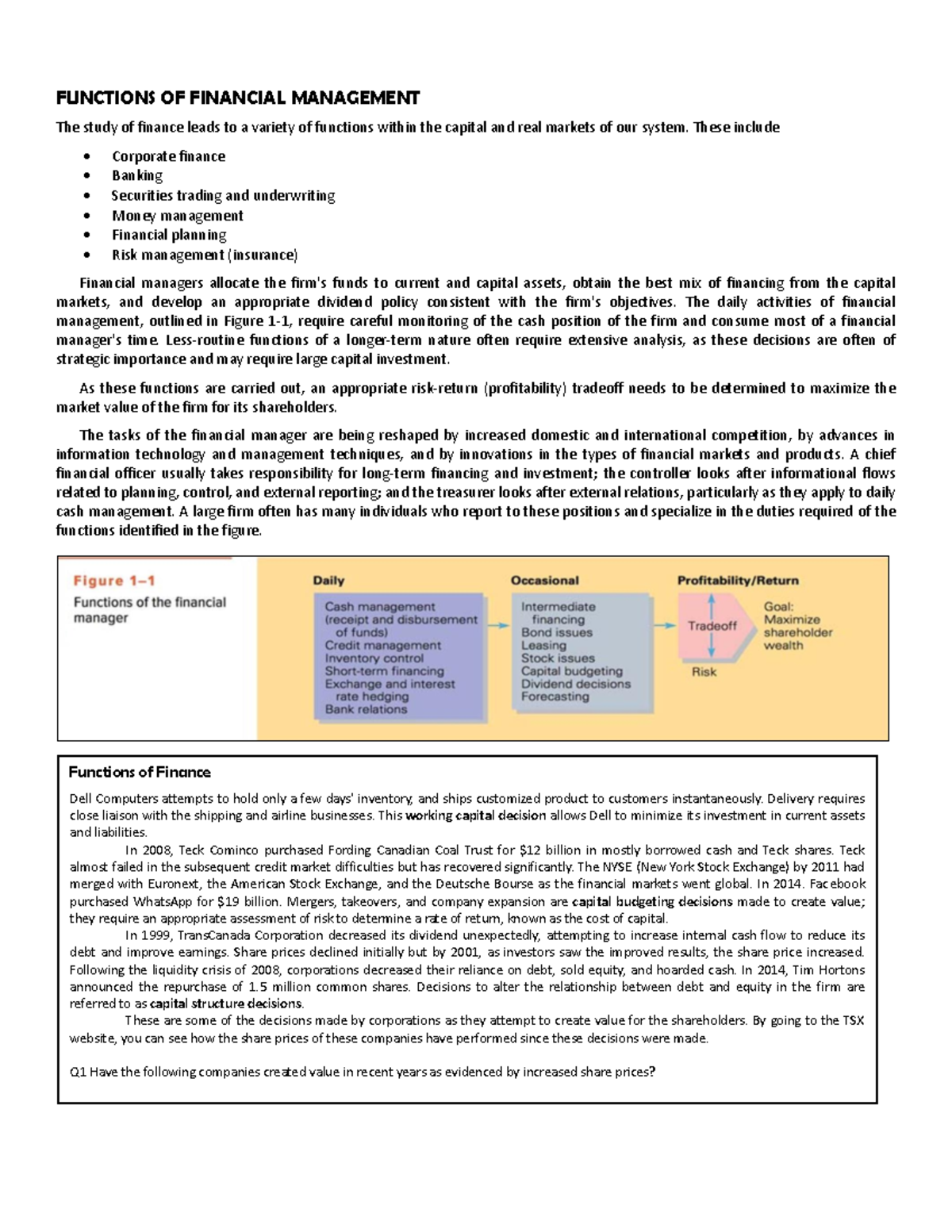
While the three pillars focus on long-term strategy, the finance function is also responsible for the day-to-day survival of the business through Working Capital Management. This is the management of current assets (cash, inventory, accounts receivable) and current liabilities (accounts payable, short-term debt).
Liquidity Management
Liquidity refers to a company's ability to meet its short-term obligations as they fall due. The finance function ensures that there is always enough cash on hand to pay employees, suppliers, and taxes. In 2026, many firms utilize automated treasury management systems to monitor cash positions across global accounts in real-time.
The Cash Conversion Cycle
A key metric for the finance function is the Cash Conversion Cycle (CCC). This measures how long it takes for a company to convert its investments in inventory and other resources into cash flows from sales. A shorter cycle means the company is more efficient and requires less external financing to sustain operations.
Finance vs. Accounting: Understanding the Difference
It is common to confuse the finance function with the accounting function, but they serve different purposes within financial management. Accounting is primarily concerned with the past (reporting and compliance), while finance is focused on the future (planning and valuation).
| Feature | Accounting Function | Finance Function |
|---|---|---|
| Primary Focus | Recording and reporting historical transactions. | Planning, acquiring, and allocating resources for the future. |
| Main Goal | Accuracy, transparency, and regulatory compliance. | Maximizing shareholder wealth and enterprise value. |
| Methodology | Accrual basis (recording revenue when earned). | Cash flow basis (focusing on actual movement of money). |
| Decision Making | Provides the data used for decisions. | Makes the decisions based on the data provided. |
| Scope | Tax, audit, bookkeeping, and financial statements. | Investment analysis, capital structure, and risk management. |
The Impact of Digital Transformation in 2026
As of 2026, the finance function has been fundamentally reshaped by technology. The "Modern Finance Function" is no longer a department of spreadsheets but a hub of strategic intelligence.
- Predictive Analytics: Finance teams now use machine learning models to predict revenue trends and expense volatility with high precision, allowing for more agile budgeting.
- ESG Integration: Environmental, Social, and Governance (ESG) factors are now a core part of the finance function. Financial managers must calculate the "carbon cost" of investments and ensure that capital allocation aligns with sustainability mandates. The International Sustainability Standards Board (ISSB) provides the frameworks that many finance functions now integrate into their reporting.
- Blockchain and Smart Contracts: In B2B environments, the finance function uses blockchain to automate payments and verify transactions instantly, reducing the need for manual reconciliation and lowering administrative costs.
Objectives of the Finance Function
The overarching objective of the finance function is often debated between two schools of thought: Profit Maximization and Wealth Maximization.
- Profit Maximization: This is a short-term focus on increasing Net Profit. However, it is often criticized because it ignores the "time value of money" and the risk factors involved in chasing immediate gains.
- Wealth Maximization: This is the modern standard. It focuses on increasing the market value of the company’s shares. Wealth maximization considers the risk, the timing of returns, and the long-term sustainability of the business. By maximizing the current value of future cash flows, the finance function serves the best interests of both the owners and the organization.
Common Challenges in the Finance Function
Despite advanced tools, the finance function faces several perennial and modern challenges:
- Data Silos: Finance requires data from sales, HR, and operations. If these departments do not share data effectively, financial planning becomes inaccurate.
- Regulatory Compliance: With evolving global tax laws and 2026's stringent digital privacy regulations, the finance function must invest heavily in compliance to avoid massive fines.
- Economic Volatility: Fluctuating interest rates and currency values require constant hedging and risk assessment to protect the company's margins.
Frequently Asked Questions
What is the primary goal of the finance function?
The primary goal is the maximization of shareholder wealth. While making a profit is necessary, wealth maximization considers the long-term value, the risks involved, and the timing of cash flows, providing a more comprehensive measure of success than simple short-term profit.
How does the finance function differ from bookkeeping?
Bookkeeping is the foundational level of accounting, focused on the routine recording of daily transactions. The finance function, however, takes that data to make strategic decisions about where the company should go, how it should grow, and how it should be funded.
Why is the "Time Value of Money" important to the finance function?
The Time Value of Money (TVM) is the concept that money available now is worth more than the same amount in the future due to its potential earning capacity. The finance function uses TVM to evaluate whether an investment today will generate enough future cash flow to justify the current expenditure.
Who is responsible for the finance function in a small business?
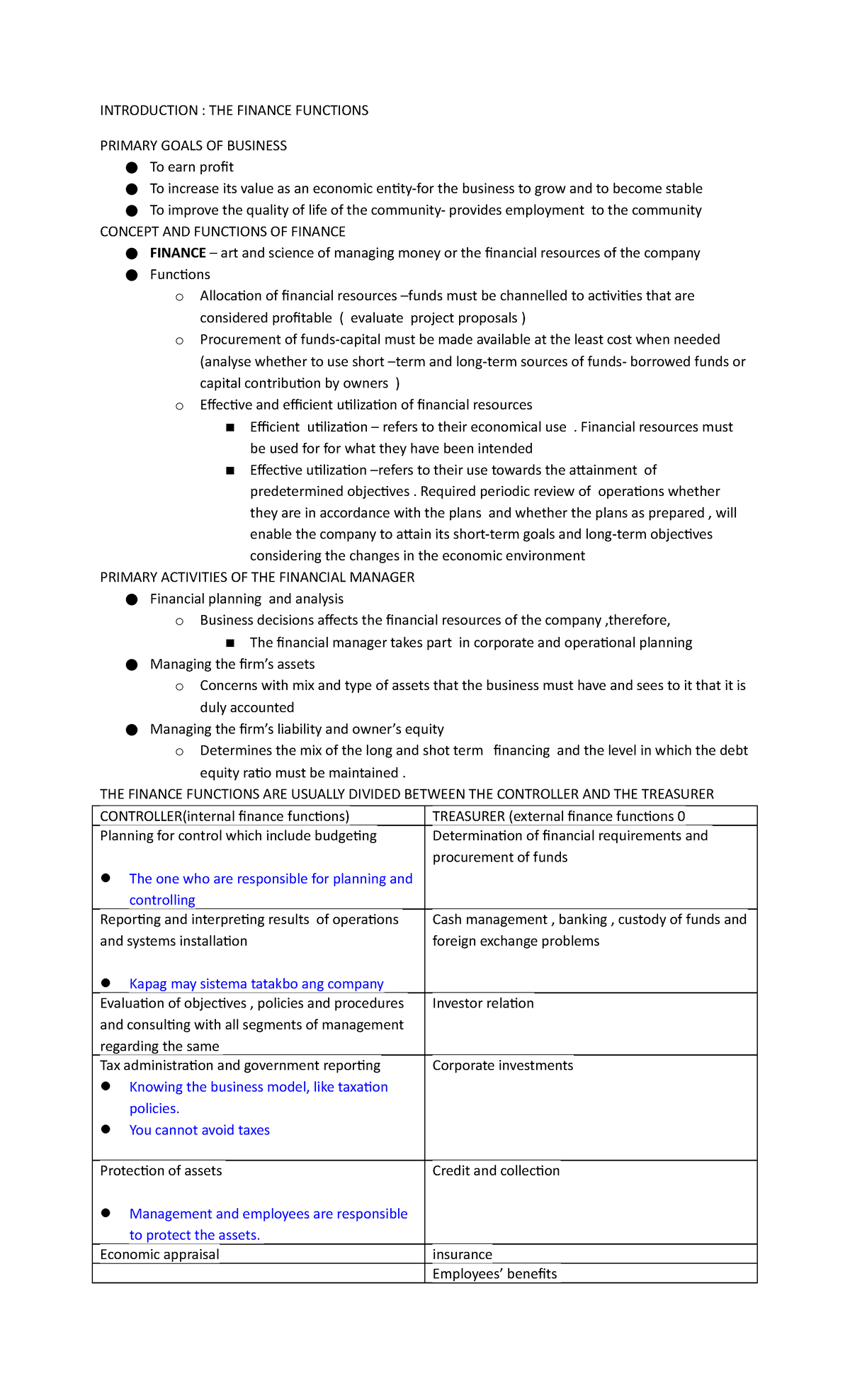
In small businesses, the owner or a general manager often handles the finance function. However, as a business grows, these responsibilities typically shift to a Controller or a Chief Financial Officer (CFO) who specializes in financial strategy.
What are the key tools used in the finance function?
Key tools include financial statements (Balance Sheet, Income Statement, Cash Flow Statement), budgeting software, Capital Budgeting techniques (NPV, IRR), and Financial Ratio Analysis (Liquidity ratios, Profitability ratios, Leverage ratios).
Strategic Recommendation
To optimize the finance function in 2026, organizations should move beyond "reactive" financial management and adopt a "proactive" stance. This involves investing in Rolling Forecasts rather than static annual budgets, allowing the company to pivot resources as market conditions change. Furthermore, the integration of non-financial metrics (like customer lifetime value and carbon footprint) into financial models is no longer optional—it is a requirement for attracting modern institutional investment.
Businesses should prioritize the development of "Financial Business Partners"—finance professionals who work directly within operational departments to provide real-time financial insights that drive better day-to-day decision-making.
Image Gallery