Determining Eligibility for a Roth IRA: A Complete Step-by-Step Guide
Determining eligibility for a Roth IRA requires meeting two primary federal criteria: generating qualifying earned income during the tax year and maintaining a Modified Adjusted Gross Income (MAGI) below statutory IRS thresholds. While...
Determining eligibility for a Roth IRA requires meeting two primary federal criteria: generating qualifying earned income during the tax year and maintaining a Modified Adjusted Gross Income (MAGI) below statutory IRS thresholds. While age imposes no barrier to entry, your tax filing status directly governs your income ceiling, determining whether you qualify for full, reduced, or zero direct contributions.
Contents
Core Requirements for Roth IRA Eligibility
To make a direct contribution to a Roth IRA, you must satisfy two fundamental rules established by the Internal Revenue Code. Unlike a Traditional IRA, where contributions may be tax-deductible regardless of income if you are not covered by a workplace plan, a Roth IRA accepts only after-tax dollars and enforces strict income caps.
1. The Earned Income Requirement
You cannot contribute more than you earned in taxable compensation during the tax year. The Internal Revenue Service (IRS Publication 590-A) strictly distinguishes between earned income and unearned income.
Qualifying earned income includes:
- Wages, salaries, tips, and professional fees reported on Form W-2.
- Net earnings from self-employment (sole proprietorships, partnerships, or LLCs) minus deductible self-employment tax and retirement contributions.
- Commission, bonuses, and taxable fringe benefits.
- Taxable non-tuition fellowship and stipend payments (for graduate students and researchers).
- Non-taxable combat pay for members of the U.S. Armed Forces.
Unearned income—which cannot be used to justify a Roth IRA contribution—includes:
- Interest, dividends, and capital gains from taxable investment accounts.
- Rental income from real estate (unless you operate as a qualified real estate professional).
- Pension payments, annuity distributions, and Social Security benefits.
- Unemployment benefits, worker's compensation, and disability income (unless classified as taxable wages).
- Child support, alimony (for divorce agreements executed after December 31, 2018), and gifts or inheritances.
If your total earned income for the year is lower than the annual maximum allowable contribution, your contribution limit is capped at 100% of your earned income. For example, if a teenager earns $3,500 working a summer job, their maximum Roth IRA contribution for that tax year is $3,500, regardless of the published annual maximum.
2. Income Ceilings Based on MAGI
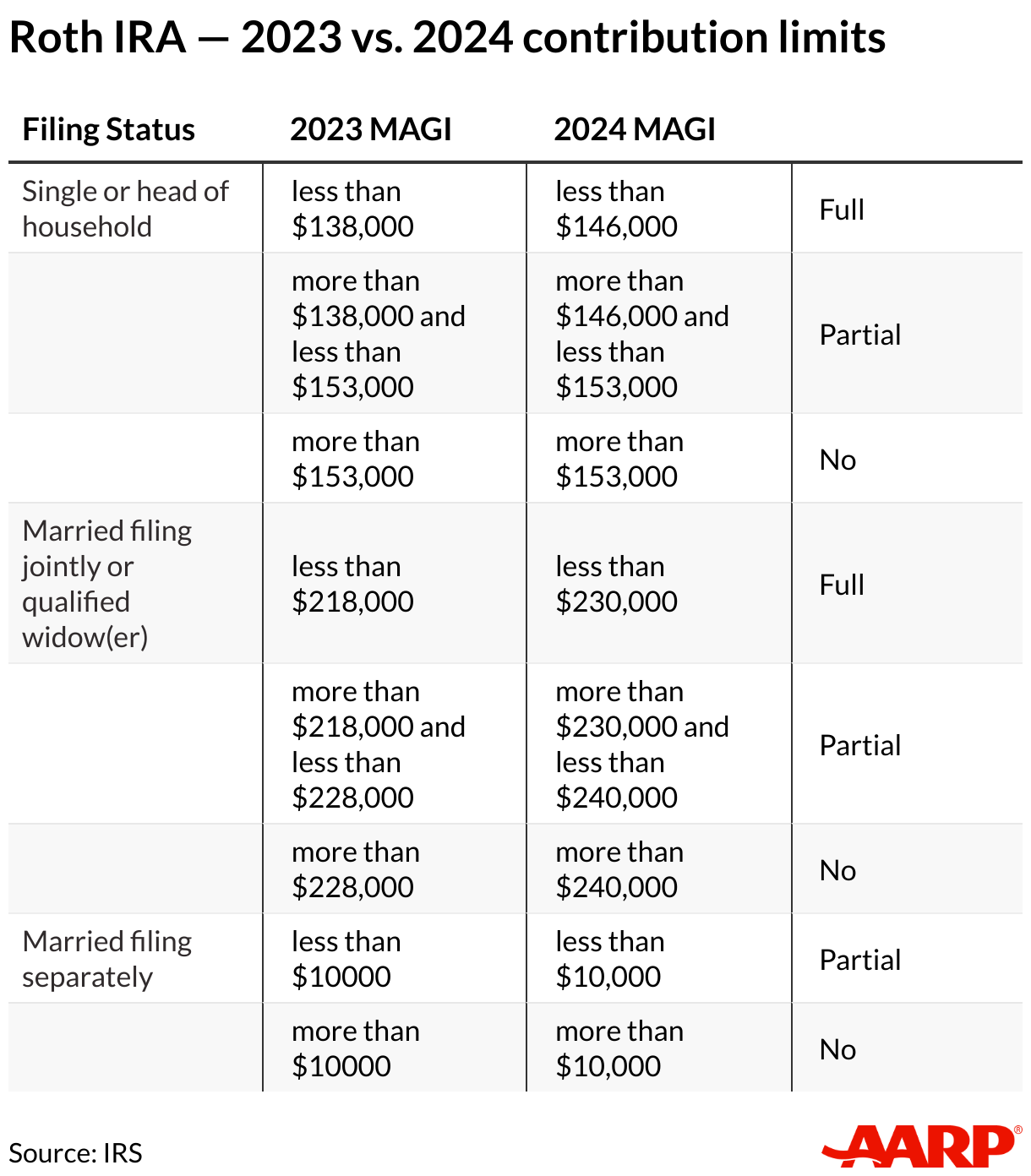
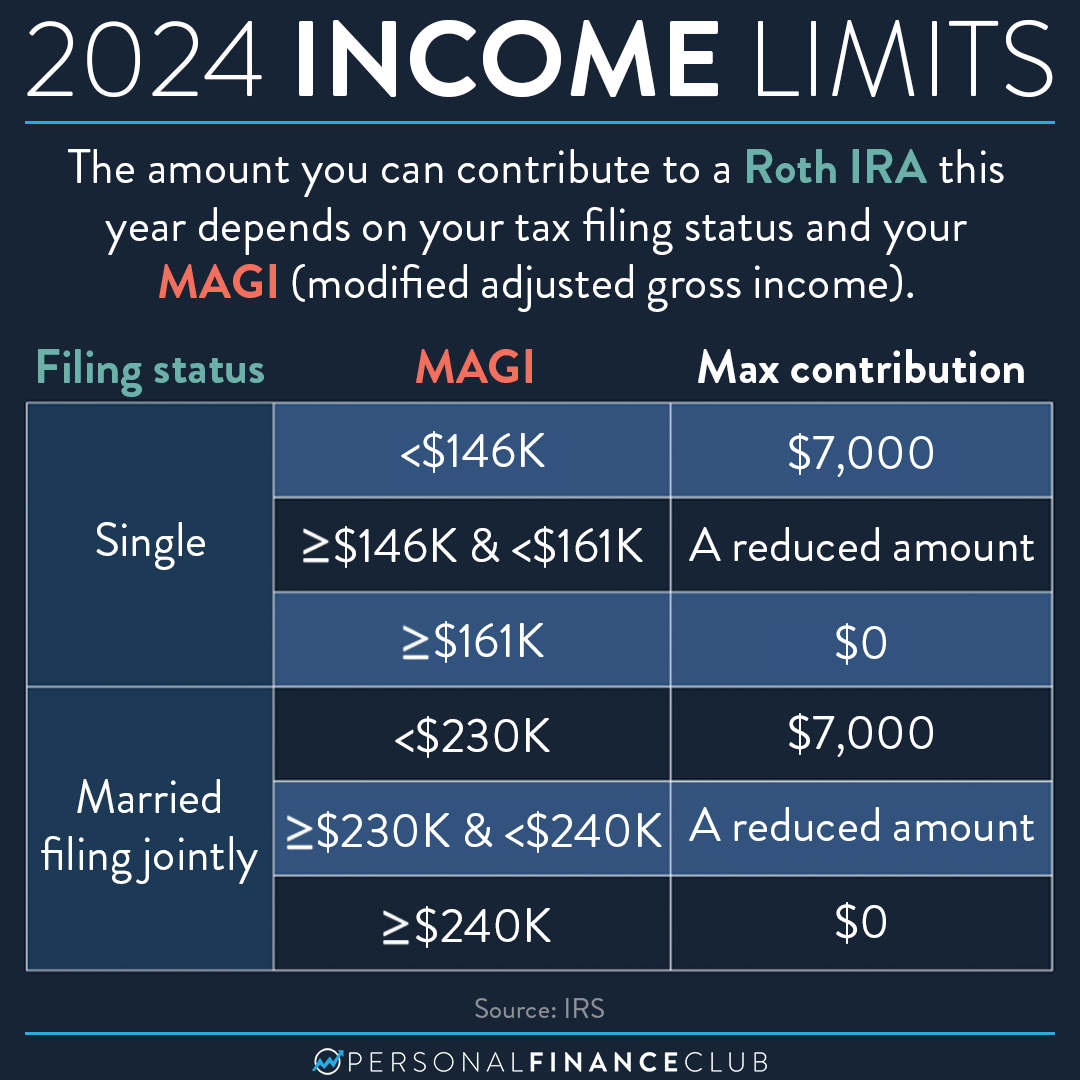
The second pillar of Roth IRA eligibility is your Modified Adjusted Gross Income (MAGI). As your earnings cross specific thresholds set annually by the IRS, your maximum allowed direct contribution begins to phase out gradually until it hits zero. High-income taxpayers who exceed these limits are entirely disqualified from making direct Roth IRA contributions for that tax year, though alternative strategies like the Backdoor Roth IRA remain available.
Calculating Your Modified Adjusted Gross Income (MAGI)
Determining whether your income falls within the allowable limits requires calculating your MAGI rather than looking solely at your gross salary or Adjusted Gross Income (AGI). MAGI is your baseline income after taking allowable pre-tax deductions, with certain tax exclusions added back.
AGI (from Form 1040) + Specific Tax Add-Backs = MAGI for Roth IRA Eligibility
Step 1: Find Your AGI
Your Adjusted Gross Income appears on Line 11 of IRS Form 1040. It represents your total gross income (wages, dividends, capital gains, self-employment income) minus "above-the-line" deductions, such as pre-tax HSA contributions, educator expenses, student loan interest deductions, and self-employed health insurance deductions.
Step 2: Add Back Excluded Items
To convert AGI to MAGI for Roth IRA purposes, you must add back specific deductions and exclusions. According to the IRS Guidelines on Individual Retirement Arrangements, these add-backs include:
- Student loan interest deduction.
- Foreign earned income exclusion and foreign housing exclusion/deduction.
- Exclusions for adoption expenses.
- Exclusions for savings bond interest used for higher education expenses.
- Deductions for losses from publicly traded partnerships.
For most taxpayers who do not claim foreign income exclusions or specialized adoption deductions, MAGI is equal to or very close to AGI. However, accurately running the calculation is vital if your earnings sit near the IRS phase-out boundaries.
Roth IRA Income Phase-Out Ranges and Contribution Limits
The IRS adjusts Roth IRA contribution limits and MAGI phase-out ranges periodically to account for inflation. Below is a detailed breakdown of the phase-out thresholds, filing statuses, and allowable contributions applicable for the 2026 tax year.
| Tax Filing Status | Full Contribution Allowed (MAGI) | Reduced Contribution Phase-Out Range | Ineligible for Direct Contribution | 2026 Maximum Contribution Limit |
|---|---|---|---|---|
| Single / Head of Household | Under $150,000 | $150,000 to $165,000 | $165,000 or greater | $7,000 (Under Age 50)$8,000 (Age 50+) |
| Married Filing Jointly / Qualifying Surviving Spouse | Under $236,000 | $236,000 to $246,000 | $246,000 or greater | $7,000 (Under Age 50)$8,000 (Age 50+) |
| Married Filing Separately (lived with spouse at any time during year) | N/A | $0 to $10,000 | $10,000 or greater | Partial up to $10k, $0 thereafter |
| Married Filing Separately (lived apart from spouse all year) | Under $150,000 | $150,000 to $165,000 | $165,000 or greater | $7,000 (Under Age 50)$8,000 (Age 50+) |
Note: The $1,000 catch-up contribution for individuals aged 50 and older is indexed for inflation under provisions of the SECURE 2.0 Act.
How the Phase-Out Works
If your MAGI falls into the phase-out range, your maximum allowed contribution is reduced proportionally. The IRS provides a specific mathematical formula in Worksheet 2-1 of Publication 590-A:
- Subtract the lower threshold of your filing status phase-out range from your MAGI.
- Divide that amount by the total phase-out range width ($15,000 for single taxpayers; $10,000 for joint filers).
- Multiply the resulting fraction by the maximum allowable contribution limit.
- Subtract that figure from the maximum contribution limit to arrive at your allowable phase-out limit.
If the result falls between $0 and $200, the IRS permits a minimum contribution limit of $200, provided your earned income supports it.
Special Eligibility Rules and Edge Cases
Eligibility rules apply differently depending on life circumstances, employment arrangements, and family structures. Understanding these specialized scenarios prevents missed savings opportunities or unexpected tax liabilities.
Spousal Roth IRAs for Non-Working Partners
Under standard IRS rules, an individual without taxable earned income cannot contribute to an IRA. However, the Kay Bailey Hutchison Spousal IRA rule creates an exception for married couples filing jointly.
If one spouse earns income while the other stays home or earns less than the individual contribution limit, the working spouse's earned income can be used to fund a separate Roth IRA for the non-working spouse. The couple’s combined contributions cannot exceed their joint taxable earned income or double the individual annual contribution limit, and their total MAGI must remain below the Married Filing Jointly income thresholds.
Minors and Young Workers
There is no minimum age requirement to open or contribute to a Roth IRA. Children or teenagers who earn income from a W-2 job (e.g., retail, food service) or legitimate self-employment (e.g., babysitting, lawn care, tutoring) can contribute up to 100% of their net earned income or the annual maximum, whichever is lower.
Parents or guardians must open a Custodial Roth IRA on behalf of the minor. The custodian manages the account investments until the minor reaches the age of majority (typically 18 or 21 depending on the state). Self-employment earnings for minors must be verifiable and represent fair market value for real services performed.
Retired or Part-Time Workers
Age limits for IRA contributions were eliminated under federal legislation (the SECURE Act). Senior citizens can continue contributing to a Roth IRA indefinitely at any age, provided they maintain qualifying earned income. Pension distributions, 401(k) withdrawals, required minimum distributions (RMDs), and Social Security income do not qualify as earned income. However, part-time work, consulting fees, or board compensation do qualify.
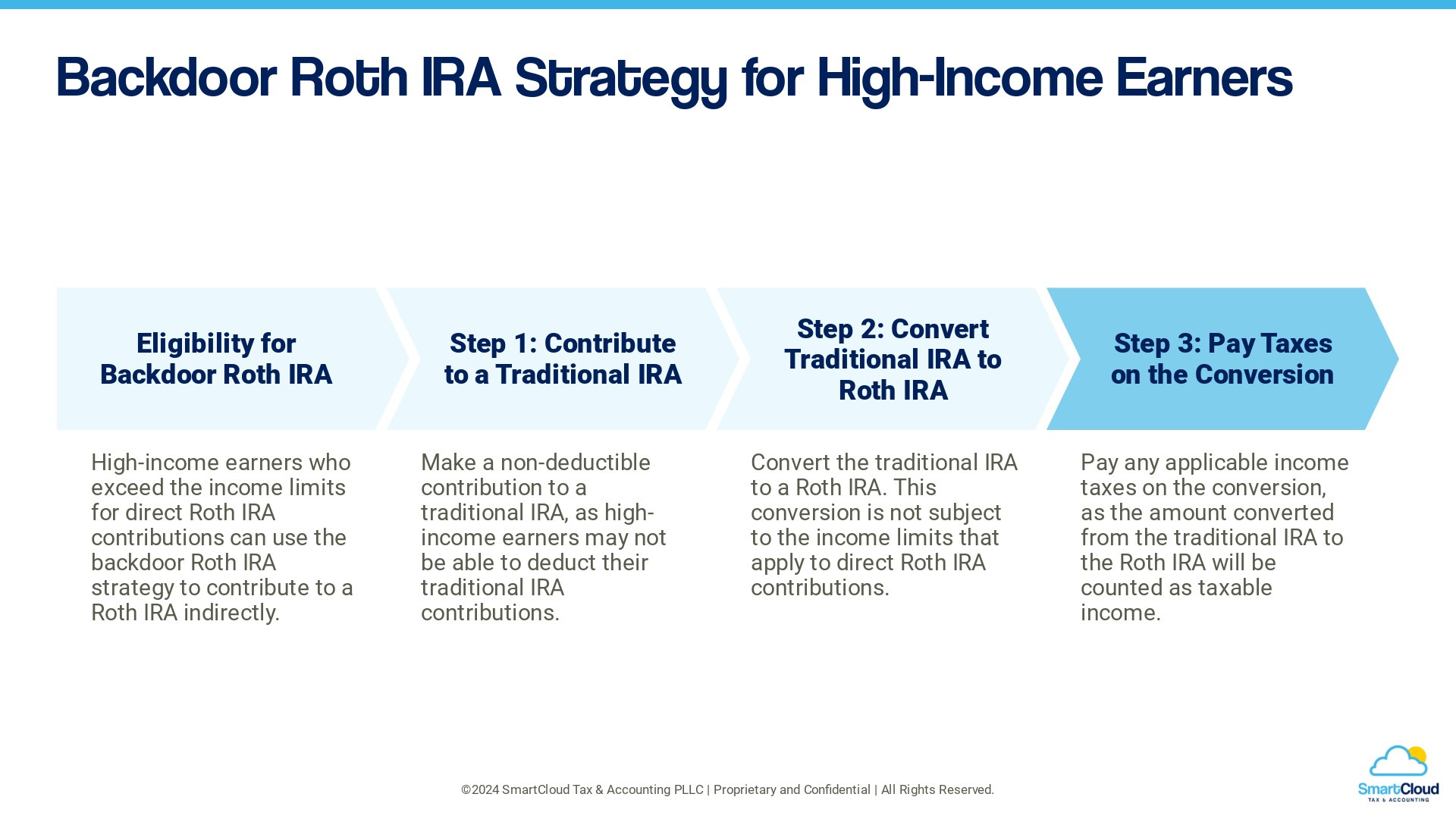
High-Income Earners: The Backdoor Roth IRA Strategy
If your MAGI exceeds the upper limits of the phase-out range, direct contributions are disallowed. However, federal tax code allows high earners to utilize a legal two-step process known as a Backdoor Roth IRA:
- Make a Non-Deductible Contribution: Deposit funds into a Traditional IRA. There are no income limits for making non-deductible contributions to a Traditional IRA, provided you have earned income.
- Convert to a Roth IRA: Execute a Roth IRA conversion through your brokerage firm, moving the funds from the Traditional IRA into a Roth IRA.
Because the initial Traditional IRA contribution was made with after-tax dollars (non-deductible), the conversion itself incurs little to no tax liability, provided you have no pre-tax funds in any other Traditional, SEP, or SIMPLE IRAs.
Caution: If you own pre-tax dollars in other Traditional IRAs, the IRS Pro-Rata Rule requires that conversions draw proportionally from pre-tax and after-tax assets across all your traditional IRA accounts, triggering a taxable event on the pre-tax portion.
Step-by-Step Verification Process to Avoid IRS Penalties
Inadvertently making an ineligible Roth IRA contribution can lead to tax consequences. The IRS imposes a 6% excise tax every year on excess contributions until the error is corrected. Following this step-by-step verification protocol protects your retirement savings from penalties.
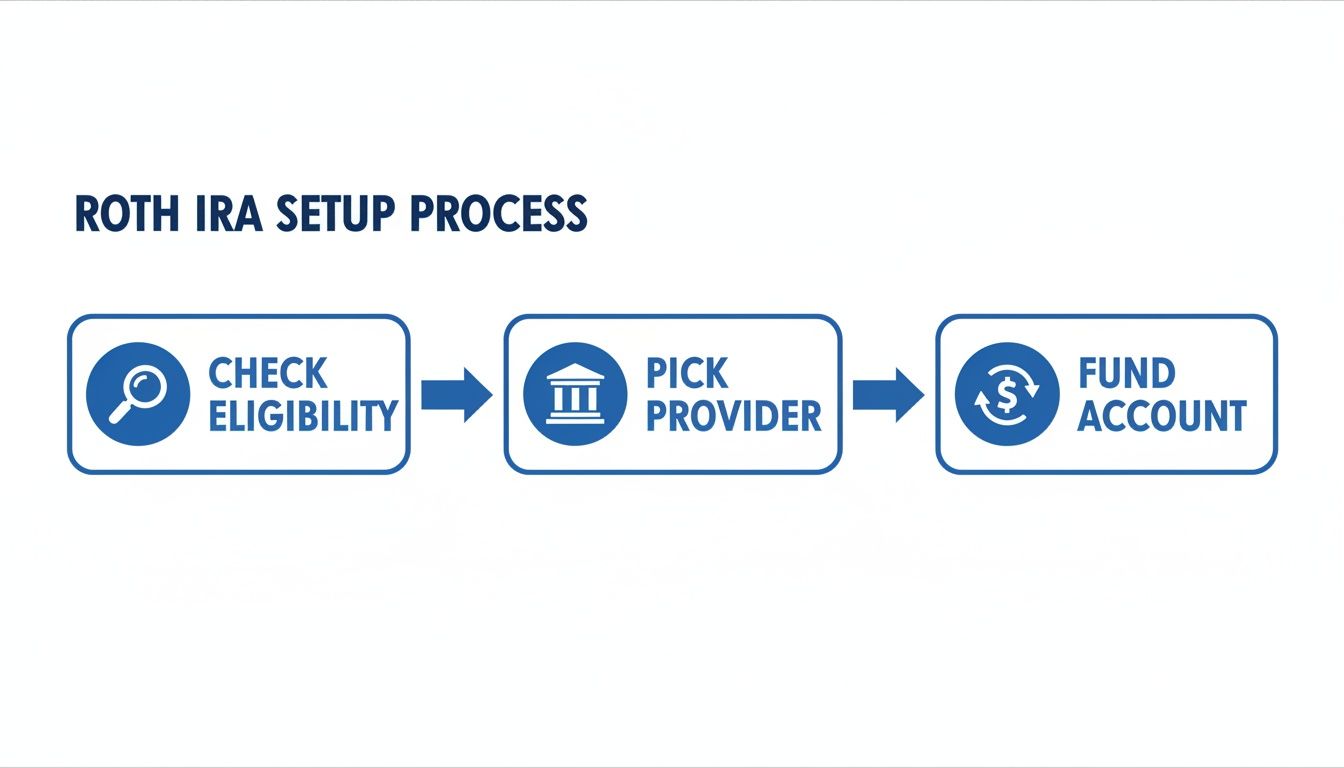
Step 1: Confirm Earned Income -> Step 2: Estimate & Track MAGI -> Step 3: Check Filing Status Limits -> Step 4: Execute Direct or Backdoor Contribution
Step 1: Verify Your Earned Income
Confirm that you will receive qualified taxable compensation during the current calendar year. If your expected earned income is uncertain (e.g., variable commission or freelance work), wait until you receive your final pay stubs or Form W-2/1099 statements before making your final contribution. You have until the federal tax filing deadline (typically April 15 of the following year) to make contributions for the preceding tax year.
Step 2: Estimate and Monitor Your MAGI Throughout the Year
Calculate your estimated annual MAGI by projecting your gross earnings and factoring in pre-tax payroll deductions (such as employer 401(k) matches, health insurance premiums, and FSA deductions). Keep a close watch on year-end bonuses, capital gains, or sudden raises that might inadvertently push your MAGI into or above the phase-out range.
Step 3: Determine Your Allowable Contribution Threshold
Compare your projected MAGI against the IRS table for your tax filing status:
- Below Phase-Out: Eligible for maximum contribution up to earned income limit.
- Within Phase-Out: Calculate reduced allowable amount using the IRS formula.
- Above Phase-Out: Disqualified from direct contribution; evaluate the Backdoor Roth strategy.
Step 4: How to Fix Excess Contributions
If you realize after making a contribution that your income exceeded the threshold or that you lacked sufficient earned income, you must take corrective action before filing your tax return (including extensions) to avoid the 6% annual penalty:
- Withdraw the Excess Contribution: Request a "Return of Excess Contributions" from your IRA provider. You must withdraw the excess principal plus any Net Income Attributable (NIA) earned on those excess dollars. The earnings must be reported as taxable income on your return for the year the contribution was made.
- Recharacterize the Contribution: Instruct your custodian to recharacterize the excess Roth contribution as a Traditional IRA contribution. The transaction is treated as if the funds were originally deposited into the Traditional IRA on the original date.
Frequently Asked Questions
Can I contribute to a Roth IRA if I don't have a job?
Only if you file a joint tax return with a spouse who has sufficient qualifying earned income (via a Spousal Roth IRA). If you are single and do not have taxable earned income—relying entirely on investment returns, pensions, unemployment, or gifts—you are ineligible to contribute to a Roth IRA for that tax year.
Is there an age limit for opening or contributing to a Roth IRA?
No. There is no upper or lower age limit for opening or making contributions to a Roth IRA. As long as you (or your spouse, if filing jointly) have earned income and meet the MAGI parameters, you can contribute at age 15 or age 85.
What happens if I contribute to a Roth IRA and my income exceeds the limit?
If you overcontribute due to exceeding the MAGI limit, the IRS applies a 6% penalty on the excess amount for every year it remains in your account. To avoid penalties, you must remove or recharacterize the excess contribution and its associated earnings before your federal tax filing deadline (plus extension window).
Can I contribute to both a 401(k) and a Roth IRA in the same year?
Yes. Participating in an employer-sponsored plan like a 401(k), 403(b), or SIMPLE IRA does not disqualify you from contributing to a Roth IRA. Furthermore, workplace retirement plan contributions lower your overall AGI, which can actually help keep your MAGI below the Roth IRA phase-out threshold. However, individual IRA contribution limits remain separate from employer plan limits.
How does earned income differ from total gross income on my tax return?
Gross income encompasses all income sources, including taxable interest, dividends, capital gains, pension distributions, and rental profits. Earned income refers specifically to active compensation received for work performed, such as wages, salaries, tips, bonuses, and net self-employment earnings. Eligibility for a Roth IRA requires active earned income, while your total MAGI determines your eligibility cap.
Strategic Recommendations for Managing Eligibility
Determining eligibility for a Roth IRA is an ongoing monitoring process rather than a one-time check. If your earnings hover near the IRS phase-out limits, consider waiting until early the following year—after all W-2s, 1099s, and final tax documents are in hand—to make your prior-year Roth contribution before the April tax deadline. This eliminates the guesswork and administrative hassle of correcting excess contributions.
If your career trajectory places you consistently above the allowable MAGI ceilings, consult with a qualified financial planner or Certified Public Accountant (CPA) to establish a clean Backdoor Roth IRA workflow. Maintaining zero pre-tax balance in all Traditional IRAs maximizes the tax efficiency of this workaround, ensuring seamless compliance with federal regulations.
Image Gallery