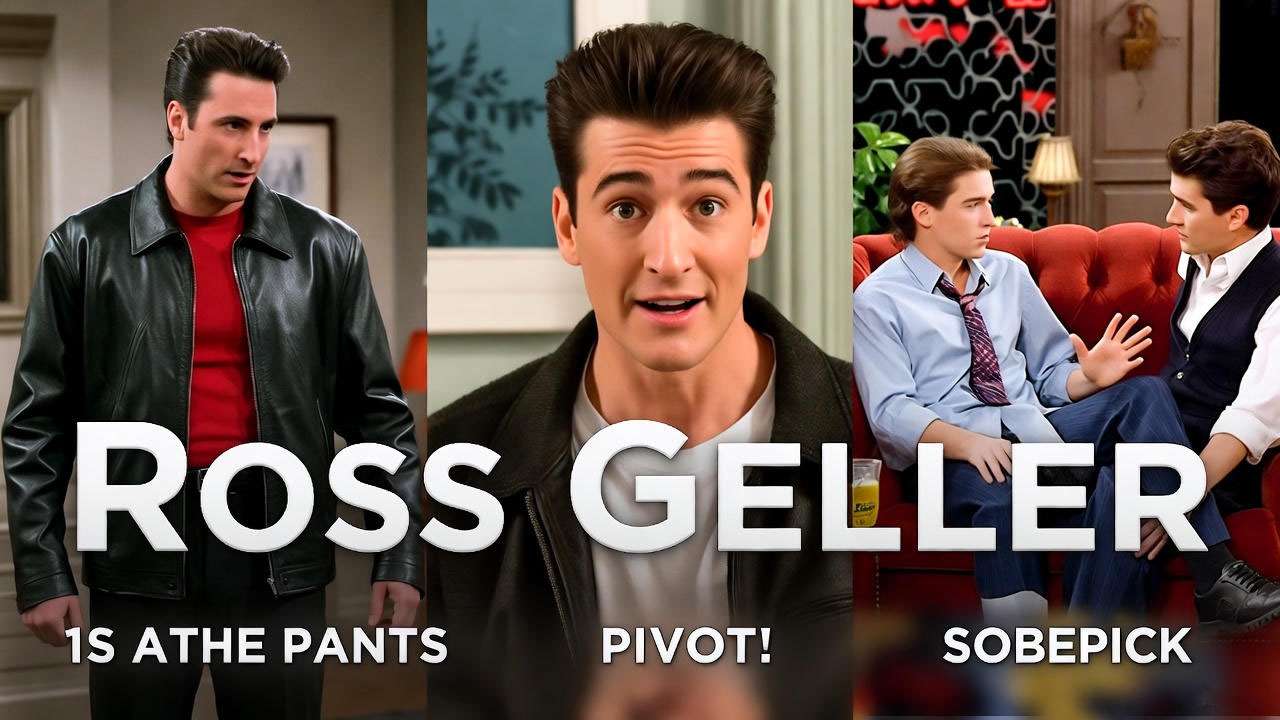
Ross Geller in 2025: A Retrospective on Character Arc, Modern Reception, and Projected Life
In 2025, Ross Geller from the landmark sitcom Friends would be a 57-year-old senior academic, likely holding a distinguished chair in paleontology at New York University while raising adult children Ben and Emma. Contemporary pop cultu...
In 2025, Ross Geller from the landmark sitcom Friends would be a 57-year-old senior academic, likely holding a distinguished chair in paleontology at New York University while raising adult children Ben and Emma. Contemporary pop culture re-examinations treat Ross as both a brilliant masterclass in physical comedy and a deeply debated archetype of 1990s romantic toxicity.
Contents
Speculative Timeline: Where Would Ross Geller Be in 2025?
To project where Dr. Ross Geller stands in 2025, one must synthesize the character's established biographical canon with real-world institutional and demographic shifts in New York City. Born in late 1967, Ross reached his mid-50s in the mid-2020s.
Academic Career and Academic Status
By 2025, Dr. Geller would have spent over two decades as a tenured faculty member in the Department of Earth and Environmental Sciences (or Department of Anthropology) at New York University (NYU). Having secured tenure in the early 2000s, Ross would likely occupy a senior administrative role, such as Department Chair or Director of Paleontological Studies.
Given his obsession with research prestige, Ross would have published numerous peer-reviewed papers on Late Cretaceous theropods, adapted to digital excavation techniques, and frequently competed for grants from institutions like the National Science Foundation. Rather than relying solely on traditional museum slide shows, a 2025 Ross would likely leverage 3D photogrammetry and LIDAR scanning to examine fossil beds remotely.
Family Dynamics and Relationships
The series finale in 2004 implied a permanent romantic reconciliation with Rachel Green. In 2025, their relationship would represent a long-term partnership or second marriage adapted to mature adulthood:
- Rachel Green: In 2025, Rachel would be a high-level executive in global fashion management or luxury retail consulting. Balancing Ross’s academic schedule with Rachel’s international industry travel would form the bedrock of their domestic dynamic.
- Ben Geller (Born May 1995): At 30 years old in 2025, Ben—raised jointly by Carol Willick, Susan Bunch, and Ross—would be established in his own career, potentially pursuing creative, technological, or corporate fields in the tri-state area.
- Emma Geller-Green (Born May 2002): Turning 23 in 2025, Emma would likely be a recent university graduate navigating the early entry-level job market or pursuing postgraduate studies, directly mirroring the educational aspirations her father held at her age.
Real Estate and Financial Reality
Having vacated his famous "Ugly Naked Guy" apartment across from Monica’s building long ago, a 2025 Ross would likely reside in a brownstone or cooperative apartment in Manhattan's West Village or Upper West Side. Supported by a senior professor's salary, academic royalties, and Rachel's executive income, the household would represent a stable, upper-middle-class Manhattan lifestyle.
The Evolution of Paleontology: How Ross’s Field Has Transformed
When Friends premiered in 1994, paleontology was undergoing the "Dinosaur Renaissance," marked by the public obsession following Jurassic Park (1993). By 2025, the discipline has undergone massive technological transformations that directly impact how a character like Ross would conduct research.
- 1990s Methodologies to 2020s Technological Integration:
- Physical brush dig sites: Drones & LIDAR terrain mapping
- Plaster cast fossils: 3D surface scanning & printing
- Anatomical sketches: CT scanning & biomechanical AI
- Geological strata mapping: Isotopic radiometric dating
Digital Paleontology and Computed Tomography (CT)
In the 1990s, fossil analysis required physical extraction, manual clearing with toothbrushes and air scribes, and visual examination. Modern paleontology relies heavily on high-resolution industrial CT scanning. This allows paleontologists to visualize internal cranial cavities, vascular structures, and unexcavated bones trapped inside dense matrix rock without damaging the specimen.
Feathered Dinosaurs and Biomolecular Analysis
The late 1990s and early 2000s saw ground-breaking fossil discoveries in Liaoning, China, proving that many theropod dinosaurs—including relatives of the Tyrannosaurus rex—possessed feathers or proto-feathers. For Ross, a specialist in avian evolutionary origins, incorporating soft-tissue melanosome analysis and ancient protein sequencing (paleoproteomics) into his lectures would be standard practice by 2025.
Climate Change and Deep-Time Ecology
Modern paleontology intersects directly with modern climate science. Paleoclimatology uses fossilized flora, leaf stomata density, and oxygen isotope ratios in ancient teeth to reconstruct paleoenvironments. In 2025, Ross’s university courses would contextualize prehistoric mass extinctions within the modern discourse on global climate systems.
Modern Re-Evaluation: How Audiences View Ross Geller Today
The shift in audience perception regarding Ross Geller between 1994 and 2025 represents one of the most drastic re-evaluations of a comedic protagonist in television history.
- 1994-2004 Audience Perception:
- "Hopeless Romantic" Protagonist
- Charming "Geek/Nice Guy"
- Silly, Well-Meaning Academic
- Master of Slapstick Comedy
- 2020s Streaming & TikTok Critique:
- Possessive and Insecure Partner
- Micro-Manager of Relationships
- Anxious, Reactionary Dynamic
- Flawed, Complex Comedic Anti-Hero
From "Hopeless Romantic" to "Red Flag" Archetype
During the original run of Friends, mainstream audiences viewed Ross as the sensitive contrast to Chandler Bing's emotional detachment and Joey Tribbiani's casual dating style. His pursuit of Rachel was structured around classic "will-they-won't-they" romantic tropes.
Through contemporary streaming views on platforms like Max and short-form commentary on TikTok, modern audiences apply critical relationship frameworks to his behavior. Key points of modern critique include:
- Possessiveness: His jealousy surrounding Rachel’s career move to Bloomingdale's and her colleague Mark Robinson is analyzed as a red flag regarding professional boundaries.
- Entitlement: The belief that his childhood crush on Rachel conferred a permanent claim to her affection.
- Insecurity Regarding Gender Norms: His uncomfortable reaction to a male nanny (Sandy) or Ben playing with a Barbie doll, which modern viewers critique as fragile masculinity.
The Critical Defense: Physical Comedy and Vulnerability
Despite modern social critiques, television scholars and critics consistently defend David Schwimmer’s performance. Schwimmer brought vocal range, precise physical slapstick, and theatrical timing that elevated the character above simple trope writing.
Episodes such as "The One with the Leather Pants" (Season 5) and "The One Where Ross Is Fine" (Season 10) demonstrate a performer using physical distress and manic energy to highlight the character's internal flaws, turning personal neurosis into top-tier ensemble comedy.
Comparative Overview: Ross Geller Across Five Decades
To understand the character's full lifecycle and cultural positioning, the table below maps Ross Geller's progression from his fictional origins into the modern era.
| Life Stage | Primary Location | Professional Title | Key Personal Milestones | Cultural/Media Framing |
|---|---|---|---|---|
| 1990s (Ages 26–31) | Museum of Prehistoric History | Museum Paleontologist | Marriage/Divorce with Carol; Birth of Ben; Relationship with Rachel | The earnest, awkward "Nice Guy" of 90s sitcoms |
| 2000s (Ages 32–41) | NYU / Central Perk Apartment | Assistant/Tenured Professor | Marriage/Divorce with Emily; Birth of Emma; Reunion with Rachel | The frantic, meme-generator of late-era prime time |
| 2010s (Ages 42–51) | Manhattan Co-op | Full Professor of Paleontology | Raising children; Publishing academic texts; Senior faculty duties | The subject of early streaming binges and viral re-analysis |
| 2020s (Ages 52–58) | NYU / Greenwich Village | Department Chair / Senior Scholar | Ben turning 30; Emma graduating college; Navigating modern academia | The debated anti-hero of relationship ethics and physical comedy masterclass |
The Cultural Afterlife of Ross Geller's Iconic Tropes
Ross Geller’s storylines established several narrative and conversational tropes that persist in modern popular culture and dating vocabulary.
- "WE WERE ON A BREAK!"
- Relationship Ethics: Ambiguity of verbal boundaries in dating
- Digital Culture: Memes, GIFs, & GIF reactions on socials
"We Were on a Break!" and Modern Relationship Boundaries
The central conflict of Season 3—whether Ross cheated on Rachel or whether their verbal agreement to "take a break" dissolved their monogamous commitment—remains a fixture in dating discourse. Modern relationship experts frequently use the phrase as shorthand for ambiguous relationship status, highlighting the necessity of clear communication regarding exclusivity, pause periods, and boundaries.
The "Unagi" Mental State and Anxiety Representation
In Season 6, Ross claims to master Unagi, misinterpreting a Japanese freshwater eel as a state of total awareness required for self-defense. In modern mental health discussions, Ross's hyper-vigilance, rage issues (e.g., "The One with Ross's Sandwich"), and deep fear of abandonment are analyzed through the lens of unaddressed emotional anxiety. What was framed purely as manic farce in 1998 is understood today as an expression of severe emotional vulnerability and stress.
"PIVOT!" and Spatial Real Estate Memes
The image of Ross screaming "Pivot!" while attempting to haul a couch up a narrow apartment stairwell with Chandler and Rachel remains one of the most recognizable television moments in digital media. It is universally invoked when discussing urban real estate struggles, DIY furniture assembly, or organizational shifts in corporate environments.
Frequently Asked Questions
How old would Ross Geller be in 2025?
Ross Geller was born on October 18, 1967 (despite occasional inconsistency in the show's inner logic). In 2025, Ross would be 57 years old.
Would Ross Geller still be working at NYU in 2025?
Yes. Having secured tenure as an academic paleontologist in the early 2000s, Ross would likely hold a senior position at New York University in 2025, potentially serving as Department Chair or holding an endowed research chair in Earth and Environmental Sciences.
Are Ross and Rachel still together in 2025?
According to the series finale in 2004, Ross and Rachel reconciled, committing to a permanent relationship. The 2021 retrospective special Friends: The Reunion confirmed that the show's creators and cast view Ross and Rachel as still married with adult children in the present day.
How old are Ross's children, Ben and Emma, in 2025?
Ben Geller, born in May 1995 to Ross and Carol, is 30 years old in 2025. Emma Geller-Green, born in May 2002 to Ross and Rachel, is 23 years old in 2025.
Why is Ross Geller viewed differently by modern streaming audiences?
Modern streaming audiences analyze TV characters through contemporary lenses regarding communication, emotional health, and relationship equality. While 1990s audiences saw Ross's possessiveness as romantic devotion, modern viewers identify his insecurities, jealousy, and traditional gender expectations as behavioral red flags, while continuing to praise David Schwimmer's physical comedy.
Key Takeaways for Pop Culture Observers
When evaluating Ross Geller’s enduring legacy in 2025, consider these core conclusions:
- Academic Continuity: Ross’s career trajectory aligns with a standard high-level academic pathway at an institution like NYU, transitioning from early-career field research to late-career administration and modern digital paleontology.
- Cultural Re-Evaluation: The character serves as a prime case study in how cultural norms shift over three decades. Behaviors once written as romantic tropes are now routinely dissected for boundaries and psychological health.
- Enduring Performance Value: Despite debates over the character's ethics, David Schwimmer’s comedic execution remains widely praised as a gold standard for multi-camera television performance.
For those re-watching Friends through a modern lens, analyze how the character’s academic neuroses drive the plot. Rather than judging him solely by contemporary social standards or past romantic tropes, view Ross Geller as a complex, manic, and highly flawed character who defined an era of television comedy.
Image Gallery