Exploring ETF Korea: A Complete Guide to South Korean Exchange-Traded Funds
Exploring ETF Korea involves navigating access to South Korea's equity market through offshore funds like US-listed ETFs or direct domestic exchange-traded funds listed on the Korea Exchange (KRX). Investors gain targeted exposure to t...
Exploring ETF Korea involves navigating access to South Korea's equity market through offshore funds like US-listed ETFs or direct domestic exchange-traded funds listed on the Korea Exchange (KRX). Investors gain targeted exposure to technology leaders, semiconductors, and industrial conglomerates while benefiting from regulatory efforts aimed at eliminating structural market undervaluations.
Contents
Understanding the South Korean ETF Market Structure
South Korea represents one of Asia's most liquid and dynamic financial markets. For global and domestic investors seeking equity exposure, exchange-traded funds (ETFs) have become the premier vehicle for navigating this market. The South Korean ETF market is supervised by the Financial Services Commission (FSC) and operated primarily through the Korea Exchange (KRX).
Over the past decade, domestic assets under management (AUM) in Korean ETFs have expanded exponentially. What began as a market dominated by plain-vanilla index trackers has evolved into a sophisticated ecosystem offering smart-beta funds, sector-specific products, active ETFs, covered-call strategies, and leveraged/inverse instruments.
- South Korea Equity Exposure
- Offshore Vehicles (US/Intl)
- iShares MSCI South Korea (EWY)
- Franklin FTSE South Korea (FLKR)
- First Trust AlphaDEX (FKO)
- Onshore Vehicles (KRX)
- Samsung KODEX Series
- Mirae Asset TIGER Series
- KB Asset RISE / KBSTAR Series
- Offshore Vehicles (US/Intl)
The domestic market is dominated by several major asset management firms:
- Samsung Asset Management (KODEX): The market pioneer and largest issuer by market share, offering flagship funds like KODEX 200 and KODEX Leverage.
- Mirae Asset Global Investments (TIGER): A major innovator in sector-specific, international, and thematic ETFs, widely popular among retail investors.
- KB Asset Management (RISE, formerly KBSTAR): A competitive provider offering low-cost broad-market trackers and sector-focused strategies.
- NH-Amundi Asset Management (HANARO): A growing institutional and retail player focusing on thematic and core asset classes.
For international investors, exploring South Korean ETFs requires deciding between offshore ETFs (listed on US or European exchanges and denominated in USD or EUR) and onshore ETFs (listed directly on the KRX in South Korean Won). Each path carries distinct structural, tax, operational, and liquidity characteristics.
Economic Drivers and the "Korea Discount"
To evaluate Korean ETFs effectively, investors must understand the macroeconomic factors shaping corporate South Korea. The economy is heavily export-oriented, making broad-market Korean equity indices highly sensitive to global demand cycles, technology spending, and global trade volume.
Key Industrial Pillars
- Semiconductors and Hardware: Companies like Samsung Electronics and SK Hynix hold dominant global positions in DRAM and NAND memory chips. Consequently, broad-market Korean ETFs frequently feature a heavy concentration in information technology.
- Automotive and Mobility: Hyundai Motor Group and its supply chain drive significant export revenues, increasingly positioning themselves in the global electric vehicle (EV) and battery sectors.
- Secondary Batteries and Clean Tech: South Korea houses leading global lithium-ion battery producers, creating demand for specialized domestic thematic ETFs.
- Industrial Sectors: Heavy industries—including shipbuilding, defense manufacturing, and construction—provide cyclical value balance to the tech-heavy market index.
Key Industrial Pillars of Korean ETFs
| Tech & Semiconductors | Automotive & Mobility | Industrials & Defense |
|---|---|---|
| • Memory (DRAM/NAND)• High Tech Hardware | • EV Supply Chains• Global Auto Exports | • Global Shipbuilding• Defense Equipment Exports |
Addressing the "Korea Discount" and Corporate Reform
Historically, South Korean equities traded at lower price-to-earnings (P/E) and price-to-book (P/B) valuations compared to regional peers—a phenomenon known as the Korea Discount. This valuation gap has traditionally been attributed to:
- Complex corporate governance structures within family-controlled conglomerates (chaebols).
- Historically lower dividend payout ratios and stock buyback rates relative to Western markets.
- Geopolitical tension associated with North Korea.
To resolve these structural issues, regulatory bodies introduced comprehensive capital market reforms, headlined by the Korea Value-Up Program. Modeled in part after corporate governance reforms in Japan, this initiative encourages listed companies to prioritize capital efficiency, improve price-to-book ratios, increase dividend distributions, and enhance communication with minority shareholders.
The launch of the Korea Value-Up Index by the KRX provided the benchmark for a new generation of Value-Up ETFs. These funds focus on companies demonstrating high return on equity (ROE), consistent capital allocation, and strong commitment to shareholder returns.
Offshore vs. Onshore Korean ETFs
When setting up investment strategies for South Korea, market participants must choose between purchasing foreign-listed funds or accessing local listing venues directly.
Offshore US-Listed ETFs
For foreign institutional and retail investors without a direct trading setup in Seoul, US-listed ETFs offer the simplest entry point. They trade during standard US market hours in US Dollars and do not require specialized foreign exchange conversion.
- iShares MSCI South Korea ETF (EWY): Issued by BlackRock, EWY is the benchmark fund for US investors seeking South Korean equity exposure. Tracked via the iShares MSCI South Korea ETF product page, the fund provides access to large- and mid-cap domestic stocks. Because of its liquidity and options market volume, it serves as a primary vehicle for global macroeconomic tactical allocation.
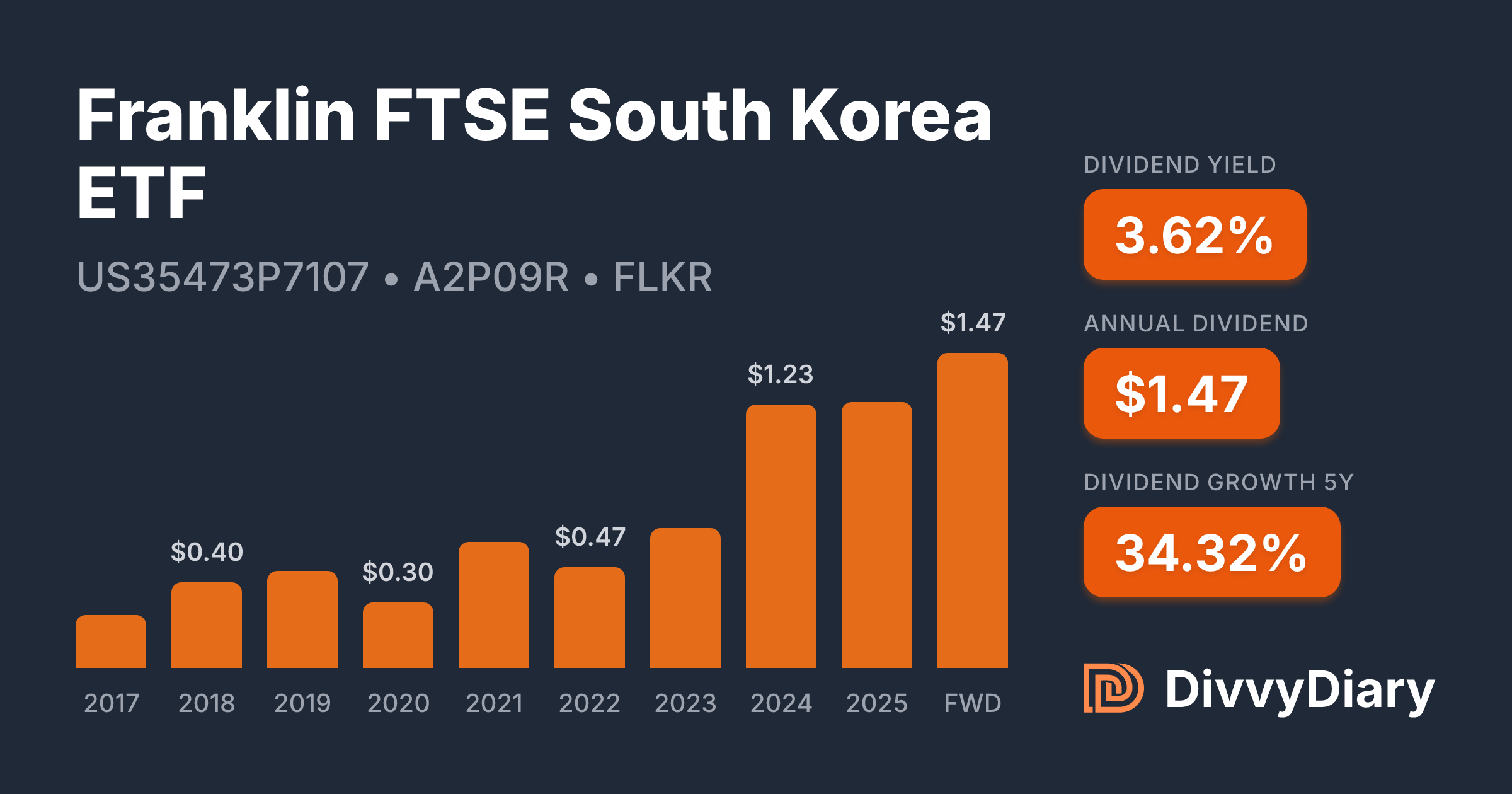
- Franklin FTSE South Korea ETF (FLKR): Issued by Franklin Templeton, FLKR tracks the FTSE South Korea Capped Index. Detailed on the Franklin Templeton FLKR page, it offers low expense ratios, making it popular for long-term buy-and-hold investors prioritizing cost efficiency over options market liquidity.
- First Trust South Korea AlphaDEX Fund (FKO): A factor-based (smart-beta) ETF that selects equities using a quantitative methodology evaluating growth and value metrics.
Onshore KRX-Listed ETFs
Directly buying ETFs on the KRX unlocks access to targeted sector funds, active management, real-time local trading, and lower management fees.
- Broad-Market Trackers: Funds like KODEX 200 and TIGER 200 replicate the KOSPI 200 Index, which tracks 200 large-cap blue-chip equities listed on the Korea Exchange.
- Thematic & Sector Funds: Domestic issuers offer granular exposure unavailable abroad, such as specific funds for K-pop/entertainment, defense contractors, domestic semiconductor suppliers, and battery equipment manufacturers.
- Value-Up ETFs: Designed specifically around companies meeting KRX capital allocation and equity valuation standards.
Regulatory Access, Taxes, and Currency Dynamics
Investing in South Korean assets requires an understanding of account structures, local tax rules, and currency management.
- South Korea ETF Operational Checklist
- Account Access
- LEI / Passport ID
- Global Brokers (IBKR)
- Local KRX Accounts
- Tax Obligations
- 15–22% Dividend Tax
- Capital Gains Exemption (Subject to DTT)
- Currency (FX)
- KRW/USD Volatility
- Unhedged vs Hedged Exposure
- Account Access
Foreign Investor Account Access
Historically, foreign investors were required to obtain an Investor Registration Certificate (IRC) before trading equities on the KRX. Regulatory reforms eliminated the mandatory IRC requirement for foreign investors, replacing it with standardized international identifiers such as Legal Entity Identifiers (LEI) for institutional investors and passport verification for individual accounts.
Furthermore, expanded Omnibus Account systems enable global custodians and brokers to trade and settle KRX-listed securities on behalf of foreign clients efficiently.
Taxation Framework for International Investors
Tax treatment depends on whether you hold offshore or onshore funds and your country of residence:
- Offshore ETFs (e.g., US-Listed EWY): Subject to domestic tax laws of the listing country. For US residents, standard capital gains and dividend taxes apply, with distributions reported on Form 1099.
- Onshore KRX ETFs:
- Dividend Withholding Tax: Dividends distributed by Korean companies or funds are subject to local withholding tax. The standard rate is 22% (inclusive of local income surtax), but this is typically reduced to 10%–15% for non-residents whose home country maintains a Double Taxation Treaty (DTT) with South Korea.
- Capital Gains Tax: Under most major bilateral tax treaties, non-resident foreign individual investors are exempt from South Korean capital gains tax on exchange-traded equities, provided they do not own a substantial shareholding percentage (typically 25% or more) in the issuing company.
Foreign Exchange Risk (KRW/USD)
South Korean ETFs listed on the domestic exchange are denominated in South Korean Won (KRW). Unhedged offshore ETFs like EWY also reflect underlying foreign exchange movements.
Because South Korea's currency often acts as a risk-sensitive currency tied to global trade cycles, the KRW tends to depreciate during periods of global economic uncertainty and appreciate during synchronized global expansions. Consequently, currency fluctuations can amplify or offset equity gains for foreign-currency-denominated portfolios.
Detailed Comparison of Major South Korean ETFs
The following table provides a structural comparison of leading offshore and onshore exchange-traded funds providing exposure to South Korean equities.
| ETF Name | Ticker | Listing Venue | Index Tracked | Primary Focus / Strategy | Currency | Typical Expense Ratio |
|---|---|---|---|---|---|---|
| iShares MSCI South Korea ETF | EWY | NYSE Arca | MSCI Korea 25/50 Index | Broad-Market Large & Mid Cap | USD | 0.59% |
| Franklin FTSE South Korea ETF | FLKR | NYSE Arca | FTSE South Korea Capped | Low-Cost Broad Market | USD | 0.09% |
| First Trust South Korea AlphaDEX | FKO | Nasdaq | NASDAQ AlphaDEX Korea | Quant / Smart-Beta Selection | USD | 0.80% |
| KODEX 200 | 069500 | Korea Exchange | KOSPI 200 Index | Domestic Large-Cap Benchmark | KRW | ~0.15% |
| TIGER Korea Value-Up | 496550 | Korea Exchange | Korea Value-Up Index | High-ROE & Capital Efficiency | KRW | ~0.08% |
| TIGER Semiconductor | 091230 | Korea Exchange | KRX Semiconductor | Local Memory & Tech Supply Chain | KRW | ~0.45% |
| KODEX Secondary Battery Industry | 305540 | Korea Exchange | FnGuide Secondary Battery | EV Battery Manufacturers & Materials | KRW | ~0.45% |
Step-by-Step Implementation Strategy
When incorporating South Korean ETFs into a diversified investment portfolio, investors should follow a structured allocation methodology:
Step 1: Select the Trading Venue
- Choose US-listed ETFs (EWY, FLKR) if you require simple access via standard international brokerage accounts, prefer dollar-denominated settlement, and prioritize overall portfolio consolidation.
- Choose KRX-listed domestic ETFs if you require targeted sector exposure (such as battery materials or defense), lower annual expense ratios, or access to active capital market initiatives like Value-Up strategies.
Step 2: Analyze Portfolio Sector Weighting
Given the dominance of tech conglomerates in South Korea, broad-market indices often allocate 30% to 40% of their total exposure to two issuers: Samsung Electronics and SK Hynix.
- If overexposed to global technology: Consider pairing broad-market Korean ETFs with equal-weighted or sector-specific domestic funds (e.g., industrials, consumer goods, or financial services) to mitigate mega-cap tech concentration risk.
- If seeking cyclical momentum: Utilize targeted sector ETFs listed on the KRX to gain direct exposure to industrial capital expenditure trends.
Step 3: Assess Valuation Metrics
Evaluate market-wide valuation indicators relative to historical averages:
- Price-to-Book Ratio (P/B): Historically, buying Korean market indices when the broad P/B ratio drops near or below 0.9x–1.0x has represented an entry window for long-term value strategies.
- Export Data Sensitivity: Monitor monthly export statistics released by South Korea's Ministry of Trade, Industry and Energy (MOTIE), as export growth figures closely correlate with broad-market corporate earnings cycles.
Step 4: Manage Currency and Tax Documentation
Ensure that international tax forms (such as Form W-8BEN for foreign status verification) are filed through your financial intermediary to qualify for reduced treaty withholding rates on dividend distributions originating from South Korea.
Frequently Asked Questions
What is the easiest way for non-resident retail investors to buy Korean ETFs?
The simplest method for non-resident retail investors is purchasing US-listed funds like EWY or FLKR through a standard international brokerage account. These trade in US Dollars during regular US exchange hours and require no specialized foreign exchange processing.
What is the "Korea Discount" and how does it impact ETF investors?
The "Korea Discount" refers to the historical tendency of South Korean equities to trade at lower price-to-book and price-to-earnings multiples than global peers. Factors include historically low dividend payouts, complex corporate governance structures, and geopolitical risk. Reforms like the Korea Value-Up Program aim to narrow this gap, creating potential upside for value-oriented ETF investors.
What tax rates apply to Korean ETF dividends for non-residents?
Dividends paid by domestic KRX-listed ETFs to non-resident foreign investors are subject to a standard 22% local withholding tax. However, under most bilateral tax treaties (such as the US-Korea Double Taxation Treaty), this rate is typically reduced to 10%–15% upon proper submission of tax residency documentation.
How do domestic KRX-listed ETFs differ from US-listed Korean ETFs?
Domestic KRX-listed ETFs offer much greater sector diversity (such as specific battery, defense, and entertainment funds), lower annual expense ratios, and trade in South Korean Won (KRW). US-listed ETFs offer seamless US dollar settlement and high liquidity, but primarily focus on broad, market-cap-weighted indices with higher expense ratios.
How does the Korea Value-Up Program affect ETF options?
The Korea Value-Up Program introduced specific capital efficiency criteria for listed companies, leading to dedicated benchmark indices like the Korea Value-Up Index. Investors can purchase targeted Value-Up ETFs that explicitly weight companies based on high return on equity (ROE), proactive capital deployment, dividend growth, and corporate governance standards.
Portfolio Strategy and Allocation Next Steps
For long-term investors evaluating international market exposure, South Korean ETFs provide a liquid gateway into advanced industrial technology, semiconductor infrastructure, and corporate governance reform.
To implement a South Korean ETF allocation effectively:
- Define Your Asset Allocation Role: Decide whether Korean equities serve as a core emerging/developed market holding or a tactical sector allocation to hardware technology and global trade growth.
- Evaluate Core-Satellite Structures: Use a low-cost broad-market fund (such as FLKR or KODEX 200) for core asset coverage, supplemented by selective satellite holdings in Value-Up funds or key growth themes like semiconductors and clean energy.
- Monitor Macro Indicators: Track global semiconductor shipping volumes, South Korean monthly export metrics, and KRX corporate value enhancement announcements to inform tactical adjustments.
Image Gallery