Understanding Workers’ Compensation in Washington State for Business Owners
In Washington state, workers’ compensation is a mandatory, state-run insurance system managed by the Department of Labor & Industries (L&I). Business owners are required to provide this coverage for almost every employee to protect aga...
In Washington state, workers’ compensation is a mandatory, state-run insurance system managed by the Department of Labor & Industries (L&I). Business owners are required to provide this coverage for almost every employee to protect against workplace injuries and occupational diseases. Unlike many other states, Washington operates a monopolistic fund, meaning coverage must be purchased directly through the state rather than private commercial insurers.
Contents
The Foundation of Washington’s Workers’ Compensation
Washington state maintains a unique "exclusive state fund" model. While private insurance companies offer workers’ compensation in most of the United States, Washington law mandates that employers participate in the state-managed program administered by the Department of Labor & Industries (L&I). This system functions as a no-fault insurance policy. When an employee is injured on the job or develops an occupational disease, the system provides benefits—such as medical care, wage replacement, and disability support—regardless of who was at fault for the incident. In exchange, the employer is generally shielded from civil lawsuits related to these workplace injuries.
For business owners, compliance is not elective. If you hire staff, you are legally obligated to set up an account with L&I, report hours worked, and pay premiums. These premiums are calculated based on the risk classification of your industry and the total hours worked by your employees.
Determining Coverage Requirements
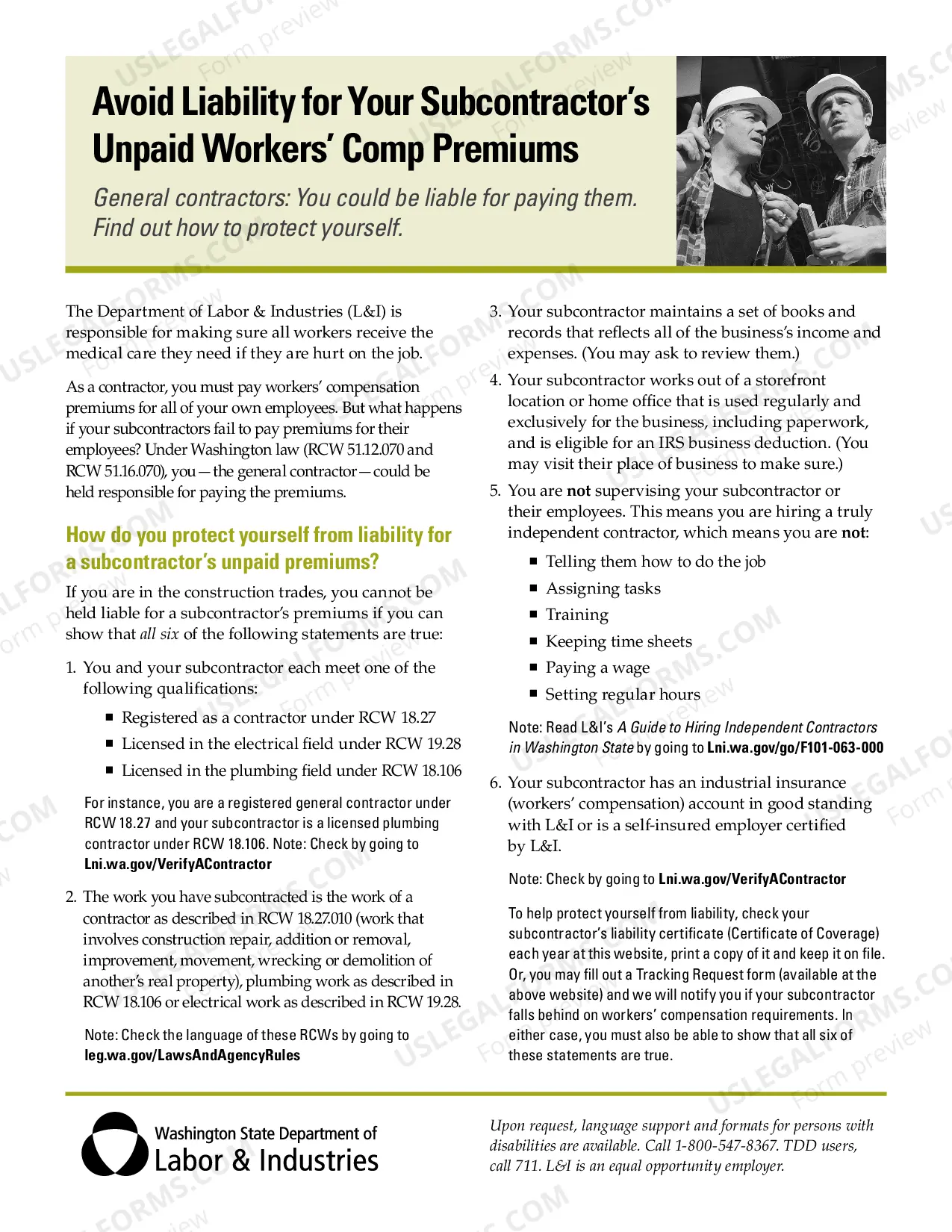
The primary test for determining if a worker must be covered is the definition of "worker." Under Washington law, an employee is typically defined as anyone who is "working for another under a contract of hire." This includes full-time, part-time, seasonal, and temporary employees. Even if you pay an individual in cash or consider them an independent contractor, L&I may still classify them as an employee if you exercise control over their work environment, schedule, and methods.
Exemptions and Optional Coverage
Certain individuals may be exempt from mandatory coverage, though this depends heavily on the legal structure of your business:
- Sole Proprietors: Coverage is generally optional. You must submit a specific form to L&I if you wish to cover yourself.
- Partners: Partners in a partnership are typically excluded, but they may opt-in for coverage.
- Corporate Officers: Officers of a corporation may be exempt if they meet specific criteria regarding ownership and board status.
- Limited Liability Company (LLC) Members: Depending on the structure of the LLC, members may be treated similarly to partners or corporate officers.
It is critical to verify your status with L&I upon registering your business. Misclassifying an employee as an independent contractor is a common compliance pitfall that can result in significant back-premium assessments, interest, and penalties.
The Financial Mechanics: Premiums and Reporting
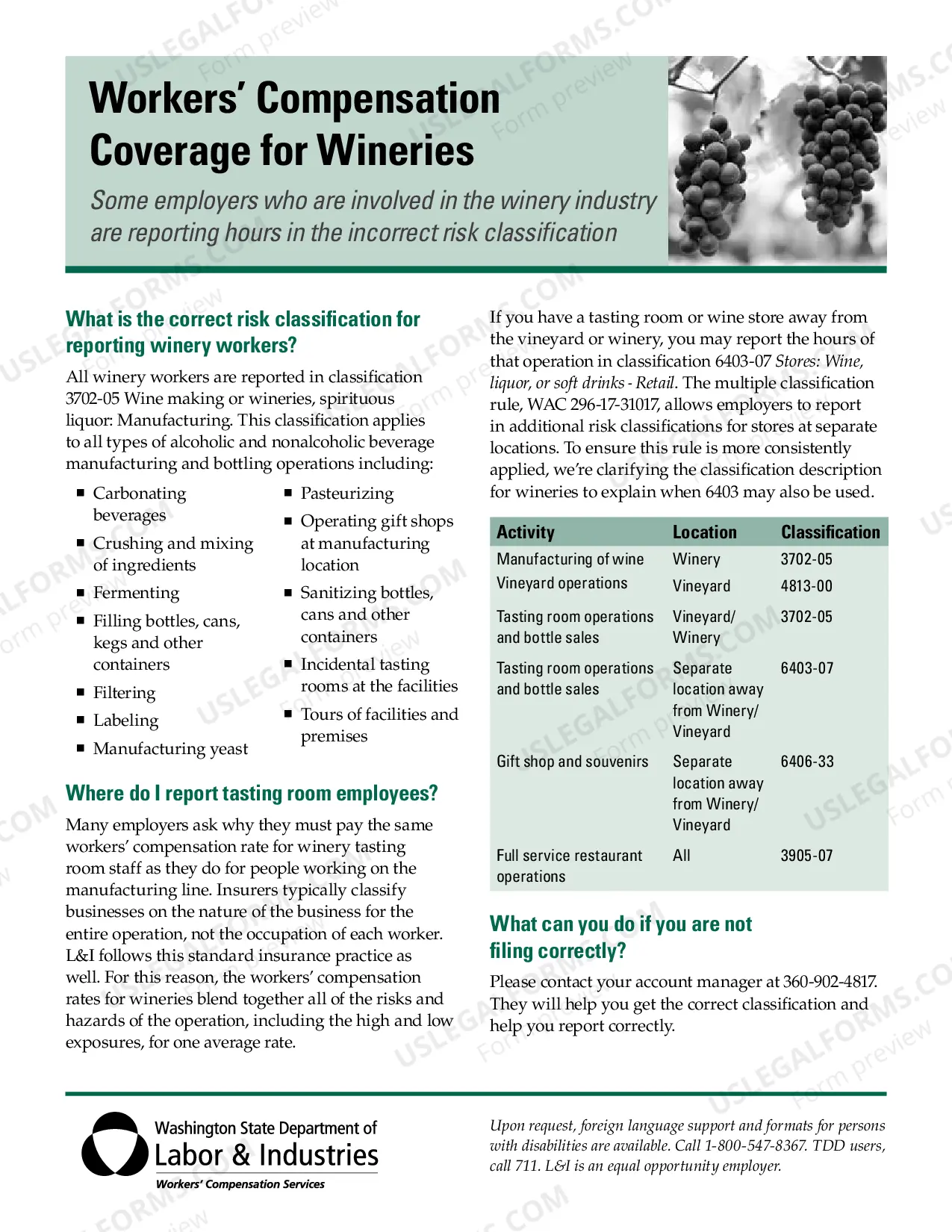
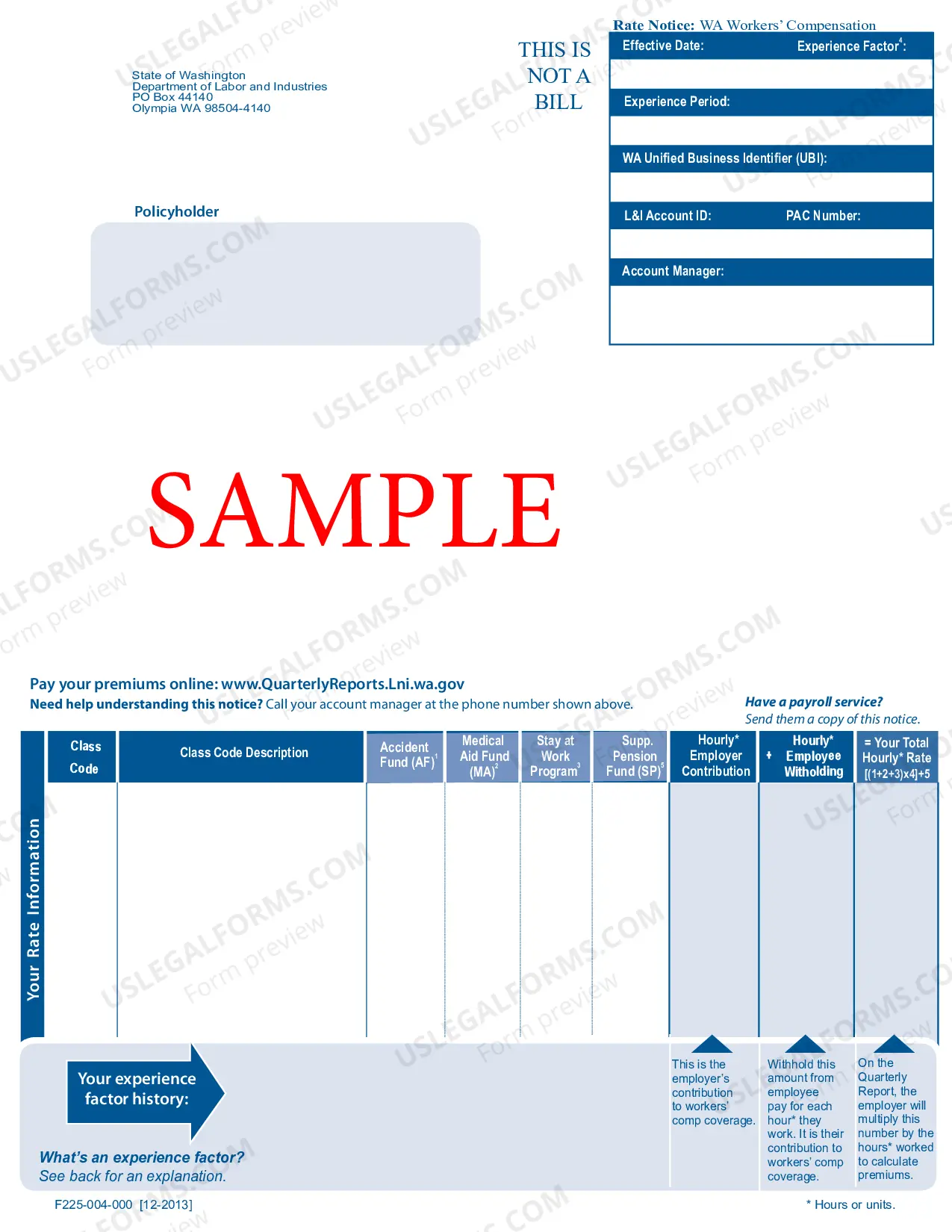
Unlike private insurance, where rates are often negotiated based on individual company experience alone, Washington’s system uses a risk-classification model. Each business is assigned one or more classification codes based on the nature of the work performed. These codes correspond to the level of risk associated with that specific industry.
Premiums consist of two components:
- The Base Rate: This is determined by the industry classification and represents the collective risk of that sector.
- Experience Factor: This reflects your individual company’s history of claims compared to other employers in the same risk class. A high frequency or severity of claims will increase your experience factor, raising your premiums, while a safer workplace can lead to lower rates over time.
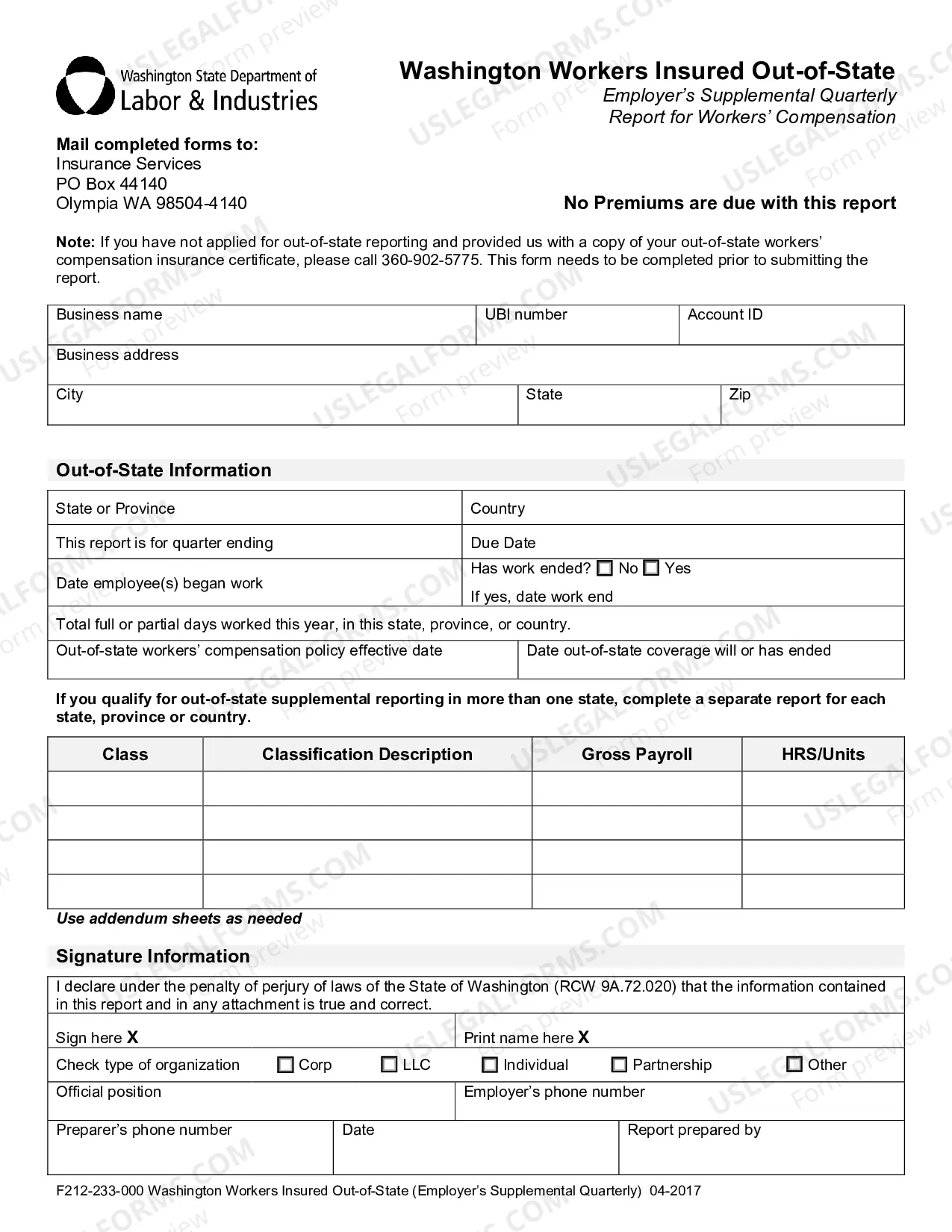
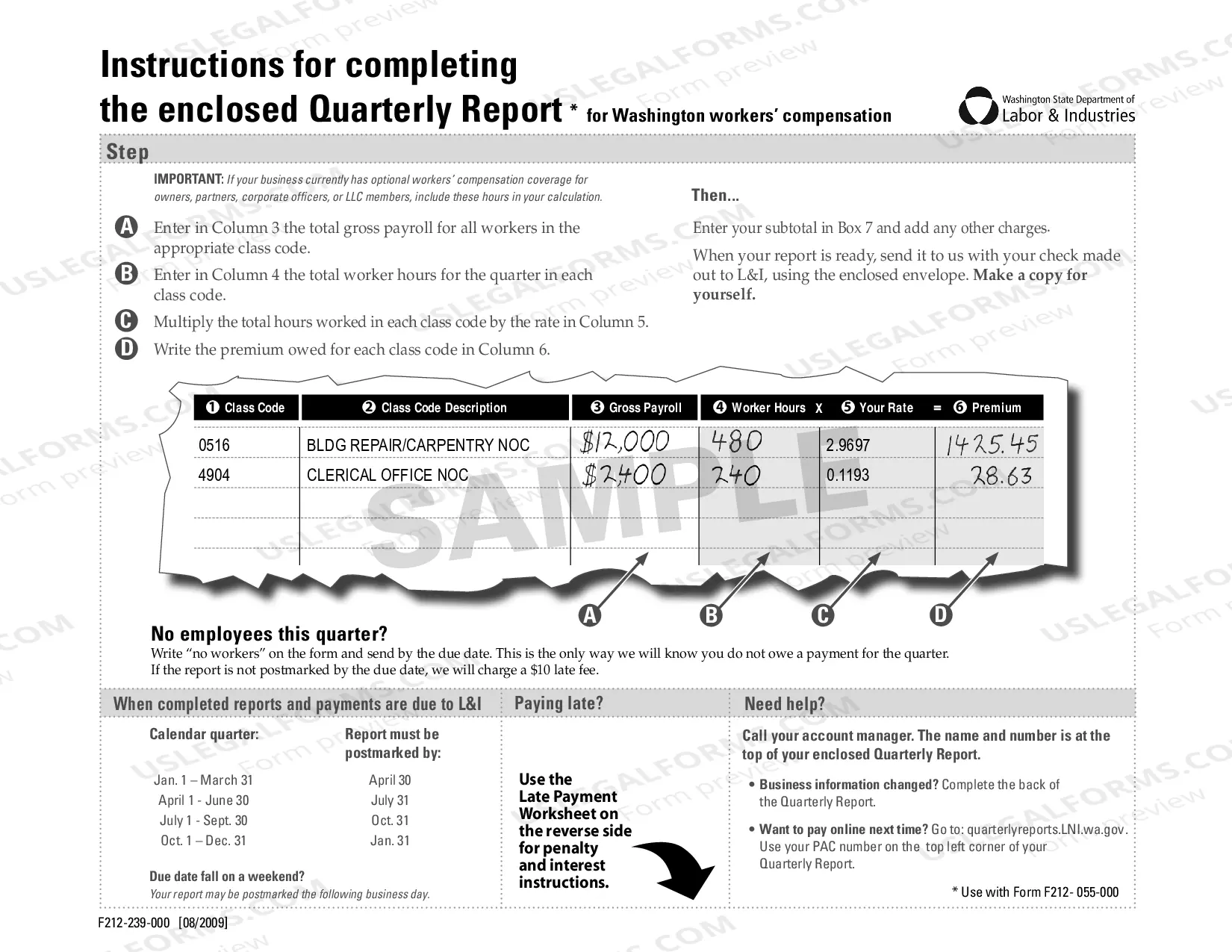
Employers must report hours worked and pay premiums on a quarterly basis. As a business owner, you are responsible for withholding a portion of the premium from employee wages, while the employer portion must be paid by the business itself. Failure to report or pay on time can lead to significant interest charges and audits.
Comparison of Coverage Options
While Washington is a monopolistic state, understanding how your obligations differ from private-market states is vital for multi-state employers.
| Feature | Washington State System | Private Market (Other States) |
|---|---|---|
| Provider | State Fund (L&I) | Private Insurance Carriers |
| Coverage Source | Mandatory L&I Account | Competitive Open Market |
| Pricing Basis | Risk Classification + Claims History | Actuarial Risk + Market Competition |
| Liability Shield | Exclusive Remedy (Comprehensive) | Limited Remedy (Varies by State) |
| Management | Regulated by State Statute | Regulated by State Insurance Comm. |
Steps to Establish Compliance
If you are starting a new business or expanding your team in 2026, the following steps are required to ensure you remain in good standing with L&I:
- Business Registration: You must register your business with the Washington Department of Revenue using the Business License Application. This process automatically triggers the creation of your L&I account.
- Identify Risk Classes: Review the L&I classification database to identify which codes apply to your employees. If your business involves multiple types of work (e.g., office staff and field construction), you may need to report hours under multiple codes.
- Establish Payroll Records: Maintain accurate, verifiable records of every hour worked by each employee. These records must be preserved for inspection during potential future audits.
- Quarterly Reporting: Use the L&I online portal, "My L&I," to submit your quarterly reports and pay premiums. Even if you have zero hours in a given quarter, you must file a report to avoid delinquency notices.
- Post Required Notices: Washington law requires employers to post the "Job Safety and Health Law" poster (Form F416-081-000) in a conspicuous place in the workplace where employees can easily view it.
Best Practices for Workplace Safety
Reducing the frequency and severity of injuries is the most effective way to control your insurance costs. L&I offers various resources for business owners, including free safety consultations, training programs, and incentive programs for businesses that implement robust safety management systems.
Implementing a return-to-work program is particularly important. When an employee is injured, returning them to light-duty work as soon as medically appropriate can significantly reduce the claim's impact on your experience factor and keep the employee connected to your business.
Frequently Asked Questions
Can I opt out of workers' compensation in Washington? No. If you have employees, workers' compensation coverage is mandatory. Washington law does not allow private alternatives or self-insurance for most small-to-mid-sized businesses.
What happens if I misclassify an employee as a contractor? If L&I determines during an audit that you misclassified workers, you will be liable for unpaid premiums, significant interest, and potential penalties. Furthermore, you may lose the protection of the "exclusive remedy," potentially opening your business to civil liability if a worker is injured.
Does my L&I account cover me as the business owner? Not automatically. Coverage for owners, partners, or corporate officers is optional and requires a specific filing with the department. You must proactively elect this coverage if you want protection.
How are premiums calculated if I have multiple types of employees? You must segregate your payroll by risk classification. For example, administrative staff usually have a lower base rate than field laborers. You report the specific hours for each group under their corresponding classification code to ensure your premiums are accurate.
What is the 'Experience Factor' and how does it affect me? The experience factor is a multiplier applied to your base premiums. It is based on your previous claims history over a three-year period. A record of fewer claims results in a factor below 1.0 (a discount), while a history of frequent or expensive claims results in a factor above 1.0 (a surcharge).
Moving Forward
Maintaining compliance with Washington’s workers' compensation system requires ongoing attention to your business structure and payroll reporting. Regularly review your industry risk classifications to ensure they match your current business activities, and prioritize a safety-first culture to minimize claim costs. For specific questions regarding your business entity, consult the official L&I website or a qualified professional in Washington state labor law.
Image Gallery