Revolving Credit Line Overview: Mechanics, Types, and Strategic Use
A revolving credit line is a flexible financing arrangement that allows a borrower to withdraw funds up to a predetermined limit, repay the balance, and withdraw the funds again as needed. Unlike traditional loans, interest is only cha...
A revolving credit line is a flexible financing arrangement that allows a borrower to withdraw funds up to a predetermined limit, repay the balance, and withdraw the funds again as needed. Unlike traditional loans, interest is only charged on the amount actually utilized, making it a primary tool for managing liquidity and short-term cash flow.
Contents
Revolving credit remains one of the most versatile financial instruments available to both individual consumers and businesses in 2026. Whether it takes the form of a credit card, a personal line of credit, or a sophisticated corporate facility, the fundamental "revolving" nature provides an evergreen source of capital. Understanding the nuances of this credit type—ranging from interest rate structures to repayment obligations—is essential for maintaining financial health and optimizing capital costs.
What is a Revolving Credit Line?
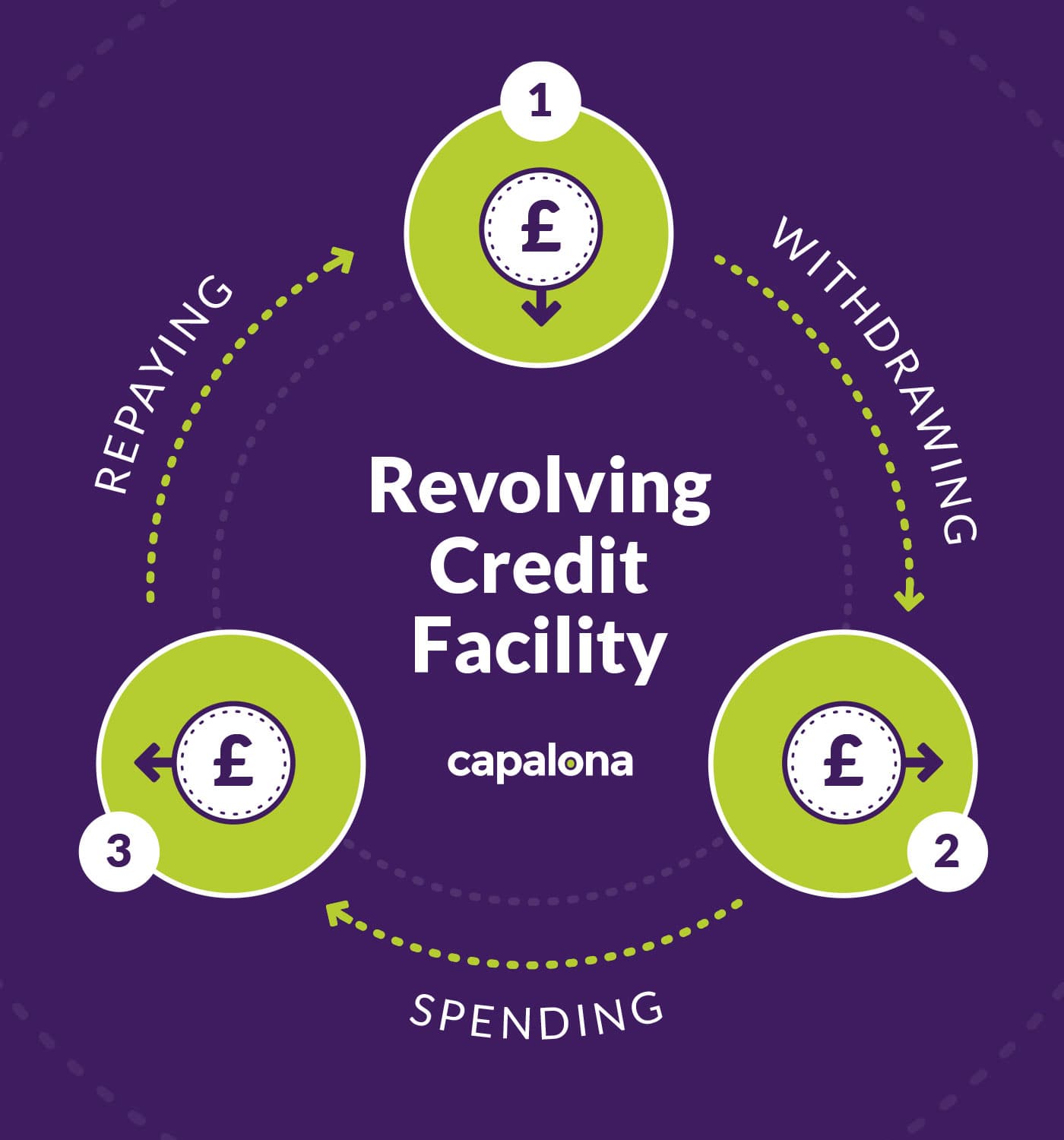
At its core, a revolving credit line is an open-ended credit agreement between a lender and a borrower. The lender establishes a maximum credit limit based on the borrower’s creditworthiness, income, and, in some cases, collateral. The borrower can access any portion of this limit at any time. As the borrower pays back the principal, that amount becomes available for use again, effectively "revolving" the credit.
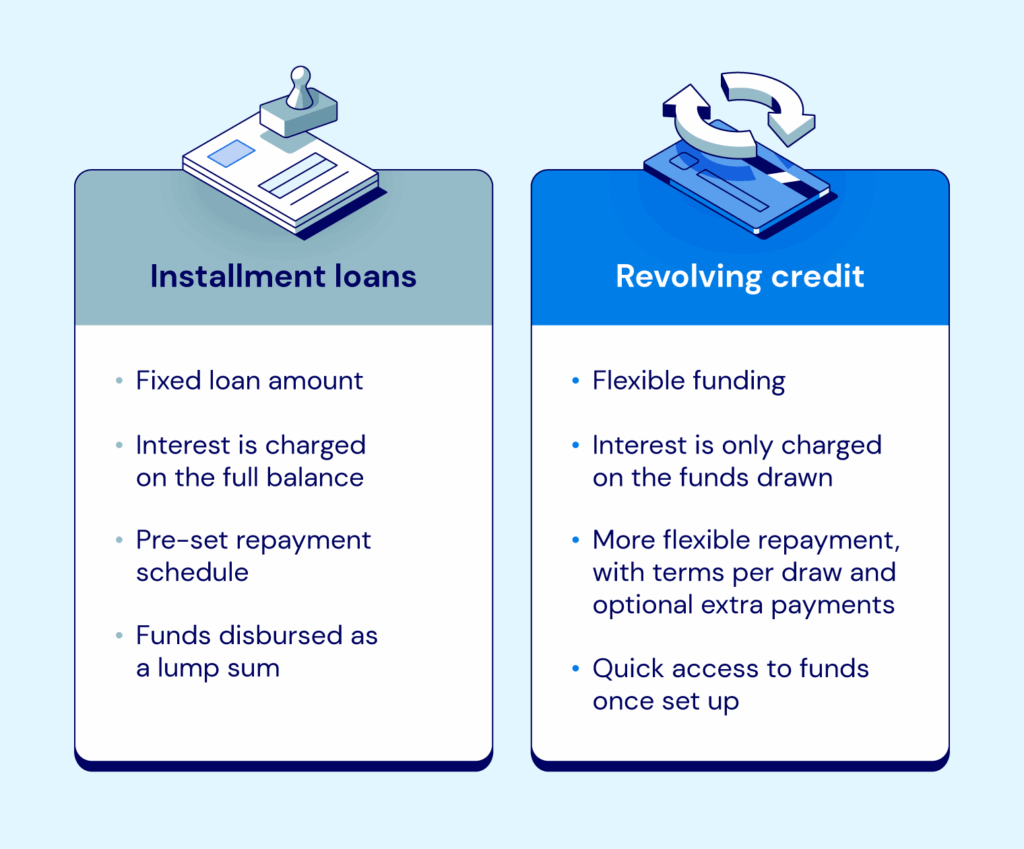
This structure contrasts sharply with installment loans, such as mortgages or auto loans. In an installment loan, the borrower receives a lump sum at the beginning and repays it over a fixed schedule. Once the loan is paid off, the account is closed. In a revolving arrangement, the account remains open indefinitely (or until a specified expiration date), provided the borrower remains in good standing.
The Mechanics of the "Draw" and "Repayment"
The functionality of a revolving credit line is defined by two continuous phases:
- The Draw Period: This is the timeframe during which the borrower can actively withdraw funds. For credit cards, this period is effectively the life of the account. For products like Home Equity Lines of Credit (HELOCs), the draw period may be limited to 5 or 10 years.
- The Repayment Phase: While borrowers must make minimum monthly payments whenever a balance exists, some revolving lines eventually enter a dedicated repayment phase where no further draws are allowed, and the remaining balance must be paid off over a fixed term.
Revolving Credit vs. Installment Credit
Choosing between revolving and installment credit depends on the specific financial need. Revolving credit is generally preferred for ongoing or unpredictable expenses, whereas installment credit is better suited for one-time, large-scale purchases with a predictable payoff timeline.
| Feature | Revolving Credit | Installment Credit |
|---|---|---|
| Access to Funds | Continuous up to the limit | One-time lump sum |
| Interest Charges | On the balance currently owed | On the total original loan amount |
| Payment Amount | Variable (based on balance) | Fixed (monthly installments) |
| Account Duration | Open-ended | Fixed term (e.g., 60 months) |
| Collateral | Usually unsecured (except HELOCs) | Often secured (e.g., the car or house) |
| Best For | Daily expenses, emergencies, cash flow | Major assets, debt consolidation |
Common Types of Revolving Credit Facilities
In 2026, the financial market offers various revolving products tailored to different sectors and risk profiles.
1. Credit Cards
The most ubiquitous form of revolving credit, credit cards allow consumers to make purchases up to a specific limit. If the balance is paid in full every month, the borrower typically avoids interest charges entirely—a feature known as the "grace period." However, carrying a balance from month to month triggers interest, often at higher rates than other credit products.
2. Personal Lines of Credit (PLOC)
A personal line of credit is typically an unsecured facility offered by banks or credit unions. It functions similarly to a credit card but often offers lower interest rates and allows for easier access to cash. Borrowers use PLOCs for home improvements, unexpected medical bills, or as a secondary emergency fund.
3. Business Lines of Credit (BLOC)
For enterprises, a business line of credit is a vital tool for managing "working capital." Businesses often face gaps between paying suppliers and receiving payments from customers. A BLOC allows a company to bridge these gaps, ensuring they can meet payroll and operational costs without interruption. Large corporations may secure "revolving credit facilities" through a syndicate of banks to ensure billions of dollars in liquidity are available for acquisitions or capital expenditures.
4. Home Equity Lines of Credit (HELOC)
A HELOC is a secured revolving line where the borrower’s home serves as collateral. Because the loan is backed by an asset, interest rates are significantly lower than those for credit cards or personal lines. However, the risk is higher for the borrower; failure to repay can lead to foreclosure. According to the Consumer Financial Protection Bureau (CFPB), HELOCs usually have variable interest rates that can fluctuate based on market conditions.
The Cost of Revolving Credit: Interest and Fees
Understanding the total cost of borrowing is critical for effective financial management. Revolving credit lines often involve more complex fee structures than simple loans.
Variable Interest Rates
Most revolving credit lines utilize variable interest rates, often pegged to a benchmark such as the U.S. Prime Rate. If the Federal Reserve adjusts interest rates to combat inflation or stimulate growth, the interest rate on a revolving credit line will likely follow suit. This means the cost of debt can change even if the borrower’s credit score remains stable.
Fee Structures
Beyond interest, lenders may charge several types of fees:
- Annual Fees: A flat yearly charge for keeping the account open.
- Transaction Fees: Fees for cash advances or balance transfers.
- Inactivity Fees: Some lenders charge a fee if the credit line is not used within a certain period, as an unused line still requires the bank to set aside capital.
- Maintenance Fees: Monthly charges common in business revolving facilities.
Impact on Credit Scores and Financial Health
Revolving credit plays a disproportionate role in determining a borrower's credit score. The most significant factor here is the Credit Utilization Ratio. This is the percentage of total available credit that a borrower is currently using. For example, if a borrower has a $10,000 limit and owes $3,000, their utilization is 30%.
Financial experts and credit bureaus generally recommend keeping utilization below 30% to maintain a high credit score. High utilization suggests to lenders that a borrower may be overextended, even if they are making their minimum payments on time. Because revolving credit accounts stay open for long periods, they also contribute to the "age of credit history," which is another positive factor for credit scoring.
Strategic Advantages of Maintaining a Revolving Line
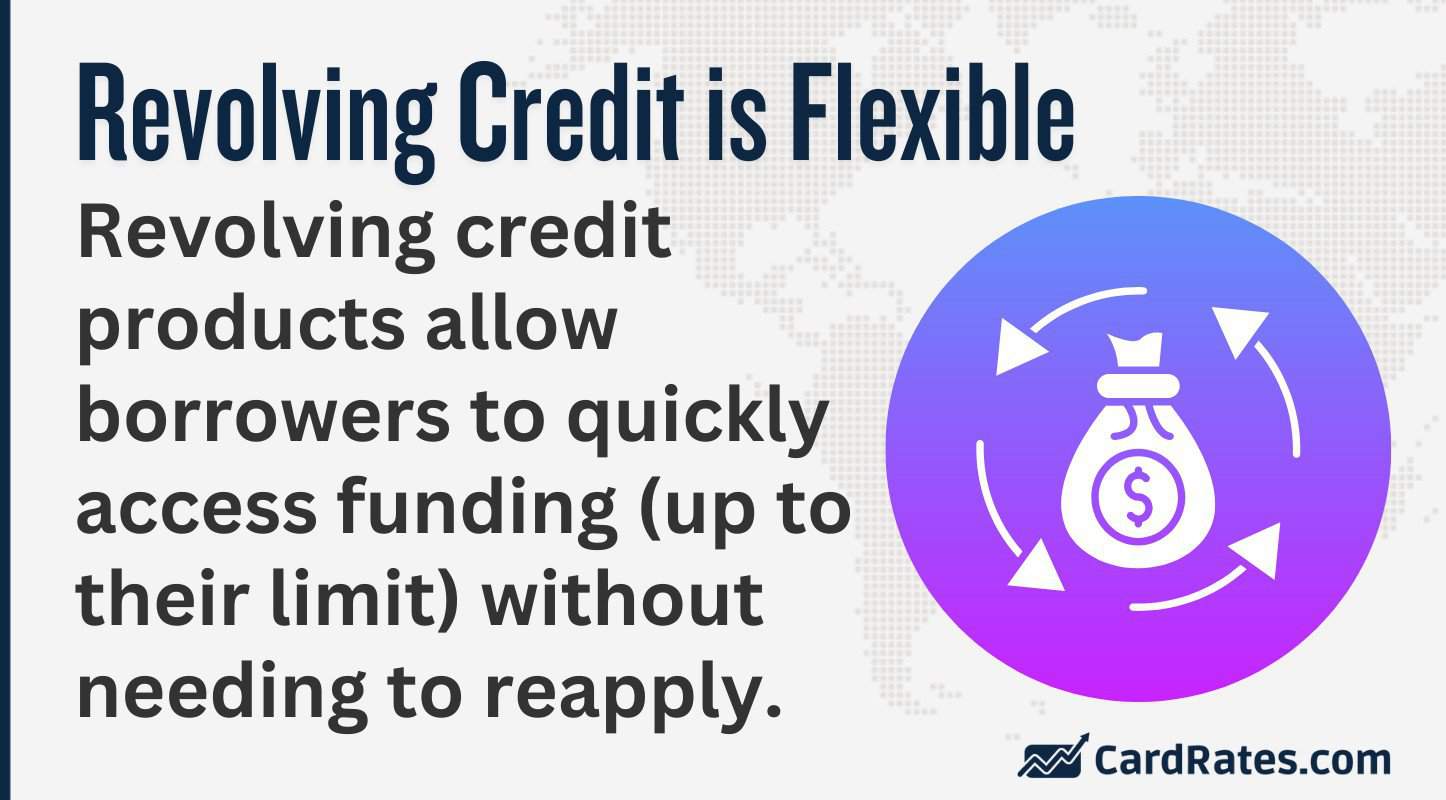
The primary advantage of a revolving credit line is flexibility. It provides a safety net that does not cost anything (if there are no annual fees) until it is actually needed. For individuals, it acts as a more efficient emergency fund than high-interest debt taken out during a crisis.
For businesses, a revolving line provides agility. If an opportunity arises to purchase inventory at a discount or expand into a new market, the business can deploy capital instantly without waiting for a lengthy loan approval process. This speed is often the difference between growth and stagnation in a competitive economy.
Risks and Common Pitfalls
The flexibility of revolving credit can be a double-edged sword. The lack of a fixed repayment schedule can lead to "perpetual debt."
- Minimum Payment Trap: Lenders only require a small minimum payment each month (often 1-3% of the balance). If a borrower only pays the minimum, the interest charges can cause the total debt to grow, or at the very least, result in the debt taking decades to pay off.
- Variable Rate Risk: In a rising interest rate environment, the monthly cost of a revolving balance can increase sharply, putting a strain on the borrower's budget.
- Overspending: Constant access to funds can encourage discretionary spending that exceeds the borrower's actual income, leading to a debt spiral.
How to Apply for a Revolving Credit Line
The application process for a revolving credit line is generally more rigorous than for a standard credit card but less intensive than for a mortgage.
- Credit Review: Lenders will perform a "hard pull" of your credit report to evaluate your payment history and existing debt levels.
- Income Verification: You will need to provide tax returns, pay stubs, or business financial statements to prove your ability to repay the draws.
- Debt-to-Income (DTI) Ratio: Lenders calculate your DTI to ensure you aren't already over-leveraged. For business lines, they will look at the Debt Service Coverage Ratio (DSCR).
- Collateral Appraisal: If applying for a HELOC or a secured business line, the lender will require an appraisal of the asset being used as security.
Frequently Asked Questions
Can a lender close my revolving credit line without notice?
Yes, in most jurisdictions, lenders reserve the right to reduce your credit limit or close the account entirely if your credit score drops significantly, if you miss payments, or if market conditions change. They are generally required to provide notice of the action, but the account can be frozen immediately to mitigate the lender's risk.
Does an unused revolving credit line help my credit score?
Yes. Having a high credit limit with a zero balance results in a 0% utilization ratio, which is highly beneficial for your credit score. It demonstrates that you have access to credit but the discipline not to use it unnecessarily.
What is the difference between a cash advance and a draw?
While both involve taking cash from a credit line, a "draw" usually refers to transferring funds from a personal or business line of credit into a checking account, often at the standard interest rate. A "cash advance" usually refers to using a credit card at an ATM, which typically triggers much higher interest rates and immediate fees.
Is interest on a revolving credit line tax-deductible?
For personal lines of credit and credit cards, the interest is almost never tax-deductible. For HELOCs, the interest may be deductible if the funds are used specifically to "buy, build, or substantially improve" the home that secures the loan, subject to IRS limits. Business line interest is generally a deductible business expense.
How often do interest rates change on these accounts?
For variable-rate accounts, the rate can change as often as the underlying index (like the Prime Rate) changes. Most lenders update the rate on the first day of the billing cycle following a benchmark change.
Summary and Next Actions
A revolving credit line is a foundational financial tool that offers unparalleled flexibility for managing cash flow and unexpected expenses. By providing access to capital that can be used, repaid, and reused, it serves as a dynamic alternative to the rigid structure of installment loans.
Next Actions:
- Evaluate your needs: Determine if your goal is a one-time purchase (installment loan) or ongoing liquidity (revolving credit).
- Check your credit score: Before applying, ensure your utilization is low and your report is error-free to secure the lowest possible variable rates.
- Compare fee structures: Look beyond the interest rate; calculate the impact of annual fees and draw requirements on the total cost of the facility.
Image Gallery