How to Decide Whether to Get Life Insurance
To decide whether you need life insurance, determine if anyone would suffer financially if you died tomorrow. If dependents rely on your income, if you share significant debt, or if someone relies on your unpaid caregiving, you need li...
To decide whether you need life insurance, determine if anyone would suffer financially if you died tomorrow. If dependents rely on your income, if you share significant debt, or if someone relies on your unpaid caregiving, you need life insurance. If you have no dependents, no cosigned debts, and sufficient liquid assets to cover end-of-life expenses, you generally do not.
Contents
The Fundamental Purpose of Life Insurance
Life insurance is not an investment vehicle for the average household; it is an income-replacement and risk-mitigation contract. When you purchase a policy, you pay ongoing premiums to an insurer in exchange for a guaranteed lump-sum cash payment—the death benefit—paid to your designated beneficiaries upon your death.
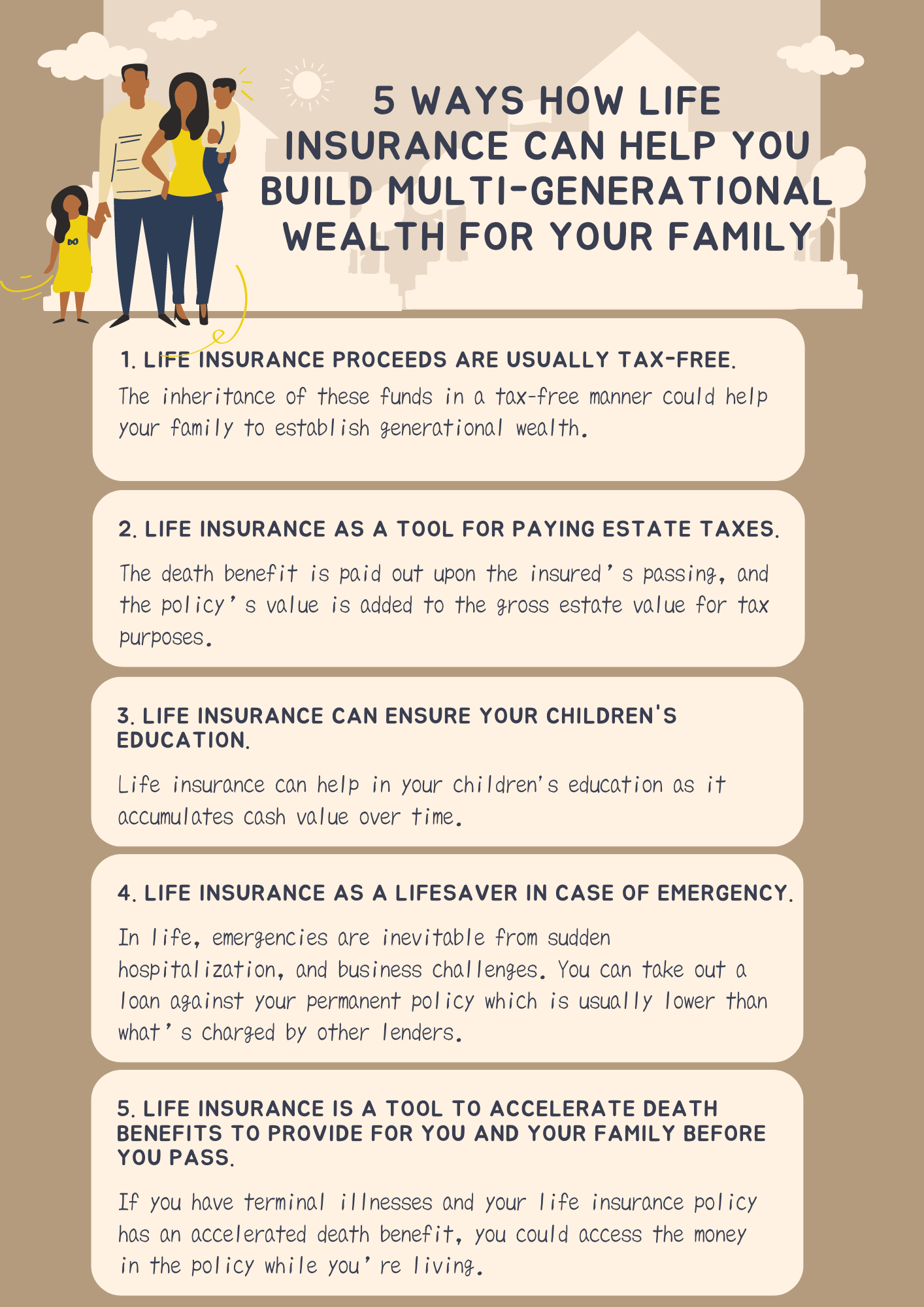
Under United States tax law, specifically Internal Revenue Code Section 101(a), death benefits are generally received by beneficiaries free of federal income tax. This tax-advantaged status ensures that the funds you designate for surviving family members or financial dependents arrive intact, providing immediate liquidity when household cash flow is disrupted.
Deciding whether to buy a policy requires evaluating whether your absence creates an unfunded liability. If your premature death would cause a surviving partner, child, parent, or business associate to face a sudden drop in living standards or an unmanageable debt burden, life insurance serves as the financial bridge. Conversely, buying insurance when no one depends on your economic output diverts capital away from productive wealth-building goals, such as retirement accounts, emergency reserves, or paying down high-interest debt.
The 4-Question Evaluation Framework
Navigating life insurance decisions becomes simpler when broken down into four practical diagnostic questions. Work through these in sequence to clarify your personal exposure.
1. Does Anyone Depend on Your Income or Labor?
Financial dependency takes two forms: direct financial support and economic value generated through labor.
- Direct Earners: If your paycheck pays the rent, mortgage, groceries, utilities, or tuition for a partner, children, or aging parents, your sudden passing eliminates that cash stream while family living expenses continue.
- Non-Earning Caregivers: Stay-at-home parents and family caregivers do not generate taxable income, but replacing their daily labor carries substantial market costs. Professional childcare, home management, cooking, and transportation can easily cost tens of thousands of dollars annually. If surviving family members would need to pay outside providers for those services, the non-earning spouse requires coverage just as the primary breadwinner does.
2. Do You Carry Shared, Cosigned, or Secured Debt?
Federal student loans generally discharge upon the death of the primary borrower. However, many other forms of consumer and commercial debt do not vanish.
- Cosigned Private Loans: If a parent, spouse, or friend cosigned a private student loan, vehicle note, or personal loan, the lender will pursue the cosigner for the remaining balance.
- Joint Mortgages: Surviving spouses who cannot qualify for or sustain the existing monthly mortgage payment on a single income face forced downsizing or foreclosure.
- Community Property States: In community property jurisdictions (such as California, Texas, Washington, and Arizona), debts incurred during a marriage may become the legal obligation of the surviving spouse, even if only one spouse signed the credit agreement.
3. What Is Your Current Level of Liquid Net Worth?
Life insurance provides liquidity. If you already possess sufficient liquid assets—such as taxable brokerage accounts, high-yield cash balances, and accessible mutual funds—to pay off all liabilities and generate sustainable lifetime income for your survivors, you may be functionally "self-insured." When your investment portfolio generates enough passive income to maintain your family's standard of living indefinitely, the justification for paying insurance premiums diminishes.
4. Do You Have Complex Estate or Business Succession Obligations?
High-net-worth individuals and business owners face unique risks that extend beyond day-to-day living expenses:
- Buy-Sell Agreements: Business partners frequently utilize cross-purchase life insurance policies. If one partner dies, the surviving partners use the insurance proceeds to purchase the deceased partner's share of the enterprise from their estate, preventing operational chaos.
- Federal and State Estate Taxes: While federal estate tax exemptions remain substantial, estates holding illiquid assets (such as commercial real estate, privately held operating businesses, or farmland) can leverage irrevocable life insurance trusts (ILITs) to supply cash for estate settlement without forcing a fire-sale of core physical assets.
Who Needs Life Insurance vs. Who Can Skip It
Different life stages introduce distinct financial vulnerabilities. Below is a breakdown of typical financial profiles and their relative need for coverage.
| Profile Category | Coverage Need | Primary Rationale |
|---|---|---|
| Parents with Minor Children | High | Replaces decades of future earnings and funds living costs and educational expenses. |
| Married, Single-Income Households | High | Surviving non-earning spouse needs financial bridge to maintain housing and household stability. |
| Dual-Income Couples with Shared Debt | Moderate | Eliminates shared liabilities (mortgage) so surviving partner is not forced to relocate. |
| Cosigned Loan Borrowers | Moderate | Shields living cosigners from absorbing unmanageable private debts. |
| Business Owners with Partners | Moderate/High | Funds buy-sell agreements and provides key-person stability during ownership transitions. |
| Single, Debt-Free Adults Without Dependents | Low / None | No dependents rely on wages; minimal burial funds or small employer group life are sufficient. |
| Fully Funded Retirees (Empty Nesters) | Low / None | Children are independent; personal investments and pensions comfortably fund surviving spouse. |
Profiles with an Immediate Need
- Single Parents: The sole source of emotional and financial security for their children. Coverage must fund legal guardianship arrangements, day-to-day living expenses, healthcare, and higher education.
- Couples Planning for Children: Securing a level-premium term policy while young and healthy locks in the lowest possible rates before age-related medical conditions develop.
- Adults Supporting Elderly Parents: If you provide monthly financial allowances or pay nursing home and assisted-living invoices for aging relatives, your passing leaves them without institutional care.
Profiles That Can Safely Forgo Coverage
- Young, Unmarried Professionals Without Dependents: If you have zero private cosigned debt and carry no dependents, paying monthly life insurance premiums offers little utility. A basic group policy provided by an employer (often 1x your annual salary at no cost) easily covers final burial or cremation expenses.
- Retirees with Independent Adult Children: Once mortgages are paid off, children are self-sufficient, and retirement portfolios are actively generating income, the financial justification for life insurance largely disappears. Continuing to pay high premiums on expiring term conversions or aging universal life policies often drains retirement reserves unnecessarily.
Term Life vs. Permanent Life: Making the Right Selection
If your diagnostic assessment confirms that you need life insurance, your next operational decision is selecting the policy structure. According to the Financial Industry Regulatory Authority (FINRA), consumers should carefully distinguish between pure death-benefit protection and policies that combine insurance with cash-value components.
Term Life Insurance
Term life is the most straightforward, cost-effective choice for roughly 95% of consumers. You buy coverage for a specific window—typically 10, 15, 20, or 30 years.
- Mechanics: If you pass away during the active term, the carrier pays the face value to your beneficiaries. If you outlive the term, the policy terminates with zero residual balance.
- Cost Structure: Because the insurer only pays if death occurs within the defined window, premiums are exceptionally affordable. A healthy 30-year-old can often secure a 20-year, $1,000,000 level-term policy for a modest monthly payment.
- Best Used For: Covering finite financial responsibilities: raising children to adulthood, paying off a 30-year residential mortgage, or covering tuition liabilities.
Permanent Life Insurance (Whole Life and Universal Life)
Permanent insurance contracts do not expire as long as required premiums are paid. They combine a death benefit with an internal cash-value account that accrues interest, dividends, or market-linked returns.
- Mechanics: A portion of each premium covers the internal cost of insurance and administrative fees, while the remainder flows into a cash-value reserve. Policyholders can borrow against this cash value or surrender the policy for its accumulated equity.
- Cost Structure: Permanent life insurance typically costs 5 to 15 times more than term insurance for the equivalent death benefit. A large portion of early-year premiums is consumed by agent commissions and administrative overhead.
- Best Used For: Specialized situations such as funding special-needs trusts for adult dependents requiring permanent care, equalizing estate inheritances across complex physical assets, or executing executive buy-sell agreements. For broad income replacement, purchasing low-cost term life and investing the cost difference into diversified index funds historically produces far superior wealth accumulation.
| Feature | Term Life Insurance | Permanent Life (Whole / Universal) |
|---|---|---|
| Coverage Duration | Set period (10, 20, 30 years) | Lifelong (until death or age 100/121) |
| Premium Cost | Very low, predictable, level | High (often 5x to 15x term rates) |
| Cash Value Accumulation | None | Yes, builds tax-deferred cash value |
| Complexity | Minimal; easy to compare | High; surrender charges, fee schedules |
| Primary Purpose | Income replacement & debt protection during peak risk | Estate tax liquidity, lifelong trusts, business partner buy-sell agreements |
How to Calculate Your Coverage Requirement: The DIME Method
A common industry rule of thumb suggests buying "10 times your annual income." While simple, blanket multiples ignore critical individual differences, such as debt loads, existing savings, and specific family sizes.
The DIME method provides an accurate, tailored framework for calculating your target coverage:
$$\text{Coverage Amount} = \text{Debt} + \text{Income Replacement} + \text{Mortgage} + \text{Education}$$
1. D: Debt and Final Expenses
Tally all non-mortgage personal debts. This includes auto loans, private student loans, credit card balances, and anticipated funeral expenses. According to the National Funeral Directors Association, median funeral and burial costs regularly exceed $8,000 to $10,000. Add this baseline figure to your total outstanding debt.
2. I: Income Replacement
Determine how many years your household would need your salary replaced. Multiply your annual take-home earnings by that duration.
- Example: If you earn $80,000 annually and want to support your family until your toddler reaches age 18 (15 years), an initial estimate is $80,000 \times 15 = $1,200,000.
- You can reduce this figure if your spouse works and can cover their own living costs, requiring you to insure only the household shortfall.
3. M: Mortgage Payoff
Calculate the exact principal balance required to pay off the family home. Clearing the mortgage eliminates the single largest monthly cash outlay, allowing the surviving family to remain comfortably housed on a much smaller baseline income.
4. E: Education Costs
Estimate expected higher education funding for each child. As of 2026, average undergraduate tuition, room, and board across four-year programs ranges from $100,000 (in-state public) to over $240,000 (private institutions). Add an appropriate projected figure for each dependent child.
Final Step: Subtract Existing Assets
Once you sum $D + I + M + E$, subtract your family's current liquid financial reserves:
- Existing life insurance policies (including standard employer group term).
- Liquid savings accounts and taxable brokerage assets.
- Dedicated education accounts already funded (such as 529 plans).
The remaining balance represents your true life insurance deficit.
Underwriting Realities and Policy Acquisition
Life insurance premiums depend primarily on actuarial mortality risk. The best rates are secured by understanding how underwriters evaluate your application.
Underwriting Risk Classes
Insurance carriers categorize applicants into risk tiers that dictate ongoing monthly premiums:
- Preferred Plus / Super Preferred: Exceptional physical health, clean family medical history, non-smoker, ideal Body Mass Index (BMI), clean driving record.
- Preferred: Excellent health, well-controlled minor conditions (such as mild cholesterol elevations), non-smoker.
- Standard Plus: Average health, slightly elevated blood pressure or higher BMI, non-smoker.
- Standard: Normal life expectancy, manageable chronic conditions, or family history of early heart disease.
- Substandard / Table Ratings: Elevated health risks, history of cancer, severe diabetes, or high-risk hobbies (e.g., private aviation, technical scuba diving).
Traditional Medical vs. Accelerated Underwriting
Historically, securing life insurance required a paramedical exam: a technician visited your home to record weight, take blood pressure, and draw blood and urine samples.
Modern digital underwriting leverages automated data collection. If you are generally healthy and fall within target age brackets, insurers can instantly review your motor vehicle records, prescription drug databases, and medical claims history via automated algorithms. This often permits the issuance of fully underwritten term policies in days without requiring bodily fluid exams.
The Problem with Relying Exclusively on Employer Policies
Many employers provide basic group life insurance at no cost, often equal to 1x or 2x your base salary. While a valuable employee benefit, relying solely on work coverage creates two critical vulnerabilities:
- Inadequate Face Value: A payout equal to one year of salary is entirely insufficient for a family with young children and a 30-year mortgage.
- Lack of Portability: Employer group life policies rarely transfer when you change jobs. If you develop a serious medical condition later in your career and separate from your company, you lose your coverage precisely when private replacement policies may be unaffordable or medically unavailable.
You should view employer-sponsored life insurance as supplemental, securing your primary, portable coverage on the open market.
Common Decision Pitfalls
When purchasing life insurance, avoiding structural traps protects your household budget:
- Buying Whole Life When You Only Need Term: Insurance agents working on high commission structures frequently market permanent policies as guaranteed "forced savings" plans. For most households, paying steep administrative charges on a complex policy limits total protection, leaving them underinsured relative to their actual death benefit needs.
- Naming Minor Children Directly as Beneficiaries: Life insurance companies cannot legally distribute large death benefits directly to minors. If an adult guardian or legal trust is not designated, the proceeds will be tied up in local probate courts while a judge appoints a property guardian, incurring legal expenses and unnecessary delays.
- Failing to Update Beneficiary Designations: Beneficiary forms on life insurance policies supersede instructions left in a last will and testament. If you finalize a divorce or remarry but fail to update your policy's beneficiary forms, the proceeds will be disbursed to your former spouse regardless of the wishes expressed in your estate documents.
- Waiting Too Long to Buy: Every passing year raises the baseline premium rate based on age alone. More importantly, developing common middle-age medical diagnoses—such as sleep apnea, elevated liver enzymes, or pre-diabetes—can push you out of preferred underwriting tiers permanently.
Frequently Asked Questions
What happens if I outlive a term life insurance policy?
If you survive your term policy's duration, the contract simply lapses, and coverage terminates. The insurer pays no benefit, and you owe no additional premiums. This outcome is ideal: it means you survived your peak financial risk window, your dependents are grown, your debts are reduced, and your retirement assets have matured to handle your household's ongoing needs.
Can I buy life insurance if I have preexisting medical conditions?
Yes. Having a preexisting medical condition—such as well-managed Type 2 diabetes, controlled high blood pressure, or past treated cancers—does not automatically bar you from coverage. Specialized independent brokers can query multiple carriers to find underwriters that assess your specific diagnosis favorably. In cases with severe chronic illness, guaranteed-issue or simplified-issue policies are available without medical queries, though they carry lower death benefits and mandatory waiting periods.
Are life insurance payouts subject to income tax?
Under standard circumstances, beneficiaries receive life insurance death benefits free of federal and state income tax. However, interest paid on death benefits held in escrow by the insurer prior to distribution is taxable as ordinary income. Additionally, if a policy's death benefit pushes your total estate value over federal or state estate tax thresholds, estate taxes may apply unless the policy is held inside an Irrevocable Life Insurance Trust (ILIT).
How often should I review my life insurance coverage?
You should re-evaluate your life insurance holdings every three to five years, or immediately following any major life transition. Significant trigger events include marriage, divorce, the birth or adoption of a child, purchasing a home, taking on substantial business debt, receiving a major salary raise, or reaching complete debt payoff.
Is accidental death and dismemberment (AD&D) an acceptable alternative to life insurance?
No. Accidental Death and Dismemberment policies only disburse payouts if you pass away as the direct result of a covered physical accident, such as a motor vehicle crash. They pay zero death benefits if you die from natural causes, disease, heart attack, stroke, cancer, or medical complications—which represent the vast majority of adult deaths. AD&D should never be treated as an adequate substitute for comprehensive term or permanent life insurance.
Next Steps for Securing Protection
If your evaluation confirms that you need life insurance, take these immediate actions:
- Calculate Your Target Value: Use the DIME formula to write down your specific required coverage amount and term duration (e.g., $750,000 face value for a 20-year term).
- Review Existing Coverage: Log in to your employee benefits portal to confirm how much group coverage you hold, its cost, and whether it terminates immediately upon job separation.
- Gather Personal Medical and Family History: Note prescription medications, surgical histories, and dates of early-onset cardiovascular disease or cancer among immediate parents and siblings to streamline underwriting applications.
- Compare Independent Quotes: Work with an independent broker or use multi-carrier comparison tools representing top-rated insurers (graded "A" or better by credit agencies like A.M. Best). Avoid captive agents who can only offer products from a single company.
- Properly Structure Beneficiary Designations: Ensure your primary beneficiary is clearly named and that you designate contingent (backup) beneficiaries. If proceeds are meant to care for minor children, consult an estate attorney to establish proper revocable living trusts or legal custodial designations under the Uniform Transfers to Minors Act (UTMA).
Image Gallery