Can You Endorse a Whole Life Insurance Policy? Understanding Riders and Amendments
Yes, you can endorse a whole life insurance policy through legal amendments commonly referred to as riders. These endorsements allow policyholders to customize their coverage by adding specific benefits, such as disability waivers, lon...
Yes, you can endorse a whole life insurance policy through legal amendments commonly referred to as riders. These endorsements allow policyholders to customize their coverage by adding specific benefits, such as disability waivers, long-term care provisions, or accelerated death benefits, effectively tailoring the static permanent contract to meet evolving financial needs.
Contents
An endorsement is a formal, written change to an insurance contract that modifies the original policy's terms. In the context of whole life insurance, these modifications are essential because whole life is designed to last for the duration of the insured’s life. Since a person’s financial situation in 2026 may look drastically different than it did twenty years prior, endorsements provide the necessary flexibility to keep the policy relevant.
The Legal Nature of Policy Endorsements
In insurance law, a whole life insurance policy is a legal contract between the owner and the insurer. Once the policy is issued, the basic terms—such as the face amount and the premium schedule—are generally fixed. However, an endorsement (or "rider") serves as an attachment that takes precedence over the original policy language where the two conflict.
Most whole life endorsements are "stipulated," meaning they are agreed upon at the time the policy is first underwritten. However, certain administrative endorsements, such as changing a beneficiary or updating a name due to marriage, can occur at any time. More complex endorsements that increase the insurer's risk, such as adding an additional death benefit, typically require a process known as evidence of insurability, which may involve new medical exams or health questionnaires.
Common Types of Whole Life Insurance Endorsements
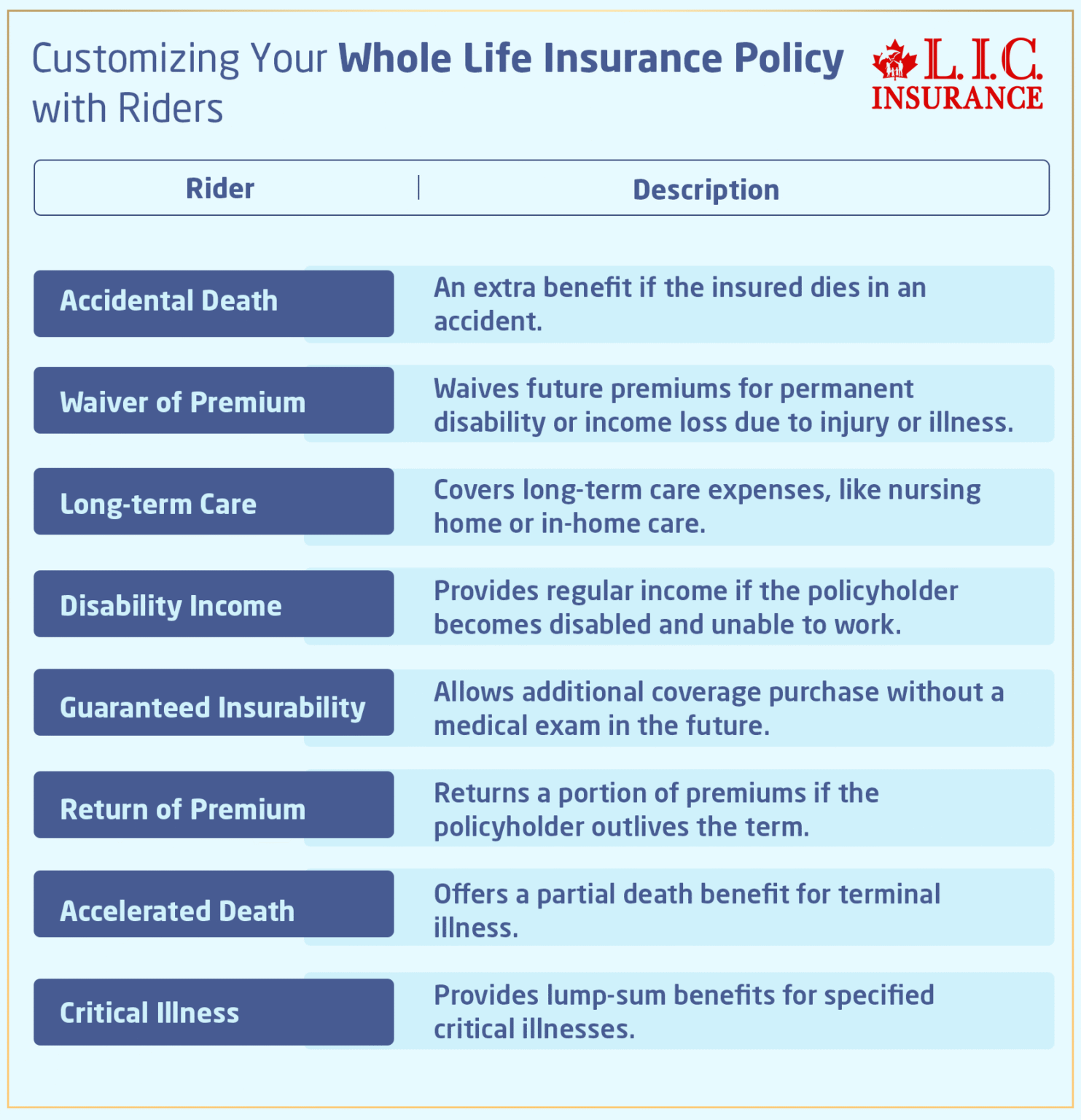
To understand how you can endorse a whole life policy, it is helpful to categorize the most common riders available in 2026. These riders represent the "endorsement" of the contract to provide additional protections or utility.
1. Accelerated Death Benefit Rider
This endorsement is one of the most common "living benefits" in modern life insurance. It allows the policyholder to receive a portion of the death benefit while they are still alive if they are diagnosed with a terminal illness or, in some cases, a chronic or critical illness. By endorsing the policy with this rider, the owner gains access to liquidity to pay for medical bills or end-of-life care, though the amount paid out is subtracted from the final death benefit awarded to beneficiaries.
2. Waiver of Premium Rider
The Waiver of Premium endorsement is a form of disability protection. If the insured becomes totally disabled and is unable to work, the insurance company "waives" the premiums due on the whole life policy while keeping the coverage in force. This ensures that the cash value continues to grow and the death benefit remains active even when the policyholder loses their primary income stream. Most companies have a six-month waiting period before the waiver takes effect.
3. Paid-Up Additions (PUA) Rider
For those using whole life insurance as a wealth accumulation tool, the Paid-Up Additions endorsement is critical. This allows the policyholder to overfund the policy by purchasing small amounts of fully "paid-up" insurance. These additions have their own cash value and death benefit, which increases the total value of the policy more rapidly than the base premium alone. This is a staple for individuals following the "Infinite Banking" or "Bank on Yourself" strategies.
4. Guaranteed Insurability Rider
This endorsement provides the right to purchase additional life insurance coverage at specific intervals or life events (such as marriage or the birth of a child) without having to undergo a medical exam. It protects the insured against the possibility that their health might decline in the future, making them otherwise uninsurable at standard rates.
How to Endorse Your Policy: The Application Process
Endorsing a whole life policy is not as simple as signing a document; it requires a structured process to ensure the amendment is legally binding and actuarially sound.
- Request and Illustration: The policyholder must contact the carrier or their agent to request an endorsement. The insurer will typically provide a policy illustration showing how the endorsement will affect the cash value, death benefit, and premiums over time.
- Underwriting Review: If the endorsement adds a benefit (like a Term Rider or a Disability Rider), the insurance company’s underwriting department must approve it. They will assess the current health and lifestyle of the insured.
- Legal Attachment: Once approved, the insurer issues a formal endorsement page. This document must be kept with the original policy. In 2026, most carriers provide these as digital "e-endorsements" accessible via a secure client portal.
- Premium Adjustment: Most endorsements come with an additional cost. The policyholder must agree to the new premium schedule, which is often drafted as a "supplemental premium" added to the base rate.
Comparison of Major Whole Life Endorsements
The following table compares common endorsements based on their primary function and whether they typically require additional medical underwriting.
| Endorsement Name | Primary Purpose | Underwriting Required? | Impact on Cash Value |
|---|---|---|---|
| Waiver of Premium | Protects policy during disability | Yes | Neutral (Keeps it growing) |
| Accelerated Death Benefit | Access funds for terminal illness | No (Usually built-in) | Reduces Death Benefit |
| Paid-Up Additions | Maximizes cash value growth | Often (at start) | Significant Increase |
| Term Insurance Rider | Adds temporary extra coverage | Yes | Low Impact |
| LTC Rider | Funds long-term care needs | Yes | May reduce Death Benefit |
| Guaranteed Insurability | Future coverage guarantees | No (After initial set-up) | Minimal |
Financial and Tax Implications of Endorsements
Endorsing a whole life policy can have significant tax consequences, particularly under the Internal Revenue Code (IRC) Section 7702. If an endorsement—specifically a Paid-Up Additions rider—causes the policy to be funded too quickly, it may be classified as a Modified Endowment Contract (MEC).
Once a policy becomes a MEC, the tax-advantaged status of the cash value changes. Loans and withdrawals are taxed as "income first," and a 10% penalty may apply if the owner is under age 59½. Therefore, when endorsing a policy to increase funding, it is vital to have the insurer perform a "MEC test" to ensure the policy retains its status as life insurance rather than an investment vehicle.
Furthermore, endorsements like the Accelerated Death Benefit are generally treated as tax-free advances on the death benefit under IRC Section 101(g), provided the insured meets the definition of terminally or chronically ill.
Limitations: What You Cannot Endorse
While whole life policies are flexible, there are limits to what can be changed via endorsement:
- The Insured Individual: You cannot endorse a policy to change the person whose life is being covered. This would require a "1035 Exchange" to a new policy or a completely new application.
- Backdating Beyond Limits: You generally cannot endorse a policy to change the original issue date by more than six months (a practice used to "save age" for lower premiums).
- Core Policy Type: You cannot endorse a whole life policy to become a variable universal life policy. These are different contract structures requiring different licenses and prospectuses.
Frequently Asked Questions
Can I add an endorsement to my whole life policy years after I bought it?
Yes, many endorsements can be added post-issue, but it is more difficult than adding them at the start. Riders like the Waiver of Premium or Accelerated Death Benefit usually require "evidence of insurability," meaning you must prove your health has not significantly declined since the policy was first issued. Some riders, like Paid-Up Additions, may have specific windows during which they can be activated.
Is there a difference between a rider and an endorsement?
In the insurance industry, the terms are often used interchangeably. Technically, a rider is a specific type of endorsement that adds a benefit or feature. An endorsement is the broader term for any amendment to the contract, including those that might limit coverage or simply change administrative details like a mailing address or name.
Do endorsements increase the cost of my whole life insurance?
In most cases, yes. Adding a rider for disability or additional death benefit coverage requires the insurer to take on more risk, which results in a higher premium. However, some endorsements, like the Accelerated Death Benefit for terminal illness, are often included by default in 2026 policies with no explicit premium charge, though there may be a fee if you actually exercise the benefit.
Can I remove an endorsement later if I no longer need it?
Generally, yes. You can request to "drop" a rider to reduce your premium payments. For example, if you reach age 65 and no longer need a Waiver of Premium rider because you are retired, you can endorse the policy to remove that coverage. Once removed, however, it may be difficult to add back if your health has changed.
Will endorsing my policy affect my beneficiaries?
It can. Endorsements that allow for "living benefits" (like Long-Term Care or Accelerated Death Benefit riders) pay out money while you are alive, which reduces the final death benefit your beneficiaries receive. It is important to balance your current financial needs with the legacy you intend to leave behind.
Practical Recommendation for Policyholders
If you are considering endorsing your whole life insurance policy in 2026, your first step should be to request an In-Force Illustration from your insurance carrier. This document provides a "real-time" look at how your policy is performing based on current dividend scales and interest rates.
Before adding any riders, evaluate your current gaps in coverage—such as disability income or long-term care—and compare the cost of adding an endorsement to your existing life policy versus purchasing a standalone policy for those specific needs. Often, endorsing an existing whole life policy is more cost-effective because you avoid the high acquisition costs associated with a brand-new insurance contract. Always consult with a qualified financial advisor to ensure that any endorsements do not inadvertently trigger MEC status or negatively impact your long-term estate planning goals.
Image Gallery