The Best Sports Cars with Manual Transmissions for 2026: An Enthusiast’s Guide
In 2026, the best sports cars with manual transmissions represent a curated selection of driver-focused machinery, headlined by the Porsche 911 Carrera T, the Mazda MX-5 Miata, and the Toyota GR86. These vehicles prioritize tactile eng...
In 2026, the best sports cars with manual transmissions represent a curated selection of driver-focused machinery, headlined by the Porsche 911 Carrera T, the Mazda MX-5 Miata, and the Toyota GR86. These vehicles prioritize tactile engagement, mechanical feedback, and driver agency over the ultimate shifting speeds provided by modern dual-clutch automatics.
Contents
The State of the Manual Transmission in 2026
As we navigate through 2026, the automotive landscape has shifted significantly toward electrification and autonomy. However, this transition has simultaneously sparked a renaissance for the traditional manual gearbox. What was once a standard feature has now become a premium, enthusiast-only "option" or, in some cases, the defining characteristic of a vehicle's identity. The "Save the Manuals" movement is no longer just a slogan; it is a market segment that dictates high resale values and dedicated production runs.
Manufacturers have recognized that while a computer-controlled transmission can shift in milliseconds, it cannot replicate the physical connection of a third pedal and a mechanical linkage. In 2026, the manual transmission serves as a deliberate choice for those who view driving as a skill to be practiced rather than a commute to be endured. This year’s top contenders focus on the quality of the shift—the weight of the clutch, the precision of the gates, and the harmony between the engine's power band and the driver’s right hand.
Top Picks for Manual Sports Cars in 2026
1. Mazda MX-5 Miata (ND3)
The Mazda MX-5 remains the gold standard for attainable driving purity. Now in its refined "ND3" iteration, the Miata continues to use a six-speed manual that is often cited as the best in the industry. The throw is short, the gates are defined with surgical precision, and the clutch uptake is intuitive.
The brilliance of the MX-5 lies in its lightweight philosophy. With a curb weight still hovering around 2,400 pounds, the mechanical connection felt through the shifter is unfiltered. In 2026, Mazda has further refined the Kinetic Posture Control (KPC) and the limited-slip differential to ensure that every downshift and rev-match is met with a stable, predictable chassis response. It is a car that teaches you how to drive better.
2. Porsche 911 Carrera T and GT3
Porsche continues to be a primary guardian of the manual gearbox. For 2026, the 911 Carrera T (Touring) stands out as the sweet spot for enthusiasts. It pairs the base engine’s high-revving nature with a seven-speed manual transmission specifically geared for engagement rather than just top-speed efficiency.
For those with a higher budget, the 911 GT3 remains the pinnacle. Its six-speed GT sports manual transmission is a mechanical masterpiece. Unlike the seven-speed unit in the Carrera, the GT3’s box is derived from racing development, offering even tighter ratios and a visceral "click-clack" feel that few other cars can emulate. Porsche’s "Auto-Blip" function is also among the most sophisticated, though purists can easily disable it for traditional heel-and-toe work.
3. Toyota GR86 and Subaru BRZ
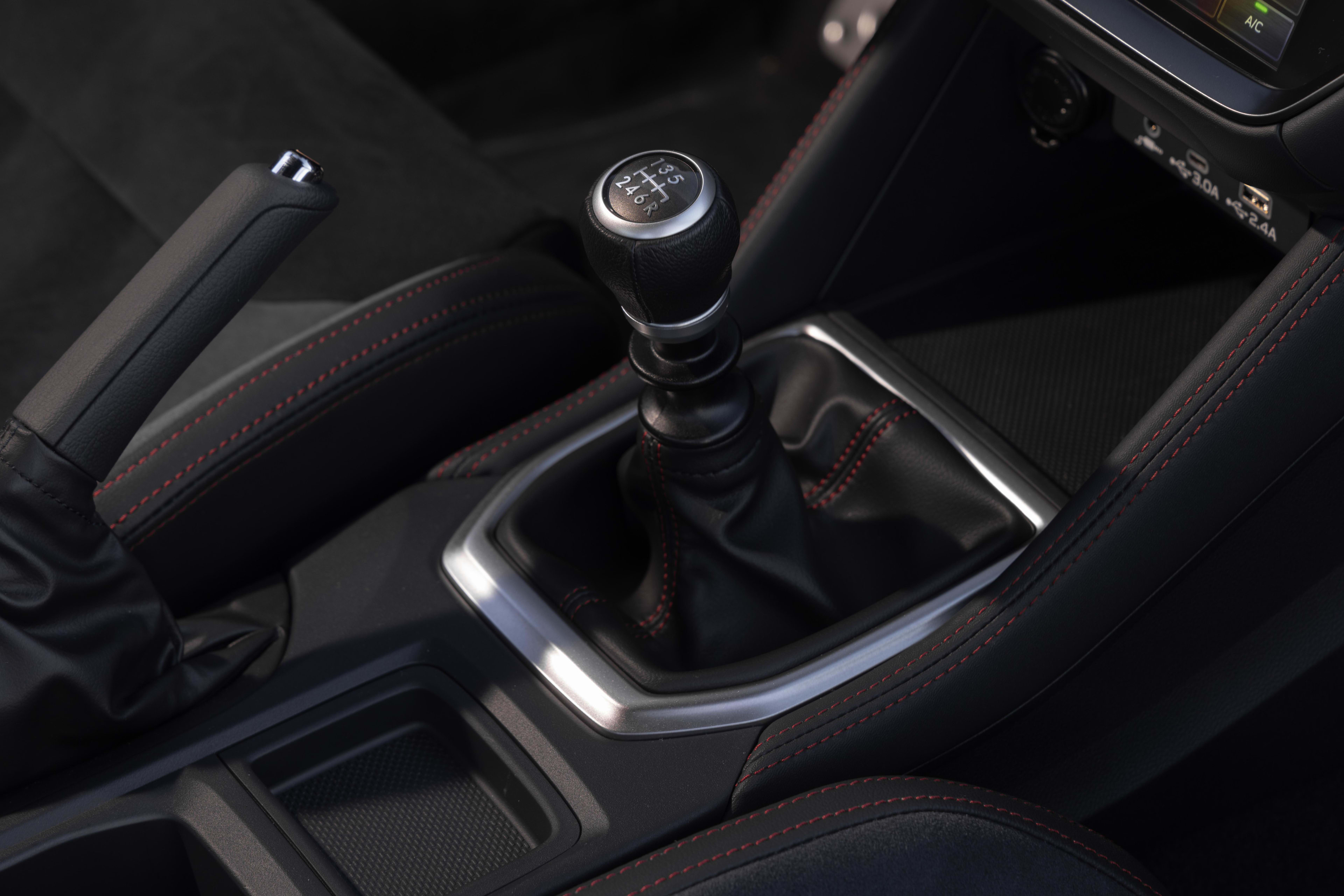
The twins—the Toyota GR86 and Subaru BRZ—remain essential for the 2026 market. These cars are built around the manual experience. Their 2.4-liter naturally aspirated boxer engines provide a linear power delivery that rewards those who stay on top of their gear changes.
The shifter in the GR86 is noted for its notchiness in the best way possible; you never wonder if you are in gear. For 2026, both manufacturers have improved the internal synchronizers to handle aggressive track driving better. These cars are the primary entry point for young enthusiasts looking to master the art of the manual transmission without the six-figure price tag of European exotics.
4. Honda Civic Type R (FL5)
While technically a hot hatchback, the Civic Type R's performance levels firmly place it in the sports car conversation. It features arguably the best front-wheel-drive manual setup ever produced. The shifter is topped with a signature weighted aluminum teardrop knob, and the linkage is remarkably direct for a cable-actuated system.
The Type R’s manual is famous for its "smooth as silk" operation. Even under the duress of 300+ horsepower being channeled through the front wheels, the gearbox remains composed. The rev-matching system is exceptionally fast, making it one of the most approachable manuals for drivers who are still perfecting their footwork.
5. BMW M2 (G87)
The BMW M2 remains one of the last bastions of the manual transmission within the M Division. In 2026, the M2’s six-speed manual is a "no-cost option" that differentiates it from the larger M3 and M4, which have increasingly moved toward the xDrive/Automatic-only configurations in certain regions.
The M2’s manual has a slightly rubbery but substantial feel that is characteristic of BMW. It is a gearbox designed to handle significant torque. When paired with the car's rear-wheel-drive layout and short wheelbase, the manual transmission transforms the M2 into a "muscle car with a scalpel," offering a level of playfulness that the automatic versions lack.
Technical Comparison of 2026 Manual Leaders
The following table compares the key technical specifications that define the manual driving experience for the top models of 2026.
| Model | Transmission Type | Engine Configuration | Weight (approx.) | Key Manual Feature |
|---|---|---|---|---|
| Mazda MX-5 | 6-Speed Manual | 2.0L I4 (Naturally Aspirated) | 2,350 lbs | Ultra-short throw linkage |
| Porsche 911 T | 7-Speed Manual | 3.0L Flat-6 (Twin-Turbo) | 3,250 lbs | Mechanical rear-axle steering integration |
| Toyota GR86 | 6-Speed Manual | 2.4L Flat-4 (Naturally Aspirated) | 2,800 lbs | Driver-adjustable rev-match logic |
| Honda Civic Type R | 6-Speed Manual | 2.0L I4 (Turbocharged) | 3,180 lbs | Helical Limited-Slip Differential |
| BMW M2 | 6-Speed Manual | 3.0L I6 (Twin-Turbo) | 3,800 lbs | Heavy-duty clutch for high torque |
| Lotus Emira V6 | 6-Speed Manual | 3.5L V6 (Supercharged) | 3,200 lbs | Visible gear linkage in cabin |
The Mechanics of Engagement: Why Manuals Matter in 2026
To understand why these cars are the "best," one must look at the technical nuances of their gearboxes. A high-quality manual transmission is defined by three primary factors: mechanical linkage, clutch modulation, and pedal spacing.
Mechanical Linkage and Gate Definition
The "feel" of a shifter is determined by how the gear lever connects to the transmission. In mid-engine cars like the Lotus Emira or the Porsche 718 (in its final ICE forms), this is often done via cables, which can sometimes feel disconnected. However, the best sports cars of 2026 use rigid rod linkages (where possible) or highly tuned cables that provide a tactile "snick" when a gear is engaged. This feedback tells the driver exactly when the dog teeth have aligned, allowing for more confident shifting at the limit.
Clutch Modulation
A great manual sports car must have a clutch that communicates. In 2026, many manufacturers have moved toward lighter clutches to make daily driving easier, but the "best" models retain a degree of weight and a clear bite point. The Porsche 911 GT3, for example, uses a clutch that requires effort but rewards the driver with millimeter-perfect control over power engagement, which is essential for launching or mid-corner adjustments.
Pedal Placement for Heel-and-Toe
The layout of the footwell is often overlooked. For a manual car to be truly great, the brake and throttle pedals must be positioned to allow "heel-and-toe" downshifting—where the driver blips the throttle with the side of their right foot while the ball of the foot stays on the brake. The Mazda MX-5 and Toyota GR86 excel here, with pedal offsets designed specifically for this technique.
Considerations for the Modern Manual Buyer
Buying a manual sports car in 2026 involves more than just selecting a brand. There are practical and financial implications to consider:
- Resale Value: Historically, as manual transmissions become rarer, their value on the used market tends to stay higher than their automatic counterparts. This is especially true for limited-run models like the Cadillac CT5-V Blackwing or specialized Porsches.
- Maintenance: Manual gearboxes are generally simpler and cheaper to repair than complex dual-clutch units (PDK, DSG). However, the clutch is a wear item. Buyers should factor in the cost of clutch replacement, especially if they plan on frequent track days.
- Learning Curve: While modern manuals often feature "hill-hold assist" and "auto-rev matching," mastering a manual still requires a dedicated time investment. For many in 2026, this "barrier to entry" is part of the appeal—it makes the driving experience feel earned.
Frequently Asked Questions
Is a manual transmission slower than an automatic in 2026?
Yes, in terms of raw 0-60 mph times and lap times, modern dual-clutch transmissions (DCTs) are faster. An automatic can shift in under 100 milliseconds, whereas a human takes significantly longer. However, the "best" sports car is rarely defined by speed alone; the manual is chosen for the subjective quality of the drive rather than the objective data of a stopwatch.
Do manual cars still have better fuel economy?
Generally, no. In 2026, modern 8-speed or 10-speed automatics are programmed for maximum efficiency and can keep the engine in its most frugal power band more effectively than a human. Most manual sports cars carry a small fuel economy penalty, often around 1-3 MPG, depending on the gear ratios.
What is "rev-matching" and should I use it?
Rev-matching is a feature where the car's computer automatically blips the throttle during a downshift to match the engine speed to the wheel speed. This prevents the car from jerking and reduces wear on the clutch. Most 2026 sports cars like the Toyota GR Supra and Honda Civic Type R include this. While purists prefer to do it themselves, the system can be helpful on the track to maintain chassis stability during heavy braking.
Are there any manual EVs in 2026?
While some manufacturers have experimented with "simulated" manual transmissions for electric vehicles (using software and haptic feedback), these do not feature a mechanical gearbox or a physical clutch in the traditional sense. For the authentic manual experience, internal combustion engines (ICE) or specialized hybrids remain the only options in 2026.
Which manual sports car is the best for a daily driver?
The Honda Civic Type R and the BMW M2 are the best daily drivers. They offer usable back seats, modern infotainment, and a clutch feel that isn't overly taxing in heavy traffic. The Type R, in particular, offers a "Comfort" mode that lightens the steering and softens the suspension, making the manual transmission the only "extra" effort required for the commute.
Final Recommendation
For the driver seeking the absolute best manual transmission experience in 2026, the choice depends on the intended environment. If your goal is a dedicated weekend toy that provides the most feedback for the least amount of money, the Mazda MX-5 Miata is unrivaled. Its mechanical simplicity ensures a pure connection that more expensive cars often mask with technology.
However, if your budget allows for a "forever car" that balances prestige with world-class engineering, the Porsche 911 Carrera T is the definitive choice. It represents the peak of manual transmission development, offering a gearbox that is as refined as it is engaging. Regardless of the choice, purchasing a manual sports car in 2026 is a vote for the continued existence of the "analog" driving experience in a digital age.
Image Gallery