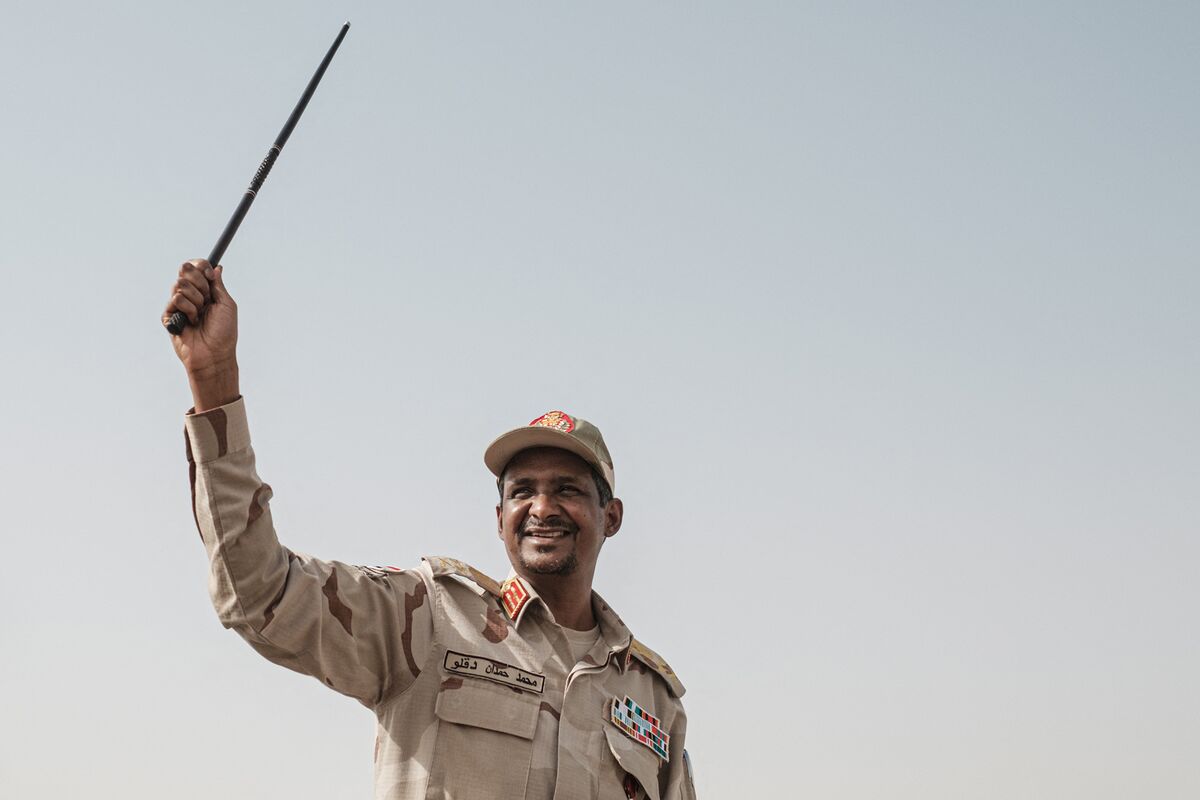
Mohamed Hamdan Dagalo: The Rise and Wealth of Sudan's RSF Commander
Mohamed Hamdan Dagalo, widely known as Hemedti, is the commander of the Rapid Support Forces (RSF) and one of Africa's most powerful figures. His multi-billion-dollar fortune stems from a vast empire of gold mining, livestock exports,...
Mohamed Hamdan Dagalo, widely known as Hemedti, is the commander of the Rapid Support Forces (RSF) and one of Africa's most powerful figures. His multi-billion-dollar fortune stems from a vast empire of gold mining, livestock exports, and international mercenary contracts, fundamentally shaping Sudan's political and military landscape.
Contents
The Origins of Hemedti’s Power
To understand the scale of Mohamed Hamdan Dagalo’s wealth in 2026, one must trace his ascent from a camel trader to a paramilitary warlord. Born into the Rizeigat tribe of the Mahariya clan in Darfur, Hemedti did not follow a traditional military path through the Sudanese military academy. Instead, his power was forged in the heat of the Darfur conflict in the early 2000s.
Originally a leader of the Janjaweed militias, Hemedti gained the favor of former President Omar al-Bashir. Bashir famously referred to him as "Hemeti," a nickname meaning "my protector." By 2013, the Janjaweed were formalized into the Rapid Support Forces (RSF), a paramilitary group that operated independently of the regular Sudanese Armed Forces (SAF). This independence allowed Hemedti to build a private economic base that functioned as a shadow state, bypassing traditional government oversight and military audits.
By the time the 2019 revolution ousted Bashir, Hemedti had transitioned from a desert militia leader to the Deputy Chairman of the Transitional Sovereignty Council. His financial independence ensured that the RSF remained a dominant force, eventually leading to the catastrophic power struggle with General Abdel Fattah al-Burhan and the SAF that erupted in April 2023.
The Gold Empire: The Backbone of the Billion-Dollar Fortune
The primary engine of Hemedti’s wealth is Sudan's gold industry. Sudan is one of Africa's largest gold producers, and for years, a significant portion of this output has been controlled by Hemedti’s family interests.
The Takeover of Jabal Amer
The turning point for Hemedti’s financial empire occurred in 2017 when the RSF took control of the Jabal Amer gold mines in North Darfur. Previously held by rival militia leader Musa Hilal, the seizure of these mines provided Hemedti with a direct and massive stream of revenue. Investigative reports from organizations like Global Witness have detailed how the RSF used its military might to secure mining sites and manage the extraction process.
Al-Gunade (Al-Junaid)
The Dagalo family’s corporate vehicle, Al-Gunade (also spelled Al-Junaid), is the central entity managing these assets. While Hemedti officially resigned from the board of Al-Gunade when he took his seat on the Sovereignty Council, the company remains under the control of his brother, Abdul Rahim Dagalo, and other family members. Al-Gunade’s operations are not limited to mining; they extend into:
- Construction and Infrastructure: Winning government contracts for road building and urban development.
- Livestock Export: Leveraging the Dagalo family’s traditional roots in the cattle and camel trade to export millions of dollars’ worth of livestock to Middle Eastern markets.
- Transport and Logistics: Managing the heavy machinery and trucking fleets required to move gold and supplies across Sudan’s porous borders.
International Financial Networks and the UAE Connection
Hemedti’s fortune is not merely a domestic phenomenon; it is deeply integrated into global financial networks. The United Arab Emirates (UAE) has historically served as the primary destination for Sudanese gold.
Much of the gold mined by RSF-controlled entities is smuggled or exported to Dubai, where it is refined and sold on the international market. This trade route provides the RSF with access to hard currency, specifically the U.S. Dollar and UAE Dirham, which are essential for procuring weapons, vehicles, and paying the salaries of tens of thousands of RSF fighters.
Furthermore, the RSF’s involvement in foreign conflicts has been a lucrative "service" export. During the war in Yemen, the RSF provided thousands of ground troops to the Saudi-led coalition. Reports suggest that these soldiers' salaries—and significant management fees—were paid directly to Hemedti’s organizations, further padding his multibillion-dollar reserves.
Comparison of Economic Control: RSF vs. SAF
In the lead-up to the 2023 conflict and throughout the subsequent years, the rivalry between Hemedti and the regular army (SAF) was as much about money as it was about military rank. The following table illustrates the divergence in their economic power bases as of the mid-2020s.
| Feature | Rapid Support Forces (RSF/Hemedti) | Sudanese Armed Forces (SAF/Burhan) |
|---|---|---|
| Primary Revenue Source | Gold mining and private family businesses. | State-owned enterprises and defense industries. |
| Corporate Entities | Al-Gunade (Al-Junaid), GSK, Tradive. | Defense Industrial System (DIS), Zadna. |
| Key Sectors | Gold, livestock, mercenary services, transport. | Fuel, wheat, telecommunications, banking. |
| Financial Oversight | Private family control; opaque and offshore. | Formal state budget (historically) and military-led monopolies. |
| International Partners | UAE, Russia (Wagner Group/Africa Corps). | Egypt, Saudi Arabia, traditional state allies. |
The Role of the Wagner Group and Russian Interests
Hemedti’s financial web also intersects with Russian interests in Africa. The Wagner Group (reorganized into the Africa Corps by 2026) established a symbiotic relationship with the RSF. In exchange for military training and support in securing gold mines, Russian entities were granted mining concessions and help in smuggling gold out of the country.
This relationship served a dual purpose: it bolstered Hemedti’s domestic power against the SAF and provided the Russian state with a vital source of gold to mitigate the impact of Western sanctions. The collaboration highlighted Hemedti's role not just as a local leader, but as a pivotal player in the geopolitical struggle for African resources.
Impact of the 2023 Conflict on the Dagalo Fortune
The war that began on April 15, 2023, fundamentally altered the geography of Hemedti’s wealth. While the RSF seized control of much of the capital, Khartoum, including the central bank and various industrial zones, the conflict led to a sharp increase in international scrutiny.
- Sanctions: The United States, United Kingdom, and European Union imposed several rounds of sanctions targeting Al-Gunade and Tradive General Trading. These sanctions aim to freeze assets and block the RSF from using the international banking system.
- Infrastructure Destruction: Much of the domestic business infrastructure owned by Al-Gunade was damaged during the fighting in Khartoum and Darfur.
- Supply Chain Disruptions: The war made the formal export of gold through Port Sudan (controlled by the SAF) impossible for the RSF, forcing them to rely entirely on informal and illicit land routes through Chad and Libya.
Despite these challenges, the sheer volume of liquid assets and gold reserves held by Hemedti has allowed the RSF to sustain a high-intensity war for years. By 2026, the "billion-dollar fortune" remains the primary obstacle to a peaceful resolution, as it allows the RSF to operate as a self-funded entity that does not require state recognition to survive.
Ethical and Humanitarian Considerations
The accumulation of such wealth in the hands of a single military leader has had devastating consequences for Sudan. The "resource curse" is exemplified in Hemedti’s control of Jabal Amer. Instead of gold revenues funding schools, hospitals, or national infrastructure, the wealth has been recycled into the purchase of Technicals (armed pickup trucks), drones, and sophisticated propaganda operations.
Human rights organizations have repeatedly linked the funding of the RSF to atrocities committed in Darfur, Khartoum, and the Kordofan regions. The ability to pay soldiers significantly higher wages than the regular army has allowed Hemedti to recruit from marginalized communities, turning economic desperation into military might.
Frequently Asked Questions
How much is Mohamed Hamdan Dagalo actually worth?
While an exact figure is impossible to verify due to the lack of public audits, international analysts and investigative journalists estimate Hemedti’s net worth to be in the low billions of dollars. This includes liquid cash, gold reserves, and the valuation of the Al-Gunade conglomerate.
Where does Hemedti keep his money?
A significant portion of his wealth is believed to be held in offshore accounts, particularly in the UAE. The RSF also maintains physical control over large quantities of gold, which serves as a "hard currency" that is resistant to traditional bank freezes.
Are Al-Gunade and the RSF the same entity?
Technically, no. Al-Gunade is a private business conglomerate owned by the Dagalo family. However, in practice, the company serves as the financial wing of the RSF, providing the funds necessary for military operations and logistics.
Has the 2023-2026 conflict bankrupt Hemedti?
No. While the war has been expensive, Hemedti’s control over gold-producing regions in Darfur and Kordofan provides a continuous revenue stream. The RSF’s decentralized financial structure makes it very difficult to "bankrupt" through traditional warfare or sanctions.
What is the international community doing about his wealth?
The primary tool has been targeted sanctions against individuals and companies. However, the effectiveness of these sanctions is limited because the RSF operates largely in the "shadow economy," using cash and gold rather than the SWIFT banking network.
Practical Next Steps for Monitoring the Situation
For those tracking the influence of military-linked wealth in Sudan, the following actions are essential for a comprehensive understanding:
- Monitor Sanctions Lists: Regularly check updates from the U.S. Department of the Treasury (OFAC) and the UK Office of Financial Sanctions Implementation (OFSI) regarding RSF-linked entities.
- Track Gold Market Reports: Watch reports from the World Gold Council and NGOs like Global Witness for shifts in Sudanese gold export patterns.
- Analyze Regional Diplomacy: Follow the diplomatic shifts in the UAE and Saudi Arabia, as their stance on Sudanese gold imports directly affects Hemedti’s liquidity.
The case of Mohamed Hamdan Dagalo serves as a stark reminder of how the fusion of military power and private enterprise can destabilize an entire region. As of 2026, Hemedti remains a central figure whose wealth is inextricably linked to the future of the Sudanese state.
Image Gallery