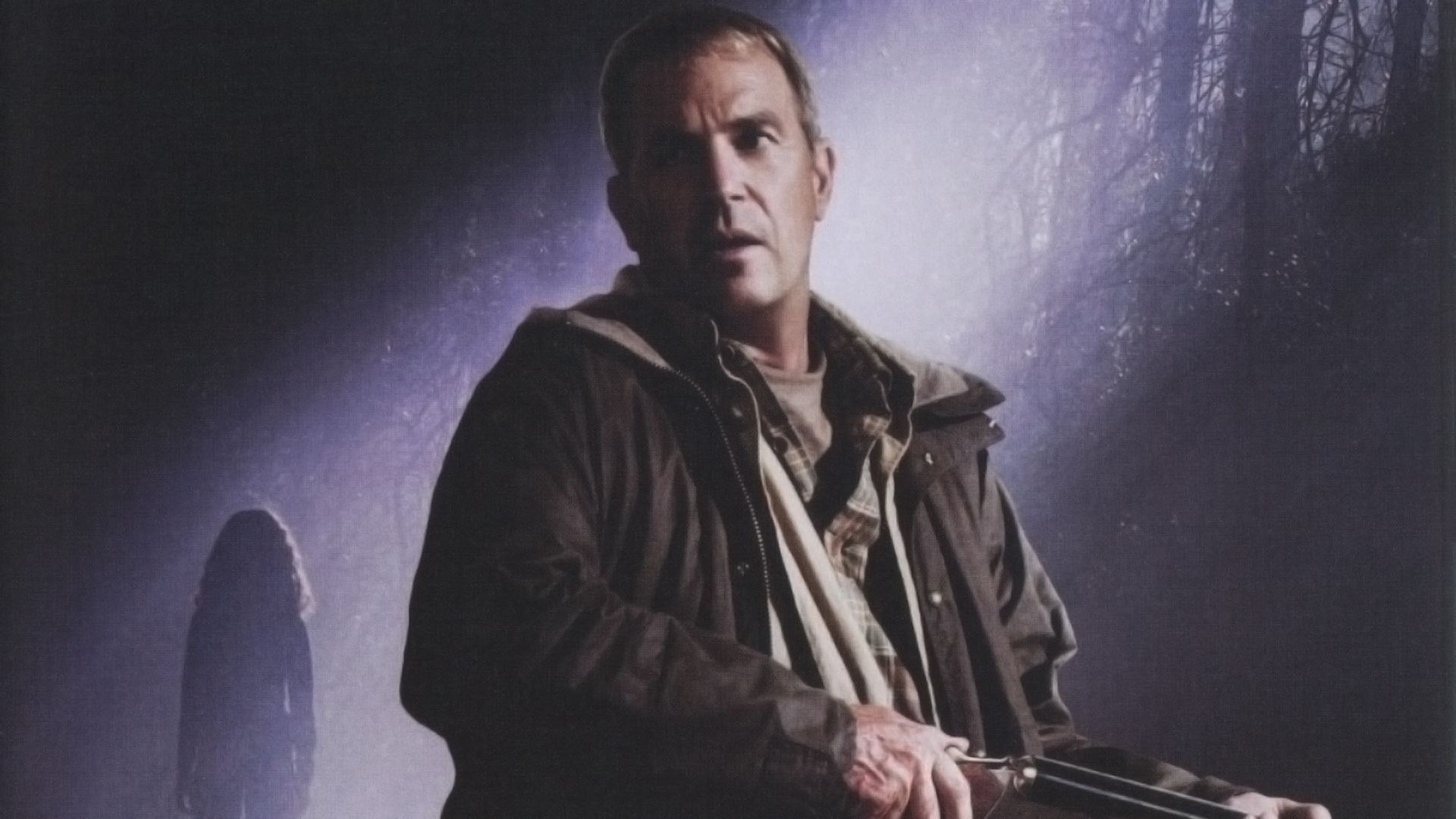
The New Daughter Plot Explained: Full Narrative Summary, Lore, and Ending
In the 2009 folk-horror film The New Daughter, newly divorced author John James moves his two children to a secluded South Carolina farmhouse containing an ancient burial mound. His teenage daughter Louisa becomes biologically and psyc...
In the 2009 folk-horror film The New Daughter, newly divorced author John James moves his two children to a secluded South Carolina farmhouse containing an ancient burial mound. His teenage daughter Louisa becomes biologically and psychologically altered by subterranean entities known as Mound Walkers, culminating in a violent struggle where John sacrifices himself in a desperate attempt to destroy the nest and save his young son.
Contents
- Relocation: Family moves to rural South Carolina property with burial mound.
- Infection: Louisa visits mound; exhibits animalistic, hostile behaviors.
- Investigation: John uncovers former owner's tragedy and "Mound Walker" lore.
- Infiltration: Entities kill household allies; house comes under siege.
- Final Sacrifice: John burns the mound; tragic twist leaves Sam in danger.
Plot Setup: A Fresh Start in Rural South Carolina
The narrative opens with John James (played by Kevin Costner), a recently divorced novelist attempting to rebuild a stable life for his daughter Louisa (Ivana Baquero) and younger son Sam (Gattlin Griffith). Seeking quiet isolation after his wife abandons the family, John purchases a sprawling, old-fashioned home tucked away in the dense woods of rural South Carolina.
Louisa resents the forced relocation, struggling with her parents' split and the isolation of their new living situation. Almost immediately upon arrival, the family discovers a massive, unnatural earthwork mound situated on the boundary of their property. The strange hill radiates an unsettling atmosphere, covered in dense roots, mud, and unusual burial-like structures.
Louisa feels an uncontrollable attraction to the site. During her first walk on the grounds, she scales the structure and enters a trance-like state. Upon returning to the house, her behavior begins a subtle, disturbing shift that goes far beyond typical teenage rebellion.
The Incubation Phase: Louisa's Physical and Behavioral Shift
As days pass, Louisa spends long hours atop the burial mound, frequently returning home drenched in thick black mud and rain. Her attitude toward her brother and father turns hostile and cold. John initially attributes her temper tantrums, sleepwalking, and social withdrawal to emotional distress over her mother's departure and the difficulty of adjusting to a new high school.
However, escalating events reveal supernatural interference:
Animalistic Appetite: John discovers Louisa eating raw meat straight from the refrigerator late at night, displaying feral reflexes.
Effigies and Dirt: Louisa conceals a strange, hand-crafted straw and mud idol underneath her bed—an artifact linked directly to the burial mound.
Physical Violence: At school, after a male classmate attempts to bully her, Louisa violently attacks him with unnatural strength, resulting in her suspension.
The Loss of Household Allies: The family's pet dog vanishes and is later found slaughtered near the property edge. Soon after, the family hired babysitter, Mrs. Lowry, is brutally murdered by unseen figures lurking outside the house after dark, leaving John without immediate local support.
BURIAL MOUND SITE
- Emits Subterranean Telepathic Signal
- Claims Human Female Maiden (Louisa)
- Physical / Biological Mutation
- Increased strength
- Mud encrustation / skin shifts
- Behavioral Transformation
- Aggression & raw meat diet
- Rejection of human family
- Physical / Biological Mutation
- Claims Human Female Maiden (Louisa)
- Emits Subterranean Telepathic Signal
John discovers mud tracks running through the corridors, strange scratching noises echoing inside the walls, and bizarre biological growths staining Louisa's bedroom walls. Desperate for answers, he decides to look into the history of the house and its previous inhabitants.
Uncovering the Lore: The Mystery of the Previous Owners
John's investigation leads him to the local township records, where he learns about the property's former owner, Roger Wayne. Wayne’s young daughter, Emily, had exhibited the exact same behavioral deterioration before mysteriously disappearing years prior.
John tracks down Roger Wayne, finding a broken man living in extreme isolation. Wayne reveals a horrific secret: his daughter was chosen by ancient subterranean entities that inhabit the earth mound. As Emily transformed into one of the creatures, Wayne realized she was no longer human. In a desperate act of desperation to prevent the corruption from spreading, he locked Emily in her room and burned the home to the ground.
Searching for scientific and mythological context, John consults Professor Evan White (Noah Taylor), an expert on pre-Columbian folklore and ancient civilizations. Professor White explains the legend of the Mound Walkers (often tied to ancient Chaqua mythology):
- Subterranean Origins: The creatures are non-human, pre-civilization species living deep underground beneath burial mounds.
- Reproductive Cycle: The entities require human maidens as "vessels" or queens to mate with, preserve their species, and spawn a new generation of hybrid creatures.
- The Claiming Process: The chosen girl undergoes a physical metamorphosis, gradually shedding her human identity, empathy, and physiology until she becomes an extension of the subterranean nest.
The Climax: Siege on the Farmhouse and Final Sacrifice
Armed with this knowledge, John returns home to find that Louisa's transformation has reached an advanced stage. Her skin appears altered, her eyes lose human warmth, and her commitment to her human family vanishes completely.
Determined to save his daughter rather than repeat Roger Wayne's brutal choice, John boards up the windows, arms himself with a shotgun, and prepares to defend the house. That night, a pack of shadowy Mound Walkers assaults the residence, tearing through the wooden barricades and crawling across the roof.
- The Final Conflict
- Mound Walkers launch full-scale siege on the home.
- John hides Sam in a closet and tracks Louisa outside.
- John finds Louisa inside the mound, partially mutated.
- John pours gasoline over the mound and ignites it.
- Grim Twist: Another Mound Walker approaches Sam.
During the intense siege:
- John kills several attacking creatures inside the house.
- He locks his young son, Sam, safely inside a closet with strict instructions not to open it.
- The creatures drag Louisa out of the home and back toward the burial earthwork.
John pursues the entities into the pitch-black woods, carrying a shotgun, a flashlight, and a container of gasoline. He crawls directly into the subterranean tunnels beneath the mound. Deep inside the nest, surrounded by bones, roots, and mud, he finds Louisa. Her body is partially enveloped by the mound’s organic mass, her transformation nearly complete as she looks at him with black, unblinking eyes.
Recognizing that his daughter can no longer be saved and that the nest will continue to terrorize his son, John makes a grim choice. He douses the chamber, the creatures, and the mound with gasoline. With a final look at Louisa, he strikes a match and ignites the fuel, causing a massive explosion that destroys the mound and burns the surrounding creatures.
The Ending Twist Explained
After the explosion, young Sam steps out of the burning ruins of the house holding a picture frame of his family. The fire illuminates the perimeter of the dark forest.
As Sam stands alone in the yard waiting for his father, a dark figure emerges from the tree line behind him. The silhouette moves with the distinct, unnatural gait of a Mound Walker. The film cuts to black right as the creature looms over the boy, leaving a bleak conclusion: John's sacrifice destroyed one nest, but failed to eradicate the subterranean threat surrounding the property, leaving Sam exposed to the remaining entities.
Key Plot Points and Character Outcomes
| Character | Role in the Story | Primary Motivation | Final Narrative Outcome |
|---|---|---|---|
| John James | Father / Author | Protect his children and rebuild his family. | Sacrifices his life by detonating the mound to destroy the nest. |
| Louisa James | Daughter / High Schooler | Coping with parental divorce; drawn to mound. | Mutates into the Mound Walkers' vessel; consumed in the fire. |
| Sam James | Youngest Son | Stay safe and remain close to his father. | Survives the house siege, but is confronted by a remaining entity. |
| Professor Evan White | Antiquities Specialist | Uncover historical truth behind ancient lore. | Provides critical intelligence regarding Mound Walker lore. |
| Roger Wayne | Previous Property Owner | Stop the entity from taking another child. | Devastated by burning his own daughter; serves as a warning to John. |
| Mrs. Lowry | Babysitter | Care for Sam and Louisa during John's trips. | Ambushed and killed by Mound Walkers outside the house. |
Themes and Narrative Analysis
1. Folk Horror and Ancient Territory
The New Daughter utilizes classical folk-horror conventions: a city family relocating to an isolated rural environment governed by pre-Christian, ancient forces. The threat does not originate from a slasher or a typical demonic possession, but from an evolutionary predator—a ancient species that claims territorial dominance over human property lines.
2. The Metaphor of Puberty and Disconnection
Louisa's transformation serves as a dark supernatural metaphor for adolescence and family breakdown:
- Her physical changes, moody isolation, mood swings, and rejection of her father mirror the turbulent shift from childhood to young adulthood.
- The breakdown of the nuclear family following divorce leaves Louisa vulnerable, rendering her emotional detachment a gateway for the Mound Walkers to claim her.
3. Parental Guilt and Defiance
John James’s journey highlights the guilt of a single father struggling to protect his children. Unlike Roger Wayne, who killed his daughter to save himself and stop the curse, John refuses to abandon Louisa. He chooses to enter the nest himself, demonstrating selflessness even when faced with an irreversible loss.
Film Adaptation vs. Original Short Story
The New Daughter is directly adapted from a short story of the same name written by acclaimed Irish author John Connolly, published in his 2004 horror anthology Nocturnes. While the core concept remains consistent, the film introduces structural changes:
- Expanded Lore: Screenwriter Will Staples added the academic character of Professor Evan White and the detailed background lore regarding ancient Chaqua myths to provide clear exposition for movie audiences.
- The Previous Owner Subplot: The tragic background of Roger Wayne and his burned house was developed specifically for the cinematic release to raise the stakes for Kevin Costner's character.
- Pacing and Action: The short story focuses heavily on atmosphere and psychological dread, whereas the film incorporates traditional creature-feature elements, siege setups, and physical action sequences during the third act.
Frequently Asked Questions
What are the creatures in The New Daughter?
The creatures are known as Mound Walkers (or Chaqua in ancient folklore). They are subterranean, pre-human entities that inhabit earthwork burial mounds. They select human teenage girls to serve as mates/queens to preserve their species.
Did Louisa turn back to normal at the end?
No. Louisa’s transformation was irreversible. When John reached her inside the subterranean chamber, her physical body and human consciousness had been largely rewritten by the entities, leading John to burn down the mound with both of them inside.
Does John James die in The New Daughter?
Yes. John sacrifices himself by dousing the interior of the subterranean mound with gasoline and lighting a match. The resulting explosion destroys the nest, killing him, Louisa, and several creatures in the process.
What happens to Sam at the very end of the movie?
Sam survives the attack on the farmhouse, but the final shot reveals another Mound Walker emerging from the dark woods behind him. The bleak ending implies that Sam remains in severe danger from surviving members of the creature colony.
Where was The New Daughter filmed?
While the film is set in rural South Carolina, principal photography took place primarily around Charleston, South Carolina, and surrounding rural locations to capture the moss-draped trees, historical farmhouses, and dense forest environments.
Recommended Next Steps for Viewers and Readers
For viewers looking to explore similar narrative themes or research the background material:
- Read the Source Material: Check out John Connolly's short story anthology Nocturnes (2004) to experience the original prose version of "The New Daughter."
- Explore Folk Horror Cinema: Fans of the film's ancient burial mythos may enjoy comparable folk-horror features such as The Ritual (2017), The Hallow (2015), or Pyewacket (2017).
- Review the Director's Work: Examine director Luis Berdejo's screenwriting work, including the acclaimed Spanish horror film [REC] (2007), which features similar themes of isolated containment and biological horror.
Image Gallery