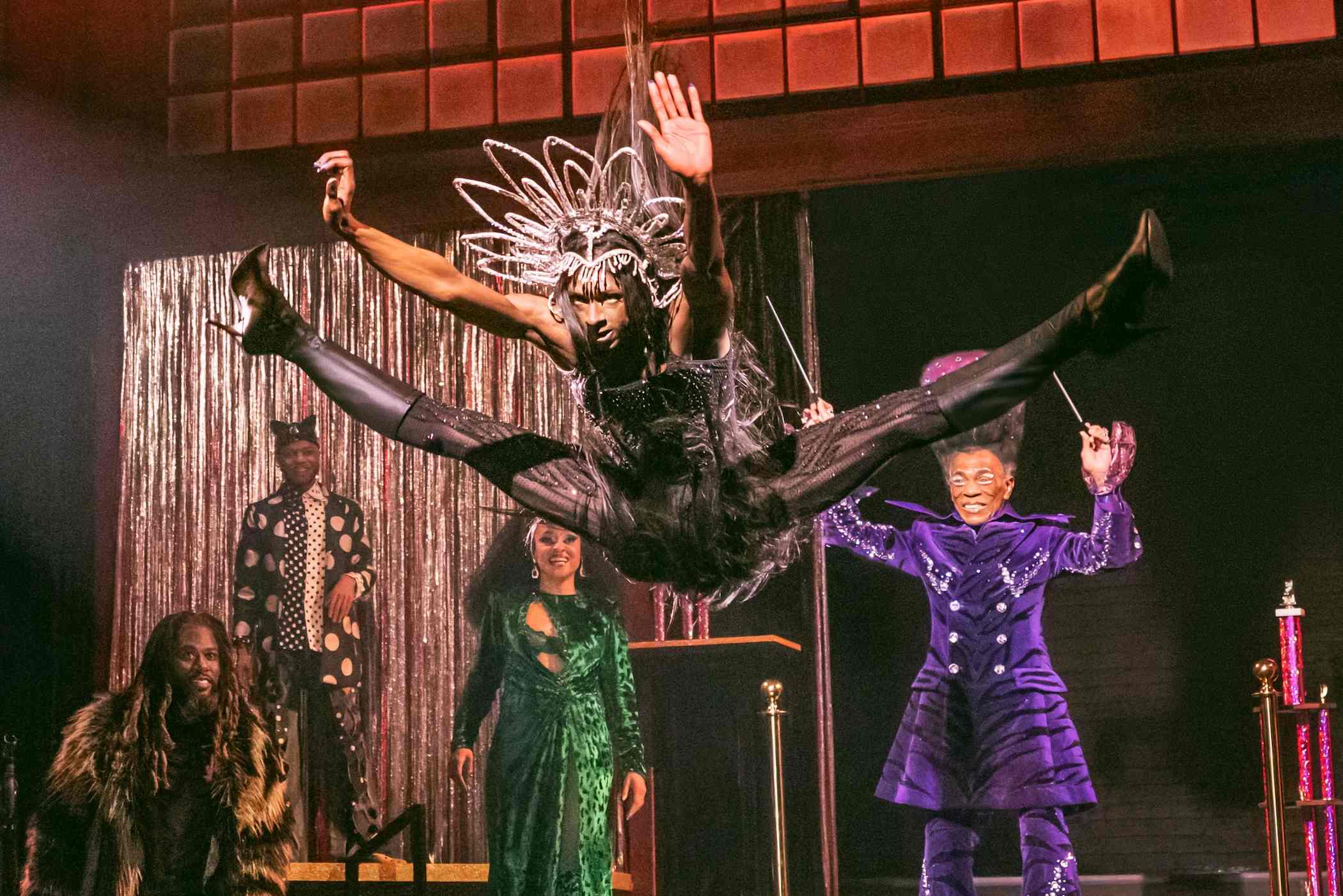
Why Cats: The Jellicle Ball Opening Night Dazzles Theater Lovers
Cats: The Jellicle Ball captivates theater lovers by transforming Andrew Lloyd Webber’s classic 1981 musical into an immersive competition set within New York City’s underground Ballroom culture. By replacing feline costumes with runwa...
Cats: The Jellicle Ball captivates theater lovers by transforming Andrew Lloyd Webber’s classic 1981 musical into an immersive competition set within New York City’s underground Ballroom culture. By replacing feline costumes with runway walks, vogue battles, and house beats, the production infuses a celebrated score with authentic queer, Black, and Latine performance arts, creating an electric, emotionally resonant theatrical experience.
Contents
The Radical Conceptual Shift: Merging Lloyd Webber with Ballroom Culture
When Andrew Lloyd Webber’s Cats premiered in London’s West End in 1981 and Broadway in 1982, it redefined mega-musicals through dance-heavy storytelling, oversized junkyard sets, and literal feline characterizations based on T.S. Eliot’s 1939 poetry collection, Old Possum's Book of Practical Cats. For decades, the show maintained a distinct visual identity centered on spandex unitards, painted whiskers, and stylized animal movement.
Cats: The Jellicle Ball, which made its landmark debut at the Perelman Performing Arts Center (PAC NYC) in New York City, completely dismantles that tradition to reveal the story's underlying core. The central premise of the original musical is an annual gathering—the Jellicle Ball—where cats gather to compete, display their unique identities, and await Old Deuteronomy’s decision on who will ascend to the Heaviside Layer to be reborn.
By recontextualizing the Jellicle Ball as an actual underground Ball rooted in Black, Latine, and LGBTQ+ Ballroom culture, the production bridges two distinct performance traditions. The competitive categories of Ballroom—such as Runway, Face, Realness, Sirens, and Vogue Fem—map onto the individual character showcases of Eliot’s cats. What once functioned as animal roleplay becomes a celebration of identity, resilience, chosen family, and self-expression. Theater lovers attending opening night were dazzled because the reimagining does not feel like a superficial gimmick; rather, it uncovers a conceptual alignment that makes the original material feel urgent, vibrant, and lived-in.
Key Artistic Pillars Behind the Production's Success
The triumph of Cats: The Jellicle Ball relies on cohesive collaboration across direction, choreography, music, and design. Each artistic department worked to honor the original score while grounding every moment in authentic Ballroom tradition.
- Original Concept (T.S. Eliot / Lloyd Webber Cats) to Reimagined Concept (NYC Underground Ballroom Culture):
- Feline Spandex / Whiskers to High-Fashion Runway & Glamour
- Junkyard Set Design to Immersive Runway & Catwalk Layout
- Classical/Jazz Ballet to Vogue Fem, Dip, & House Dancing
- Heaviside Ascension to Community Elevation & Honor
Co-Directors Zhailon Levingston and Bill Rauch’s Vision
Co-directors Zhailon Levingston and Bill Rauch framed the narrative around community resilience. Rather than treating the characters as animals attempting to act human, Levingston and Rauch present real people forming protective social structures within their respective "houses." The directors utilize the dynamic architecture of the theater to blur the line between spectator and participant. Characters enter through the crowd, work the runway, and interact directly with judges seated at table setups reminiscent of authentic ball nights in Harlem and Brooklyn.
Ballroom Choreography by Arturo Lyons and Omari Wiles
Choreography serves as the primary engine of the production. Legendary Ballroom icons Arturo Lyons (Icon Arturo Miyake-Mugler) and Omari Wiles (Founder of Les Ballet Afrik) served as co-choreographers. Their work integrates classic theater storytelling with technical Ballroom disciplines:
- Vogue Fem: Emphasizing dramatic floor performance, duckwalks, cat walking, and spin-dips during high-energy character numbers.
- Runway & High Fashion: Transforming character intros into competitive walks where posture, garment handling, and attitude determine success.
- Posing and Hands Performance: Utilizing intricate hand movements to tell the intricate backstories of characters like Mr. Mistoffelees and Skimbleshanks.
The dancers execute complex physical sequences while maintaining vocal control, bringing a level of athletic intensity that energizes the entire auditorium.
Musical Reimagining and House Beat Orchestrations
Under the guidance of musical supervisor William Waldrop and beats/arrangements by modern collaborators, Lloyd Webber's iconic melodies remain intact while absorbing contemporary urban rhythms. Synth basslines, house music percussion, and runway commentary ("mic talk") are layered beneath classic woodwind and brass arrangements. Songs like "The Jellicle Ball" instrumental sequence transition seamlessly from symphonic sweeps into pounding club beats, creating an audio environment that feels both musically nostalgic and modern.
Standout Performances and Character Reinterpretations
The opening night cast assembled a fusion of Broadway veterans and authentic Ballroom icons, ensuring that both theatrical precision and culture-specific authenticity were delivered without compromise.
| Character | Performer (Selected Cast) | Performance Style & Interpretation |
|---|---|---|
| Old Deuteronomy | André De Shields | Beloved Elder & House Founder |
| Grizabella | Deborah Cox / Tempress | Ostracized Icon Seeking Redemption |
| Rum Tum Tugger | Sydney James Harcourt | High-Energy Sex Symbol / Runway |
| Mr. Mistoffelees | Robert "Bandida" Montano | Illusionist & Vogue Fem Master |
| Macavity | Antwayn Hopper | Menacing Outlaw / Disrupter |
Old Deuteronomy (André De Shields)
Tony Award winner André De Shields commands the stage as the matriarch/patriarch figure of the community. Dressed in regal garments, De Shields brings profound gravitas to the role. Rather than an aging feline in a heavy synthetic coat, this Old Deuteronomy is an esteemed elder who has survived eras of hardship, presiding over the youth with wisdom, tenderness, and authority.
Grizabella (Deborah Cox / Tempress Chasity Moore)
The role of Grizabella takes on heightened emotional weight. Positioned as a former Ballroom legend who left or was ostracized from the community, her return to the hall carries palpable pain and vulnerability. The performance of "Memory" shifts from a melancholy solo into a raw plea for acceptance from one's chosen family. When the vocals peak, the delivery avoids theatrical melodrama, striking a nerve with audience members who understand the pain of isolation.
Rum Tum Tugger (Sydney James Harcourt)
Sydney James Harcourt reimagines the Rum Tum Tugger as an irresistible, hyper-confident runway icon. Infusing the song with R&B vocal flourishes, swagger, and crowd work, Harcourt transforms the character's signature indifference into a commentary on celebrity and charisma within competitive subcultures.
Mr. Mistoffelees (Robert "Bandida" Montano)
Traditionally depicted as a magical cat performing stage illusions, Mr. Mistoffelees is reinterpreted as a master of vogueing and dramatic illusion. Montano's performance during "Mr. Mistoffelees" showcases rapid spin combinations, floorwork, and sudden reveals, turning the song into an explosive climax of athletic artistry.
Production Design and Immersive Atmosphere
The physical production design at PAC NYC shifts the traditional proscenium boundary into a runway layout surrounded by audience seating, VIP tables, and judging stations.
- Layout Overview:
- Top: Judges Table & Ballroom Dias
- Center: Runway Stage leading to Catwalk Area
- Periphery: Audience Seating surrounding the stage and catwalk area
Costume Design by Qween Jean
Costume designer Qween Jean replaced synthetic fur and body paint with high-fashion garments that reference decades of urban nightlife and couture catwalks. Highlights include:
- Structures and Drapery: Flowing trains, metallic fabrics, and exaggerated shoulders that accentuate body movement during vogueing.
- Textural References: Subtle nods to feline patterns through leopard prints, textured faux furs, and sequined scales, integrating original motifs without literalism.
- Personalized Character Garments: Custom street-style tailored suits for characters like Munkustrap and glamour gowns for the commentating MCs.
Lighting and Sound Architecture
Lighting designer Adam Honoré uses sharp moving beams, strobes, and vibrant neon washes to alternate between the intimate atmosphere of a late-night club and the bright, focused lights of a fashion runway. Deep bass frequencies calibrate the sound system to mirror the physical pulse of a real Ball, ensuring that the audience feels the beat in their chests throughout high-energy numbers.
Comparative Analysis: Traditional Cats vs. Cats: The Jellicle Ball
To understand why this production resonated so strongly with theater critics and audiences, it helps to compare the structural choices of the original production with the reimagined version.
| Feature | Original Broadway / West End Production | Cats: The Jellicle Ball |
|---|---|---|
| Primary Setting | An abandoned, larger-than-life junkyard | An underground NYC Ballroom & Runway |
| Costuming & Aesthetics | Hand-painted spandex unitards, leg warmers, fur wigs | High-fashion gowns, tailored streetwear, leather, couture |
| Dance Vocabulary | Classical ballet, contemporary jazz, acrobatic gymnastics | Vogue Fem, Runway walking, Duckwalks, House dancing |
| Narrative Theme | Feline mythology and ritual rebirth | Community survival, queer history, family, identity |
| Orchestration Style | 1980s symphonic synth-pop and theater brass | Theater orchestration blended with house beats and live MCing |
| Audience Relationship | Fourth-wall proscenium with occasional aisle walks | Immersive runway configuration with direct crowd interaction |
Broader Impact on Contemporary Musical Theater
The success of Cats: The Jellicle Ball signals a broad shift in how revival productions approach classic musical theater canon. Rather than relying on simple nostalgia or traditional revivals, modern directors are demonstrating how legacy scores can serve as flexible canvases for contemporary cultural expressions.
By inviting authentic culture-bearers into core creative roles—rather than hiring outside choreographers to simulate styles—the production avoids cultural appropriation while delivering a masterclass in adaptation. It demonstrates that Andrew Lloyd Webber's score possesses structural versatility, capable of supporting entirely new movement vocabularies without losing its melodic hooks.
For theatergoers, opening night proved that a show long burdened by pop-culture parody could be transformed into a triumphant, deeply moving work of art.
Frequently Asked Questions
What is the main concept of Cats: The Jellicle Ball?
Cats: The Jellicle Ball reimagines Andrew Lloyd Webber's classic musical Cats within the context of New York City’s underground Ballroom culture. Instead of actors dressed in feline costumes in a junkyard, the performers compete in runway, voguing, and fashion categories as members of queer and Latine/Black house communities.
Is the original music by Andrew Lloyd Webber still in the show?
Yes. The production retains the original score, lyrics, and iconic songs like "Memory," "Mr. Mistoffelees," and "Macavity." However, the orchestrations are updated with house music beats, modern percussion, and live runway commentary that fit the Ballroom setting.
Where did Cats: The Jellicle Ball perform?
The production premiered at the Perelman Performing Arts Center (PAC NYC), located at the World Trade Center site in Lower Manhattan, New York City.
Who directed and choreographed this reimagined production?
The show was co-directed by Zhailon Levingston and Bill Rauch, with authentic Ballroom choreography created by legendary icons Arturo Lyons and Omari Wiles.
Is this production suitable for people who didn't like the original Cats?
Yes. Many audience members and critics who found the original musical's feline costumes or loose plot unappealing have lauded Cats: The Jellicle Ball. The clear competitive narrative of the Ball format and the athleticism of vogue dance give the story grounded emotional clarity and narrative momentum.
Recommended Next Steps for Theater Enthusiasts
To fully appreciate the cultural and artistic context of Cats: The Jellicle Ball, theater lovers can take several practical steps:
- Explore Ballroom History: Watch foundational documentaries such as Paris Is Burning (1990) and series like Pose or Legendary to understand the history, house structures, and performance categories referenced in the show.
- Compare Musical Arrangements: Listen to the original 1981 London or 1982 Broadway cast recordings alongside modern house and runway tracks to see how rhythmic structures align.
- Follow the Creative Team: Track ongoing projects by directors Zhailon Levingston and Bill Rauch, as well as choreographers Arturo Lyons and Omari Wiles, who continue to push boundaries across regional and Broadway venues.
Image Gallery