Mastering Alternate Side Parking Rules, Regulations, and Schedules for 2026
Navigating municipal street regulations requires precision, especially when managing vehicle placement alongside municipal corridors. Alternate side parking (ASP) remains a critical tool for cities aiming to maintain sanitation standar...
Navigating municipal street regulations requires precision, especially when managing vehicle placement alongside municipal corridors. Alternate side parking (ASP) remains a critical tool for cities aiming to maintain sanitation standards, sweep debris, and ensure emergency vehicle access. Understanding the mechanical rhythms of municipal cleaning schedules prevents costly citations and towing fees. Metropolitan municipal departments enforce strict timelines to maximize sweeping efficiency, making adherence to these rules a daily necessity for vehicle owners.
Contents
Core Mechanics of Municipal Street Cleaning Operations
Municipal sanitation departments schedule sweeping operations to clear accumulated debris, particulate matter, and refuse from curb lanes. Without periodic clearance, storm drains clog, posing flood risks and degrading urban infrastructure.
Sweepers operate on strict timetables dictated by traffic density, residential density, and weather patterns. Modern municipal tracking systems integrate real-time GPS data, allowing drivers to monitor sweeper locations through municipal web portals and mobile applications.
Compliance involves moving vehicles entirely away from the designated side of the street during the posted window. Simply sitting in the vehicle or moving it temporarily into an active zone does not satisfy municipal code. Traffic enforcement agents issue citations immediately upon the expiration of the grace period, and repeat offenders face swift impoundment.
Decoding Parking Signs and Regulatory Codes
Reading street signs accurately is the first line of defense against municipal citations. Signage varies by district, but standard configurations feature specific icons, time windows, and day-of-the-week indicators.
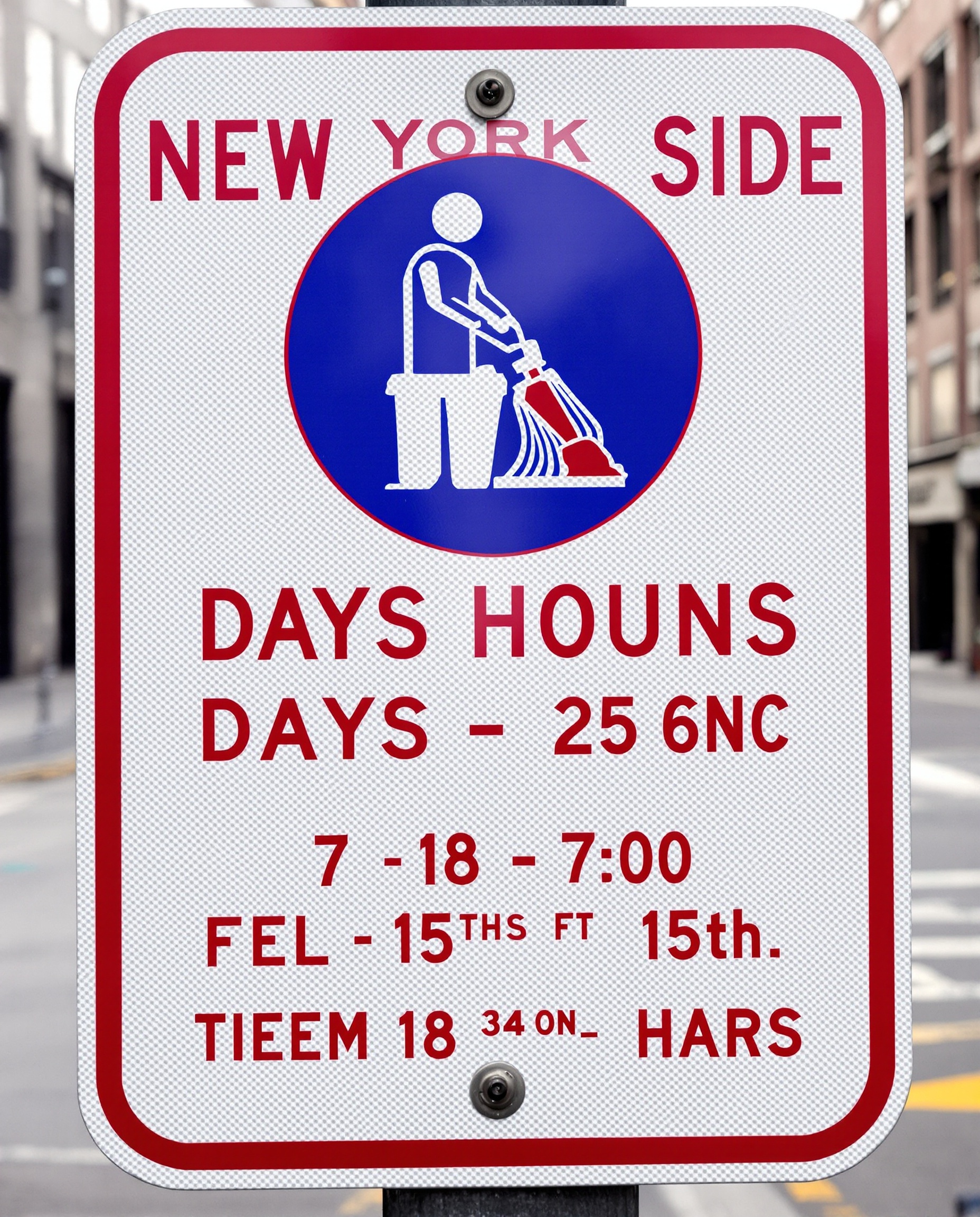
- Broom Icon: Represents sanitation sweeping hours where parking is strictly prohibited.
- Arrow Indicators: Point the exact direction or boundary where the restriction applies, stretching from one intersection corner to the next.
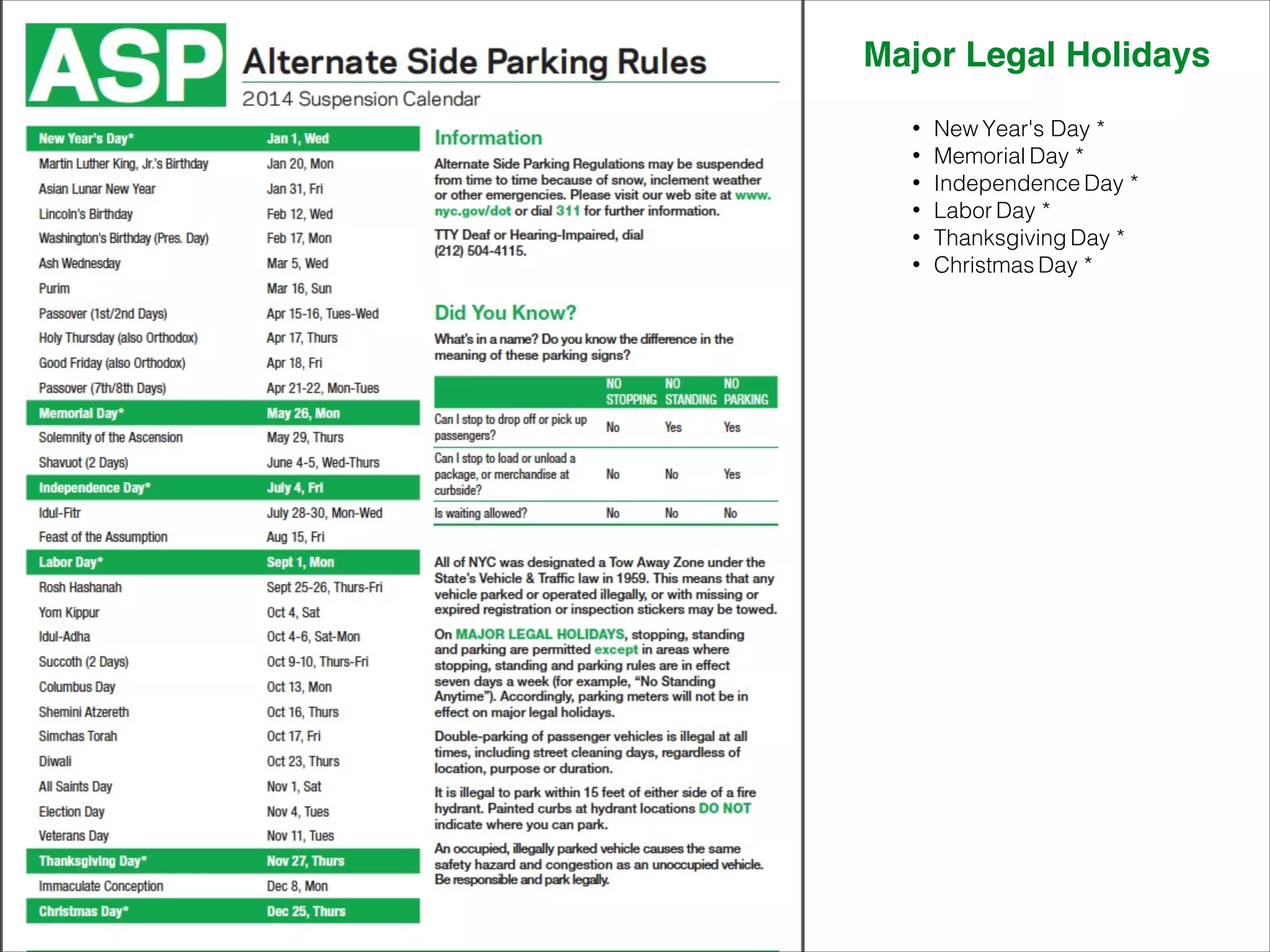
- Exemptions: Major legal holidays often suspend ASP rules, though parking meters may still remain active unless explicitly stated otherwise.
- Weather Suspensions: Severe meteorological events, such as heavy blizzards or localized flooding emergencies, prompt municipal leadership to suspend regulations temporarily.
Municipalities utilize distinct color codes and text formats to differentiate between commercial zones and residential corridors. Drivers must inspect every sign on the block face rather than relying solely on memory or previous habits, as municipal authorities frequently adjust operational hours to accommodate infrastructure repairs or seasonal leaf removal programs.
Comparative Breakdown of Parking Enforcement Frameworks
Different urban jurisdictions implement unique strategies for managing curb space. The table below outlines how major metropolitan areas structure their enforcement frameworks, grace periods, and towing triggers.
| Municipality | Standard ASP Window | Grace Period | Towing Risk for First Offense | Holiday Suspension Policy |
|---|---|---|---|---|
| New York City | 90 minutes to 3 hours | 5 minutes | Low (Citations primary) | Suspended on major religious and secular holidays |
| Chicago | 9 AM to 2 PM (Seasonal) | None | High (Immediate relocation) | Suspended during winter ban exceptions |
| Boston | Variable by district | None | Moderate (Based on obstruction) | Suspended on official state holidays |
| San Francisco | 2-hour windows | 10 minutes | Moderate | Suspended on designated state holidays |
Understanding these regional variances prevents administrative disputes and reduces the likelihood of financial penalties when operating a vehicle across municipal lines.
Strategic Workflow for Daily Compliance
Establishing a repeatable daily routine protects vehicle owners from unexpected tickets. Implementing a systematic approach minimizes friction and keeps vehicles properly positioned.
- Verify the Evening Schedule: Check municipal alert systems or neighborhood notification boards the evening before to confirm whether cleaning is scheduled for the following morning.
- Identify Safe Harbor Zones: Locate side streets with different cleaning schedules or municipal parking facilities where vehicles can remain undisturbed during restricted hours.
- Set Precise Alarms: Program reminders 30 minutes prior to the commencement of the restriction window to allow sufficient time for vehicle relocation.
- Monitor Weather Bulletins: Review municipal feeds for emergency suspensions triggered by severe weather conditions or unexpected utility construction.
- Inspect the Block Face: Walk the length of the curb upon parking to verify that temporary construction signs or emergency utility notices have not altered standard rules.
Adhering to this structured workflow eliminates guesswork and ensures consistent compliance across changing municipal landscapes.
Navigating Legal Holidays and Emergency Suspensions
Municipalities routinely suspend alternate side parking for specific holidays, religious observances, and severe weather emergencies. However, suspension rules are rarely uniform. While mechanical sweeping is paused, parking meter regulations often remain in full effect unless explicitly waived by executive order.
Drivers must consult official municipal channels rather than social media rumors when verifying suspension status. Municipalities maintain dedicated phone hotlines, SMS alert services, and official social media feeds that provide real-time updates regarding regulatory changes. Relying on outdated schedules during holiday weeks is a primary driver of preventable municipal citations.
Expert Insights and Common Pitfalls
Experienced urban drivers understand the hidden nuances of street regulation enforcement. A frequent error involves miscalculating the exact boundary lines between two distinct regulatory zones. Traffic enforcement agents measure distances strictly from intersection corners and fire hydrants; parking within an unmarked buffer zone often results in a citation even if the vehicle appears clear of the main sign.
Proactive Vehicle Management: Always maintain a clean dashboard and keep your vehicle registration and inspection documents up to date. Unregistered or inspection-expired vehicles parked on public streets are immediate targets for immediate impoundment during alternate side parking operations, regardless of whether sweeping is actively occurring on that block.
Another critical consideration involves the shift from daytime to overnight rules. Certain commercial corridors transition from daytime loading zones to overnight residential parking spaces, requiring precise timing to avoid overlapping violation windows.
Frequently Asked Questions
What happens if my car is towed during alternate side parking enforcement?
If your vehicle is towed, you must locate it through the municipal auto pound database, pay all outstanding fines and towing fees, and present valid registration and insurance documentation to retrieve it. Immediate retrieval is essential, as daily storage fees accumulate rapidly at municipal impound facilities.
Are residential driveways protected from alternate side parking rules?
Driveway owners are generally prohibited from parking across their own curb cuts if it blocks the sidewalk, but parking completely within a private driveway exempts the vehicle from street-side sweeping regulations. However, overlapping the sidewalk apron with a bumper still violates municipal pedestrian codes.
How are commercial vehicles handled under alternate side parking rules?
Commercial vehicles must adhere to the exact same sweeping windows as passenger vehicles unless operating under a specific municipal commercial loading permit. Even with a permit, parking during active sweeping hours without an active loading operation in progress triggers immediate ticketing.
Can I sit inside my car to avoid getting a ticket?
Sitting in the vehicle does not exempt you from moving it; enforcement agents will instruct you to drive away, and failure to immediately relocate the vehicle results in a citation. Idling regulations in many metropolitan areas also limit how long a stationary vehicle can run its engine at the curb.
How do I contest an unfair alternate side parking ticket?
You can contest a ticket online or by mail through the municipal adjudication bureau by submitting photographic evidence of conflicting signage, obscured notices, or proof of an official weather suspension. Submitting documentation promptly within the mandated contest window prevents late fees from compounding the original penalty.
To minimize future municipal infractions, subscribe to official municipal notification services and audit your local street signs weekly for any updates to neighborhood cleaning schedules.
Image Gallery