Quince Italian Leather Riding Boots: 2026 Performance and Value Analysis
Quince Italian leather riding boots represent the pinnacle of the direct-to-consumer value proposition in 2026, offering premium full-grain leather and traditional craftsmanship at roughly one-third the price of legacy luxury brands. T...
Quince Italian leather riding boots represent the pinnacle of the direct-to-consumer value proposition in 2026, offering premium full-grain leather and traditional craftsmanship at roughly one-third the price of legacy luxury brands. They serve as a durable, versatile wardrobe staple for those prioritizing ethical production and timeless equestrian aesthetics without the traditional retail markup.
Contents
The Evolution of Direct-to-Consumer Luxury in 2026
By 2026, the retail landscape has undergone a significant transformation, with the "direct-to-consumer" (DTC) model moving from a disruptive niche to the gold standard for value-conscious professionals. Quince has positioned itself at the forefront of this shift, particularly within the footwear sector. The Quince Italian leather riding boot is not merely a seasonal fashion item; it is a case study in supply chain optimization.
The traditional path of a luxury boot involves multiple intermediaries: the tannery, the manufacturer, the brand wholesaler, and finally the high-end department store. Each stage adds a significant margin, often resulting in a 600% to 800% markup by the time the product reaches the consumer. Quince eliminates these layers by partnering directly with the same factories that produce for heritage European labels. In 2026, this "factory-to-doorstep" approach allows for the use of high-grade Italian hides while maintaining a price point that remains accessible to the middle market.
For the consumer, this means the quality of the leather—the grain, the scent, and the aging potential—is identical to boots retailing for $500 or more, despite the Quince iteration typically hovering around the $160 to $190 range. This price-to-quality ratio has made the riding boot a focal point of "slow fashion" wardrobes, where longevity is prioritized over disposable trends.
Material Integrity: The Science Behind Italian Leather
The primary draw of these boots is the "Italian" designation, which is often misunderstood as a simple marketing term. In the context of Quince’s 2026 footwear line, Italian leather refers to hides processed in tanneries that follow the strict environmental and quality standards of the Leather Working Group (LWG).
Tanning and Texture
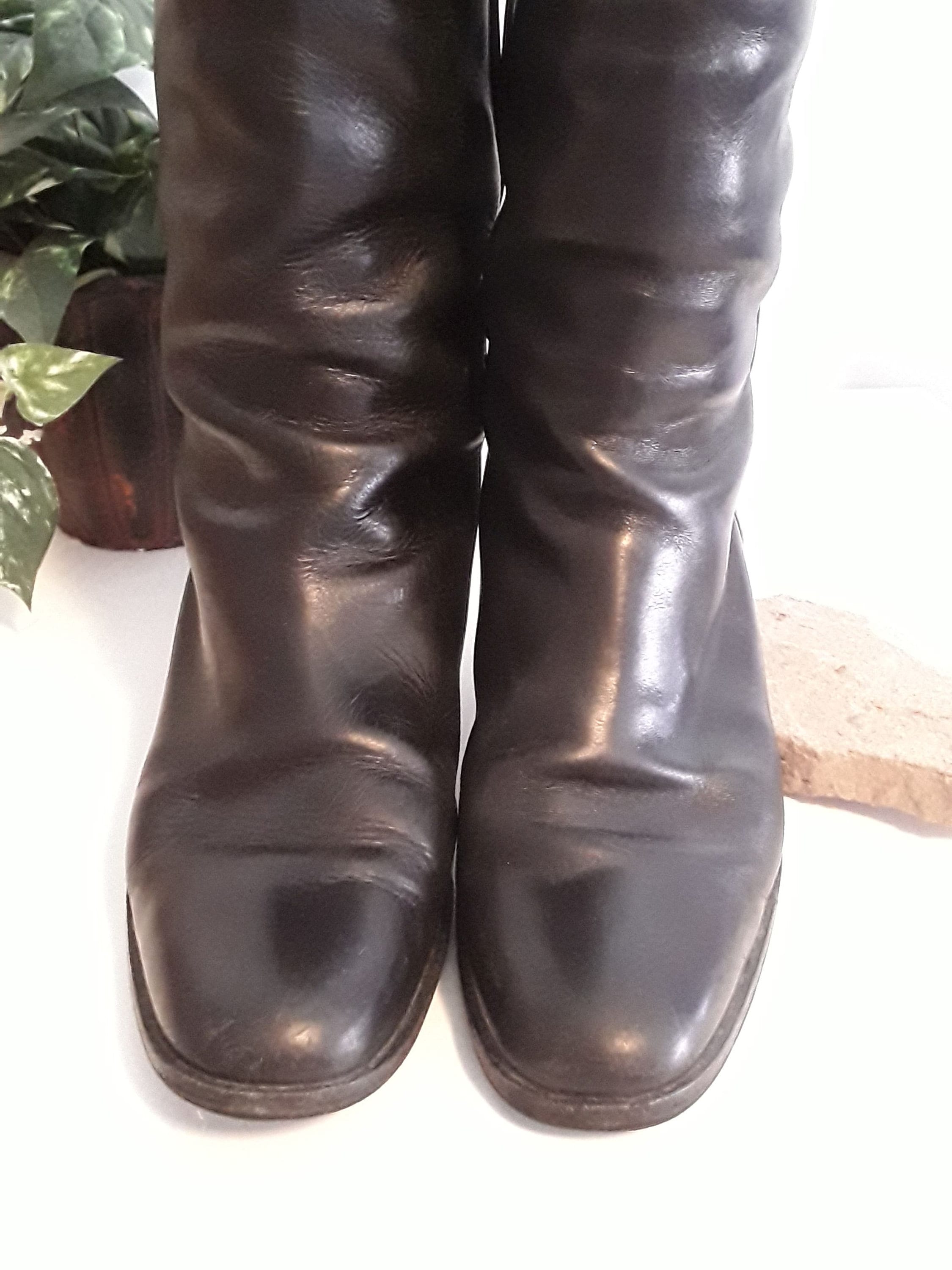
Most Quince riding boots utilize top-grain or full-grain leather. Full-grain leather is the highest quality, as it includes the outermost layer of the hide, retaining all natural fibers and strength. This results in a boot that does not just "wear out" but rather develops a unique patina over time. The tanning process in these Italian facilities often uses vegetable-based tannins or low-impact chrome processes that ensure the leather remains supple yet structurally sound.
Structural Reinforcement
Beyond the exterior leather, the 2026 models feature refined interior linings. A high-quality riding boot must breathe; otherwise, moisture builds up and degrades the leather from the inside out. Quince utilizes soft leather linings rather than synthetic fabrics, which enhances the "break-in" experience. While synthetic linings can cause friction and overheating, leather-on-leather construction allows the boot to mold to the specific contours of the wearer's calf and ankle over several weeks of consistent use.
Design Analysis: The Classic Equestrian Silhouette
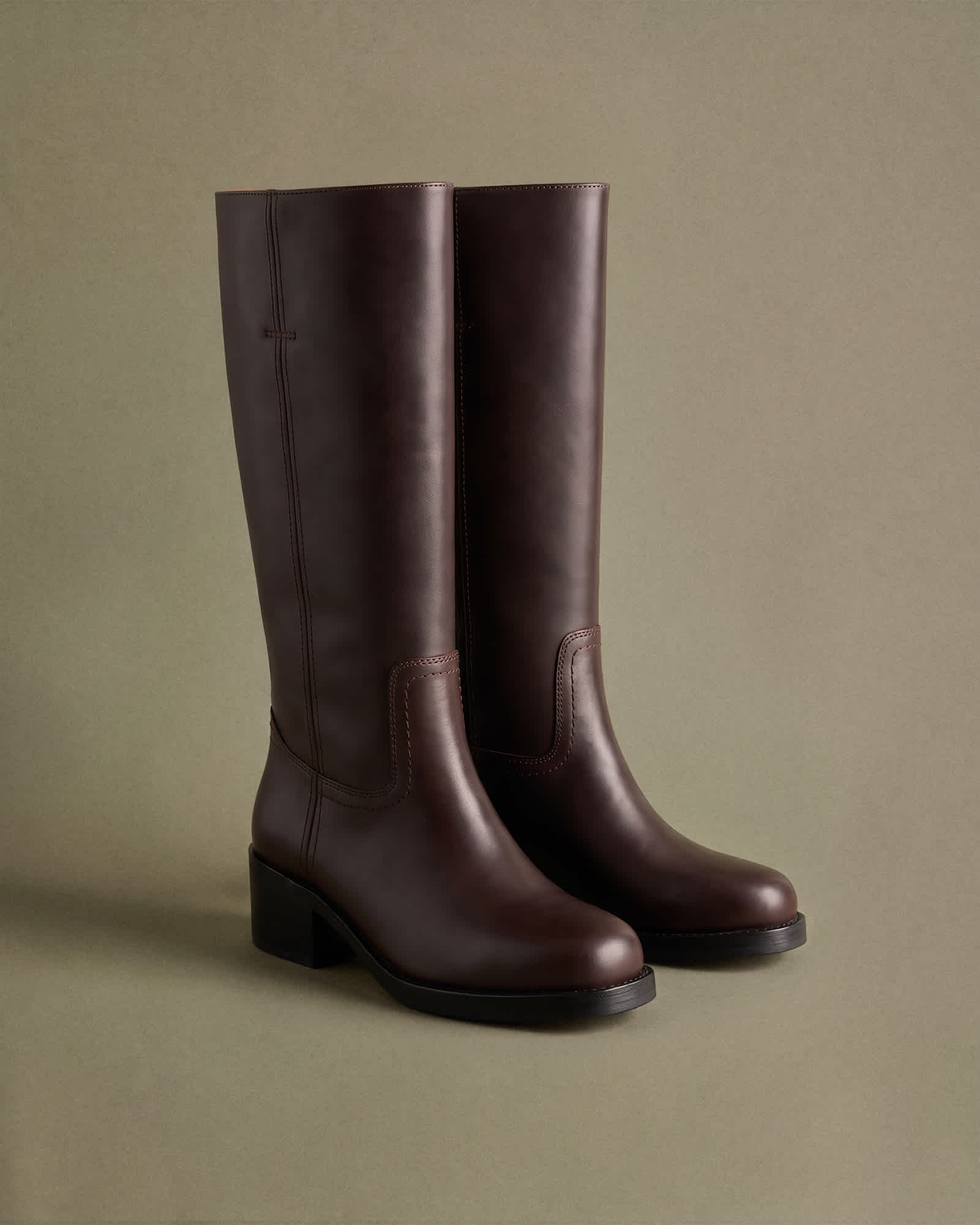
The aesthetic of the Quince riding boot is rooted in the traditional equestrian style—characterized by a tall shaft, a rounded toe, and a low, stacked heel. In 2026, while other brands have experimented with "lug" soles or exaggerated hardware, Quince has maintained a minimalist profile that ensures the boot remains relevant regardless of shifting fashion cycles.
Minimalist Hardware
The hardware on these boots is purposefully understated. Most versions feature a discrete side or rear zipper, often sourced from high-quality manufacturers like YKK to ensure smoothness and durability. The absence of large buckles or flashy logos is a deliberate choice that aligns with the "quiet luxury" movement that has dominated the mid-2020s. This makes the boot appropriate for a variety of settings, from a business-casual office environment to weekend social gatherings.
Sole Construction and Traction
A common critique of traditional leather boots is their lack of grip on modern urban surfaces. The 2026 Quince riding boot addresses this by integrating a slim, high-density rubber inlay into the leather outsole. This hybrid approach preserves the elegant side profile of a leather sole while providing the necessary traction for rain-slicked sidewalks or polished office floors. The heel is typically a stacked leather design with a rubber cap, allowing for easy replacement by a cobbler once it wears down—a hallmark of sustainable footwear design.
Technical Specifications and Comparative Analysis
When evaluating the Quince Italian leather riding boot, it is helpful to compare it against both entry-level "fast fashion" boots and heritage luxury brands. The following table outlines the key differentiators based on 2026 market standards.
| Feature | Fast Fashion (Generic) | Quince Riding Boots | Heritage Luxury Brands |
|---|---|---|---|
| Material | Synthetic or "Genuine" Leather | Full/Top-Grain Italian Leather | Grade-A Calfskin |
| Lining | Polyester/Textile | 100% Breathable Leather | Silk or Premium Leather |
| Sole Type | Glued Rubber/Plastic | Leather with Rubber Inlay | Hand-Stitched Leather |
| Average Price | $60 – $90 | $160 – $190 | $550 – $1,200 |
| Repairability | Low (Disposable) | Moderate (Cobbler Friendly) | High (Recraftable) |
| Production | Mass-Market Factory | LWG-Certified Factory | Artisanal Atelier |
The "Genuine Leather" label often found on cheaper boots is actually a technical term for the lowest grade of real leather, made from the remaining scraps after higher layers are stripped away. By opting for top-grain Italian leather, Quince provides a product that is structurally superior and more aesthetically pleasing as it ages.
Fit, Sizing, and the Calf Circumference Challenge
One of the most critical aspects of a tall riding boot is the fit around the calf. In 2026, Quince has expanded its sizing logic to accommodate a broader range of body types, though the "standard" fit remains the most popular.
Measuring for Success
The standard shaft height for these boots typically ranges from 15 to 16 inches, designed to hit just below the knee for the average wearer. However, the calf circumference is where most fit issues arise. The standard Quince boot usually offers a 14.5 to 15-inch circumference. For those with more athletic calves, it is essential to measure the widest part of the leg while wearing the socks or leggings intended to be paired with the boots.
The Break-In Period
Because these boots are made from authentic, high-quality leather, they require a break-in period. Unlike synthetic boots that are soft immediately but degrade quickly, Italian leather boots may feel stiff during the first five to ten wears. This stiffness is a sign of material density. As the leather warms with body heat, the fibers loosen and eventually "set" into a shape that is custom to the wearer's gait and leg shape.
Sustainability and Ethical Production Standards
In 2026, the environmental impact of fashion is a primary concern for the target audience of Quince. The leather industry, historically criticized for its chemical use and water consumption, has seen significant reform.
Quince’s commitment to ethical production is verified through its partnership with factories that adhere to the United Nations Global Compact principles. This ensures that the artisans involved in the construction of the boots are paid fair wages and work in safe conditions. Furthermore, the use of LWG-certified leather means that the tanneries must demonstrate excellence in water management and energy consumption.
By producing a boot that is designed to last years rather than months, Quince also addresses the "volume" problem in fashion. Choosing one pair of $180 leather boots that can be resoled over three pairs of $60 synthetic boots results in a significantly lower lifetime carbon footprint.
Maintenance and Longevity: Protecting Your Investment
To ensure the Italian leather maintains its integrity through the 2026 winter season and beyond, a proactive maintenance routine is required. Leather is a biological material that can dry out and crack if neglected.
- Conditioning: Every 3–6 months, apply a high-quality leather conditioner. This keeps the hide supple and prevents the "salt staining" often seen in colder climates.
- Storage: Use cedar boot trees or even simple cardboard inserts to help the shaft maintain its shape when not in use. This prevents permanent creasing at the ankle.
- Weatherproofing: While Italian leather has some natural resistance, applying a non-silicone water repellent spray is recommended before the first wear in wet conditions.
- Cleaning: Wipe down the boots with a damp (not soaking) cloth after exposure to mud or road salt. Never place them near a direct heat source like a radiator to dry, as this will cause the leather to become brittle.
Frequently Asked Questions
Are Quince Italian leather riding boots waterproof?
No, they are water-resistant but not fully waterproof. The leather can withstand light rain and splashes, but because it is a porous natural material, prolonged submersion or heavy rain will eventually penetrate the hide. For 2026, it is recommended to apply a specialized leather protector if you live in a particularly wet climate.
Do these boots run true to size?
Generally, Quince boots are reported to run true to size in terms of foot length. However, they tend to have a narrower footbed. If you have wide feet or plan on wearing heavy wool socks, many stylists suggest sizing up by half a size to ensure adequate circulation and comfort.
Can the soles be replaced?
Yes. While they are not traditional Goodyear-welted (which would significantly increase the price), the construction allows a professional cobbler to sand down the existing rubber/leather sole and apply a new outsole or heel cap. This significantly extends the life of the boot compared to molded plastic alternatives.
How do I know if my calf will fit in the standard boot?
Measure your calf at its widest point while sitting down with your foot flat on the floor. If your measurement is 14 inches or less, the standard Quince boot will likely offer a comfortable fit with room for jeans. If your measurement exceeds 15 inches, you may find the standard fit too restrictive.
Where is the leather sourced?
The hides are sourced from tanneries in Italy, specifically regions known for high-quality bovine leather production. The final assembly typically takes place in ethically audited factories in regions like Spain, Italy, or high-end facilities in Asia that specialize in export-grade footwear.
Final Recommendation
For those seeking a balance of luxury materials and pragmatic pricing in 2026, the Quince Italian leather riding boot is an exceptional choice. It successfully bridges the gap between disposable fast fashion and the often-prohibitive costs of legacy designer houses. While it requires a brief break-in period and regular conditioning, the result is a sophisticated, durable piece of footwear that improves with age. If you prioritize a classic silhouette and ethical manufacturing, this boot remains one of the best investments in the current market.
Image Gallery