Saba Learning Platform in 2026: Comprehensive Enterprise LMS Review, Features, and Technical Architecture
The Saba Learning Platform has continuously evolved to meet the stringent demands of modern enterprise workforce development. As organizations navigate hybrid work models, skills-based hiring, and AI-driven talent management, Saba Clou...
The Saba Learning Platform has continuously evolved to meet the stringent demands of modern enterprise workforce development. As organizations navigate hybrid work models, skills-based hiring, and AI-driven talent management, Saba Cloud remains a cornerstone solution for learning management systems (LMS) and talent experience platforms (TXP). This guide explores the core architecture, advanced feature sets, operational realities, and integration capabilities of the Saba learning platform to help enterprise administrators, HR leaders, and IT directors optimize their learning ecosystems.
Contents
Core Architectural Overview and Technical Capabilities
Enterprise-grade learning management requires a robust cloud infrastructure capable of scaling across global workforces while maintaining high availability and strict data compliance. The Saba learning platform utilizes a multi-tenant cloud architecture engineered to handle millions of active learners without performance degradation.
The technical foundation relies on secure API-driven integrations, enabling seamless data flow between human capital management (HCM) systems, enterprise resource planning (ERP) software, and external content providers. System administrators benefit from role-based access control (RBAC), advanced encryption standards for data at rest and in transit, and localized compliance features that adhere to regional data privacy regulations such as GDPR and CCPA.
Key Technical Infrastructure Highlights
- Scalability: Optimized for high concurrency, supporting multinational organizations with hundreds of thousands of concurrent users across disparate time zones.
- API Framework: Extensive RESTful APIs and webhooks that allow custom integrations with third-party tools like Microsoft Teams, Slack, Zoom, and major HRIS platforms.
- Content Interoperability: Full compliance with e-learning standards including SCORM (1.2 and 2004), xAPI (Tin Can API), and LTI (Learning Tools Interoperability) for seamless content playback.
- Security Standards: SOC 2 Type II certification, SAML 2.0 single sign-on (SSO) support, and multi-factor authentication (MFA) enforcement.
Artificial Intelligence and Personalized Learner Experience
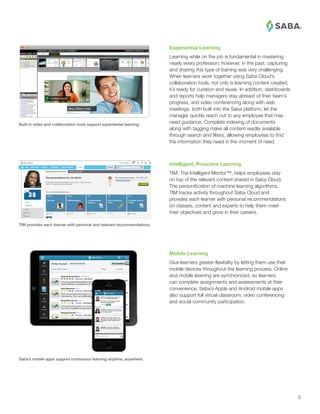
In 2026, artificial intelligence is no longer an optional add-on but the primary engine driving employee engagement and skill acquisition. The Saba learning platform leverages machine learning algorithms to analyze user behavior, career aspirations, performance reviews, and manager feedback to deliver hyper-personalized learning recommendations.
The platform's intelligent recommendation engine curates content from internal catalogs and external repositories, suggesting microlearning modules, certifications, and mentorship opportunities that align with individual skill gaps. This shift from static course catalogs to dynamic, competency-based development pathways helps organizations future-proof their workforce.
Intelligent Skill Mapping The platform continuously maps employee progress against evolving industry frameworks. By identifying real-time capability gaps, the system automatically suggests targeted developmental interventions, reducing time-to-competency for critical business roles.
Enterprise Feature Comparison: Saba vs. Competitive Ecosystems
Evaluating an enterprise LMS requires comparing core functional capabilities, administrative overhead, and user experience metrics against alternative market solutions. The following table outlines how the Saba learning platform stacks up against standard industry competitors in key operational categories.
| Evaluation Metric | Saba Learning Platform | Cornerstone LMS | Adobe Learning Manager | Moodle Workplace |
|---|---|---|---|---|
| Primary Deployment | Enterprise Cloud (SaaS) | Enterprise Cloud (SaaS) | Enterprise Cloud (SaaS) | Open-Source / Cloud Hosted |
| AI Recommendation Depth | Advanced Skill-Based Matching | Comprehensive Talent Graph | Automated Content Tagging | Plugin-Dependent |
| Mobile Experience | Dedicated Native App & Responsive | Dedicated Native App & Responsive | Responsive Web Design | Mobile App via Moodle Core |
| Integration Complexity | Moderate to High (API-Driven) | High (Requires Specialist Support) | Moderate | Low to Moderate (Developer Needed) |
| Customization Flexibility | High (Configurable Workflows) | High (Enterprise Rules Engine) | Moderate | Maximum (Code-Level Control) |
Implementation and Administration Workflow
Deploying an enterprise LMS like Saba requires a structured, multi-phase implementation methodology to ensure data integrity, user adoption, and alignment with organizational goals. Administrators must carefully orchestrate data migration, user provisioning, and content curation before the official go-live date.
Step-by-Step Deployment Roadmap
- Discovery and Scope Definition: Collaborate with implementation consultants to map current HR data structures, define organizational hierarchies, and establish compliance tracking requirements.
- Data Cleansing and Migration: Extract employee records, historical training completions, and competency frameworks from legacy systems, ensuring clean data formatting prior to import.
- Configuration and Branding: Configure system settings, including localization parameters, security protocols, email notifications, and corporate visual branding.
- Content Integration and Testing: Upload SCORM and xAPI packages, configure third-party content feeds (such as LinkedIn Learning or Coursera), and run rigorous end-to-end user acceptance testing (UAT).
- Change Management and Training: Roll out targeted communication campaigns, conduct administrator training sessions, and provide learner-facing guides to drive initial adoption.
- Post-Launch Optimization: Monitor system analytics, review user feedback, and refine automated learning pathways to maximize return on investment.
Balancing Advantages and Operational Challenges
Every enterprise software solution presents distinct benefits alongside operational hurdles that IT and HR teams must manage proactively. Understanding these factors ensures realistic expectations and smoother long-term administration.
Strategic Advantages
- Unified Talent Ecosystem: Combines learning management with performance management and succession planning, offering a holistic view of employee growth.
- Robust Analytics: Advanced reporting dashboards provide deep insights into compliance completion rates, skill progression, and training ROI.
- Global Readiness: Multi-language support, localized currencies, and regional compliance management facilitate seamless multinational deployments.
Operational Challenges
- Resource Intensity: Configuring and maintaining complex automated workflows and custom integrations requires dedicated administrative personnel.
- Steep Learning Curve: The depth of configuration options can overwhelm new administrators, necessitating formal vendor training.
- Cost Structure: Enterprise licensing models can represent a significant capital investment for mid-sized organizations.
Frequently Asked Questions
What is the primary focus of the Saba learning platform?
The Saba learning platform focuses on enterprise-grade learning management, employee development, and talent experience, helping organizations deliver personalized training, track compliance, and map workforce skills. Beyond basic course delivery, the platform integrates performance metrics and AI-driven skill recommendations to support continuous professional growth and succession planning.
Does Saba support mobile learning for remote workforces?
Yes, Saba provides robust mobile capabilities through dedicated native applications and responsive web designs that function seamlessly across smartphones and tablets. This ensures that deskless workers, field technicians, and remote employees can access microlearning modules, complete mandatory compliance training, and view their career development paths offline or on the go.
How does Saba handle e-learning content standards?
Saba natively supports industry-standard e-learning protocols including SCORM 1.2, SCORM 2004, xAPI (Tin Can API), and LTI. This ensures that organizations can seamlessly import custom-built courses or leverage external content libraries from third-party vendors without compatibility issues.
Can the Saba learning platform integrate with existing HRIS systems?
The platform offers a comprehensive suite of RESTful APIs, webhooks, and pre-built connectors designed to sync data with major HRIS, HCM, and ERP platforms. This integration capability ensures user directories, organizational hierarchies, and completion records remain updated automatically across your entire technology stack.
What security and compliance standards does Saba meet?
Saba adheres to stringent enterprise security frameworks, including SOC 2 Type II compliance, robust data encryption protocols, and support for SAML 2.0 single sign-on. These measures ensure that sensitive employee data and organizational training records remain secure and compliant with global privacy regulations such as GDPR.
Optimizing Your Enterprise Learning Strategy
Implementing or optimizing the Saba learning platform requires continuous alignment between technological capabilities and business objectives. By leveraging advanced analytics, embracing AI-driven skill development, and maintaining rigorous administrative governance, organizations can transform their training departments into strategic drivers of business growth. Prioritize continuous feedback loops, keep integration pathways secure, and empower your workforce with accessible, relevant learning experiences designed for the modern enterprise environment.
Image Gallery