Understanding the SOFA Score for Sepsis
The Sequential Organ Failure Assessment (SOFA) score is a medical tool used to track a patient’s status during a stay in an intensive care unit (ICU) to determine the extent of a patient's organ function or rate of failure. In the cont...
The Sequential Organ Failure Assessment (SOFA) score is a medical tool used to track a patient’s status during a stay in an intensive care unit (ICU) to determine the extent of a patient's organ function or rate of failure. In the context of sepsis, the SOFA score is vital for identifying life-threatening organ dysfunction caused by a dysregulated host response to infection, helping clinicians guide immediate treatment decisions and prognostication.
Contents
Introduction to Sepsis and Clinical Evaluation
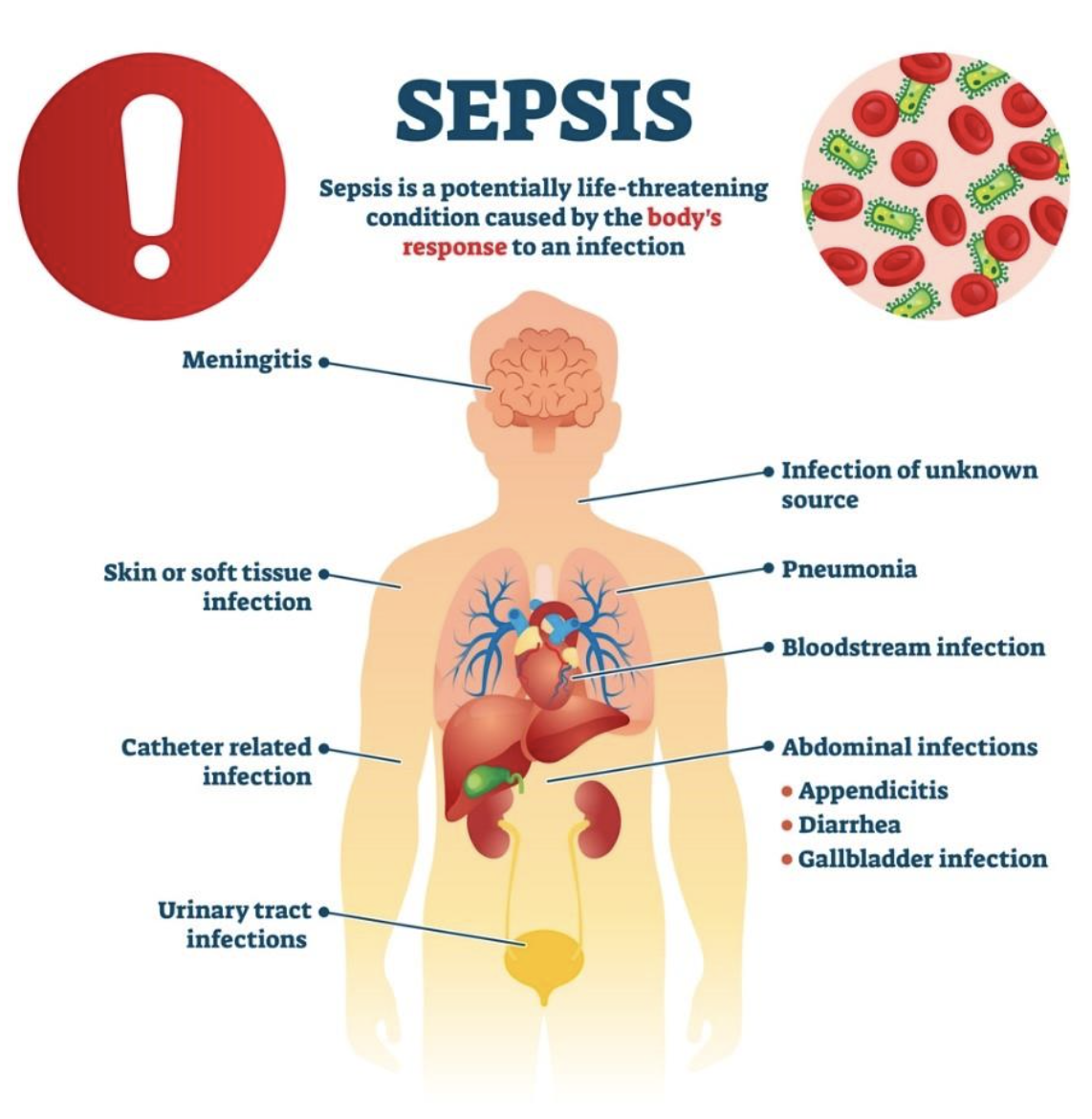
Sepsis is a complex, medical emergency characterized by a systemic host response to infection that leads to acute organ dysfunction. Historically, diagnosing and staging sepsis relied heavily on systemic inflammatory response syndrome (SIRS) criteria, which focused largely on inflammation indicators like elevated heart rate, abnormal white blood cell counts, and fever. However, clinical consensus evolved because SIRS criteria proved too sensitive and insufficiently specific to capture true organ threat.
To address this limitation, the Third International Consensus Definitions for Sepsis and Septic Shock (Sepsis-3) introduced in 2016 redefined sepsis as life-threatening organ dysfunction caused by a dysregulated response to infection. Clinically, this organ dysfunction is operationalized using the Sequential Organ Failure Assessment (SOFA) score. By evaluating multiple organ systems, the SOFA score provides a systematic, objective framework to measure the severity of illness, assess risk of mortality, and monitor therapeutic responses over time in critically ill patients.
The Origins and Evolution of the SOFA Score
The SOFA score was originally developed in 1994 by the Working Group on Sepsis-Related Problems of the European Society of Intensive Care Medicine (ESICM). Initially named the Sepsis-Related Organ Failure Assessment, its original purpose was to characterize the sequence, incidence, and severity of organ dysfunction and failure in groups of critically ill patients, particularly those with sepsis.
Over time, researchers recognized that the tool's utility extended far beyond epidemiological studies. Clinicians began using it at the bedside to track individual patient trajectories. In 2016, the Sepsis-3 task force formally integrated the SOFA score into the diagnostic criteria for sepsis. This evolution shifted clinical practice from relying on generalized inflammation markers to quantifying specific, measurable organ failures. Today, calculating a patient's SOFA score is a standard protocol in intensive care units worldwide, serving as an international benchmark for critical care research and quality improvement initiatives.
Core Components and Organ Systems Evaluated
The SOFA scoring system assesses six distinct organ systems, assigning a sub-score ranging from 0 (normal or near normal function) to 4 (severe dysfunction) for each system. The cumulative score can range from 0 to 24, with higher scores indicating more severe organ dysfunction and a higher risk of mortality.
| Organ System | Clinical Parameter | Sub-Score Range |
|---|---|---|
| Respiratory | PaO2 / FiO2 ratio with or without support | 0 to 4 |
| Cardiovascular | Blood pressure and vasopressor requirements | 0 to 4 |
| Hepatic | Bilirubin levels | 0 to 4 |
| Coagulation | Platelet count | 0 to 4 |
| Renal | Creatinine levels and urine output | 0 to 4 |
| Neurological | Glasgow Coma Scale (GCS) score | 0 to 4 |
Each parameter captures a specific physiological dimension. The respiratory assessment evaluates gas exchange efficiency through the ratio of arterial oxygen partial pressure ($\text{PaO}_2$) to fractional inspired oxygen ($\text{FiO}_2$). The cardiovascular component assesses arterial hypotension and the specific doses of vasoactive medications required to maintain adequate mean arterial pressure (MAP). Coagulation is monitored via circulating platelet counts, reflecting clotting capability and consumption risks like disseminated intravascular coagulation (DIC). Hepatic function is evaluated using serum bilirubin concentrations, while renal function relies on serum creatinine measurements and daily urine output volumes. Finally, the neurological system is scored using the Glasgow Coma Scale (GCS), evaluating consciousness, verbal response, and motor function.
The Shift from SIRS to Sepsis-3 Criteria
The transition from SIRS to Sepsis-3 marked a fundamental shift in how modern medicine approaches systemic infections. Under older guidelines, a patient needed to meet two or more SIRS criteria alongside a suspected infection to be diagnosed with sepsis. Because these criteria could be triggered by routine postoperative recovery, trauma, or minor infections, many patients without true life-threatening organ failure were over-diagnosed and aggressively treated, while others were missed.
Under Sepsis-3 guidelines, a suspected or documented infection coupled with an acute increase of 2 points or more in the baseline SOFA score defines sepsis. This baseline is assumed to be zero in patients without pre-existing organ dysfunction. This change ensures that clinical interventions target patients experiencing actual cellular and organ-level compromise.
Furthermore, Sepsis-3 introduced the concept of septic shock, a subset of sepsis characterized by underlying circulatory and cellular/metabolic abnormalities severe enough to substantially increase mortality. Clinically, septic shock is identified by persistent hypotension requiring vasopressors to maintain a mean arterial pressure of 65 mmHg or higher, and a serum lactate level greater than 2 mmol/L ($18\text{ mg/dL}$) despite adequate volume resuscitation.
Calculating the SOFA Score in Clinical Practice
Calculating a patient's SOFA score requires laboratory blood tests, arterial blood gas analysis, hemodynamic monitoring, and a neurological evaluation. Because physiological parameters change rapidly in critical illness, the score is typically calculated upon admission to the ICU and recalculated every 24 hours to monitor clinical trends.
To compute the score, clinicians or automated electronic health record (EHR) systems evaluate each of the six organ systems and sum the individual category points:
- Respiratory System: A $\text{PaO}_2/\text{FiO}_2$ ratio above 400 yields 0 points, whereas a ratio below 100 with mechanical ventilation yields 4 points.
- Coagulation: Platelet counts above $150 \times 10^3/\mu\text{L}$ score 0, while counts dropping below $20\times 10^3/\mu\text{L}$ score 4.
- Liver: Bilirubin levels under $1.2\text{ mg/dL}$ ($20\ \mu\text{mol/L}$) score 0, while levels exceeding $12.0\text{ mg/dL}$ ($204\ \mu\text{mol/L}$) score 4.
- Cardiovascular: No hypotension scores 0. Low MAP or the requirement of dopamine, dobutamine, epinephrine, or norepinephrine at varying infusion rates escalates the score from 1 to 4.
- Central Nervous System: A normal GCS score of 15 yields 0 points, while a GCS score falling below 6 yields 4 points.
- Renal: Normal creatinine and urine output score 0, while severe oliguria or creatinine levels exceeding $5.0\text{ mg/dL}$ ($440\ \mu\text{mol/L}$) score 4.
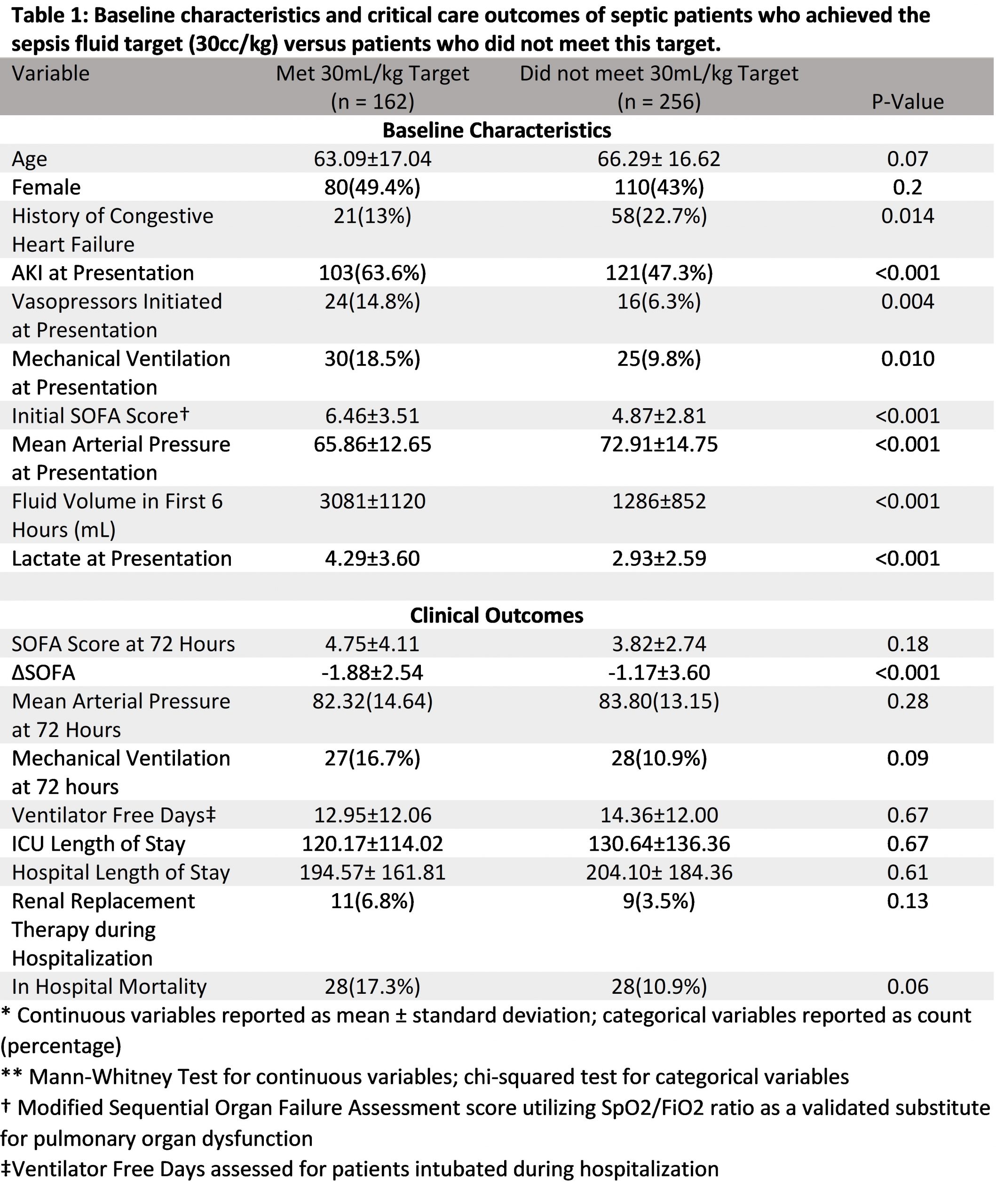
An increasing score over successive days indicates worsening organ failure and a poor prognosis, whereas a decreasing score suggests successful therapeutic intervention and clinical stabilization.
The Role of qSOFA in Out-of-Hospital and Emergency Settings
While the full SOFA score is robust and accurate, it requires laboratory testing and continuous hemodynamic monitoring, making it impractical for rapid triage in pre-hospital environments, emergency departments, or general hospital wards. To address this, the Sepsis-3 task force introduced the qSOFA (quick SOFA) score.
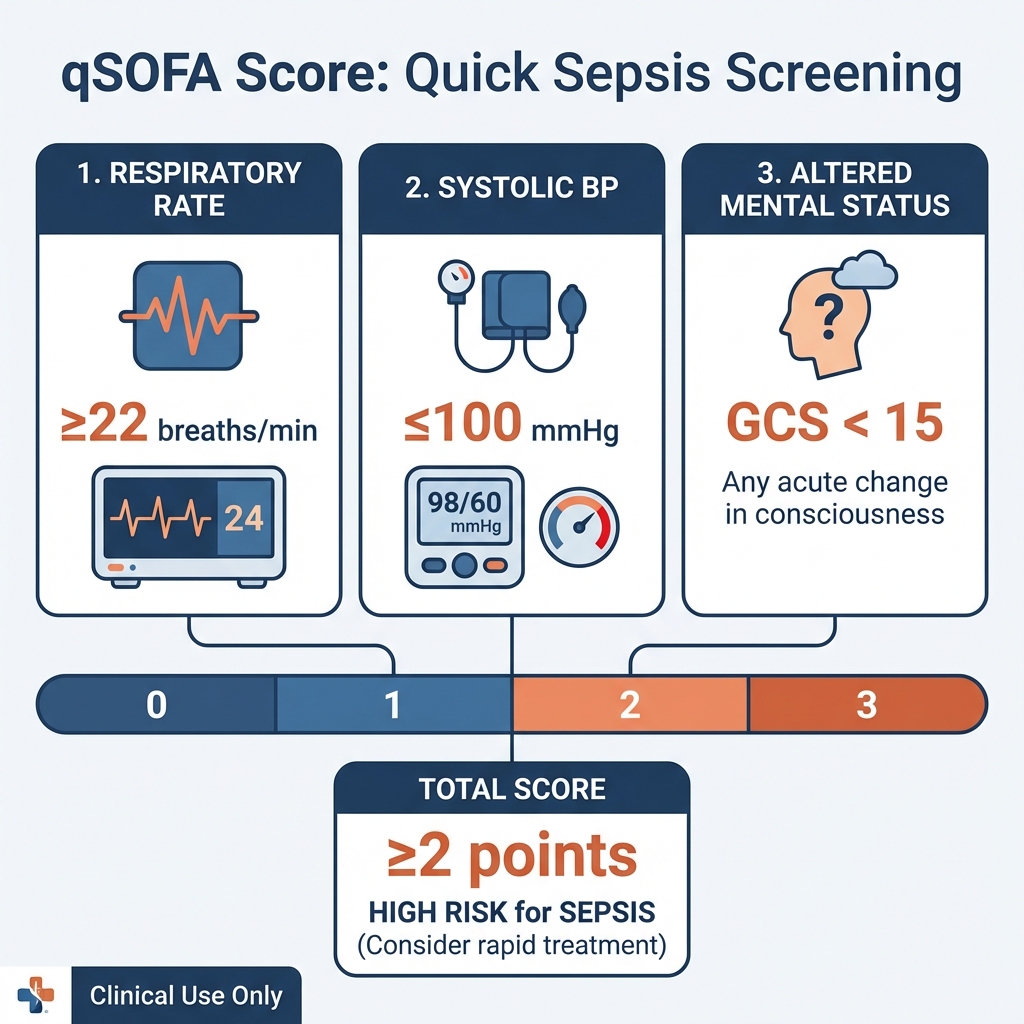
The qSOFA score is a bedside screening tool that can be completed in seconds without any laboratory tests. It evaluates three clinical criteria, assigning 1 point for each positive finding:
- Respiratory rate: $\ge 22$ breaths per minute
- Neurological status: Altered mental status (Glasgow Coma Scale $< 15$)
- Systolic blood pressure: $\le 100\text{ mmHg}$
A qSOFA score of 2 or 3 points indicates a high risk of poor outcomes, such as prolonged ICU stays or in-hospital mortality, among patients with suspected infections outside the intensive care unit. Clinicians use qSOFA to prompt immediate further investigation, such as calculating a full SOFA score, drawing blood cultures, checking serum lactate levels, and initiating broad-spectrum antibiotic therapy.
Limitations and Practical Challenges of the SOFA Score
Despite its widespread adoption and clinical utility, the SOFA score has notable limitations that healthcare providers must consider during patient management.
- Delayed Data Availability: Calculating the complete SOFA score requires laboratory results, such as arterial blood gases, bilirubin, and creatinine. In emergency settings or resource-limited environments, these turnaround times can delay risk stratification.
- Pre-existing Chronic Conditions: The standard SOFA score does not adjust for baseline chronic organ dysfunction. A patient with chronic kidney disease or baseline neurological impairment may have an elevated score upon admission, which can confound the assessment of acute sepsis-induced changes unless the clinician knows the patient's true pre-morbid baseline.
- Dynamic Variability: Organ function fluctuates rapidly. A single snapshot SOFA score calculated at a specific moment may not fully reflect a patient's trajectory over a 24-hour period. Serial assessments are mandatory to capture clinical trends accurately.
- Intervention Confounding: Medical interventions, such as mechanical ventilation, sedation, or vasopressor therapy, can artificially alter specific component scores (such as the neurological GCS score due to sedation), requiring expert clinical interpretation.
Frequently Asked Questions
What is a normal SOFA score?
A completely normal SOFA score is 0, indicating that all six evaluated organ systems are functioning within normal parameters. However, in critically ill populations, a score of 0 is uncommon. Even mild baseline abnormalities in an older adult or a patient with a chronic comorbidity can yield a baseline score of 1 or 2.
What SOFA score indicates a high risk of mortality?
While mortality risk increases incrementally with each point scored, a total SOFA score of 2 or more points signifies organ dysfunction associated with an in-hospital mortality risk greater than 10% in patients with suspected infection. Patients with scores exceeding 11 face significantly higher mortality rates, often surpassing 50%.
How often is the SOFA score calculated?
In intensive care units, the SOFA score is typically calculated daily to evaluate a patient's response to treatment and track the progression or resolution of organ failure. In acute research or clinical trials, scores may be calculated more frequently to capture dynamic physiological changes.
Can the SOFA score be used outside of the ICU?
The full SOFA score is designed primarily for ICU patients because it relies on laboratory tests and intensive monitoring equipment. For patients outside the ICU, such as those in the emergency department or general hospital wards, the simplified qSOFA screening tool is recommended instead.
Does a high SOFA score mean a patient has sepsis?
Not necessarily. While a high SOFA score indicates severe organ dysfunction, sepsis specifically requires this acute organ dysfunction to be caused by a dysregulated host response to a suspected or proven infection. Other critical conditions, such as severe trauma, acute poisoning, or cardiogenic shock, can also elevate the SOFA score in the absence of infection.
Conclusion and Next Actions
Understanding the SOFA score for sepsis is essential for modern critical care, enabling clinicians to objectively quantify organ dysfunction, monitor patient trajectories, and implement timely life-saving interventions. For healthcare providers, integrating both the full SOFA and screening tools like qSOFA into clinical workflows ensures rapid identification of at-risk patients. When managing suspected sepsis, clinical teams should immediately obtain baseline laboratory panels, calculate organ failure scores, evaluate serum lactate levels, and initiate protocolized resuscitation and antimicrobial stewardship without delay.
Image Gallery