The Rise of Beadle and Grimm: The Evolution of Luxury Tabletop Gaming
The rise of Beadle & Grimm’s Pandemonium Warehouse marks the evolution of tabletop gaming into a luxury hobby. Founded by actor Matthew Lillard and his longtime gaming group, the company produces high-end, officially licensed boxed set...
The rise of Beadle & Grimm’s Pandemonium Warehouse marks the evolution of tabletop gaming into a luxury hobby. Founded by actor Matthew Lillard and his longtime gaming group, the company produces high-end, officially licensed boxed sets that transform roleplaying sessions with physical props, detailed maps, and immersive handouts for systems like Dungeons & Dragons and Pathfinder.
Contents
The Origins of Pandemonium: A 30-Year Gaming Legacy
The story of Beadle & Grimm’s is not merely one of business strategy, but of lifelong friendship. The company was founded by five friends—Matthew Lillard, Bill Rehor, Charlie Rehor, Jon Ciccolini, and Paul Shapiro—who had been playing Dungeons & Dragons (D&D) together for over three decades. This group, often referred to as the "Founding Five," transitioned from hobbyists to entrepreneurs by identifying a specific pain point in the tabletop roleplaying game (TTRPG) community: the "DM Burden."
Running a high-quality D&D campaign requires immense preparation. Dungeon Masters (DMs) often spend hours drawing maps, crafting letters, and finding minis. The founders of Beadle & Grimm’s realized that while professional DMs and streamers had access to high-end props, the average home gamer did not have a streamlined way to achieve that level of immersion. Leveraging their backgrounds in acting, theater, and production, they decided to create "game night in a box."
Founded in 2018, the company struck a landmark licensing deal with Wizards of the Coast. This allowed them to produce premium "Platinum Editions" of official D&D adventure modules, launching alongside the books themselves. This synergy was unprecedented in the industry, positioning Beadle & Grimm’s as the official "high-end" arm of the D&D ecosystem.
The Business Model of Immersion
Beadle & Grimm’s operates on a "luxury-tier" business model that distinguishes it from standard hobby shops. Instead of selling mass-market accessories, they focus on limited-run, high-value collections. Their rise was fueled by the "whale" demographic of the TTRPG world—players who have more disposable income than time and are willing to pay a premium for a curated, cinematic experience.
The Philosophy of the Box
The core philosophy of the company is that the physical world should reflect the fantasy world. When a player’s character receives a mysterious letter from an NPC, the player should receive a physical piece of parchment with a wax seal. When they find a legendary artifact, they should be able to hold a metal coin or a wearable piece of jewelry.
By 2026, this philosophy has expanded beyond simple props. The company now integrates digital assets and high-quality "battle maps" that are pre-gridded and sized for standard miniatures, removing the need for DMs to draw on vinyl mats mid-game. This focus on logistical ease combined with aesthetic beauty remains their primary market differentiator.
Product Tiers and the Hierarchy of Play
As the company grew, they realized that a one-size-fits-all "Platinum" approach was too expensive for many gamers. To reach a broader audience while maintaining their luxury status, they developed a tiered system of products.
| Edition Tier | Primary Contents | Target Audience | Typical Price Range (USD) |
|---|---|---|---|
| Platinum Edition | All book content broken into booklets, metal jewelry, 20+ battle maps, DM screen, many props. | Hardcore groups, professional DMs, collectors. | $450 - $550 |
| Gold Edition | Significant maps, curated props, specialized DM screen, encounter cards. | Serious groups looking for high immersion. | $250 - $350 |
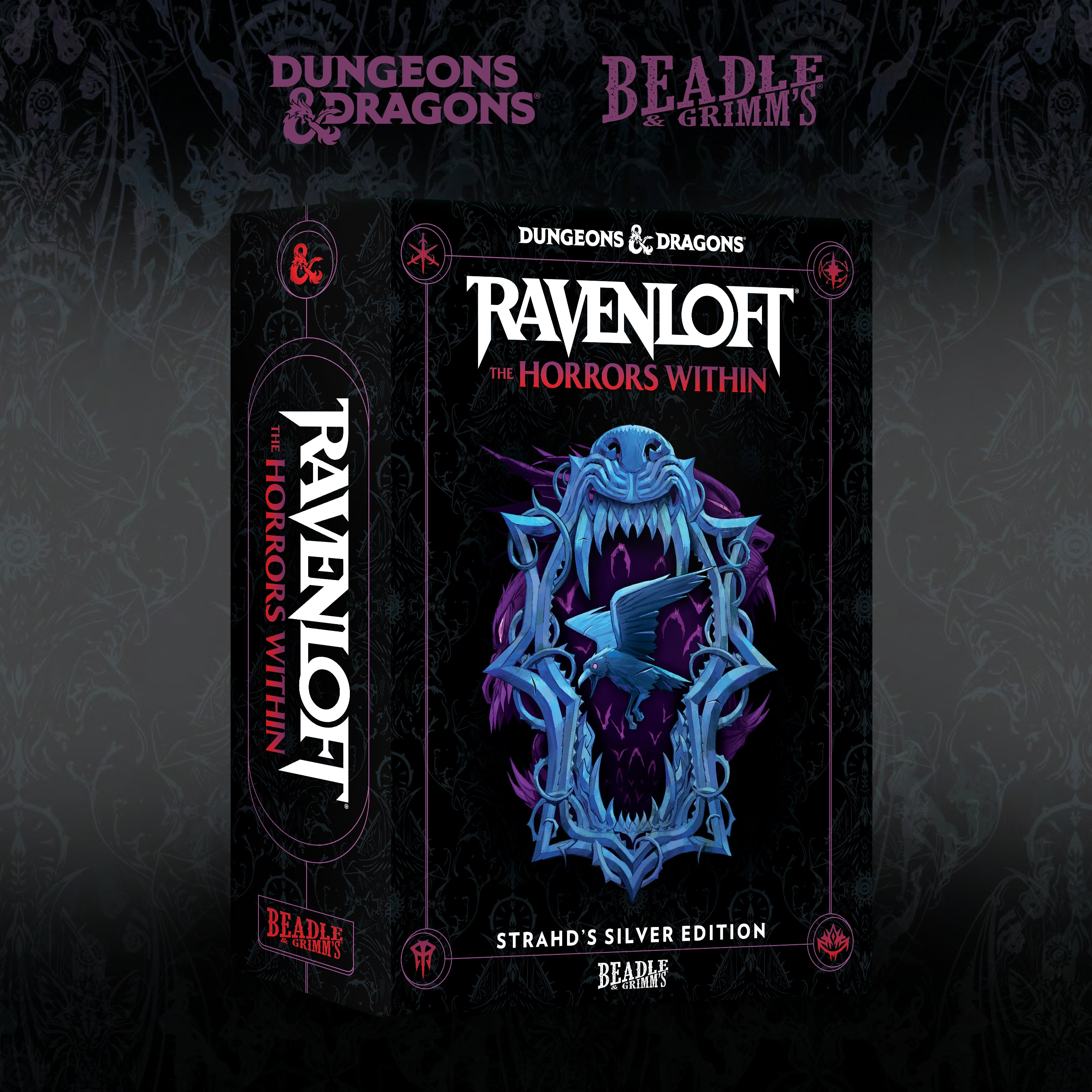
| Silver Edition | Essential battle maps, specific key props, some jewelry or coins. | Standard groups wanting a premium boost. | $150 - $190 |
| Legendary/Special | System-specific (Pathfinder/Critical Role) custom items and exclusive artifacts. | Fans of specific settings or non-D&D systems. | $200 - $400 |
The Platinum Standard
The Platinum Edition is the flagship product that defined the company's rise. Using Waterdeep: Dragon Heist as their debut, they proved that there was a market for a $500 box of gaming supplies. These sets typically include a "DM Screen" tailored specifically to that adventure, dozens of high-quality "hang-outs" (physical letters, menus, and posters), and "Encounter Cards" that hang over the DM screen to show players the art of a monster while the DM sees the stats.
Strategic Partnerships and System Expansion
While their relationship with Wizards of the Coast was the catalyst for their success, Beadle & Grimm’s resisted the urge to remain a single-system company. Their expansion into other intellectual properties was a critical step in their "rise" as a dominant force in the industry.
Collaboration with Paizo and Pathfinder
In a major move for the company, they partnered with Paizo to bring their premium treatment to the Pathfinder RPG. Their "Gold Edition" for the Absalom: City of Lost Omens and Kingmaker adventure paths demonstrated that they could adapt their "immersion-first" model to systems with different mechanical needs and fanbases.
Critical Role and the "Legendary" Series
The partnership with Critical Role for the Tal'Dorei Reborn boxed set was a turning point. Critical Role represents the most visible segment of the TTRPG community, and by creating the "Legendary Edition" for the setting, Beadle & Grimm’s tapped into a massive, highly engaged fan base. This set featured items like a wearable "Medal of the Horizonback" and custom-designed maps of the continent, cementing the brand's status among the "Critter" community.
Magic: The Gathering Secret Lairs
Broadening their reach further, the company collaborated with the Magic: The Gathering team for exclusive "Secret Lair" drops and the Kamigawa: Neon Dynasty Platinum Edition. These boxes focused less on "Dungeon Mastering" and more on the collector’s experience, including high-end deck boxes, playmats, and lithographs, proving the brand could successfully pivot into the collectible card game (CCG) space.
Technical Depth: Why the Props Matter
From a technical SEO and product analysis perspective, the rise of Beadle & Grimm’s is a case study in high-fidelity components. The company avoids plastic "toys" in favor of materials that feel authentic to a medieval or fantasy setting.
- Paper Quality: They utilize different paper stocks for different in-game documents. A royal decree might be on heavy, cream-colored cardstock, while a frantic note from a prisoner might be on thin, distressed paper.
- Cartography: They employ professional fantasy cartographers (such as Mike Schley or Jared Blando) to create maps that are not only functional for tactical combat but also beautiful enough to be framed as art.
- The "Booklet" System: One of their most functional innovations is breaking down a 300-page hardcover adventure book into 4 or 5 softcover booklets. This allows the DM to only bring the relevant portion of the adventure to the table, rather than lugging a heavy tome.
- In-World Artifacts: Their jewelry is often made of zinc alloy or "aged" metals. These are designed to be "table-ready," meaning they can be passed around without the fear of breaking, yet they carry enough weight to feel significant to the players.
Analyzing the Impact on the TTRPG Market
The success of Beadle & Grimm’s has fundamentally changed how tabletop companies view "collector's editions." Before 2018, a collector’s edition usually meant a leather-bound book or a few extra pieces of art. Post-Beadle & Grimm’s, the industry has seen a surge in physical props and "experience-based" gaming kits.
However, their rise has not been without criticism. The high price point creates a barrier to entry that some argue bifurcates the hobby into "haves" and "have-nots." Beadle & Grimm’s has responded to this by introducing their "Silver" and "Steel" editions, which offer the most essential play aids (like maps and encounter cards) at a lower price point, ensuring their products aren't exclusively for the wealthy elite of the hobby.
In 2026, the company stands as a bridge between the digital-heavy future of tabletop (VTTs like D&D Beyond) and the tactile, "old-school" roots of the hobby. Even as more players move to screens, the desire for a "real" artifact to hold during a climactic moment remains a powerful driver of their sales.
Frequently Asked Questions
Is Beadle & Grimm’s worth the price?
The value of a Beadle & Grimm’s box depends on how often your group plays and the value you place on immersion. For a group that meets weekly and splits the cost, a $500 Platinum Edition averages out to a very low "per session" cost over a year-long campaign. If you are a DM who values saved preparation time, the pre-printed maps and handouts offer hundreds of hours of labor savings.
Do their boxes include the actual game books?
Most Beadle & Grimm’s editions include the full text of the adventure, but it is often presented in a series of softcover booklets rather than the standard hardcover book sold in stores. It is important to check the specific product description, as some smaller "Character Kits" or "Class Acts" are meant to supplement books you already own.
How limited are their production runs?
Beadle & Grimm’s typically produces limited quantities based on pre-order demand. Once a Platinum Edition for a specific adventure sells out, it is rarely reprinted in that exact form. This has led to a robust secondary market on sites like eBay, where older sets like Curse of Strahd often sell for significantly more than their original retail price.
Are the products compatible with 5th Edition D&D?
Yes, the vast majority of their D&D-branded products are designed specifically for the 5th Edition ruleset. However, their props and maps are "system agnostic" enough that they can be used with almost any fantasy TTRPG system if the DM is willing to adapt the stats.
What is the difference between a Gold and Silver edition?
A Gold Edition is a comprehensive experience that includes almost everything needed for a campaign, including a custom DM screen and significant jewelry. A Silver Edition focuses on the "essentials"—primarily the high-quality battle maps and the most important in-world handouts—without the higher-end luxury items like metal artifacts or the custom screen.
Practical Recommendation for Interested Gamers
If you are new to the world of premium tabletop accessories, the best entry point is often a Silver Edition of a current adventure. This allows you to experience the quality of their cartography and the convenience of their encounter cards without the heavy investment of a Platinum box. For those who prioritize the "theatrical" aspect of the game, following their social media for "Class Acts" releases—smaller kits focused on specific player classes—provides a lower-cost way to bring the Beadle & Grimm’s aesthetic to your character.
For collectors and dedicated DMs, the Platinum Edition remains the definitive way to play a flagship D&D campaign. Given the limited nature of these runs, the most practical action is to sign up for their "Pandemonium Warehouse" newsletter to participate in pre-order windows, which often include exclusive early-bird bonuses.
Image Gallery