How to Find an Inmate in California: The Complete 2026 Lookup Guide
Navigating the California correctional system to locate an incarcerated individual requires understanding the distinct jurisdictions between state prisons, county jails, and federal facilities. As of 2026, the California Department of...
Navigating the California correctional system to locate an incarcerated individual requires understanding the distinct jurisdictions between state prisons, county jails, and federal facilities. As of 2026, the California Department of Corrections and Rehabilitation (CDCR) and individual county sheriff departments have streamlined digital lookup tools, yet specific procedural nuances still dictate how fast and accurately you can find someone. This guide details the exact steps, required identifiers, and jurisdiction strategies necessary to locate an inmate across California correctional facilities.
Contents
Understanding California Correctional Jurisdictions
Before initiating a search, you must identify whether the subject is held in a state prison, a local county jail, or a federal holding facility. Each system operates independent databases with unique identifier requirements. State prisons house individuals convicted of felonies serving sentences typically exceeding one year, while county jails house pre-trial detainees, individuals awaiting sentencing, or those serving short misdemeanor sentences. Federal inmates in California fall under the jurisdiction of the Federal Bureau of Prisons (BOP).
Failing to check the correct jurisdictional database is the most common reason searches yield no results. If an arrest occurred very recently, the individual is almost always processed through the local county jail first, even if they will eventually be transferred to a state prison following a trial or plea agreement.
Step-by-Step Guide to Locating State Prison Inmates via CDCR
The California Department of Corrections and Rehabilitation maintains the Offender Information Search (OIS) system. This database covers all adult inmates currently housed in state prisons or under the supervision of California state parole.
To conduct an effective CDCR search, adhere to the following workflow:
- Gather Basic Information: Collect the inmate's full legal name, including any known aliases, and their date of birth. Having the CDCR Number (a unique alphanumeric identifier assigned upon intake) reduces search time to seconds.
- Access the Official Portal: Navigate to the secure CDCR online inmate locator portal through the official California state government domain.
- Input Search Parameters: Enter either the CDCR number or the first and last name. If using names, utilize filters such as race, age, or gender to narrow down common names.
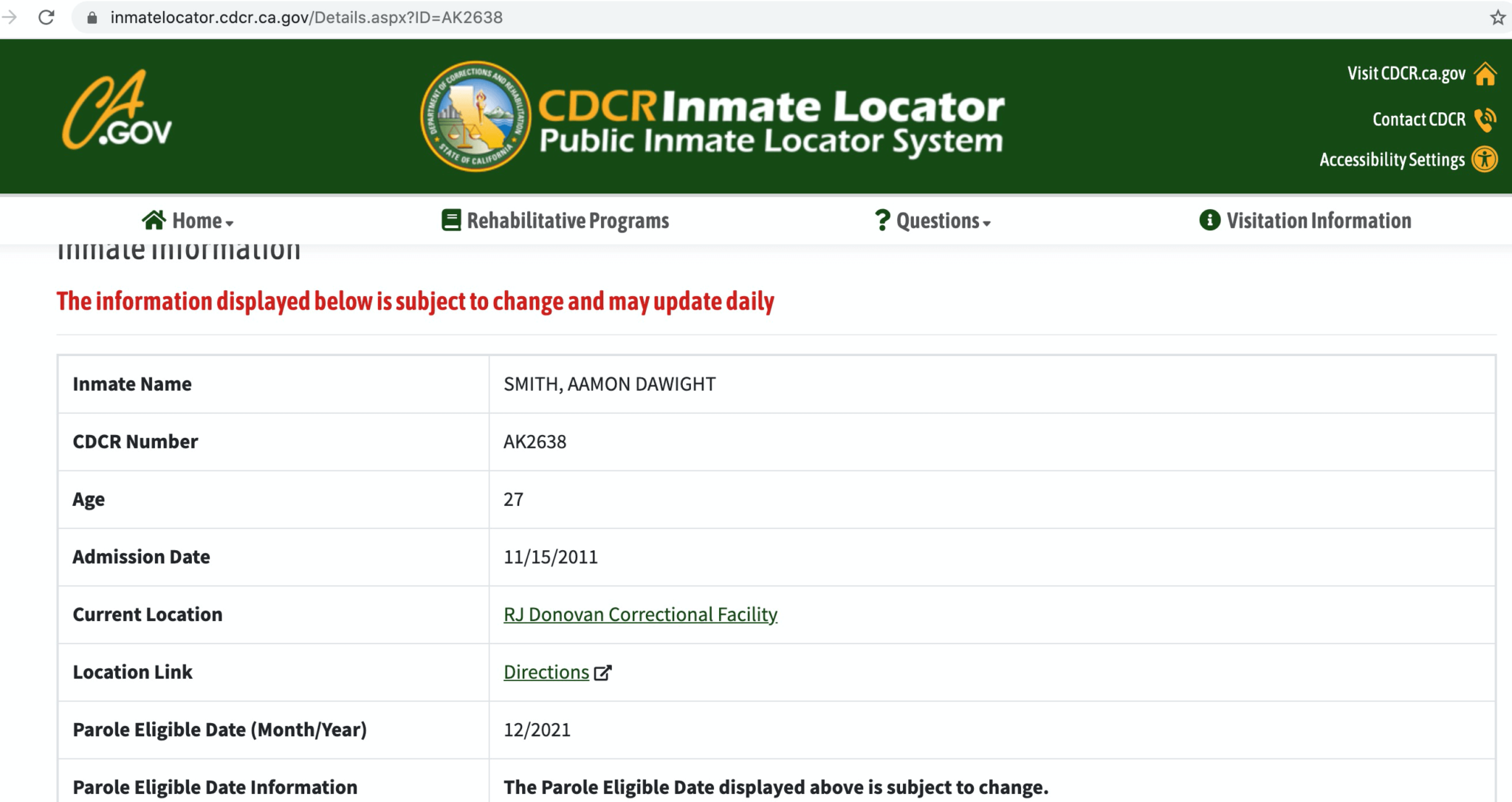
- Review Status Outputs: Examine the resulting profile. A standard CDCR record displays the inmate's current housing facility, security level, admission date, and scheduled parole eligibility dates.
Important Operational Note: If an inmate has recently been transferred between institutions or is undergoing court transport, the CDCR database may display a status of "In Transit." During this operational window, specific housing facility details are temporarily restricted for security purposes, and updates typically resume within 24 to 48 hours.
Navigating County Jail Inmate Locators in California
California features 58 counties, each managing its own sheriff's department and independent jail management system. Because there is no single statewide database for county jails, you must search the specific county where the arrest or booking occurred.
Major county facilities experience high daily processing volumes. Below is a comparative overview of primary county jail lookup resources in major metropolitan regions:
| County Jurisdiction | Primary Facility / System Name | Required Search Identifiers | Typical Update Frequency |
|---|---|---|---|
| Los Angeles County | Inmate Information Center (LADA / LASD) | Booking Number or Full Name & DOB | Real-time to hourly updates |
| San Diego County | SDSD Who's in Jail Lookup | Booking Number or Name & Alias | Updated every 30 minutes |
| Orange County | Orange County Sheriff's Department Corrections | Booking Number or Name & DOB | Updated hourly |
| Riverside County | Riverside County Sheriff's Inmate Tracking | Booking Number or Last Name / DOB | Updated daily or bi-daily |
| Sacramento County | Sacramento County Main Jail / Rio Cosumnes | Booking Number or Full Name & DOB | Real-time database sync |
When searching county databases, verify spelling variations carefully. Hyphenated last names or suffixes (Jr., III) frequently cause search errors if not entered exactly as recorded during intake booking.
Federal Bureau of Prisons (BOP) Search for California Facilities
If the individual was convicted of federal offenses (such as federal drug trafficking, immigration violations, or white-collar crimes), they will not appear in CDCR or county jail databases. California houses several high-profile federal correctional institutions, including FCI Herlong, FCI Dublin (historical data/status), FCC Lompoc, and MDC Los Angeles.
To locate a federal inmate in California:
- Utilize the Federal Bureau of Prisons Inmate Locator tool online.
- Search by the 8-digit or 9-digit Register Number, or use the inmate's full legal name, age, race, and sex.
- Review facility contact information, visitation guidelines, and mail procedures specific to that federal installation.
Comparison of California Correctional Search Systems
Evaluating the structural differences between state, county, and federal systems ensures you target the correct repository.
| Feature / Metric | CDCR State Prisons | County Jails (e.g., LASD, SDSD) | Federal Bureau of Prisons |
|---|---|---|---|
| Primary Jurisdiction | Felony convictions > 1 year | Pre-trial, misdemeanors, short terms | Federal crimes, federal warrants |
| Identifier Standard | CDCR Number (e.g., A-12345) | Booking Number / Jacket Number | 8-9 Digit Register Number |
| Search Accessibility | Statewide centralized database | Fragmented by individual county | Nationwide centralized database |
| Release Tracking | Comprehensive parole tracking | Immediate release processing logs | Federal halfway house and supervised release data |
Frequently Asked Questions
How can I find someone in California if I do not know their booking or CDCR number?
You can search using the individual's full legal first and last name combined with their date of birth. Providing additional filters such as gender, race, or approximate age helps narrow down common names in large county or state databases.
What should I do if my search yields no results in the CDCR database?
If an inmate does not appear in the state prison database, they are likely held in a local county jail or have not yet been sentenced and transferred from county custody. Contact the local sheriff's department in the county where the arrest took place.
Are California inmate lookup tools completely free to use?
Yes, official government portals provided by the CDCR, California county sheriff departments, and the Federal Bureau of Prisons are entirely free. Avoid third-party commercial background check sites that charge fees to access public correctional data.
How often are California jail and prison inmate databases updated?
County jail systems generally update their rosters in real-time or hourly as bookings and releases occur, while state prison databases managed by the CDCR update daily to reflect institutional transfers and status changes.
Can I find out an inmate's scheduled release date online?
State prison profiles on the CDCR website typically display calculated parole eligibility and projected release dates, whereas county jail portals may omit release dates for pre-trial inmates who have not yet been sentenced by a judge.
Conclusion and Next Steps
Locating an inmate in California requires methodically checking the correct tier of the justice system—starting with local county jails for recent arrests, moving to the CDCR for state prison sentences, or checking the Federal Bureau of Prisons for federal convictions. Always rely on official government websites to secure accurate, real-time data regarding housing locations, court dates, and facility visitation policies.
Image Gallery