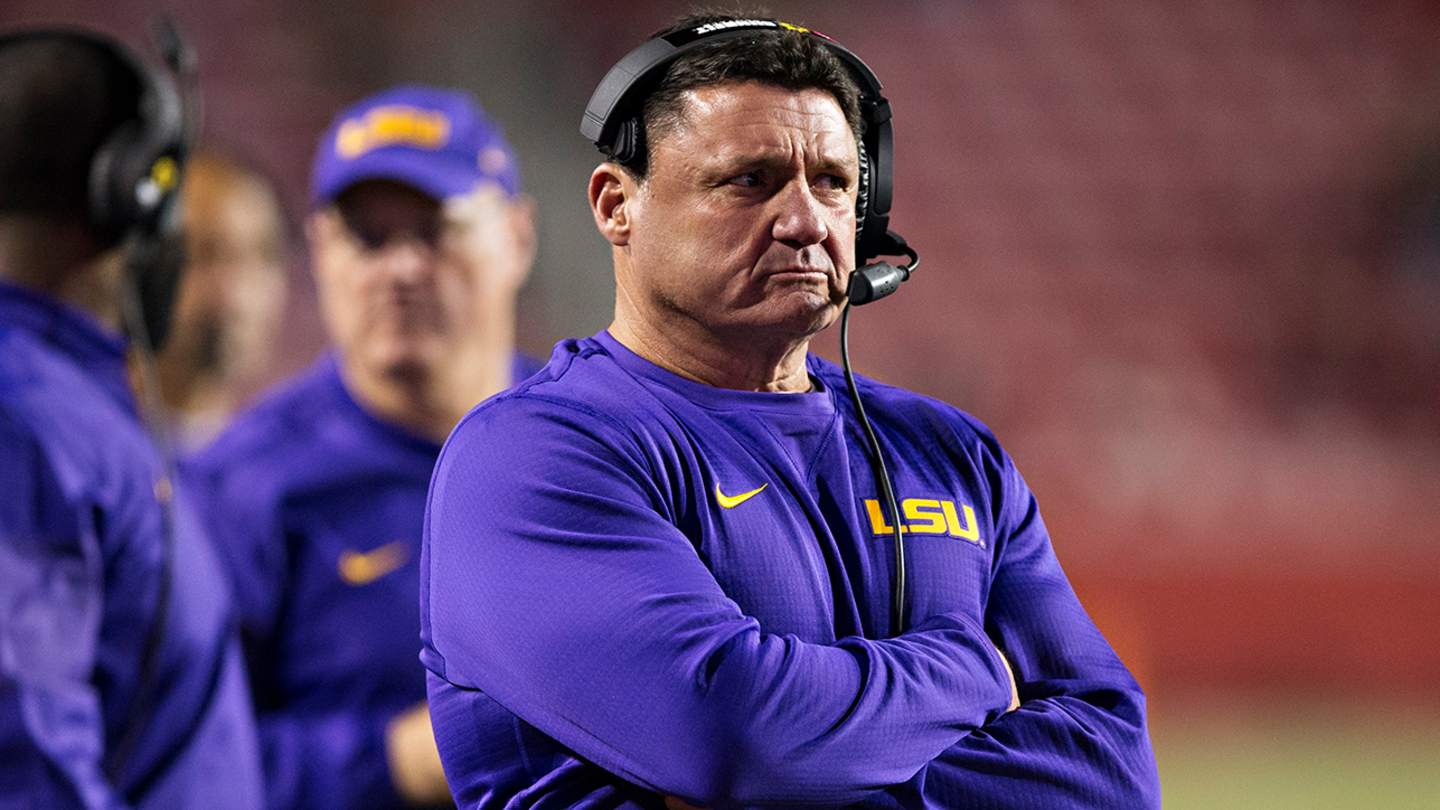
Is LSU Still Paying Ed Orgeron? The Final Status of the $16.9 Million Buyout
As of early 2026, Louisiana State University (LSU) has officially fulfilled the financial obligations outlined in the 2021 separation agreement with former head football coach Ed Orgeron. The final scheduled installment of the $16.9 mi...
As of early 2026, Louisiana State University (LSU) has officially fulfilled the financial obligations outlined in the 2021 separation agreement with former head football coach Ed Orgeron. The final scheduled installment of the $16.9 million buyout was completed in December 2025, effectively removing the "Coach O" payout from the university’s athletic department ledger for the current fiscal year.
Contents
The Financial Structure of the Orgeron Separation Agreement
When LSU and Ed Orgeron agreed to part ways in October 2021, the terms were dictated by a separation agreement that sought to balance the university's immediate cash flow with the guaranteed money remaining on Orgeron’s contract. Orgeron had signed a massive six-year, $42 million extension in early 2020, shortly after leading the Tigers to an undefeated season and a College Football Playoff National Championship.
The buyout agreed upon was $16,949,469. Unlike many coaching buyouts that involve a single lump-sum payment, LSU negotiated a structured payout. This allowed the university to distribute the financial burden over several fiscal cycles. The agreement stipulated that the total sum would be paid out in 18 installments. The first payment was a significant sum of $5.68 million, paid in December 2021. The remaining balance was then divided into 17 equal installments of $666,666.67, paid twice annually in June and December.
This structure was beneficial for the LSU athletic department, which, despite being one of the most profitable in the country, faced the simultaneous challenge of hiring a high-priced successor in Brian Kelly. By spreading the $16.9 million across four years, the university managed its "dead money" while investing in a new coaching staff and infrastructure improvements.
The 2021–2025 Payment Timeline
The timeline for these payments was a recurring topic of discussion among LSU fans and financial analysts alike. Because the payments were scheduled through the end of 2025, the university carried this debt throughout the transition and early years of the Brian Kelly era.
| Payment Period | Payment Amount | Cumulative Total Paid |
|---|---|---|
| December 2021 | $5,680,469.00 | $5,680,469.00 |
| June 2022 | $666,666.67 | $6,347,135.67 |
| December 2022 | $666,666.67 | $7,013,802.34 |
| June 2023 | $666,666.67 | $7,680,469.01 |
| December 2023 | $666,666.67 | $8,347,135.68 |
| June 2024 | $666,666.67 | $9,013,802.35 |
| December 2024 | $666,666.67 | $9,680,469.02 |
| June 2025 | $666,666.67 | $10,347,135.69 |
| December 2025 | $666,666.67 | $16,949,469.00* |
*Note: The final installment included the remaining balance to reach the total guaranteed $16.9M. The 17th and 18th payments concluded the obligation.
As we stand in 2026, the "June and December" cycle of $666,666 payments has finally ceased. For the first time in nearly five years, LSU is no longer paying a former head football coach not to coach, a milestone that represents a stabilization of the athletic department’s long-term financial planning.
Legal and Contractual Nuances: The "No Mitigation" Clause
One of the most notable aspects of Ed Orgeron’s buyout was the absence of a mitigation clause. In many coaching contracts, if a fired coach takes a new job at another university or in the NFL, his former employer can "offset" his buyout by the amount he earns at the new position. This often saves universities millions of dollars if a fired coach returns to the sidelines quickly.
However, Orgeron’s agreement with LSU specifically stated that he had no duty to mitigate. This meant that even if Orgeron had taken another high-paying head coaching job in 2022 or 2023, LSU would have remained legally obligated to pay the full $16.9 million. This gave Orgeron the freedom to step away from the game, travel, and enjoy his "buyout life" without any financial penalty.
Legal experts often point to this as a significant win for Orgeron’s representation. From LSU’s perspective, the lack of mitigation was likely a trade-off to secure a lower total buyout figure than what might have been owed under the full remaining value of his $42 million contract. According to reports from The Advocate and ESPN, both parties felt the $16.9 million settlement was a fair resolution to avoid a potentially messy and public legal battle regarding "for cause" termination.
Impact on LSU’s Athletic Budget and Facility Upgrades
Managing a $16.9 million buyout while simultaneously paying a new head coach (Brian Kelly) a salary exceeding $9 million per year required surgical precision from the LSU athletic department’s CFO. In the years spanning 2022 to 2025, LSU’s "dead money" obligations were among the highest in the Southeastern Conference (SEC).
The completion of these payments in late 2025 frees up approximately $1.33 million in annual liquidity starting in 2026. While this sum is small relative to the total LSU athletics budget—which often exceeds $150 million—it is significant for non-revenue sports and infrastructure. The university has already signaled plans for further renovations to Tiger Stadium and the expansion of NIL (Name, Image, and Likeness) support initiatives. The conclusion of the Orgeron debt allows these funds to be reallocated toward active competitive advantages rather than legacy costs.
Comparing the Orgeron Buyout to SEC Peers
To understand the scale of what LSU paid Ed Orgeron, it is helpful to look at the broader landscape of the SEC. For years, the conference has been defined by skyrocketing coaching salaries and, consequently, massive buyouts.
Orgeron’s $16.9 million, while substantial, was eventually eclipsed by other departures in the region. For example, Texas A&M’s decision to move on from Jimbo Fisher in late 2023 resulted in a record-shattering buyout of over $75 million. Compared to the Fisher situation, the LSU-Orgeron settlement looks relatively modest and fiscally responsible in hindsight.
Auburn University also faced significant buyout hurdles during this same period, paying out over $21 million to Gus Malzahn and subsequent millions to Bryan Harsin. LSU’s strategy of a structured four-year payout helped them avoid the "cash crunch" that some peer institutions faced when attempting to fund massive coaching changes through booster donations and reserve funds in a single year.
The Cost of Success: Was the Buyout Worth It?
The debate over the Orgeron buyout often comes down to the 2019 National Championship. Orgeron delivered what is widely considered one of the greatest seasons in the history of college football. For many LSU supporters, the $16.9 million paid out through 2025 was simply the "tax" for that championship.
However, the rapid decline of the program in 2020 and 2021—characterized by a 11-11 record over his final two seasons—created the necessity for the change. In the business of elite college athletics, the cost of a mistake in a long-term contract extension is high. The Orgeron era serves as a case study in the risks of "reward contracts" following championship seasons.
As of 2026, the LSU administration has moved toward more performance-contingent structures and enhanced "for cause" language in its coaching contracts to prevent a repeat of the $16.9 million exit fee. The conclusion of the Orgeron payments marks the end of a specific chapter in LSU history—one defined by the highest of highs and a very expensive goodbye.
Frequently Asked Questions
Did Ed Orgeron have to remain unemployed to get his LSU money?
No. The separation agreement contained a "no mitigation" clause. This allowed Orgeron to receive the full $16.9 million regardless of whether he took another job or remained retired. He was not required to seek other employment to reduce LSU’s financial obligation.
Where did the money for the buyout come from?
The buyout was funded entirely by the LSU Athletic Department, primarily through revenue generated by football (ticket sales, television contracts, and SEC distributions) and private donations to the Tiger Athletic Foundation (TAF). No state tax dollars or tuition funds were used to pay Ed Orgeron's buyout.
How much was Ed Orgeron’s final payment?
The final payment, made in December 2025, was approximately $666,666.67. This capped off the 18-installment schedule that began in late 2021.
Are there any remaining ties between Ed Orgeron and LSU?
While Orgeron is a legendary figure in Tigers history due to the 2019 title, he holds no official capacity at the university. With the financial settlement concluded in 2025, there are no ongoing contractual or financial links between the two parties as of 2026.
How does this buyout affect Brian Kelly’s contract?
The completion of Orgeron’s buyout provides LSU with more financial flexibility within its athletic budget. While it does not directly change the terms of Brian Kelly’s $95 million contract, it reduces the total amount of "dead money" the university is carrying, making it easier to fund assistant coach raises and facility upgrades requested by the current staff.
Practical Recommendation for Fans and Analysts
For those tracking university finances, the most important takeaway in 2026 is that LSU’s balance sheet is now "clean" regarding previous head coaching tenures. When reviewing the LSU Athletic Department’s annual financial reports (often released in late winter/early spring), you should expect to see a significant drop in the "Severance Payments" line item for the 2025-2026 fiscal year compared to the previous four years. This is a positive indicator of the department’s long-term fiscal health and its ability to pivot resources toward the evolving NIL landscape.
Image Gallery