Exploring Nature’s Radar: A Comprehensive Overview of Animals That Use Sonar
Biological sonar, scientifically known as echolocation, is a sophisticated sensory system used by various animals to navigate, forage, and communicate in environments where vision is limited. By emitting high-frequency sound pulses and...
Biological sonar, scientifically known as echolocation, is a sophisticated sensory system used by various animals to navigate, forage, and communicate in environments where vision is limited. By emitting high-frequency sound pulses and interpreting the returning echoes, these specialized creatures can "see" their surroundings with acoustic precision, even in total darkness or murky waters.
Contents
The Mechanics of Biological Sonar
To understand how animals use sonar, one must first distinguish between the man-made technology and the biological process. While the fundamental physics—emitting a signal and timing its return—remains the same, the biological implementation is far more nuanced. Animals that use sonar generate sound waves, typically at ultrasonic frequencies (above the range of human hearing), which travel through their environment until they strike an object.
When the sound wave hits a target, it bounces back as an echo. The animal’s brain then processes this echo to determine the object’s distance, size, shape, texture, and even its velocity. This process is incredibly rapid. As of 2026, neurological studies have shown that some species can process these auditory "snapshots" hundreds of times per second, allowing for real-time tracking of erratic prey like moths or fast-moving fish.
The effectiveness of biological sonar depends on two primary factors: frequency and intensity. Higher frequencies provide a higher resolution, allowing the animal to detect smaller objects, but these waves do not travel as far. Lower frequencies travel greater distances but offer less detail. Animals have evolved specific frequencies that match their ecological niche and dietary requirements.
Masters of the Sky: Echolocation in Bats
Bats are perhaps the most famous practitioners of biological sonar. However, it is important to clarify that not all bats use it. The bat population is generally divided into two groups: the Microchiroptera (microbats), which rely heavily on echolocation, and the Megachiroptera (megabats or fruit bats), which largely rely on sight and smell, with a few notable exceptions.
How Bats Generate Sound
Most microbats generate sonar pulses in their larynx. These sounds are then emitted through the mouth or, in the case of horseshoe bats, through complex nose-leaf structures. The shape of the nose-leaf acts as a directional megaphone, focusing the sound beam to increase its range and accuracy.
Hunting and Navigation
Bats use different "phases" of sonar while hunting. During the search phase, they emit relatively infrequent pulses to scan a wide area. Once a potential prey item is detected, they enter the approach phase, increasing the pulse rate. Finally, during the "terminal buzz," the bat emits a rapid-fire sequence of pulses to pinpoint the exact location of the insect in the milliseconds before capture.
An intriguing aspect of bat sonar is the evolutionary arms race it has triggered. Many moth species have developed "ears" capable of hearing bat ultrasonic pulses, allowing them to perform evasive maneuvers. Some moths even produce their own ultrasonic clicks to "jam" the bat’s sonar or warn that they are toxic.
Deep-Sea Navigators: Cetaceans and Marine Sonar
In the aquatic realm, sound travels approximately 4.5 times faster than it does in air, making the ocean an ideal medium for sonar. Toothed whales, including dolphins, porpoises, orcas, and sperm whales, have mastered this technology to thrive in the aphotic zones of the deep ocean.
The Role of the Melon
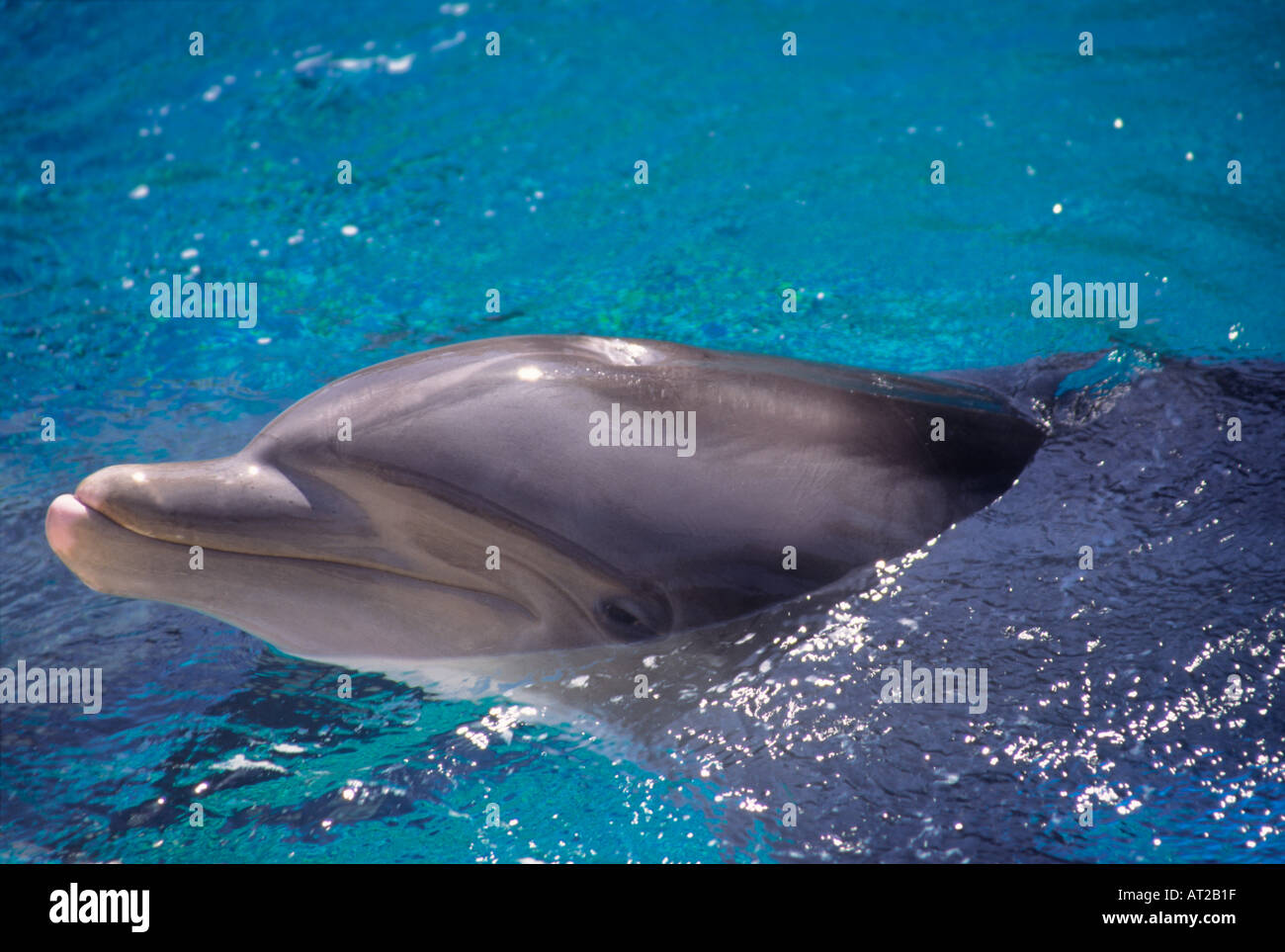
Unlike bats, cetaceans do not use their larynx to produce sonar clicks. Instead, they produce sounds by moving air through specialized structures called phonic lips located just below the blowhole. The sound is then focused through the melon, a fatty, oil-filled organ in the forehead. The melon acts as an acoustic lens, concentrating the sound into a beam that is projected into the water.
Receiving the Signal
Water is a much denser medium than air, meaning sound waves can be felt as much as heard. Dolphins do not use their external ear canals to receive sonar echoes; instead, the sound is conducted through the fatty tissues of their lower jaw to the middle ear. This biological configuration allows for incredible directional sensitivity, enabling a dolphin to detect a small ball from over 70 meters away.
Sperm Whales and Long-Range Detection
Sperm whales possess the largest sonar apparatus in the animal kingdom. Their massive heads contain the spermaceti organ, which allows them to produce "clicks" that are among the loudest sounds produced by any animal. These pulses can travel for kilometers, allowing sperm whales to locate giant squid in the pitch-black depths of the Atlantic and Pacific oceans.
Unusual and Lesser-Known Sonar Users
While bats and dolphins are the primary examples, several other species have evolved simpler forms of echolocation to solve specific environmental challenges.
Terrestrial Mammals: Shrews and Tenrecs
Some species of shrews and the Madagascar tenrec use primitive echolocation. Unlike the sophisticated imaging of a bat, these animals likely use sonar for "close-range" orientation. By emitting soft squeaks, they can detect the boundaries of tunnels or the presence of obstacles in the leaf litter. This is an example of convergent evolution, where unrelated species develop similar traits to survive in dark habitats.
Cave-Dwelling Birds: Oilbirds and Swiftlets
Two groups of birds have evolved the ability to use sonar to navigate deep caves where they nest. The Oilbird of South America and certain species of Swiftlets in Southeast Asia use audible clicks (within the range of human hearing) to find their way in the dark. Because their clicks are lower frequency than those of bats, their "acoustic vision" is less detailed, but it is sufficient to prevent them from crashing into cave walls.
Comparative Overview of Biological Sonar Systems
The following table compares the sonar capabilities of different animal groups based on current biological data.
| Animal Group | Primary Mechanism | Frequency Range | Primary Environment | Detection Goal |
|---|---|---|---|---|
| Microbats | Laryngeal or Nasal | 20 kHz - 200 kHz | Aerial / Terrestrial | Insects and Obstacles |
| Dolphins | Phonic Lips / Melon | 40 kHz - 150 kHz | Marine | Fish, Squids, Social |
| Sperm Whales | Spermaceti Organ | 10 kHz - 30 kHz | Deep Ocean | Large Prey (Squid) |
| Oilbirds | Syrinx (Audible) | 1 kHz - 15 kHz | Caves / Aerial | Cave Navigation |
| Shrews | Laryngeal | 30 kHz - 60 kHz | Terrestrial / Subterranean | Near-field Navigation |
Evolutionary Trade-offs and Limitations
The ability to use sonar is not without its costs. It is an energetically expensive process, requiring high metabolic rates to power the muscles responsible for rapid sound production and the neural processing power required to interpret the data.
Furthermore, biological sonar has environmental limitations:
- Acoustic Interference: In areas with heavy rain or high winds, "clutter" can interfere with a bat's ability to distinguish prey from background noise.
- Anthropogenic Noise: For marine mammals, human-generated noise from shipping, sonar testing, and seismic surveys can be devastating. As of 2026, international maritime regulations have intensified efforts to reduce "acoustic smog" in the oceans, as it can disorient whales and lead to mass strandings.
- Detection by Predators/Prey: Echolocating is essentially like shouting in the dark. While it helps the animal see, it also reveals its location to anyone—predator or prey—capable of hearing those frequencies.
Modern Applications of Biological Insights
In 2026, the study of animal sonar continues to drive innovation in human technology. Engineers are looking at the "beam-forming" capabilities of the dolphin's melon to create more efficient underwater communication systems for autonomous underwater vehicles (AUVs). Similarly, the "frequency-modulated" chirps of bats are being used as models for high-resolution medical imaging and miniaturized radar systems for self-driving cars.
Understanding these animals is not just a matter of biological curiosity; it provides a blueprint for efficient sensory processing. By studying how a bat can navigate a forest at 30 miles per hour without hitting a single leaf, humans are learning how to build smarter, safer navigation systems for our own world.
Frequently Asked Questions
Is sonar the same thing as echolocation?
In a biological context, yes. "Echolocation" is the term used to describe the biological process of using sound to locate objects. "Sonar" (Sound Navigation and Ranging) is the term for the technology humans developed, which was inspired by the biological process.
Can humans use echolocation?
Surprisingly, yes. Some visually impaired individuals have trained themselves to use "flash sonar" by making clicking sounds with their tongues. By listening to the echoes, they can detect the location of walls, parked cars, and even the height of curbs. While not as precise as a bat’s sonar, it demonstrates the plasticity of the human brain.
Why don't all birds use sonar?
Echolocation requires specialized anatomy and significant neural resources. Most birds are diurnal (active during the day) and have highly developed vision, which is more energy-efficient for flight in illuminated environments. Only birds that occupy permanently dark niches, like deep caves, have found the evolutionary "cost" of sonar to be worthwhile.
Do dolphins use sonar to communicate?
While the primary purpose of the high-frequency clicks is navigation and hunting, dolphins also use a variety of whistles and "burst pulses" for social communication. Researchers believe there is some overlap, as dolphins can likely "eavesdrop" on the sonar returns of their pod-mates to share information about prey locations.
Summary and Next Steps
Biological sonar is one of nature’s most fascinating adaptations, proving that vision is not the only way to build a map of the world. From the high-altitude hunting of microbats to the abyssal dives of sperm whales, sonar allows life to thrive where light cannot reach.
If you are interested in learning more about these creatures or supporting their conservation, consider these actions:
- Support Dark Sky Initiatives: Reducing light pollution helps maintain the natural nocturnal environments that bats depend on.
- Advocate for Quiet Oceans: Support organizations like the Ocean Conservation Research that work to mitigate the impact of industrial noise on marine life.
- Explore Local Bat Conservation: Many local wildlife groups offer "bat walks" using ultrasonic detectors, allowing you to hear the sounds of nature's radar for yourself.
Image Gallery