Is the Illuminati Evil? Historical Facts vs. Modern Conspiracy Myths
Historically, the Illuminati was not an evil organization, but an 18th-century Bavarian secret society committed to Enlightenment principles such as rationalism, secularism, and opposing government tyranny. Modern claims portraying the...
Historically, the Illuminati was not an evil organization, but an 18th-century Bavarian secret society committed to Enlightenment principles such as rationalism, secularism, and opposing government tyranny. Modern claims portraying the group as a sinister, satanic global elite are fictional conspiracy theories that evolved centuries after the historical group was outlawed and disbanded.
Contents
The Historical Bavarian Illuminati: Who Were They?
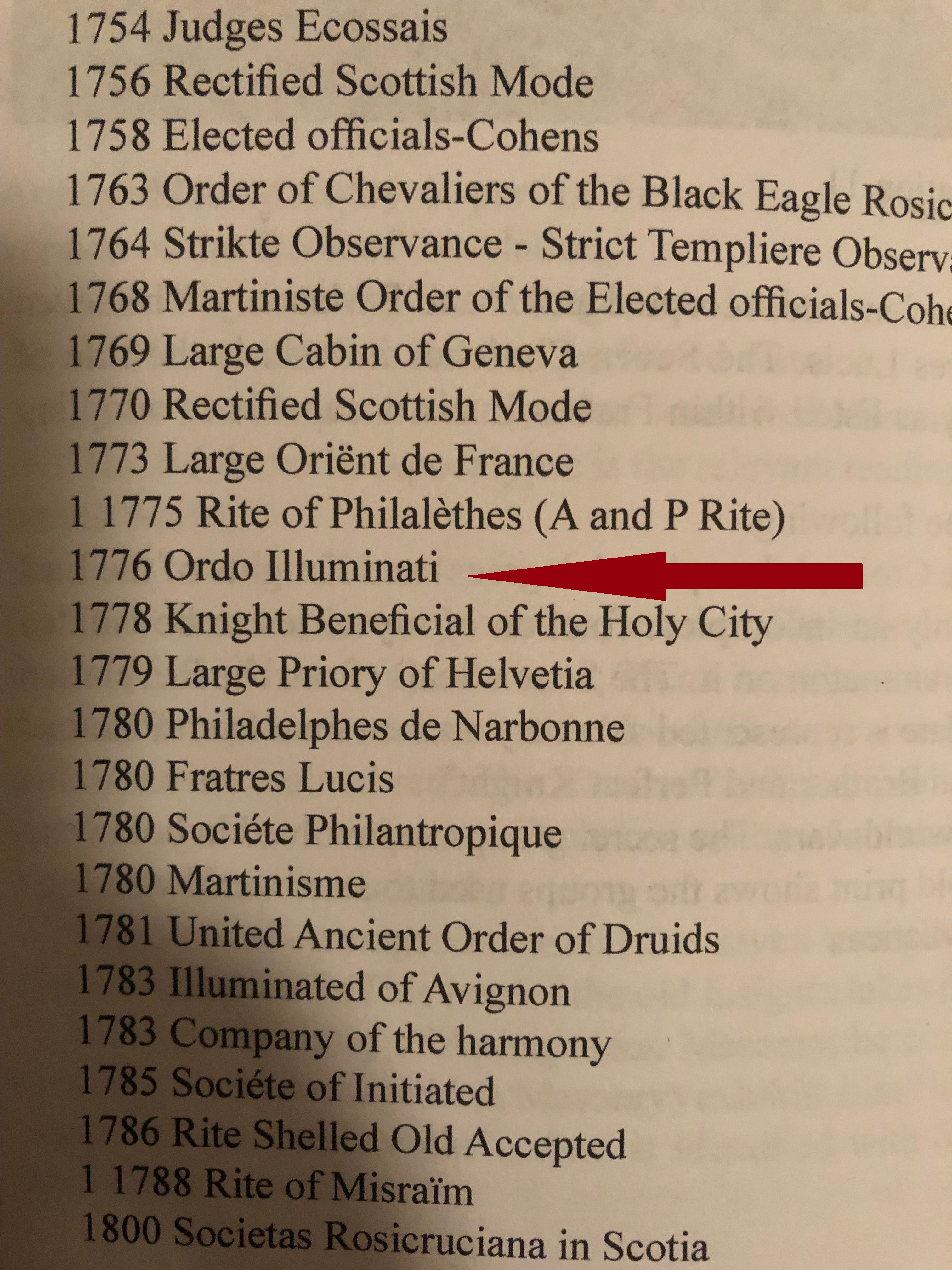
To understand whether the Illuminati was evil, one must examine its true historical origins rather than modern pop culture folklore. The order was founded on May 1, 1776, in Ingolstadt, Bavaria (now part of Germany), by Adam Weishaupt, a professor of canon law at the University of Ingolstadt.
During the late 18th century, Bavaria was heavily influenced by the Roman Catholic Church and conservative monarchical governance. Weishaupt, deeply influenced by the European Enlightenment, sought to create a covert space where intellectuals could freely discuss radical ideas regarding philosophy, science, and governance without fear of state censorship or religious persecution.
| Year | Event |
|---|---|
| 1776 | Adam Weishaupt founds the Order of the Illuminati in Bavaria |
| 1780 | Adolph Freiherr Knigge joins, revitalizing the organizational structure and expanding recruitment across Freemasonry lodges |
| 1784 | Elector Karl Theodor issues edicts banning secret societies |
| 1785 | Bavarian police raid Illuminati members; Weishaupt flees |
| 1787 | Final banning decree with capital punishment; society ends |
Initially called the Order of the Perfectibilists, the group adopted the name Illuminati, derived from the Latin word illuminatus, meaning "enlightened." Weishaupt designed a hierarchical structure modeled partly on the Jesuit Order and partly on Freemasonry. Members used pseudonyms—Weishaupt chose "Spartacus"—and followed strict secrecy protocols to shield their identities from state informants.
At its peak between 1782 and 1784, the movement attracted between 1,500 and 2,000 members across Central Europe. Notable adherents included prominent writers, civil servants, and noblemen, such as Johann Wolfgang von Goethe and Johann Gottfried von Herder. The group's rapid expansion was facilitated by diplomat Adolph Freiherr Knigge, who restructured the order's degrees to align more closely with established Masonic lodges, enabling recruitment from existing fraternal networks.
Were the Original Ideals of the Illuminati Evil?
Evaluating whether the historical Illuminati was "evil" requires placing its objectives within the political context of 18th-century Europe. By contemporary modern standards, their core philosophical goals were aligned with fundamental democratic and human rights values:
- Secularization: Advocating for the separation of religious institutions from state governance and public education.
- Rationalism: Encouraging scientific inquiry, critical thinking, and empirical research over religious dogma.
- Opposition to Tyranny: Restricting monarchical abuses of authority and promoting republican governance.
- Social Equality: Advocating for civic equality and moral self-improvement through moral instruction and education.
From the perspective of the ruling Bavarian monarchy and the Roman Catholic Church, these goals were considered subversion and heresy. Monarchs viewed opposition to absolute divine-right rule as treason, while church leaders viewed secularism as an attack on public morality.
While the Illuminati's goals were moral from an Enlightenment viewpoint, their methods relied on stealth, infiltration, and deception. Weishaupt instructed members to join Masonic lodges covertly to steer influential citizens toward Enlightenment ideals without public knowledge. This conspiratorial methodology—using secret networks to shape social policy—is the primary reason the group gained a reputation for political subversion, laying the groundwork for later accusations of malevolence.
The Downfall and Dissolution of the Order (1785–1787)
The historical Order of the Illuminati was short-lived, remaining active for roughly nine years. Internal dissent between Adam Weishaupt and Adolph Freiherr Knigge fragmented the leadership by 1784. Knigge resigned, leaving the group structurally vulnerable just as state authorities intensified their crackdown.
Alarmed by reports of covert political subversion, Karl Theodor, Elector of Bavaria, issued a series of edicts between 1784 and 1787 banning all secret societies, fraternities, and unauthorized assemblies. The Bavarian government launched systematic investigations, raided the homes of high-ranking members, and confiscated internal documents, correspondence, and philosophical essays.
These seized documents were published by the Bavarian state to demonstrate the group's radical anti-monarchical and anti-clerical plans. The publication inadvertently confirmed that the order was actively plotting against the political status quo, leading to immediate arrests, banishments, and loss of public office for key members. Adam Weishaupt was stripped of his university position and fled Bavaria, living the remainder of his life in exile in Gotha until his death in 1830.
By 1787, the Order of the Illuminati was systematically dismantled. Historical research, such as documentation preserved by the Encyclopaedia Britannica, confirms that no verified evidence exists showing the group survived past the late 18th century.
The Evolution of the Myth: How the Illuminati Became a Symbol of Evil
If the historical Illuminati disbanded in the 1780s, why does the name remain synonymous with sinister global cabals today? The transformation from a defunct historical society into an alleged evil puppetmaster occurred through three distinct historical phases.
1. Counter-Revolutionary Rhetoric (Late 18th Century)
Following the outbreak of the French Revolution in 1789, conservative writers sought to explain the sudden collapse of the French monarchy. French Jesuit priest Augustin Barruel and Scottish physicist John Robison published separate books arguing that the French Revolution was not a spontaneous uprising against royal oppression, but a orchestrated plot executed by the banned Bavarian Illuminati.
These texts, including Robison’s 1797 work Proofs of a Conspiracy, claimed that former Illuminati members had secretly taken control of French Masonic lodges to orchestrate the overthrow of church and state. Although historians have thoroughly debunked these claims, the narrative established a persistent literary trope: attributing complex socio-political upheavals to covert forces.
2. 20th-Century Literature and Counterculture
In the mid-20th century, the myth shifted from political paranoia to literary satire and pop culture. In the 1960s, writers Robert Anton Wilson and Robert Shea co-authored The Illuminatus! Trilogy, a satirical sci-fi novel series designed to poke fun at conspiracy theories by mixing real history with absurd rumors.
However, many readers mistook the satirical fiction for historical truth. During the same period, Christian fundamentalist literature and right-wing political movements integrated the term "Illuminati" into broader narratives regarding a "New World Order," portraying the group as an occultic, satanic elite operating behind global financial institutions.
3. The Digital Era and Internet Lore
In the 21st century, the internet and social media accelerated the proliferation of Illuminati mythology. Algorithms on video and social platforms amplified sensationalist content linking public figures, pop stars, global political figures, and major banking institutions to hidden hand gestures, triangular imagery, and alleged occult rituals.
Why Human Psychology Frames Secret Groups as Malicious
The ongoing belief that the Illuminati is an active, evil entity is sustained by established psychological mechanisms:
- Proportionality Bias: Human cognitive psychology predisposes individuals to assume that major, dramatic events (such as economic crises, wars, or pandemics) must be caused by equally large, powerful forces. Attributing random global crises to a secret elite provides a sense of narrative structure.
- Out-Group Hostility and Intentional Secrecy: When an organization operates behind closed doors, non-members naturally fill information gaps with suspicion. Secrecy creates an immediate asymmetry of trust, leading observers to assume the worst possible motives.
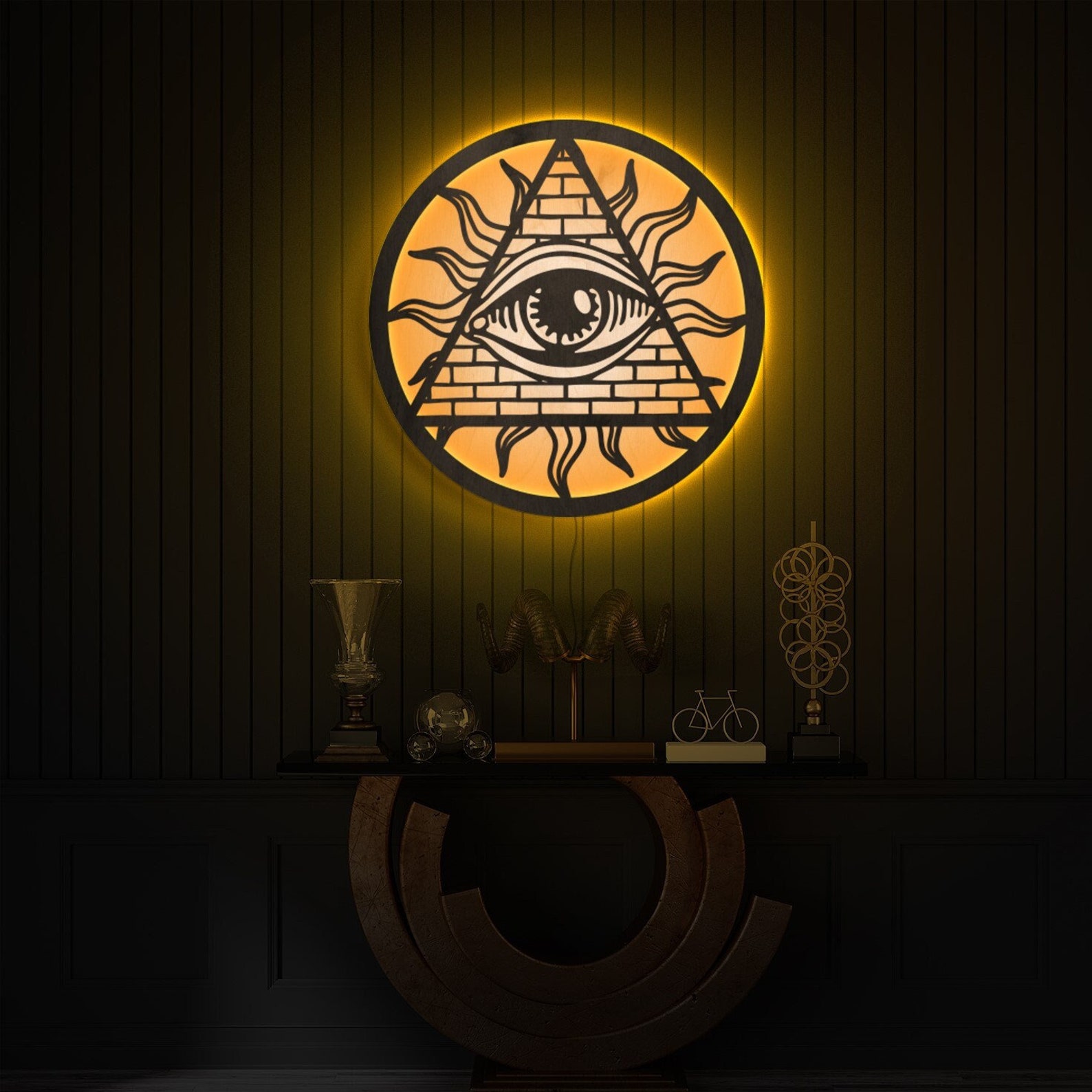
- Pattern Recognition (Apophenia): The human mind continuously seeks patterns. In pop culture, common geometric shapes—such as triangles, pyramids, or the "Eye of Providence"—are frequently reinterpreted as hidden markers of secret control, even when used entirely by coincidence or as standard artistic motifs.
Historical Reality vs. Modern Conspiracy Myth
To clearly evaluate claims regarding the group, it is helpful to compare the documented facts of the 18th-century Bavarian society against modern pop culture narratives.
| Attribute | Historical Bavarian Illuminati (1776–1785) | Modern Pop Culture / Conspiracy Myth |
|---|---|---|
| Primary Founder | Adam Weishaupt (Professor of Law) | Ancient occultists, satanic figures, or alien entities |
| Operational Scope | Localized to Bavaria and Central Europe | Global, controlling all international governments and banks |
| Core Ideology | Enlightenment rationalism, secularism, anti-tyranny | Global domination, totalitarian enslavement, occultism |
| Stance on Religion | Deist/Secularist; opposed clerical influence | Allegedly Satanic, anti-Christian, or Luciferian |
| Size & Reach | 1,500 to 2,000 documented elite members | Billions of unwitting subjects controlled by a tiny elite |
| Current Status | Dissolved and outlawed by Bavarian edicts in 1787 | Allegedly active today, operating behind multinational entities |
| Evidence Base | Seized historical state archives, police records | Speculative internet videos, symbolic interpretation |
Frequently Asked Questions
Was Adam Weishaupt an evil person?
Adam Weishaupt was an academic thinker focused on radical Enlightenment philosophy. While his covert tactics—such as using fake identities and infiltrating Masonic lodges—were deceptive, his explicit personal goal was moral improvement, liberty, and freeing society from state autocratic rule, not personal enrichment or mass harm.
Why is the "Eye of Providence" associated with the Illuminati?
The Eye of Providence (an eye inside a triangle) was historically a Christian symbol representing God's omniscience. While some Masonic lodges adopted it in the late 18th century as a symbol of divine watchfulness, the original Bavarian Illuminati did not use it as their main emblem; their primary symbol was the Owl of Minerva, representing wisdom.
Does the Illuminati control modern world events or currency?
No verified historical or intelligence evidence shows that any group named the Illuminati controls modern governments, central banks, or media outlets. Allegations linking symbols on currency (such as the Great Seal on the US dollar bill) to the Illuminati rely on speculative interpretations developed long after the historic group was disbanded.
Is the Illuminati linked to Satanism?
The original 18th-century Illuminati was not linked to Satanism. Members were primarily deists, rationalists, or liberal Christians who advocated for secular governance. The connection to Satanism arose during late 19th- and 20th-century religious polemics aimed at discrediting secular political movements.
Are secret societies inherently illegal today?
In modern democratic nations, secret or private societies (such as fraternal orders, university secret societies, or policy clubs) are legal as long as their operations comply with local laws, corporate registration rules, and human rights statutes.
Assessing Conspiratorial Claims: Practical Guidance
When encountering assertions that a covert, evil organization like the Illuminati controls contemporary socio-political events, historical research methods provide a clear framework for critical analysis:
- Examine Primary Documentation: Distinguish between primary historical sources (confiscated letters, court decrees, verified institutional records) and unverified claims published in opinion essays or social media posts.
- Apply Occam’s Razor: Recognize that complex global outcomes—such as market fluctuations or political realignments—are almost always the result of competing public interests, institutional incentives, and visible systemic factors, rather than a centralized secret puppetmaster.
- Separate Symbolism from Substance: Avoid assuming that common aesthetic motifs (pyramids, eyes, or hand gestures) serve as hidden operational signatures. Historical entities operating in secrecy deliberately avoided public symbols that would expose their members to legal prosecution.
By evaluating the evidence objectively, it becomes clear that while the historical Bavarian Illuminati used deceptive conspiratorial methods to advance radical political goals, the group itself was an Enlightenment-era intellectual network—not an evil, supernatural cabal.
Image Gallery