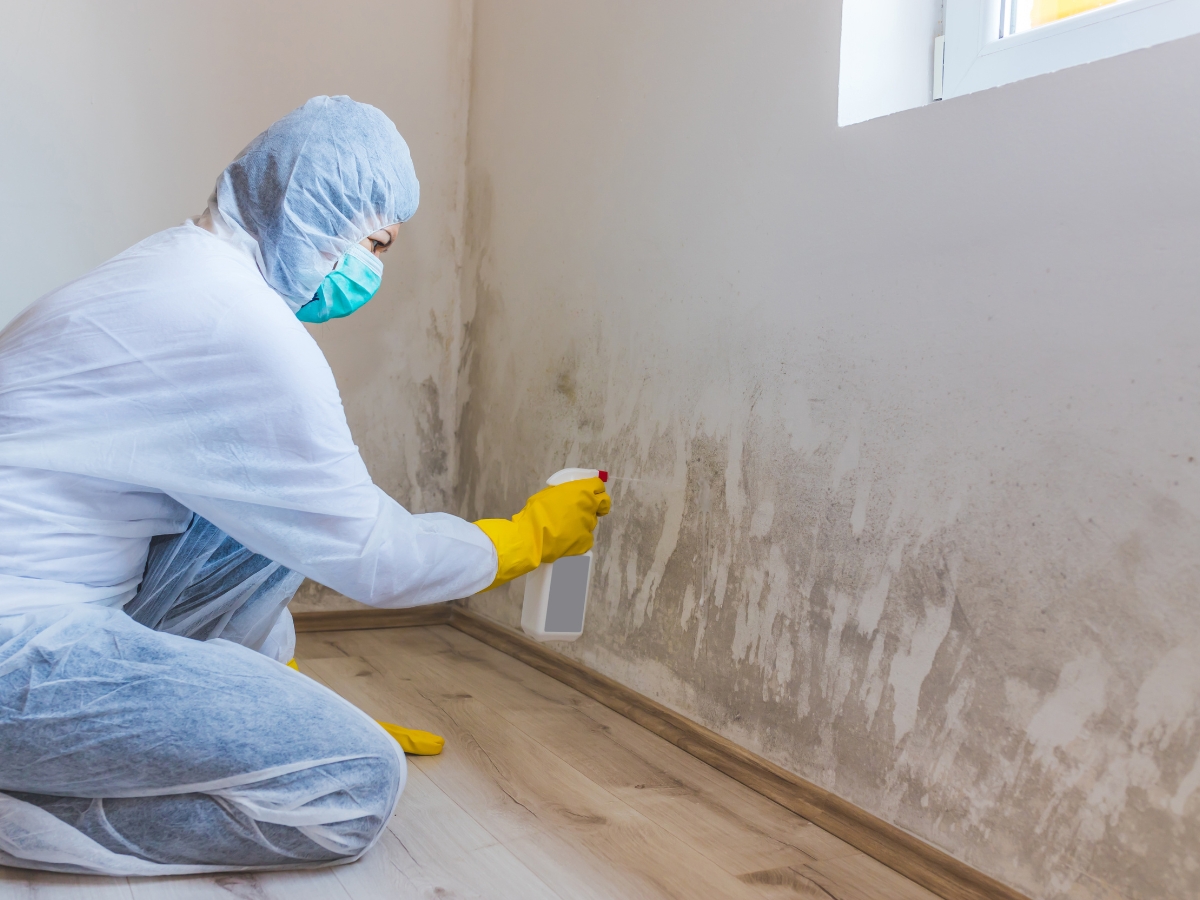
Del Monte Mold Remediation Explained: Process, Costs, and Professional Standards
Professional mold remediation is a highly technical process designed to identify, contain, and eliminate fungal growth while restoring a property to a safe, "Condition 1" environment. When engaging a specialist like Del Monte Restorati...
Professional mold remediation is a highly technical process designed to identify, contain, and eliminate fungal growth while restoring a property to a safe, "Condition 1" environment. When engaging a specialist like Del Monte Restoration, the focus shifts from surface cleaning to a comprehensive structural recovery that adheres to strict IICRC S520 industry standards.
Contents
In 2026, property owners are more aware than ever that mold is not merely a cosmetic issue or a simple matter of wiping down a wall with bleach. Effective remediation requires a deep understanding of microbiology, building science, and environmental engineering. Whether you are dealing with the aftermath of a burst pipe, a slow leak, or high humidity levels, the Del Monte approach to mold remediation ensures that the root cause of the moisture is addressed, the existing mold is safely removed, and the indoor air quality is returned to baseline levels.
Understanding the Scope of Mold Remediation
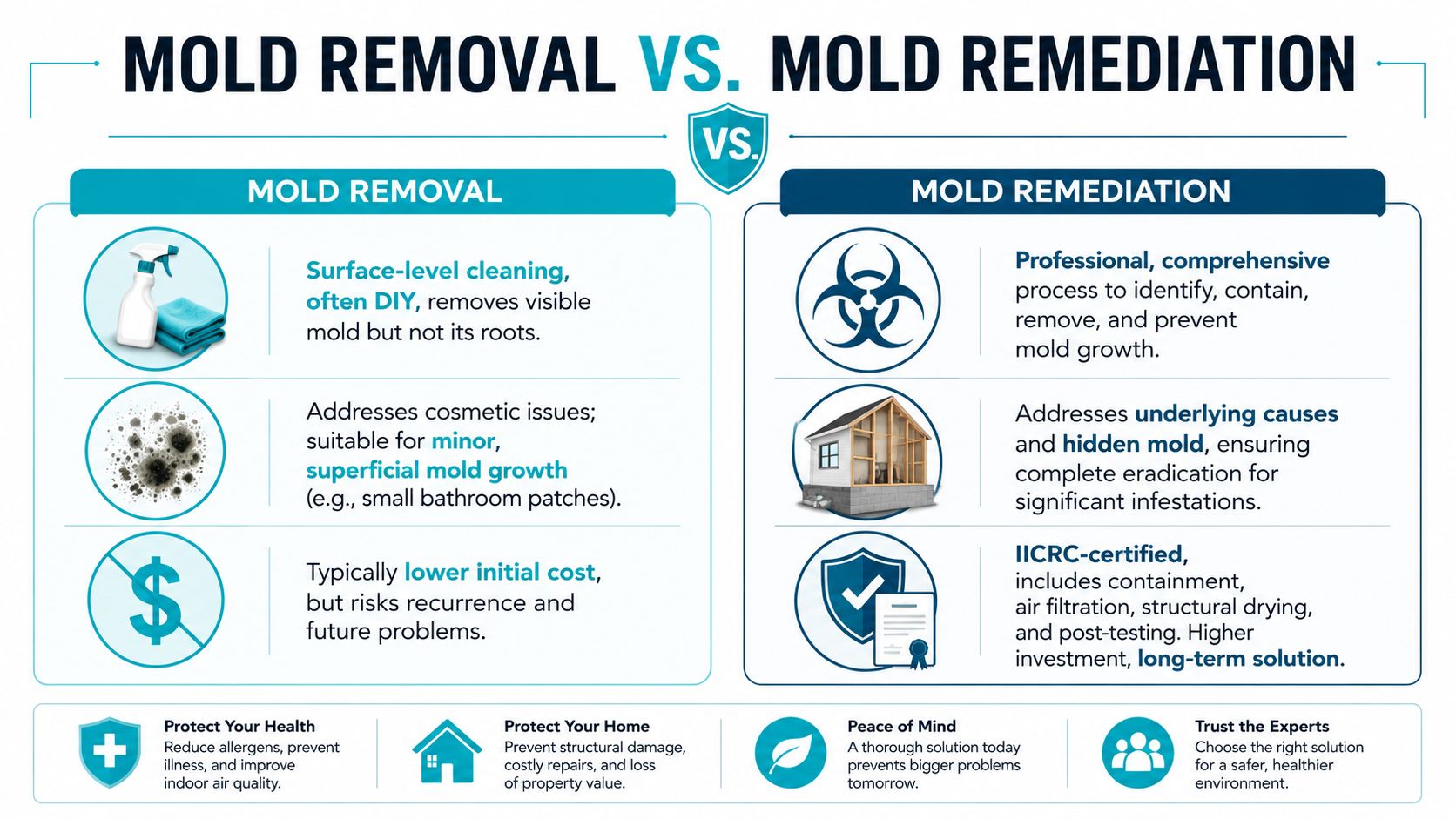
To understand mold remediation, one must first distinguish it from "mold removal." It is scientifically impossible to remove all mold from an indoor environment; mold spores are omnipresent in the air and on surfaces. The goal of a professional remediation project is to bring the fungal ecology back to a "normal" or healthy state.
In the industry, this is often categorized into three conditions:
- Condition 1 (Normal Fungal Ecology): An indoor environment that may contain settled spores or fragments, but with a distribution similar to the outdoor environment.
- Condition 2 (Settled Spores): An area that contains settled spores or fragments that were dispersed during a mold problem elsewhere in the building, but where active growth is not present.
- Condition 3 (Actual Growth): An area with active mold growth, which may be visible or hidden behind walls and under flooring.
The Del Monte remediation protocol is specifically designed to transition a property from Condition 3 back to Condition 1 using a combination of physical removal and advanced air filtration.
The Professional Remediation Process: A Step-by-Step Breakdown
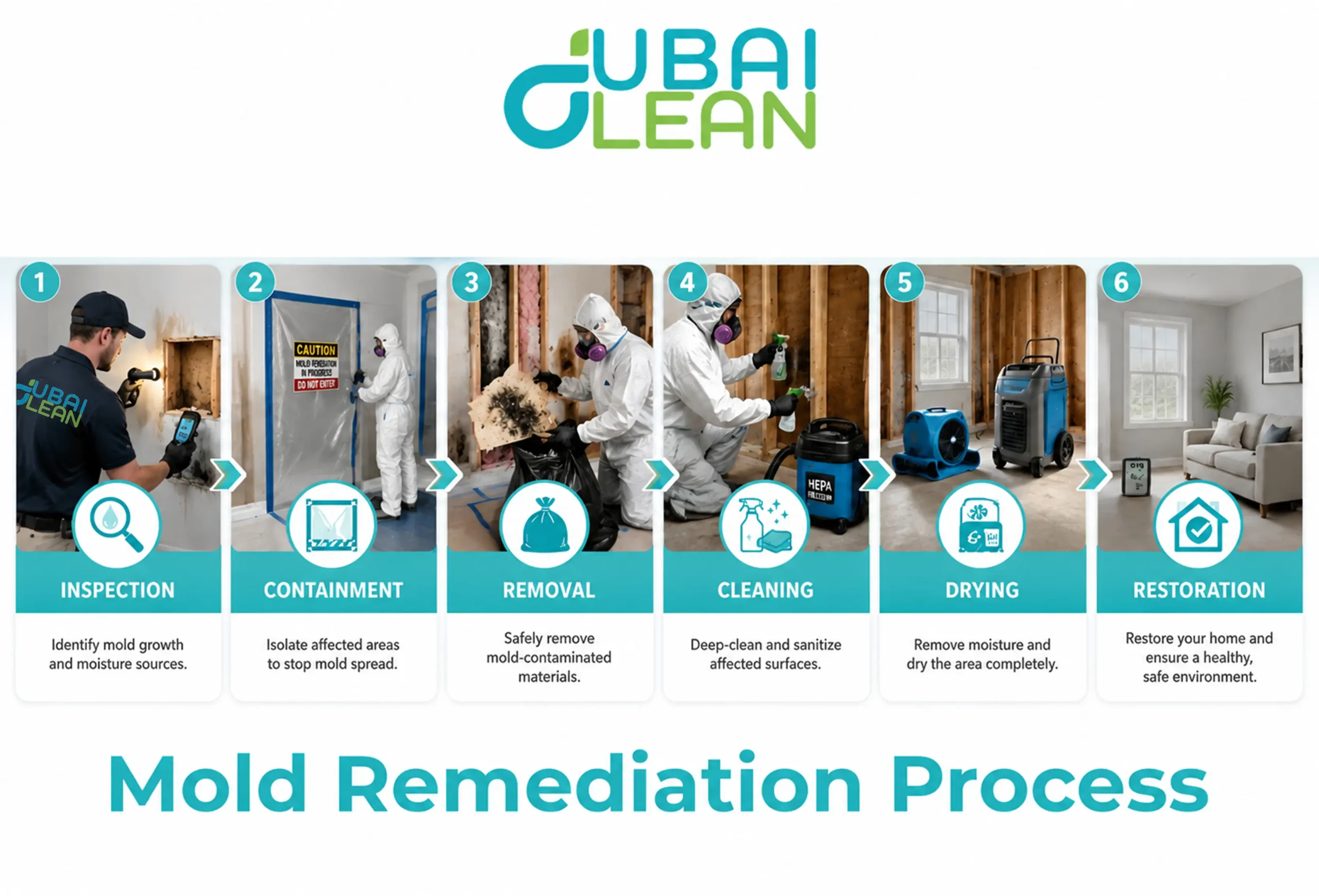
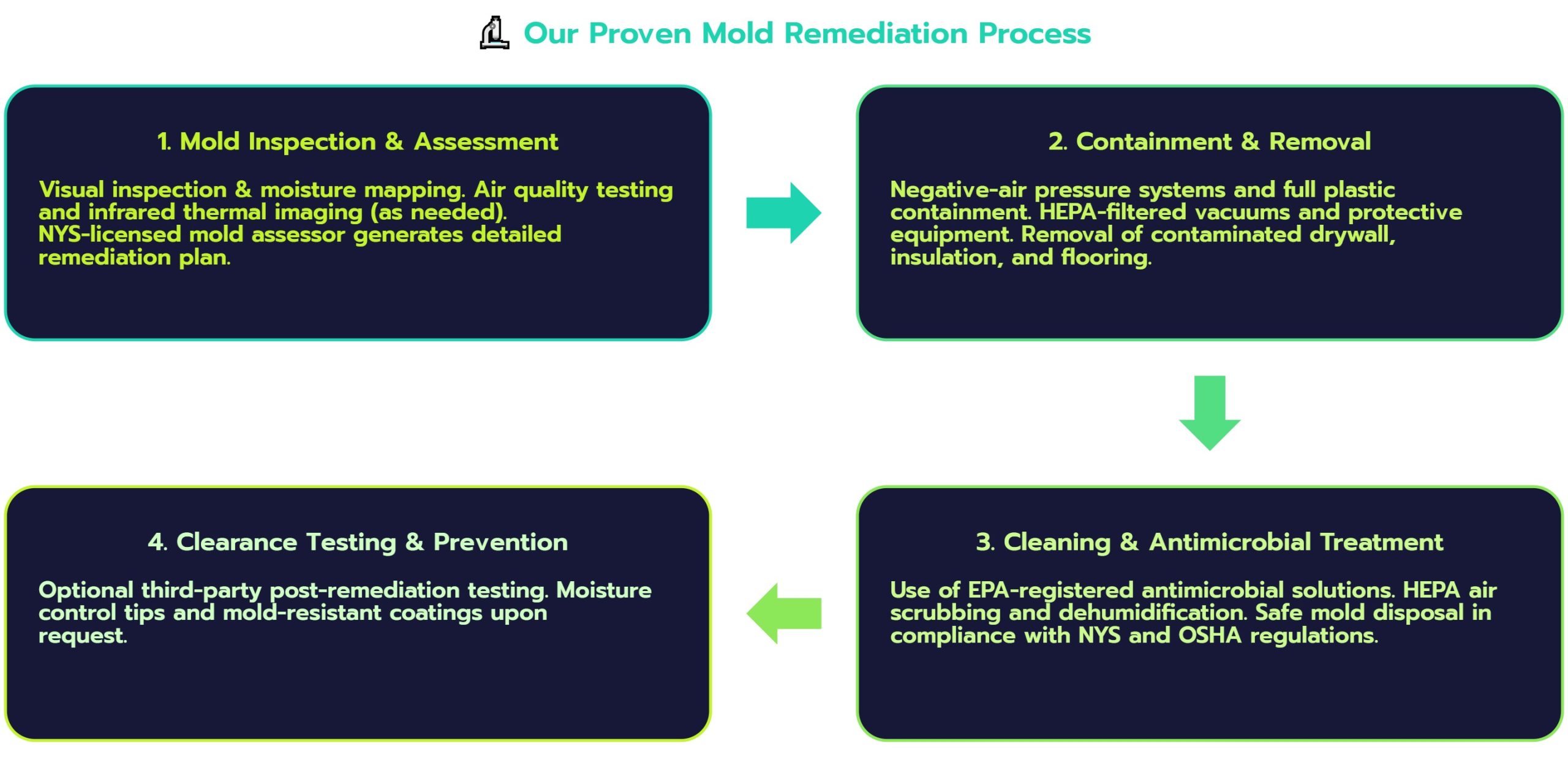
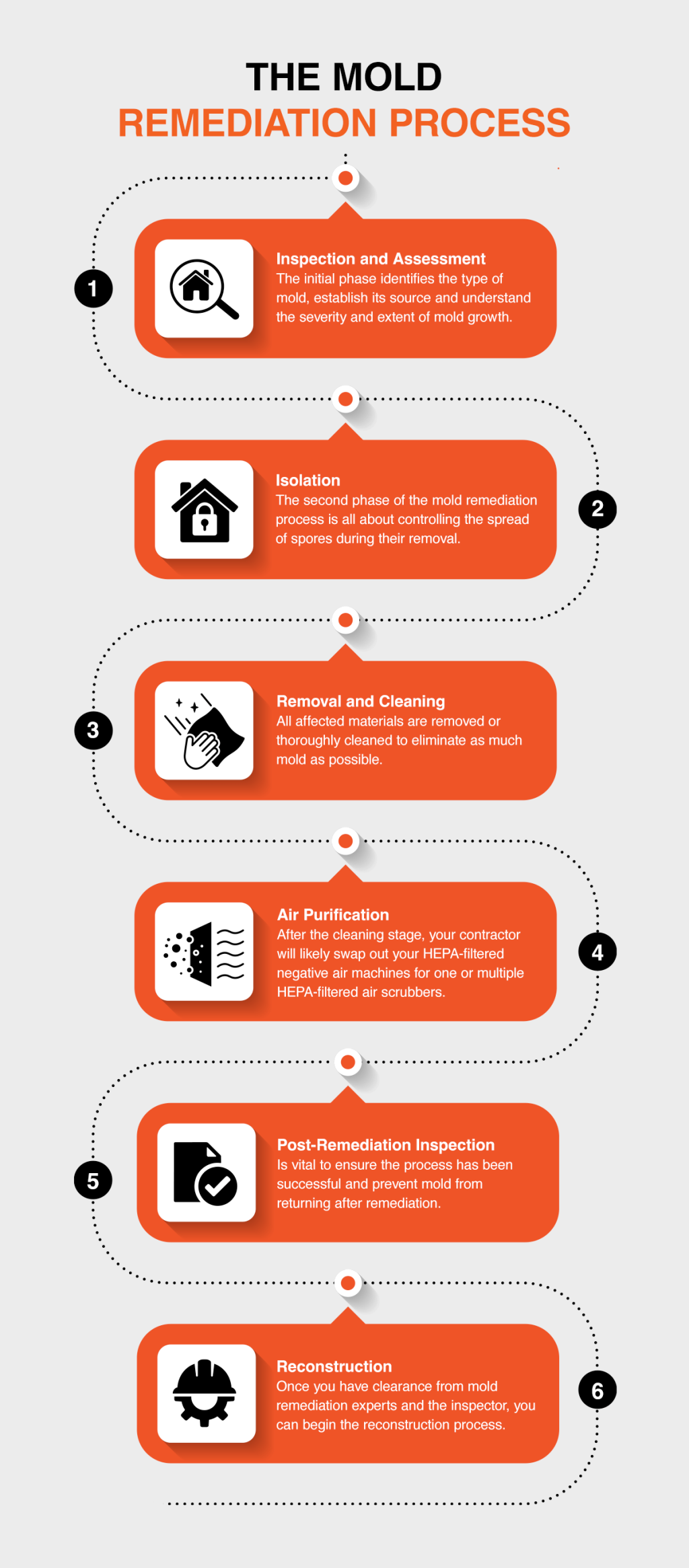
The process used by Del Monte Restoration involves several critical phases. Skipping any of these steps can lead to cross-contamination, where mold spores are inadvertently spread to unaffected areas of the building.
1. Initial Assessment and Moisture Mapping
Before any physical work begins, a technician performs a thorough inspection. This involves more than just a visual check. Professionals use infrared thermography (thermal imaging) to detect temperature anomalies that indicate hidden moisture behind drywall or under cabinets. Moisture meters are then used to confirm the moisture content of various building materials. This "moisture mapping" ensures that the source of the mold—the water—is identified and can be repaired.
2. Containment and Pressure Management
To prevent the spread of spores, the affected area must be isolated. Del Monte utilizes 6-mil polyethylene sheeting to create physical barriers. Depending on the severity of the infestation, this may involve "source containment" (covering the specific moldy area) or "full containment" (sealing off entire rooms).
Crucially, the containment zone is placed under negative air pressure. By using high-capacity air scrubbers equipped with HEPA (High-Efficiency Particulate Air) filters, technicians ensure that air only flows into the workspace and is exhausted out of the building (or through additional filtration). This prevents microscopic spores from escaping through cracks or under doors during the agitation of cleaning.
3. Air Filtration and Purification
Throughout the entire project, air scrubbers run continuously. These machines are capable of capturing 99.97% of particles as small as 0.3 microns. In 2026, the latest HEPA 500 and 1000 units are used to cycle the air in the containment zone multiple times per hour, significantly reducing the concentration of airborne spores and Microbial Volatile Organic Compounds (MVOCs), which are responsible for the "musty" odor associated with mold.
4. Controlled Demolition and Removal
Porous materials that have sustained heavy mold growth—such as drywall, insulation, and carpeting—cannot be effectively cleaned. These materials must be removed and discarded. Technicians bag these materials inside the containment zone in double-thick waste bags, wiping down the exterior of the bags before they are moved through the building to prevent any leakage of contaminants.
5. HEPA Vacuuming and Sandwich Cleaning
Once porous materials are removed, the remaining semi-porous (wood framing) and non-porous (metal, glass) surfaces undergo a rigorous cleaning process often called the "sandwich method":
- HEPA Vacuuming: Dry-vacuuming surfaces to remove the bulk of settled spores.
- Damp Wiping: Using an EPA-registered antimicrobial or biocide to clean the surface.
- HEPA Vacuuming: A final pass to pick up any particles loosened during the damp wipe.
6. Structural Drying
If the underlying building materials are still damp, professional-grade dehumidifiers and air movers are deployed. Mold requires moisture to thrive; if the wood framing is not dried to a moisture content of less than 15%, the mold will return shortly after the project is completed.
Technical Comparison of Remediation Levels
The complexity and cost of a remediation project depend on the "Level" of contamination, as defined by the New York City Department of Health and Mental Hygiene (DOHMH) guidelines and the IICRC.
| Contamination Level | Surface Area Affected | Containment Requirements | Typical Equipment |
|---|---|---|---|
| Level I (Small) | Under 10 square feet | Minimal (poly sheeting on doors) | HEPA Vac, N95 Mask |
| Level II (Mid) | 10 to 30 square feet | Polyethylene barriers, HEPA filtration | Air scrubbers, Negative air |
| Level III (Large) | 30 to 100 square feet | Full containment, Decontamination chamber | Multiple Air scrubbers, Full PPE |
| Level IV (Extensive) | Over 100 square feet | Advanced engineering controls, Multiple zones | High-capacity dehumidification, Bio-hazard suits |
Essential Equipment in the Del Monte Arsenal
A professional remediation is only as good as the technology utilized. In 2026, the equipment used by Del Monte Restoration represents the pinnacle of environmental safety.
- HEPA Air Scrubbers: These are the workhorses of the industry. By creating a vacuum-like effect in the room, they ensure that the air being breathed by the rest of the occupants remains clean.
- Media Blasting (Dry Ice or Soda): For extensive mold on attic rafters or crawlspace joists, technicians may use dry ice blasting. This "sublimation" process lifts mold off the wood without adding moisture or using harsh chemicals.
- Antimicrobial Encapsulants: After cleaning, some surfaces may be treated with an encapsulant—a specialized coating that prevents any remaining microscopic spores from germinating, though this is never a substitute for thorough cleaning.
- Hydroxyl Generators: Unlike ozone generators, which can be harmful to occupants and materials, hydroxyl generators can often be used while people are present to neutralize odors and airborne pathogens through natural atmospheric chemistry.
Post-Remediation Verification (PRV)
The most important step in the Del Monte process is the Post-Remediation Verification, also known as "Clearance Testing." To ensure there is no conflict of interest, it is a best practice—and often a regulatory requirement—that a third-party Environmental Health Professional (EHP) or mold inspector performs this test.
The PRV typically includes:
- Visual Inspection: Ensuring the area is free of dust and debris.
- Moisture Testing: Confirming that all structural materials are dry.
- Air Sampling: Taking "Spore Trap" samples inside the containment and comparing them to a "Control" sample taken outside. If the indoor spore count is significantly lower than or equal to the outdoor count, and the types of mold found are consistent with the outdoors, the area is deemed "cleared."
Common Mistakes in DIY Mold Treatment
Many homeowners attempt to handle mold using household products, which often exacerbates the problem.
- The Bleach Myth: Bleach is mostly water. While it can kill mold on non-porous surfaces like tile, it cannot penetrate porous materials like wood or drywall. The water in the bleach actually feeds the mold roots (mycelia) deeper into the material, leading to faster regrowth.
- Lack of Containment: Using a standard vacuum or a fan to dry an area spreads millions of spores throughout the HVAC system and the rest of the home.
- Ignoring the Source: Cleaning the mold without fixing the leak or humidity issue is a temporary fix. Professional firms like Del Monte emphasize that "remediation without moisture control is just cleaning."
Costs and Timeline Expectations in 2026
The cost of mold remediation is highly variable. Small, localized projects (Level I) may range from $500 to $1,500. However, whole-house remediation involving HVAC cleaning and structural demolition can exceed $10,000 to $30,000.
Most residential projects are completed within 3 to 5 business days. This includes the setup of containment, the removal of materials, a 24-48 hour drying period, and the final clearance testing.
For further information on health risks associated with mold, the Environmental Protection Agency (EPA) provides comprehensive guidelines on indoor air quality. Additionally, the IICRC (Institute of Inspection, Cleaning and Restoration Certification) offers the definitive standards for professional mold remediation.
FAQ
Does homeowners insurance cover Del Monte mold remediation?
Coverage depends entirely on the "cause of loss." If the mold resulted from a sudden and accidental water discharge, such as a pipe burst, it is often covered up to a specific limit (e.g., $5,000 or $10,000). If the mold is the result of long-term seepage, humidity, or lack of maintenance, insurance typically denies the claim. Always check your policy for a "Mold Endorsement."
Is it safe to stay in the house during the remediation process?
In most cases, yes, provided that the remediation team has established proper containment and negative air pressure. However, if the mold is in a primary living area (like the only kitchen or bathroom) or if an occupant has severe asthma or a compromised immune system, temporary relocation is recommended.
How do I know if the mold is "toxic"?
The term "toxic mold" is a bit of a misnomer. Some molds, like Stachybotrys chartarum (black mold), produce mycotoxins, but all molds can cause respiratory irritation in sensitive individuals. The Del Monte approach treats all mold as a potential health hazard, regardless of the species, focusing on complete removal rather than just identifying the "toxicity."
Will the mold come back after professional remediation?
If the moisture source is permanently fixed and the area was cleaned to Condition 1 standards, the mold should not return. However, if a new leak occurs or humidity levels exceed 60%, new mold spores from the outdoor air will land on the damp surface and begin to grow.
Can I just paint over the mold?
No. Painting over mold (even with "mold-resistant" paint) is a common mistake. The mold will continue to grow underneath the paint, eventually causing the paint to bubble and peel. The mold must be physically removed before any surface treatments are applied.
Final Recommendation
When dealing with mold, the priority must be safety and structural integrity. If you suspect a mold issue, the first step is to stop the water source. Once the environment is stable, engaging a professional firm like Del Monte Restoration ensures that the cleanup is handled with the correct engineering controls. Always insist on a third-party clearance test to verify that the air in your home is safe for your family.
Image Gallery