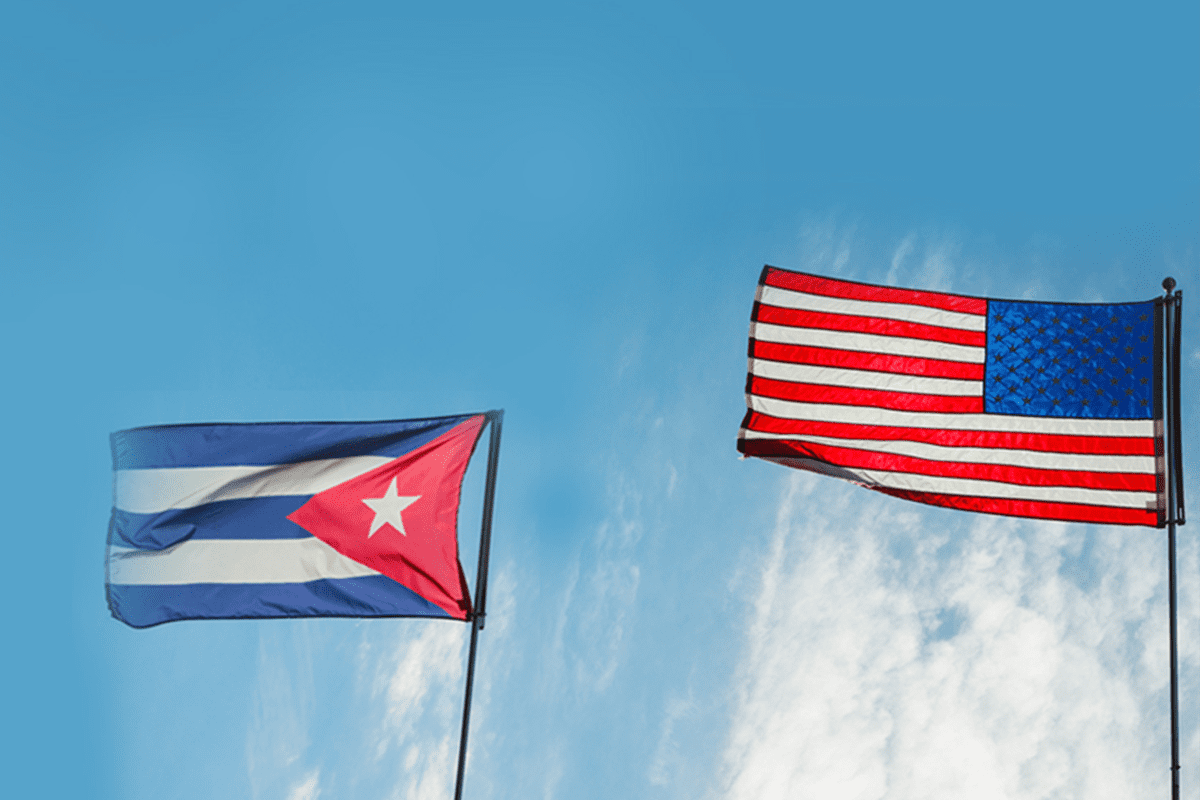
Who Is Running Cuba Today and Why It Matters for Regional Stability
As of 2026, Cuba is governed by a collective leadership structure anchored by President Miguel Díaz-Canel, who serves as the First Secretary of the Communist Party of Cuba (PCC). This leadership operates under a centralized socialist s...
As of 2026, Cuba is governed by a collective leadership structure anchored by President Miguel Díaz-Canel, who serves as the First Secretary of the Communist Party of Cuba (PCC). This leadership operates under a centralized socialist system where the PCC remains the constitutionally enshrined supreme political force, navigating deep-seated economic challenges, social shifts, and a complex geopolitical relationship with the United States.
Contents
The Architecture of Cuban Governance
Understanding who runs Cuba requires looking beyond a single executive office. While Miguel Díaz-Canel holds the dual titles of President of the Republic and First Secretary of the Communist Party, the governance of the island is predicated on the influence of the party apparatus. Under the 2019 Constitution, the Communist Party is defined as the "superior driving force of society and the State."
Key Pillars of Power
The current power structure is not a traditional democracy but a monolithic party state. The primary organs of authority include:
- The Communist Party of Cuba (PCC): This is the definitive center of gravity. The Politburo of the PCC determines the ideological direction and national strategy.
- The Council of State and Council of Ministers: These bodies execute the policies formulated by the party. The Council of Ministers acts as the highest-ranking executive and administrative organ.
- The National Assembly of People’s Power (ANPP): This is the legislative body. While it formally elects the President and confirms ministers, it historically serves to codify decisions made within the upper echelons of the party.
- The Military and Security Apparatus: Historically, the Revolutionary Armed Forces (FAR) and the Ministry of the Interior (MININT) hold significant influence, not only in national security but also in the management of the state-run business conglomerate GAESA, which controls critical sectors of the economy, including tourism and retail.
Why the Current Leadership Structure Matters
The stability and decision-making capacity of Cuba’s current leadership have profound implications for the Caribbean region, international trade, and migration patterns.
Economic Management and Reform
Cuba is currently managing an unprecedented period of economic austerity. Since the post-pandemic recovery period, the government has struggled with high inflation, chronic shortages of basic goods, and an aging electrical infrastructure. Because the state maintains a near-monopoly on imports and exports, the success or failure of internal reforms—such as the legalization of small and medium-sized private enterprises (known as MIPYMES)—depends entirely on the regulatory environment set by Díaz-Canel’s administration.
Geopolitical Positioning
The relationship between Havana and Washington remains a defining factor in regional politics. During the 2020s, the U.S. maintained various sanctions regimes, significantly affecting Cuba's access to international financial markets. The current Cuban administration's ability to navigate these restrictions, while simultaneously courting investment from global partners like Russia, China, and various European nations, dictates the island's economic lifeline.
Migration and Social Cohesion
A critical aspect of the current administration’s relevance is the massive exodus of Cuban citizens. Record numbers of departures have depleted the labor force and shifted the demographic makeup of the island. The government's inability to provide upward mobility or sufficient social welfare has turned migration into a primary pressure valve, which in turn influences U.S. border policies and regional diplomatic discussions regarding human rights and asylum.
Comparative Overview of Power Dynamics
The following table summarizes the primary institutions and their relative roles in the Cuban governance model.
| Institution | Primary Role | Relationship to Leadership |
|---|---|---|
| Communist Party (PCC) | Ideological direction and policy oversight | Supreme authority |
| President (Díaz-Canel) | Chief executive and party leader | Execution of party mandates |
| National Assembly (ANPP) | Legislative enactment | Constitutional ratification |
| GAESA (Military Group) | Management of strategic sectors | Economic implementation |
| Judiciary | Legal enforcement | Subordinated to state interests |
Challenges Facing the Leadership in 2026
The current administration faces a "triple threat" of structural, social, and external pressures that define its tenure.
The Energy Crisis
Reliable electricity remains the most acute administrative challenge. The reliance on aging oil-fired power plants, combined with a lack of hard currency to purchase fuel on the international market, leads to frequent and prolonged blackouts. This technical failure creates direct political fallout, as citizens increasingly associate the central government’s competence with the availability of basic utilities.
Succession and Political Legitimacy
While Miguel Díaz-Canel represents the first non-Castro leader in decades, the generational transition within the party remains incomplete. The "historic generation" of the 1959 revolution still exerts influence, creating a dual-track political culture. The current leadership must balance the demands of aging hardliners with a younger population that shows decreasing ideological adherence to the party’s historical narrative.
Regulatory Evolution
The introduction of private sectors (MIPYMES) was a departure from the traditional command economy. However, the government oscillates between encouraging private investment to plug gaps in the economy and imposing stringent price controls and tax regulations to prevent these entities from gaining too much independent influence. This tension marks the most critical internal policy debate within the Cuban government today.
Frequently Asked Questions
Is Cuba currently a military-led state?
While not a military junta in the traditional sense, the influence of the Revolutionary Armed Forces is systemic. Military personnel hold high-ranking positions in the government, and the military-controlled conglomerate, GAESA, manages a significant percentage of the nation's hard-currency income.
How much power does the Cuban President have?
The President possesses significant executive power, but it is bounded by the Politburo of the Communist Party. Decisions of national importance are vetted through party consensus rather than individual executive fiat, though the President acts as the primary public face and representative of the state.
What is the role of the U.S. embargo in Cuban governance?
The U.S. trade embargo—referred to in Cuba as el bloqueo—is a central pillar of the government’s external policy. The leadership utilizes the embargo to explain domestic economic failures and to maintain a nationalist narrative that centralizes domestic support against an external adversary.
Why do people leave Cuba in such high numbers?
Economic desperation, political repression, and a lack of professional prospects drive migration. The current leadership’s inability to modernize the economy sufficiently to support the population has created a systemic crisis that manifests as mass migration.
Can the current leadership be challenged?
There is no legal framework for an opposition party or a competitive electoral system in Cuba. While informal protests have occurred, the legal, judicial, and security structures are designed to maintain the monopoly of the Communist Party, making institutional change from within the opposition highly unlikely under the current constitution.
Conclusion and Next Actions
The governance of Cuba is a study in centralized survivalism. For observers, international businesses, or researchers, understanding the island requires focusing on the interplay between the PCC’s political directives and the technical requirements of the Cuban economy.
To monitor the situation in 2026, pay close attention to:
- PCC Plenary Meetings: These signify shifts in internal economic or social policy.
- Currency Valuation Changes: The official versus the street exchange rate of the Cuban Peso (CUP) remains the most reliable metric of the government’s economic stability.
- Infrastructure Investments: Announcements regarding international energy partnerships are indicators of how the state intends to solve its acute power shortages.
Image Gallery