Understanding the Trailer Air Brake System: Operation, Components, and Safety
A trailer air brake system utilizes compressed air to actuate foundation brakes on heavy-duty vehicles, ensuring safe deceleration and stopping power. By converting pneumatic pressure into mechanical force, the system allows for synchr...
A trailer air brake system utilizes compressed air to actuate foundation brakes on heavy-duty vehicles, ensuring safe deceleration and stopping power. By converting pneumatic pressure into mechanical force, the system allows for synchronized braking between the tractor and the trailer, relying on a fail-safe design that automatically engages the brakes if air pressure is lost.
Contents
Principles of Pneumatic Braking
The fundamental principle behind the trailer air brake system is the use of compressed air as the energy medium. Unlike hydraulic brakes in passenger vehicles, which rely on incompressible fluid, air brake systems are designed for high-capacity heavy-duty applications. The system operates on a "pressure-to-release" logic, specifically regarding the parking or emergency function.
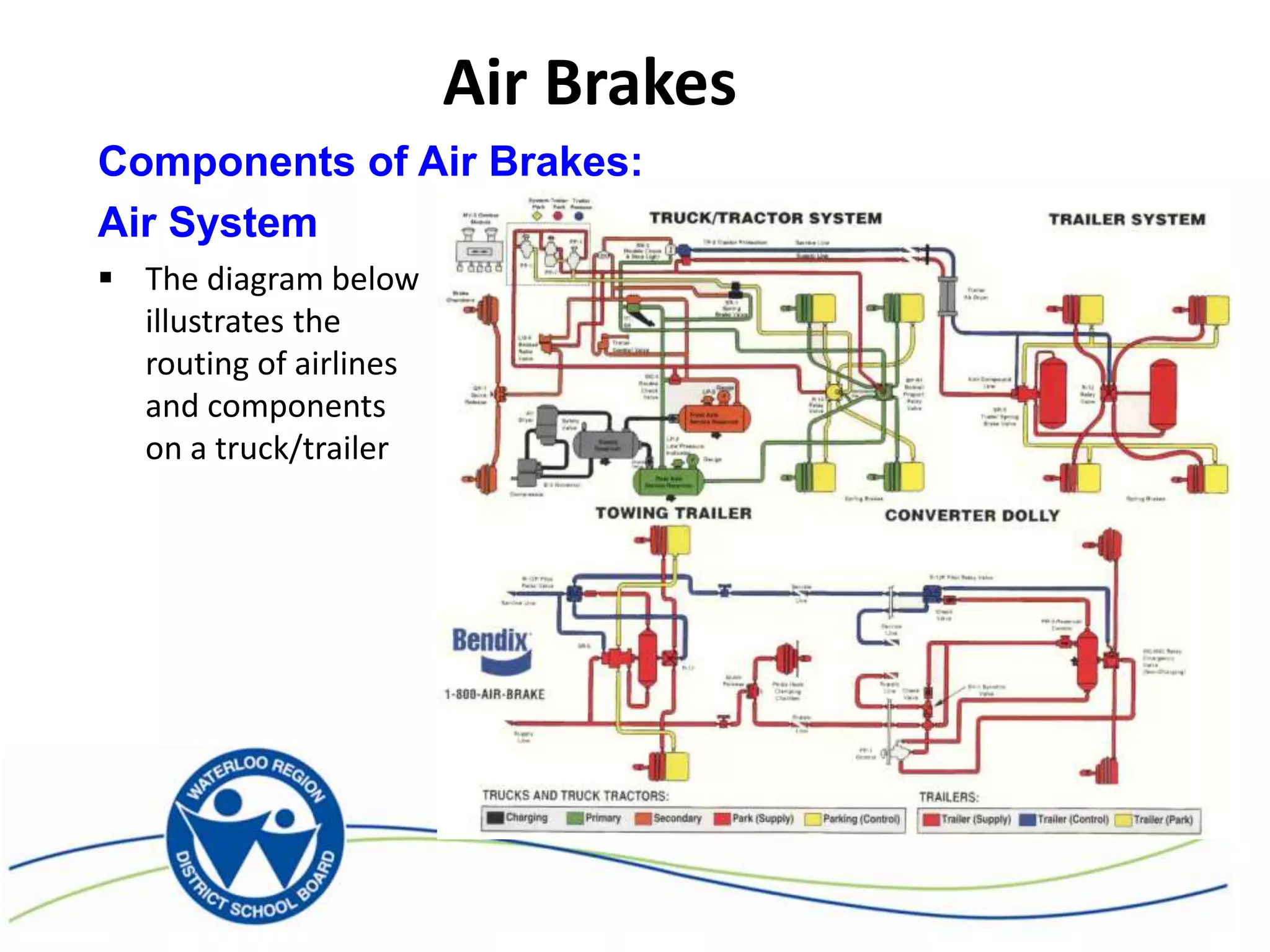
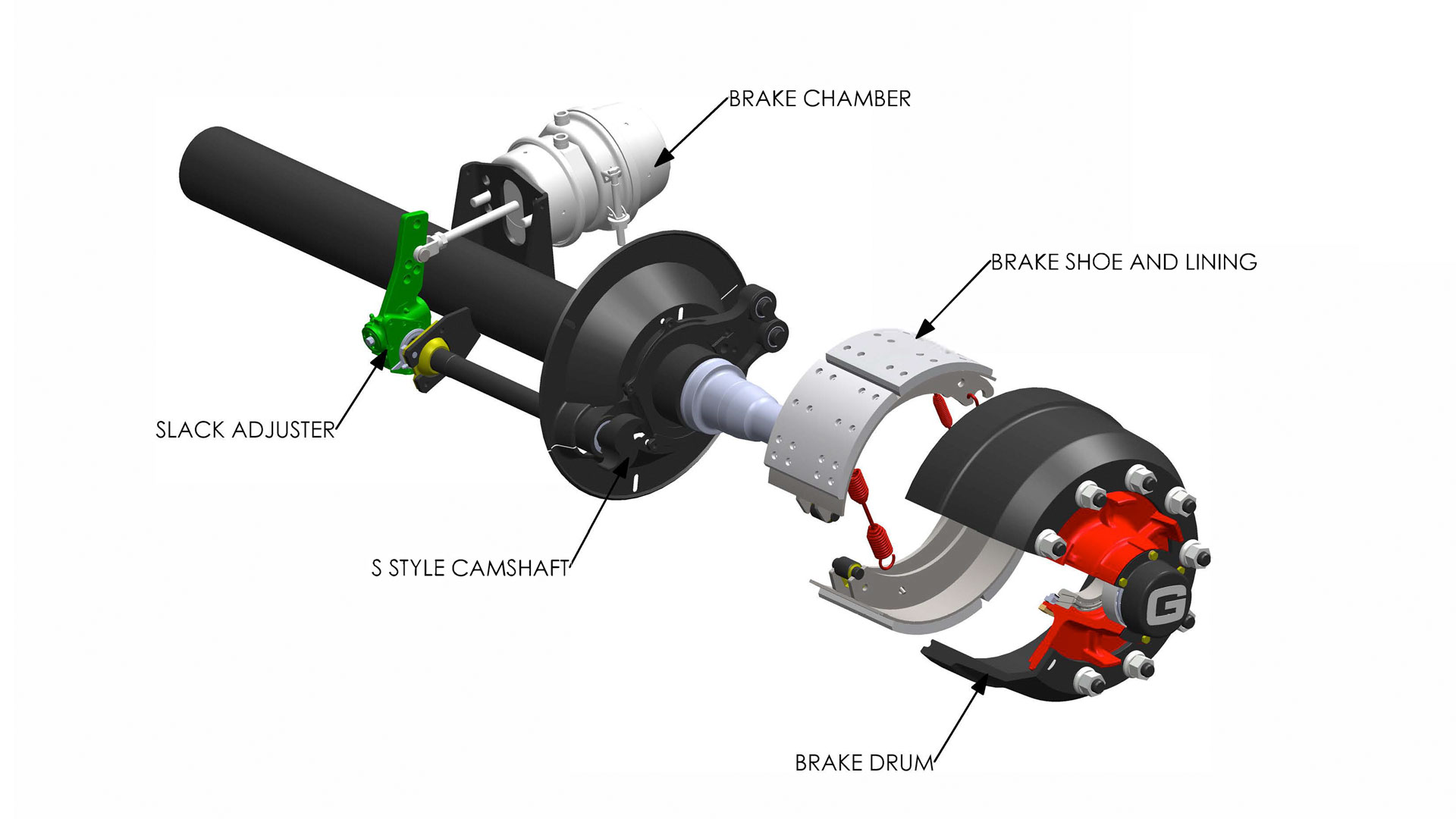
Compressed air is generated by a compressor mounted on the tractor engine and stored in reservoirs. When the operator engages the brake pedal, the tractor sends a control signal through the service line, increasing the air pressure delivered to the trailer's relay valve. This valve then draws air directly from the trailer’s own air reservoir to fill the brake chambers, pushing the pushrod out to activate the brake slack adjuster and force the brake shoes against the drum (or pads against the rotor).
Primary Components and Their Functions
To understand how the system manages both service braking and emergency stopping, one must identify the specific components within the trailer’s air circuit.
- Air Reservoirs (Tanks): These serve as the storage medium for compressed air. The trailer tank ensures that there is an adequate supply of air available immediately at the trailer axles, minimizing the lag time that would occur if air had to travel all the way from the tractor’s compressor.
- Relay Valve: This is a critical component that speeds up brake application. Instead of waiting for air to travel from the tractor’s foot valve, the relay valve senses the pilot signal from the tractor and immediately opens a port to the trailer reservoir, sending high-volume air to the brake chambers.
- Brake Chambers: These are pneumatic actuators. They contain a diaphragm that moves when air pressure is introduced. In a typical spring brake setup, the chamber consists of two sections: the service side (actuated by air pressure) and the spring side (held in the released position by air pressure).
- Slack Adjusters: These mechanical linkages connect the brake chamber pushrod to the brake camshaft. Their role is to compensate for the wear of the brake linings, ensuring the stroke of the pushrod remains within the manufacturer’s specified range.
- Glad Hands: These are the coupling devices used to connect the tractor’s air lines to the trailer. The service line (blue) provides the signal for braking, while the emergency/supply line (red) provides a constant supply of air to keep the spring brakes released.
The Role of Spring Brakes in Safety
The most vital safety feature of a modern trailer air brake system is the spring brake. Inside the brake chamber, a powerful mechanical spring is compressed by air pressure during normal operation. As long as the system has adequate air pressure (typically above 60 psi), the spring remains retracted.
If the trailer experiences a catastrophic air leak, or if the tractor is disconnected, the air pressure in the supply line drops. Without air pressure to hold the spring back, the force of the spring is released, mechanically driving the pushrod forward to apply the brakes. This ensures that a trailer left unattended or disconnected will remain stationary, and a trailer that suffers a total air loss while moving will automatically transition to a stopped state.
Comparative Overview: Service vs. Emergency Systems
| Feature | Service Brake System | Emergency/Parking System |
|---|---|---|
| Primary Actuation | Compressed air | Mechanical spring force |
| Normal Operation | Activated by pedal | Held in "off" by air pressure |
| Loss of Air Result | Brakes release | Brakes engage automatically |
| Control Source | Foot valve (Tractor) | Supply line (Dash valve) |
Inspection and Preventive Maintenance
Regular maintenance is a regulatory and safety requirement for commercial vehicle operators. Drivers must perform daily pre-trip inspections to ensure the integrity of the pneumatic circuit. Key tasks include:
- Air Leakage Test: With the engine off and the system fully charged, release the parking brakes and note the pressure drop. A drop of more than 4 psi in one minute for a tractor-trailer combination indicates a leak that must be addressed before operation.
- Slack Adjuster Check: Ensure the stroke of the pushrod is within limits. Excessive stroke, often caused by poorly adjusted slack adjusters, can lead to brake fade or total loss of stopping power.
- Moisture Evacuation: Air reservoirs must be drained regularly to remove condensation. Water in the system can lead to internal corrosion and, in freezing temperatures, can block the lines, causing a system-wide failure.
- Glad Hand Seal Inspection: The rubber seals on the glad hands are wear items. A cracked or missing seal will prevent the air system from sealing, causing persistent air loss and a potential roadside emergency.
Troubleshooting Common Issues
When the trailer air brake system fails to perform as expected, the issue is often traceable to air volume or mechanical linkage issues.
- Slow Brake Release: If the brakes are sluggish in releasing, check for restricted lines or a malfunctioning relay valve. Cold weather often exacerbates issues with moisture in the relay valve, causing it to freeze.
- Dragging Brakes: This usually points to a mechanical adjustment issue with the slack adjusters or a build-up of residue in the brake chamber that prevents the return spring from fully retracting.
- Failure to Hold/Release: If the trailer does not release its brakes when the tractor is connected, the lines may be reversed, or the supply pressure may be insufficient. Always ensure the glad hands are connected to the correct ports: Red to Emergency/Supply, Blue to Service.
Regulatory and Safety Limitations
It is critical to note that the trailer air brake system is designed to provide controlled braking for standard road operations. It is not an infinite-capacity system; steep or prolonged downgrades require the use of engine braking (jake brakes) to prevent the trailer brake linings from overheating. Brake fade occurs when the drum or rotor reaches temperatures beyond the operating limit of the lining material, causing a significant loss in friction.
Always consult the manufacturer’s technical manual for the specific trailer model being operated. If you are uncertain about the air brake integrity or if an inspection reveals compromised lines, do not attempt to repair the pneumatic components unless you are a qualified technician with the appropriate certification. Improper maintenance of brake systems can lead to catastrophic failure. If you are experiencing persistent issues with pressure loss, consult a certified heavy-duty mechanic.
Frequently Asked Questions
Why is it called an "emergency" line? The emergency line (red) is responsible for supplying air to the trailer’s reservoir and releasing the spring brakes. If this line is severed, the loss of pressure causes the spring brakes to engage automatically, effectively acting as an emergency stop.
What causes "brake fade" in trailer systems? Brake fade occurs due to excessive heat. When the trailer’s foundation brakes are used continuously on long descents, the friction materials reach their thermal capacity and lose their coefficient of friction, resulting in decreased braking efficiency.
Can I manually release the spring brakes? Most air brake chambers feature a "caging bolt" that can be used to manually compress the spring. This is a hazardous procedure intended only for towing a disabled vehicle to a safe location. It should only be performed by trained professionals.
How often should I drain the air reservoirs? In standard operating conditions, you should drain the tanks daily. In humid climates, more frequent draining may be necessary to prevent water accumulation.
What does it mean if the trailer brakes "grab" during normal driving? "Grabbing" or uneven braking usually indicates an imbalance in the system or contaminated brake linings. It may also suggest that the relay valve is failing to modulate pressure correctly, causing an abrupt application rather than a smooth increase in force.
Next Steps for Operational Safety
To ensure the continued reliability of your trailer air brake system, perform a thorough "Applied Pressure Test" once a month. With the engine off and the system charged, depress the brake pedal and hold it firmly. Monitor the air pressure gauge for one minute; a pressure drop exceeding 4 psi indicates a leak in the service lines or chambers. Following this, always document your findings in your vehicle maintenance log to stay compliant with safety regulations and internal fleet policy.
Image Gallery