How Much Money Did King Solomon Have? Modern Estimates of Biblical Wealth
King Solomon’s wealth is estimated to have exceeded $2 trillion in modern currency. This valuation stems primarily from the biblical account of the 666 talents of gold he received annually, alongside vast holdings in precious stones, c...
King Solomon’s wealth is estimated to have exceeded $2 trillion in modern currency. This valuation stems primarily from the biblical account of the 666 talents of gold he received annually, alongside vast holdings in precious stones, cedarwood, livestock, and a global trade empire that dominated the ancient Near East during his 40-year reign.
Contents
The Mathematical Foundation of Solomon’s Wealth
To understand the scale of King Solomon’s fortune, one must first translate ancient measurements into modern metrics. The primary benchmark for his wealth is found in 1 Kings 10:14, which states that Solomon received 666 talents of gold in a single year. This was not his total net worth, but rather his annual "salary" or tribute income, excluding the revenue from merchants, traders, and various governors.
Calculating the Value of a Talent
In the ancient Hebrew system, a talent was a unit of weight, not a specific coin. While estimates vary slightly among scholars, the standard Hebrew talent is generally accepted to be approximately 75 pounds (34 kilograms).
If Solomon received 666 talents of gold annually:
- Total Weight: 666 talents × 75 lbs = 49,950 lbs of gold per year.
- Troy Ounces: 49,950 lbs is roughly 728,437 troy ounces (using the conversion of 14.5833 troy ounces per pound).
- Modern Valuation: As of 2026, with gold prices hovering around $2,300 per troy ounce, Solomon’s annual gold income alone would be worth approximately $1.67 billion per year.
When projected over a 40-year reign, and factoring in the compound accumulation of existing reserves, the value of the gold alone becomes astronomical. However, gold was only one facet of the Solomonic economy.
Diversified Revenue Streams of the United Monarchy
Solomon’s financial genius lay in his ability to diversify the economy of Israel, transforming it from a tribal confederation into a regional superpower. His wealth was sustained by several high-yield "business units" that operated across international borders.
The Maritime Trade and the Fleet of Tarshish
Solomon established a sophisticated maritime partnership with King Hiram of Tyre. Together, they built a fleet of "ships of Tarshish" based in Ezion-Geber on the shores of the Red Sea. These expeditions, which took three years to complete, returned with gold, silver, ivory, apes, and peacocks. The exotic nature of these goods suggests trade routes extending as far as India or the Horn of Africa (Ophir). The profit margins on these luxury goods were immense, as Solomon controlled the primary ports and distribution networks.
Tolls and Transit Taxes
Israel’s geographic location served as a "land bridge" between the great empires of Egypt to the south and Assyria/Babylon to the north. Solomon capitalized on this by establishing fortified "chariot cities" like Hazor, Megiddo, and Gezer. Any merchant caravan traveling the Via Maris or the King’s Highway had to pay significant tolls and protection fees, providing the king with a steady stream of passive income.
The Military-Industrial Complex
Solomon was a major player in the international arms and livestock trade. The biblical text notes that he imported horses from Egypt and Kue (Cilicia) and exported them to the kings of the Hittites and Arameans. He maintained a standing army of 1,400 chariots and 12,000 horses. In the ancient world, chariots were the equivalent of modern fighter jets—extremely expensive to produce and maintain, signifying a level of wealth that few contemporary monarchs could match.
Physical Assets and Infrastructure
Net worth is often measured by assets rather than liquid cash. Solomon’s architectural legacy represents a massive concentration of capital.
- The First Temple: Constructed over seven years, the Temple in Jerusalem was essentially a national treasury. The interior was overlaid with pure gold, and the vessels used in service were crafted from solid gold and silver. According to 1 Chronicles 22:14, King David had already prepared 100,000 talents of gold and 1,000,000 talents of silver for the project, which Solomon then executed.
- The Royal Palace: Taking 13 years to complete, the "House of the Forest of Lebanon" featured 45 cedar pillars and an ivory throne overlaid with the finest gold.
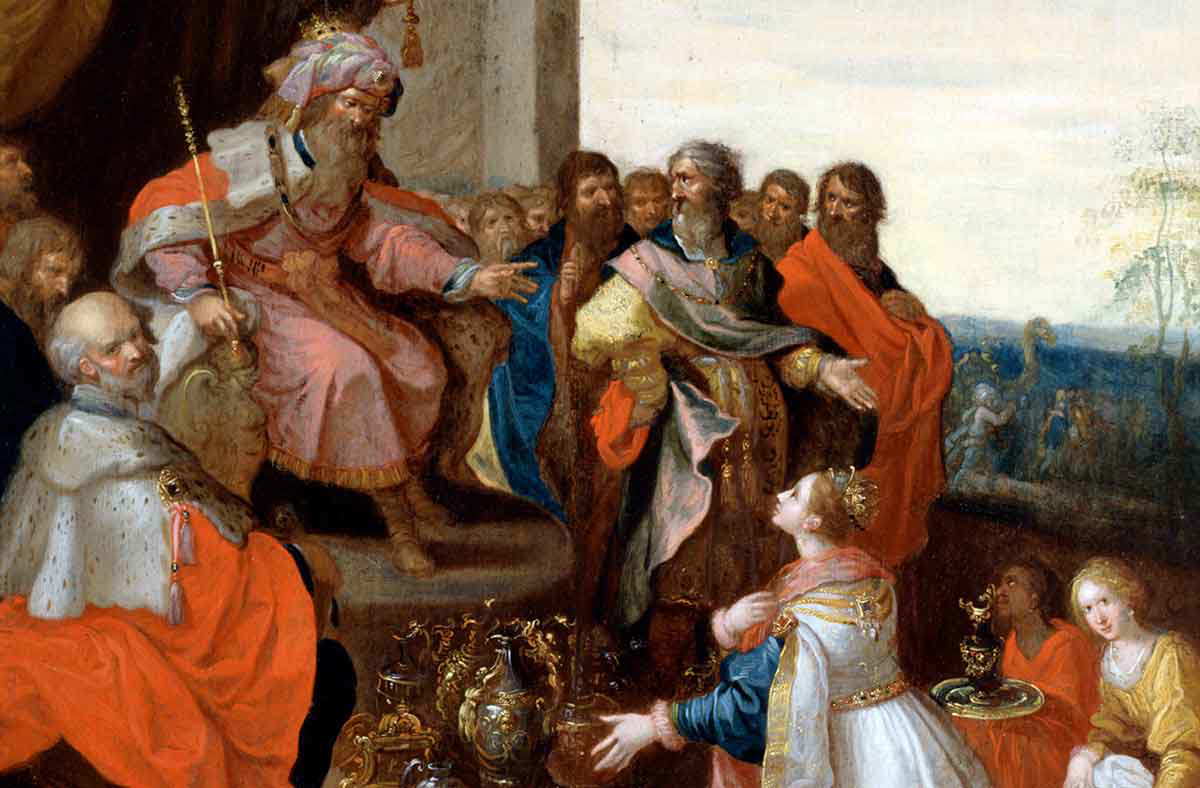
- The Throne of Ivory: No other kingdom possessed a throne of such craftsmanship. It featured six steps, with twelve lions standing on the ends of the steps—a display of wealth intended to intimidate and impress visiting dignitaries.
| Asset Category | Description | Modern Estimated Value Impact |
|---|---|---|
| Annual Gold Tribute | 666 talents (~22.6 metric tons) | ~$1.67 Billion/Year |
| Silver Holdings | Silver was as "common as stones" in Jerusalem | High Liquidity, Lower Unit Value |
| Real Estate | The Temple, Palace, and Fortified Cities | Incalculable / Trillions |
| Trade Monopolies | Horses, Chariots, Cedar, and Spices | High Operating Cash Flow |
| Gifts/Diplomacy | Tributes from Queen of Sheba and others | Billion-dollar "Bonus" Events |
Solomon vs. History’s Wealthiest Individuals
When discussing "who was the richest person ever," the conversation usually revolves around Solomon, Mansa Musa of Mali, and Augustus Caesar.
Solomon vs. Mansa Musa
Mansa Musa is often cited as having a net worth of $400 billion (adjusted for inflation). However, many biblical scholars argue that the sheer volume of gold described in the Solomonic era—where silver was discarded as having no value because gold was so prevalent—suggests a total valuation that exceeds the $1 trillion mark, potentially reaching $2.1 trillion.
The Inflation of Silver
A unique indicator of Solomon’s wealth was the market's reaction to it. 1 Kings 10:27 states that the king made silver as common in Jerusalem as stones. In economic terms, this implies a massive "gold standard" economy where the supply of precious metals was so high that silver suffered from extreme devaluation. This level of market saturation is rarely seen in history, indicating that Solomon’s wealth wasn't just "rich" by ancient standards—it was disruptive to the global economy of the time.
Archaeological and Historical Context
While the biblical account provides specific figures, modern archaeology offers a more nuanced view. Critics often point out that there is limited archaeological evidence of a "Golden Empire" of this specific magnitude in the 10th century BCE. However, recent discoveries in the Timna Valley (often referred to as "King Solomon's Mines") have revealed massive copper smelting operations dating to the exact period of his reign.
Copper was the "oil" of the Iron Age. Controlling the production and export of copper would have provided the underlying industrial wealth necessary to trade for the gold and silver mentioned in the scriptures. The presence of sophisticated purple-dyed textiles at these sites also confirms the high-status, wealthy society that the Bible describes.
Economic Limitations and the Fall of the Wealthy State
It is important to note that Solomon's wealth came at a significant cost to the population. To maintain this level of grandeur, he instituted heavy taxation and forced labor (the corvée). This economic strain eventually led to the fracturing of the kingdom after his death. This serves as a historical reminder that a monarch’s "net worth" is not always synonymous with the economic health of the citizenry.
Professional Financial Note
While these figures are based on historical and biblical texts, they represent estimates based on 2026 commodity pricing. Ancient economies functioned differently than modern fiat systems, and "wealth" often included non-liquid assets like wives, slaves, and livestock that are difficult to value by modern ethical and financial standards.
Frequently Asked Questions
Did King Solomon really have 666 talents of gold?
The figure of 666 talents is recorded in both 1 Kings and 2 Chronicles. Most historians interpret this as a specific accounting of the annual tribute or "tax revenue" collected by the crown, rather than a symbolic number. It represents roughly 25 tons of gold per year.
How does Solomon's wealth compare to Elon Musk or Jeff Bezos?
Modern billionaires like Musk or Bezos have net worths tied to stock equity and company valuations. Solomon’s wealth was "hard wealth"—physical gold, land, and resources. If you converted Solomon’s physical gold and real estate into modern dollars, he would likely be four to five times wealthier than the richest person alive in 2026.
Where did King Solomon get his gold?
His primary source was the land of Ophir. The exact location of Ophir is debated, with theories ranging from modern-day Ethiopia and Zimbabwe to India and the Arabian Peninsula. He also received gold as tribute from the Queen of Sheba and other regional rulers.
Was silver really worthless during his reign?
Silver wasn't literally worthless, but it was "not considered of value" for royal items because gold was so abundant. This suggests that the middle class likely used silver, while the upper class and the state transitioned entirely to a gold-based luxury economy.
What happened to Solomon's gold after he died?
Much of the wealth was liquidated or plundered within a few decades of his death. His son, Rehoboam, faced an invasion by Pharaoh Shishak of Egypt, who stripped the Temple and the palace of their gold shields and treasures, effectively transferring Israel’s wealth back to the Egyptian treasury.
Practical Recommendation: Analyzing Historical Wealth
If you are researching King Solomon's wealth for academic or investment historical context, focus on the commodity-to-labor ratio. The true measure of his power was not just the weight of his gold, but his ability to command the labor of hundreds of thousands of people to build infrastructure that lasted for centuries. For a modern perspective on how these ancient resources shaped the world, consult the Oxford Encyclopedia of Ancient Egypt or the Biblical Archaeology Society for the latest excavation reports from the 10th century BCE strata.
Image Gallery