Shannon Brown Contract: A Full Career Salary and Earnings Analysis
Over his nine-season NBA career, Shannon Brown signed several pivotal contracts that totaled approximately $25.2 million in career earnings. His most notable financial periods occurred during his championship tenure with the Los Angele...
Over his nine-season NBA career, Shannon Brown signed several pivotal contracts that totaled approximately $25.2 million in career earnings. His most notable financial periods occurred during his championship tenure with the Los Angeles Lakers and his peak-salary years with the Phoenix Suns, where he secured a multi-year deal worth $7 million.
Contents
Shannon Brown’s trajectory in the NBA serves as a case study for how "role players" with elite athleticism can leverage championship success into significant financial security. While he never reached the "max contract" status of his superstar teammates like Kobe Bryant, Brown navigated the Collective Bargaining Agreement (CBA) of the late 2000s and early 2010s to maximize his market value. As we look back from 2026, his career earnings highlight the massive shift in NBA salary scales over the last two decades.
The Evolution of Shannon Brown’s NBA Market Value
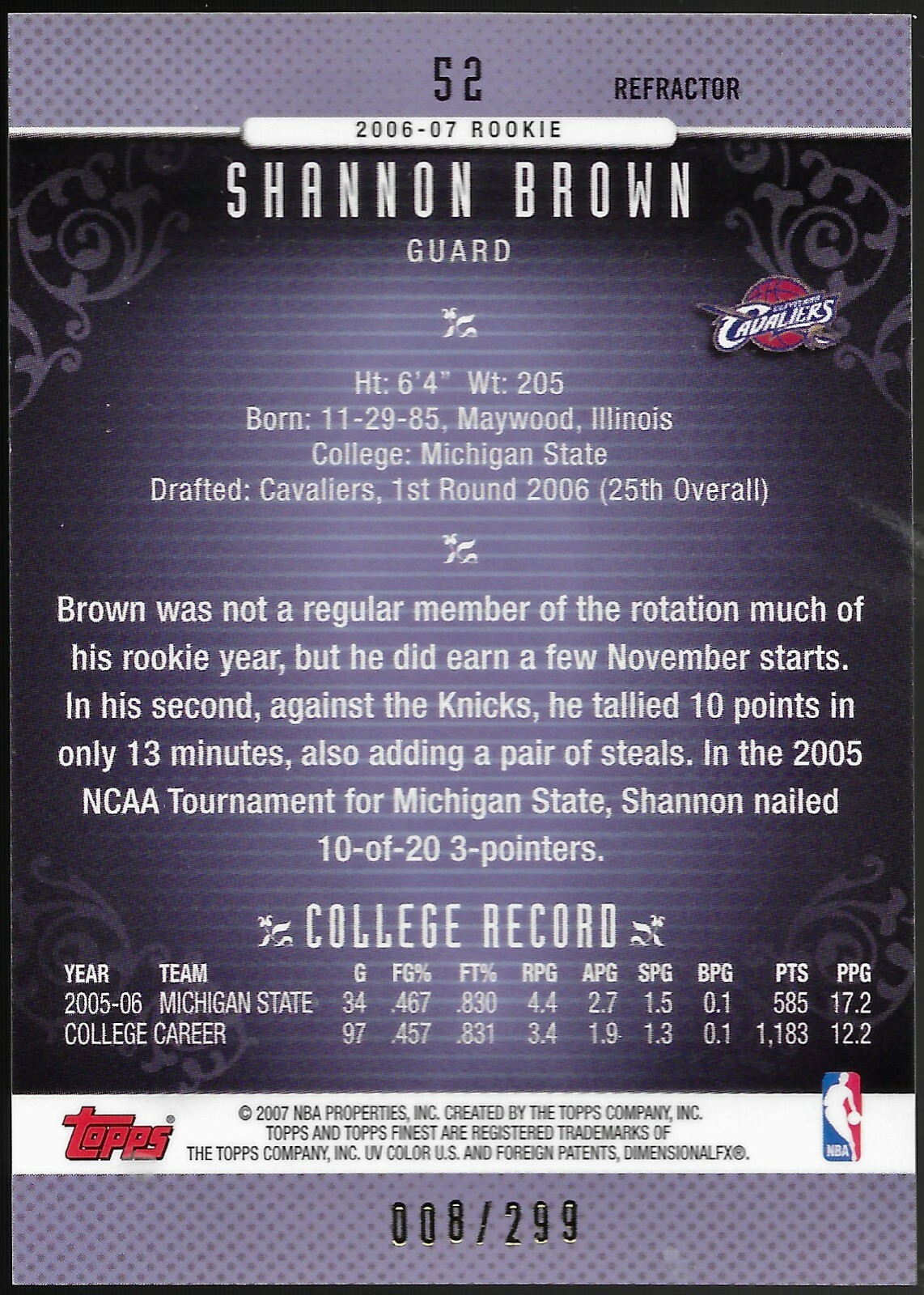
Shannon Brown entered the NBA as the 25th overall pick in the 2006 NBA Draft. At that time, rookie contracts for first-round picks were strictly governed by a rookie scale, which dictated the salary based on the exact slot in which a player was drafted.
Initial Rookie Contract: Cleveland Cavaliers (2006–2008)
Upon being drafted by the Cleveland Cavaliers, Brown signed a standard rookie-scale contract. For the 25th pick in 2006, this meant a two-year deal with team options for the third and fourth years.
- 2006-2007: $944,520
- 2007-2008: $1,015,440
During this period, Brown struggled to find consistent minutes in a crowded Cleveland backcourt. His value was primarily seen in his potential and "verticality," but he had yet to prove he could be a consistent contributor to a winning system. This uncertainty led to a series of trades and short-term stints with the Chicago Bulls and Charlotte Bobcats (now the Hornets).
The "Journeyman" Transition (2008–2009)
In early 2008, Brown was part of a multi-player trade that sent him to Chicago. Later, as a free agent in the summer of 2008, he signed a one-year, minimum-salary deal with the Charlotte Bobcats for roughly $797,581. This was a "prove-it" year. Had he failed to perform in Charlotte, his NBA career—and his future earning potential—might have ended prematurely. Instead, a mid-season trade in February 2009 changed the trajectory of his life and bank account.
The Los Angeles Lakers Era: Maximizing Value Through Championships
The trade that sent Shannon Brown and Adam Morrison to the Los Angeles Lakers in exchange for Vladimir Radmanović is often cited as one of the most lopsided "minor" trades in Lakers history. For Brown, it was a financial turning point.
The 2009 Extension and the Player Option Gamble
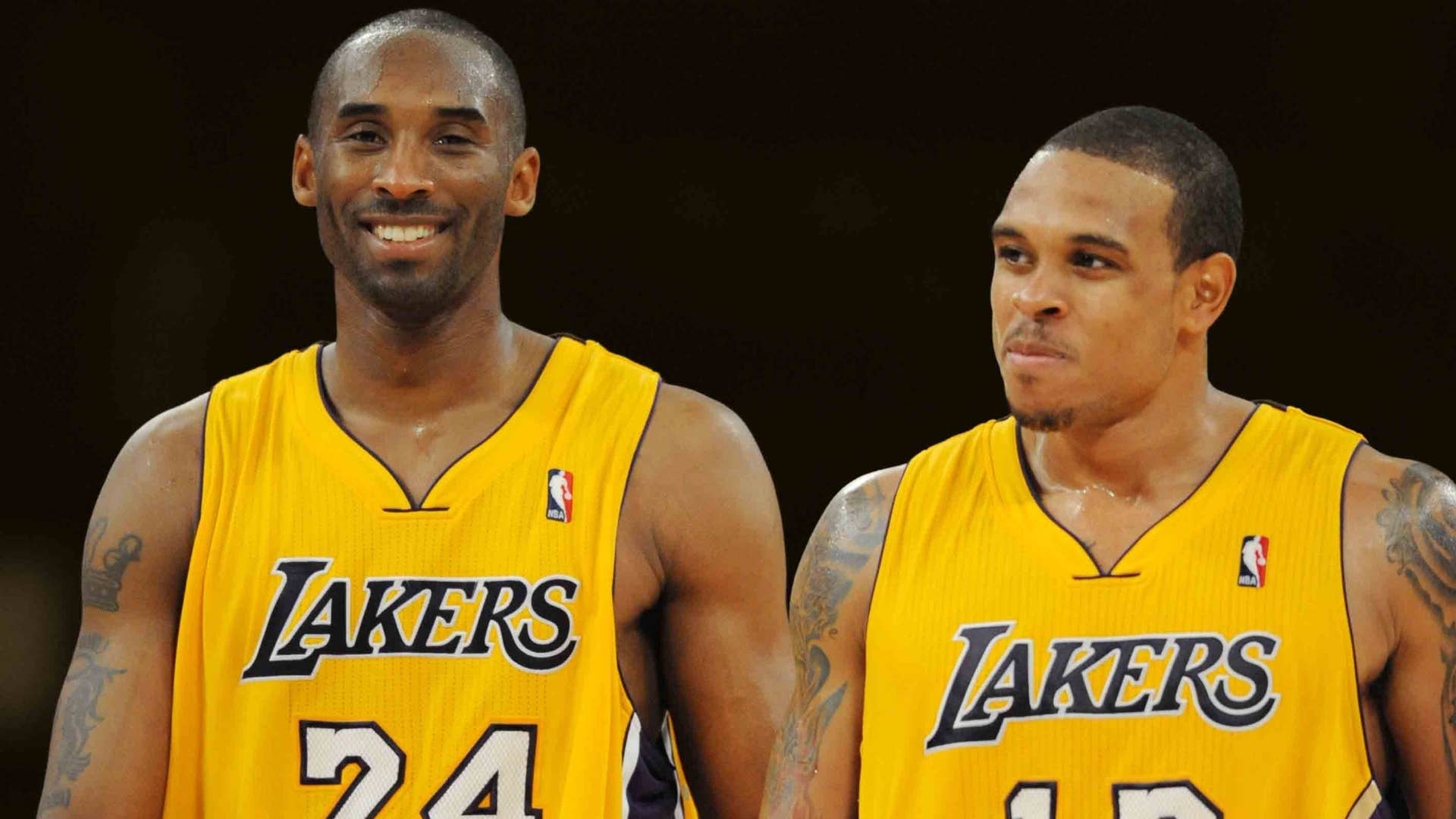
After contributing to the Lakers' 2009 Championship, Brown became a restricted free agent. Despite receiving interest from other teams, he chose to stay in Los Angeles, signing a two-year, $4.2 million contract.
This contract was strategic. It included a player option for the second year, allowing Brown to bet on himself. By performing well during the 2009-2010 season and winning a second consecutive ring, he increased his visibility exponentially. His "Let Shannon Dunk" campaign for the Dunk Contest and his highlight-reel blocks made him a household name, which is a rarity for a bench player.
The 2010 Re-signing
In 2010, Brown exercised his player option to become an unrestricted free agent, seeking a raise. The Lakers, wanting to maintain their championship core, re-signed him to a two-year, $4.6 million deal. While the annual increase was modest, it provided him with "Early Bird Rights" and solidified his status as a key rotation piece on a high-profile contender.
The Phoenix Suns Deal: Peak Career Earnings
By 2011, the NBA landscape was shifting due to the lockout. When the lockout ended, Brown sought a larger role and a larger paycheck. He found both with the Phoenix Suns.
Initially, Brown signed a one-year, $3.5 million deal with the Suns for the 2011-2012 season. This was a significant jump from his Lakers salary. He flourished in Phoenix’s up-tempo system, averaging a career-high 11 points per game.
Recognizing his value as a scoring threat off the bench, the Suns rewarded him in 2012 with a two-year, $7 million contract. This represented the peak of his earning power.
| Season | Team | Salary (USD) | Contract Type |
|---|---|---|---|
| 2006-07 | Cleveland Cavaliers | $944,520 | Rookie Scale |
| 2007-08 | Chicago Bulls | $1,015,440 | Rookie Scale |
| 2008-09 | Charlotte / LA Lakers | $797,581 | 1-Year Minimum |
| 2009-10 | Los Angeles Lakers | $1,990,000 | 2-Year Deal (Year 1) |
| 2010-11 | Los Angeles Lakers | $2,149,000 | 2-Year Deal (Year 1) |
| 2011-12 | Phoenix Suns | $3,500,000 | 1-Year Free Agent |
| 2012-13 | Phoenix Suns | $3,500,000 | 2-Year Deal (Year 1) |
| 2013-14 | Knicks / Spurs / Suns | $3,541,000 | Trade/Waiver/10-Day |
| 2014-15 | Miami Heat | $1,310,286 | Veteran Minimum |
| Total | Estimated | $25,247,827 | Career Total |
Late-Career Contracts and Ten-Day Agreements
The final years of Shannon Brown’s NBA career illustrate the "grind" of a veteran player. In 2013, he was traded to the Washington Wizards as part of the Marcin Gortat deal but was immediately waived. Because his $3.5 million salary for that year was fully guaranteed, he still received his pay despite being cut.
Following his release, Brown transitioned into the world of short-term contracts. This is a common phase for veterans where teams "test" their fitness and locker room fit.
- San Antonio Spurs: Signed two consecutive 10-day contracts in early 2014.
- New York Knicks: Signed two 10-day contracts followed by a deal for the remainder of the 2013-14 season.
- Miami Heat: Signed a one-year veteran minimum contract in 2014 worth approximately $1.3 million, though he was waived in November of that year.
These late-stage contracts, while smaller than his Suns deals, allowed Brown to push his career earnings past the $25 million mark.
Financial Context: The 2011 CBA and Cap Growth
To understand Shannon Brown’s contract history, one must look at the salary cap environment of that era. During Brown’s peak years (2009–2013), the NBA salary cap hovered between $57 million and $58 million.
In 2026, with the salary cap exceeding $175 million due to massive media rights deals, a player of Shannon Brown’s caliber—a high-energy, championship-winning rotation guard—would likely command a "Mid-Level Exception" (MLE) worth $12–15 million per year. By historical standards, Brown was well-paid, but his $25 million career total highlights the exponential growth in NBA revenue over the last decade.
Post-NBA Earnings and the BIG3
Following his NBA departure, Shannon Brown continued to earn professionally through international opportunities and the BIG3 league. Founded by Ice Cube, the BIG3 provided a platform for retired NBA players to earn significant weekly salaries and bonuses. Brown’s participation in the BIG3 was not just about staying active; it was a business move to maintain his brand and supplement his career earnings.
Additionally, like many former Lakers, Brown has benefited from the "Lakers Legacy" brand. This involves paid appearances, autograph signings, and media work related to the 2009 and 2010 championship anniversaries.
Legal and Financial Challenges
It is important to note that the "contract amount" is gross income. In 2021, Brown was among several former NBA players named in a legal matter regarding the NBA’s Health and Welfare Benefit Plan. These proceedings focused on administrative claims rather than his playing contracts but served as a reminder of the complexities professional athletes face when managing post-career finances and benefits. According to reports from ESPN and other major outlets, these legal hurdles are often a result of players seeking to navigate the healthcare systems provided by the league after their playing days conclude.
Summary of Career Achievements Impacting Earnings
- 2× NBA Champion (2009, 2010): Directly led to his $4.6 million Lakers deal.
- First-Round Draft Status: Guaranteed his first $2 million in the league.
- Durability: Played 541 regular-season games, allowing him to reach "Veteran Minimum" status, which pays significantly more than a standard minimum for younger players.
Frequently Asked Questions
What was Shannon Brown’s largest single-year salary?
Shannon Brown’s largest single-year salary was $3.5 million. He earned this amount during the 2011-2012 season with the Phoenix Suns and again during the 2012-2013 season as part of a multi-year agreement.
How much did the Lakers pay Shannon Brown?
The Los Angeles Lakers paid Shannon Brown approximately $5 million over his two-and-a-half seasons with the team. This included a partial season in 2008-09 and two full seasons where he was a primary contributor to their back-to-back championships.
Did Shannon Brown have a "Max Contract"?
No, Shannon Brown never signed a max contract. His career role was that of a "spark plug" or "sixth man." In the NBA's financial hierarchy, players in this category typically sign for the Mid-Level Exception or slightly above the league minimum.
What happened to Shannon Brown’s contract with the Wizards?
Shannon Brown was traded to the Washington Wizards in 2013 but never played a game for them. He was waived three days after the trade. However, because his contract was guaranteed, the Wizards were responsible for paying his $3.5 million salary for that season.
How do Shannon Brown’s earnings compare to modern NBA players?
In 2026 terms, Shannon Brown's $25 million career total seems modest. Today, many rotation players earn $25 million in just two seasons. However, during his era, his earnings were consistent with a high-quality role player on a championship-caliber team.
Practical Recommendation for Researchers
When analyzing historical NBA contracts like Shannon Brown’s, it is essential to use verified databases such as Spotrac or Basketball-Reference. These platforms account for trades, waivers, and "dead money" that might not be apparent in initial news reports. For those looking at the business of basketball, Brown’s career is an excellent example of how performance in high-leverage moments (the NBA Finals) can stabilize a career that might otherwise have been cut short due to early-career inconsistency.
Image Gallery